Owning Our Leadership: Ethos Self-Efficacy Session 2

How do you lead?

I like to ask a question at the start of a post because it feels like an invitation… Like I’m starting a conversation. Because the purpose of this blog is not just to express my own thoughts and ideas, but to connect with others who are willing and excited to engage with them and me. I just never know when, where or who the next great connection will be, and it’s one of the best uncertainties in life.

As I prepared for my second self-efficacy session at Ethos today, all I wanted to do was explore questions. I know my own approach to leadership, how I have evolved in my own practice of it, etc. And I am happy to ‘impart’ any of that to anyone who asks, but these self-efficacy sessions are meant to stimulate attendees’ own explorations and assessments. I am simply the facilitator. So I came with more queries than teachings. Looking back, I wish I had invited more questions as well. Learning for next time!

The group was small, five of us who know each other already, three who attended my first session in March. No dry erase writing this time, just slow, thoughtful reflection and sharing. I know now that regardless of audience size or composition, I can show up loving and present, and navigate any dynamic with a strong rudder of openness and connection. And I’m rewarded so generously every time.

Words that recurred today included energy, empathy, together, expectation, growth, awareness, humility, discomfort, vulnerability, and love, among others. I will continue to reflect on my friends’ insights and expressions, and learn from them. Please find below the questions I prepared, as well as a few that emerged in conversation. We did end up discussing most of them, without feeling rushed or forced. It all flowed in easy, loving exchange. We led ourselves and one another in exactly the way I had hoped we would, and I am nothing but grateful.

I hope you experience excellent leadership in your life, dear reader–both of you and by you. And if you are unclear or unsure how to lead well or better, may opportunities for clarity and confidence meet you soon on your journey.

Oh, and in case you have not already considered:
Assuming you are a leader in any given space, regardless of title or status, how does this affect/change how you show up, to yourself and to others?
If you knew you could lead from any chair in the orchestra of your family, your work organization, and humanity, how would you play?

————————————-

Ethos: Own Your Leadership
June 22, 2025

Curious – philosophical – concrete –> Apply

Why here today? Curious about…?
What is leadership?
How do we know we’re being led?
How do we know we’re leading?

What is your first act of leadership in memory (mine was in preschool)?
–What was the outcome/consequence?
–What did it teach you?

What is your leadership style and (how) does it change with context?
–How has it evolved over time (drift)?
–Any seminal experiences that shifted it?

How do we feel when led well?
How do you want those you lead to feel–about themselves, the work, and you?
–How does this inform how you show up?
–How do you think/assume/// they want to feel?

What feedback have you gotten about your leadership?
What feedback have you given about others’?
What are the compontents of effective feedback, both giving and receiving?

This Moment

5 talks to prepare in the next eight weeks.
Blog post to write.
Dinner to cook.

But all I wanted to do is write to my friend. Not just jar smiles, but a letter. Connect in long form, right now. Because this was a big week and weekend and I wanted to share it.

Daughter graduated high school and turned 18 on the same day. Family came and went from my house for six days in a row; I woke up each morning having to run the list to keep track of everybody. Our family has been through things over the years; getting to this point of pending empty nest was, at times, not guaranteed. We got through it all together, one breath at at time. This moment is a big deal in our family. This moment is a big deal for our country. All of this on my heart, I wanted to do nothing but write to my friend, before any of my other tasks and obligations. I’m getting better and braver at letting my intuition guide me, and I have yet to regret it.

Turns out I want to share what I wrote with all of you, too:

“…I write to you today because this moment in life feels important. The No Kings protests marched all across the country yesterday as most of my family were basically offline and absorbed in ourselves. We read about the two political shootings in Minnesota and I felt a little guilty not participating in any larger demonstrations of my values. And I reconciled it by attending to the connections in my own tight circle. We have disagreements and friction within my own family and I see my navigating and mediating these peacefully and mindfully as an important contribution to society–small and mighty. 🙂

“There are so many calls to ‘fight,’ so many adversarial, us vs. them, good vs. evil narratives surrounding us right now. And while I abhor so many actions taken by ‘leaders,’ I still resist to call them evil and dehumanize them… That feels antithetical to the ethos of love and connection that I wish/strive to live by… But OMG it is challenging to resist that ad hominem train! *sigh*

“…This weekend I begin creating five new talks for this summer, to be delivered to [XXX corporation]… As I consider how to address their wellness challenges, many of which are relational, I come back, as I so often do, to core principles of humility, curiosity, empathy, and connection. My intent is to light the spark of togetherness, mutual caring and uplift, and collaboration, starting with the premise that we all matter, and that no matter what chair we occupy in the orchestra, we can and do lead from exactly where we sit. Each and every one of us matters to the whole–WE ARE THE SYSTEM–and embracing that fundamental first principle changes everything–don’t you think? If we all matter, then I need to know how I affect you, and vice versa. We need better self-awareness, self-regulation, and effective communication skills to get the work done and not burn out doing it! And having talked to people and learned how we operate individually and in groups my whole career, I feel qualified to help here! And who knows–this could be the start of something that grows; I could possibly help more people than just my one patient at a time! SO many possibilities!”

This moment, my friends.

We get to decide how we show up, and for what, over and again, in resilient, optimistic learning and persistence, in love and connection, in faith and confidence that we can do what is needed to heal the ragged tears in our social fabric, one encounter, one conversation, one relationship at a time.

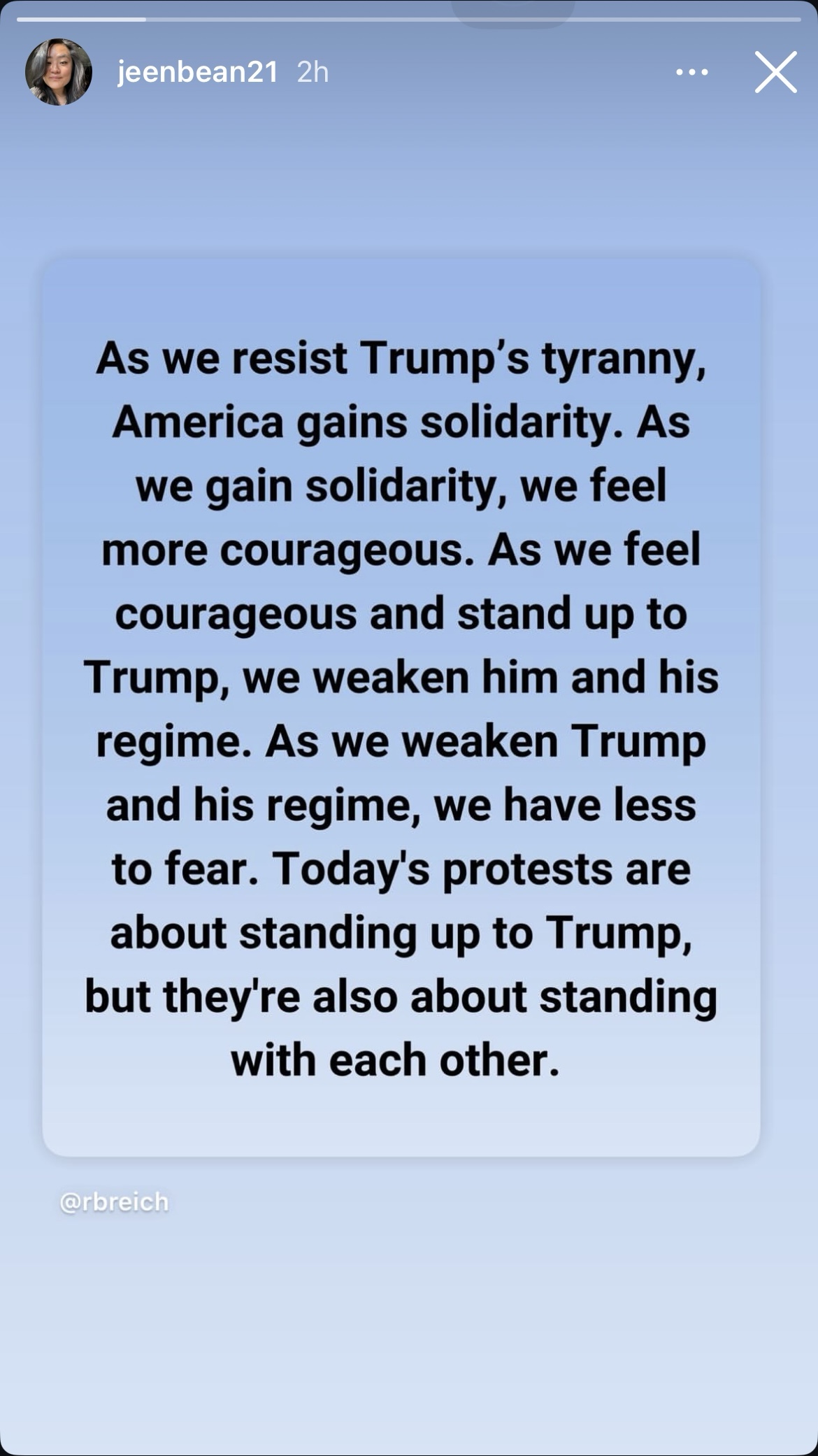
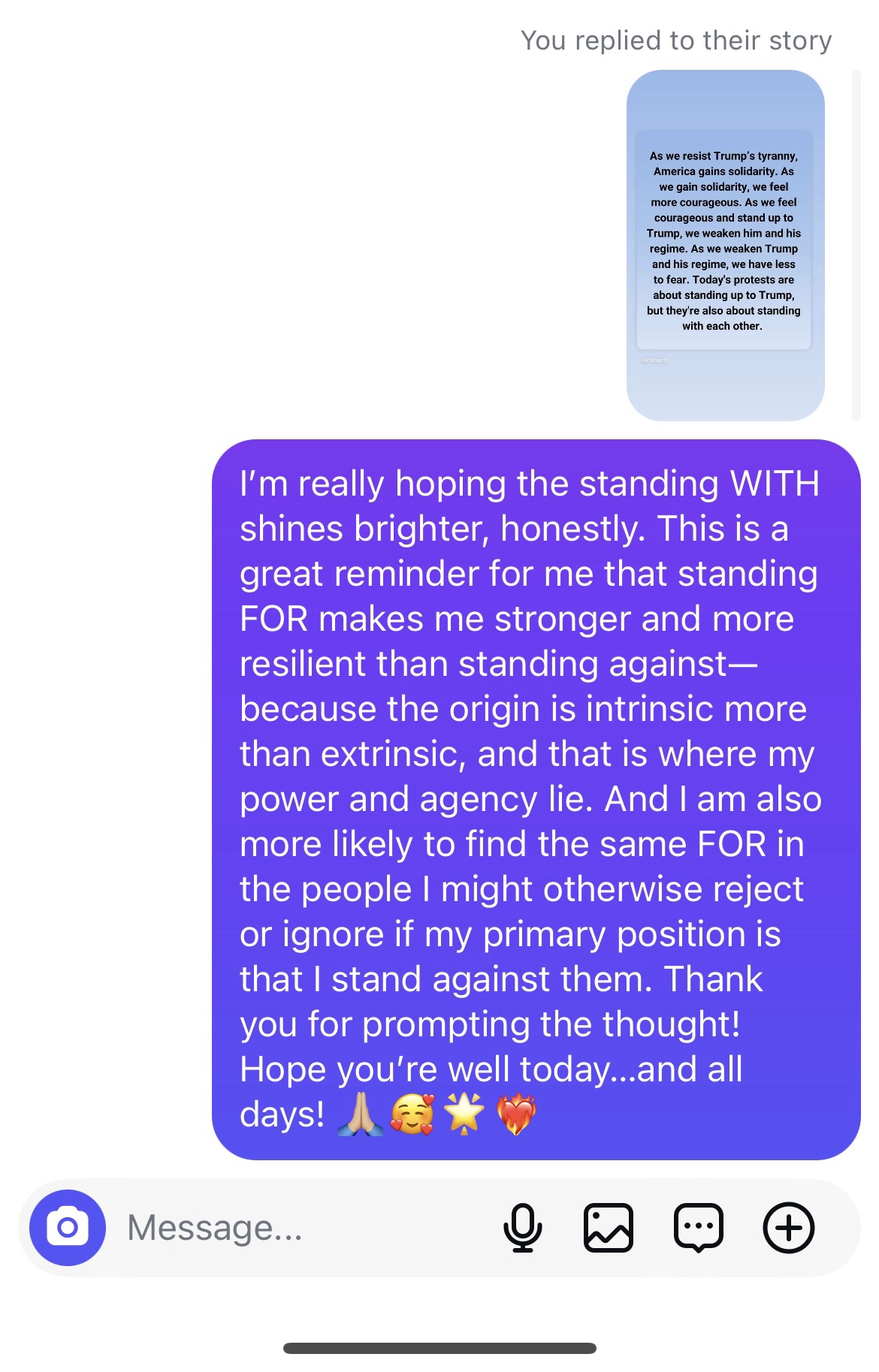
Screenshot
Screenshot
Screenshot

Wishing Others Discomfort? I Respectfully Disagree.

“Wishing all the homophobes a super uncomfortable month”
I see this meme on social media again this year, as June 1 marks the beginning of Pride Month. I do not endorse it.

What is the intent and goal of this expression? What is the intent and goal of the Pride movement? Does the former ultimately advance the latter?

The initial reaction of many progressives on seeing this message is likely affirmative–righteousness, a sense of tribal pride, a satisfying abstract finger gesture to all perceived as oppressors and abusers of LGBTQ+ people. And because it’s understated and almost playful, it also feels benign, something that could be laughed off as a joke. I see it as adversarial and counterproductive to the cause, as going low, not high, however lightly it is meant to land.

What is the knee-jerk reaction to deep-seated, visceral, relational, and other existential discomfort? We may avoid, deny, dismiss, reject, and in worst cases, lash out. I have lived adjacent to abusive relationships. When abusers’ discomfort is stoked, outcomes are not good for the abused. Poking the bear is not often wise. There is some evidence that violence and harm against LGBTQ+ people rises during June, which is not surprising. So it’s interesting that I see this meme posted by cisgender/heterosexual people I know, and not those I know who identify as LGBTQ+. This is just my own observation; I don’t know the actual demographic distribution of people who share this meme.

The best intention of this message, I think, is solidarity and allyship. The impact may be very different. I can imagine someone who feels uncomfortable, for whatever reason, with non-cis/het identity feeling rejected, shamed, and even hated by this message. What response is this likely to engender? How does that make anything better for anyone? How does it advance the cause?

Discomfort can be a very good and necessary thing. It signals a possible threat to our well-being. Like physical pain and our myriad emotions, discomfort calls us to attend to something in our environment. How we manage our discomfort determines many outcomes of our lives. Why would we wish discomfort on our fellow humans? Because we want them to suffer? Because we want them to empathize with something? What do we want from their discomfort?

If you’re uncomfortable with Pride Month, and/or with anything LGBTQ+ in general, I want to know more. What is that about? What informs that discomfort, and how does it affect your life? How does it affect your attitudes, speech, and actions when you encounter anything LGBTQ+? I don’t wish discomfort on you, and I accept that you have it; I may empathize with it, if I learn about your personal experience of it. I wish you were as comfortable as I am with all things sexual and gender-related. I also wish for you to get curious about your discomfort, to explore its origins, its costs–present and potential–to you and those in your life. I wish for you to imagine a life free from this discomfort–what would that feel like? What might that cost you? What would you need to take any steps in that direction? Is that even possible? I wish for your discomfort to be the birthplace of growth and connection, more than conflict and suffering–as any discomfort has the potential to be–for you and all those you’re uncomfortable with.

If we were all better at embracing our various discomforts (healthy eating, exercising more, being more honest with ourselves and others, having the hard conversations, etc.), at making it safe for one another to engage with and overcome them, how would that feel? How would our relationships and communities be? Right now we make it safe to respond to our discomforts with rage, blame, and dehumanizing. When I see people wishing discomfort on others, I’m disappointed.

We can do better.