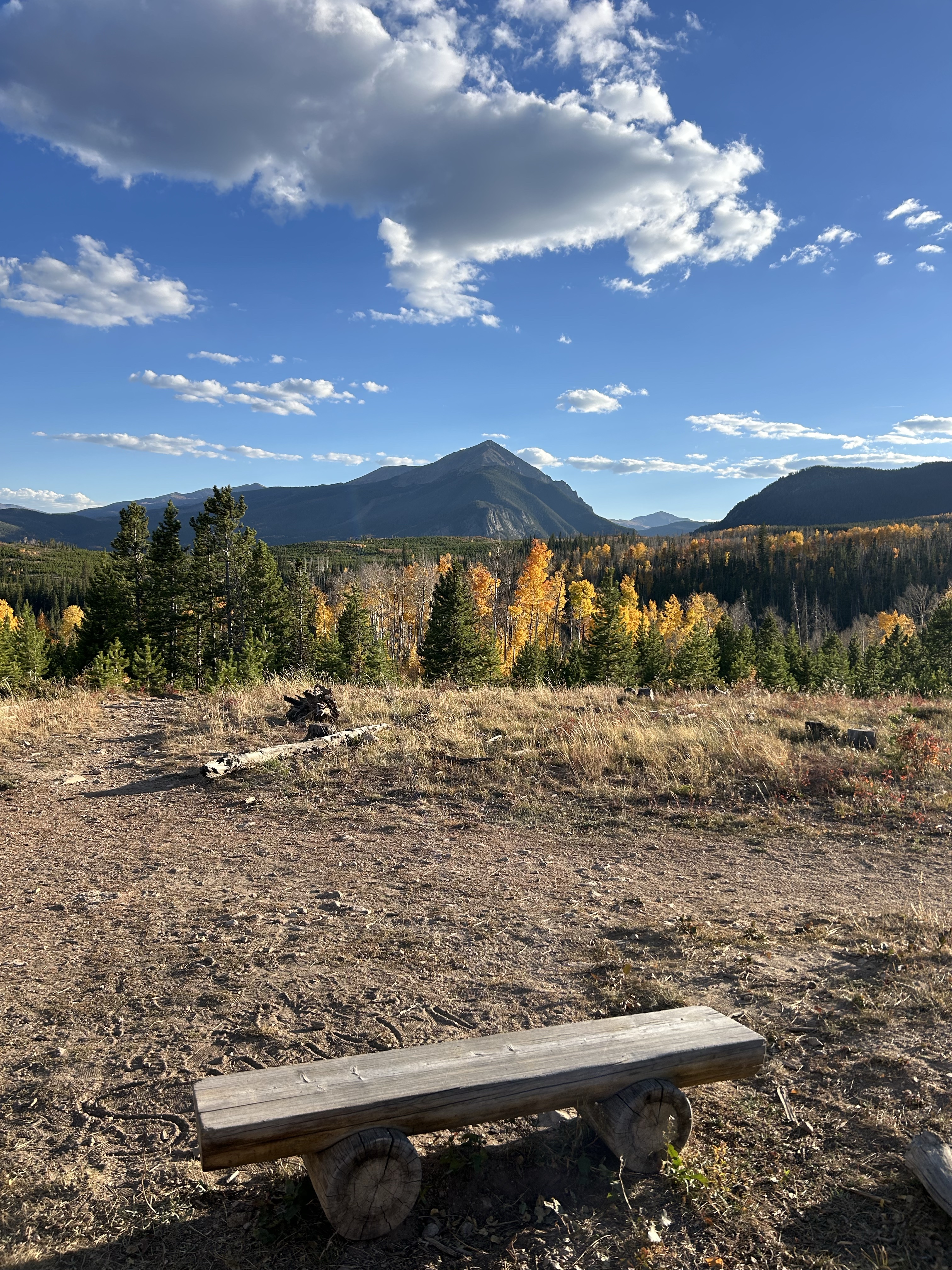
Holding the Questions

“I want to beg you, as much as I can, dear sir, to be patient toward all that is unsolved in your heart and to try to love the questions themselves like locked rooms and like books that are written in a very foreign tongue. Do not now seek the answers, which cannot be given you because you would not be able to live them. And the point is, to live everything. Live the questions now. Perhaps you will then gradually, without noticing it, live along some distant day into the answer.”
–Rainer Maria Rilke, letter to Franz Xaver Kappus, July 1903, from Letters to a Young Poet translated by MD Herter Norton, 1934

“Live the questions now.”

How would life be if we could tolerate uncertainty and lack of control much better than we do? If we could embrace the present moment of unknowing? If we could find peace in the way things are? What if we could ground in patience, confident that we can meet whatever lies ahead with all the experience, resourcefulness, and creativity we can muster?

And what if we actually ask better questions? Instead of stopping at “I don’t understand,” what if we get honest, curious, and deep? Finding out what we didn’t know we didn’t know is a special kind of epiphany. How often does this happen to us? If we ask a lot of open and honest questions to people of all different backgrounds and experiences, it can be a common occurrence.

What question(s) recur for you lately? Why? How do they feel as they occupy you? Light or heavy? Agitating? Stimulating? …Fascinating?

It’s late and I procrastinated again tonight, thinking I would write about something else. Funny how that pattern emerges, three weeks into this 30 day project this time. So instead of offering much more of my own analysis, I’ll share resources that help me to live the questions peacefully, joyfully, and in a perpetual state of fascination.

If you do not already follow Maria Popova’s blog The Marginalian, I highly recommend it. On the topic of living the question, she highlights Jacqueline Novogratz’s 2012 commencement address at Gettysburg College, in which she quotes Rilke and admonishes graduates, “We’ve become a society seeking instant gratification. We want simple answers, clear pathways to success… Life does not work that way. And instead of looking for answers all the time, my wish for you is that you get comfortable living the questions… Focus on being interested, not on being interesting.”

In her post “How Ignorance Fuels Science and the Evolution of Knowledge,” Popova introduces readers to Stuart Firestein’s book Ignorance: How It Drives Science, which is now in my audiobook queue. Science is driven by curiosity, which starts with the awareness of ignorance (see also Ian Leslie’s book Curious). She quotes Firestein:

“There are a lot of facts to be known in order to be a professional anything — lawyer, doctor, engineer, accountant, teacher. But with science there is one important difference. The facts serve mainly to access the ignorance… Scientists don’t concentrate on what they know, which is considerable but minuscule, but rather on what they don’t know…. Science traffics in ignorance, cultivates it, and is driven by it. Mucking about in the unknown is an adventure; doing it for a living is something most scientists consider a privilege. […] Working scientists don’t get bogged down in the factual swamp because they don’t care all that much for facts. It’s not that they discount or ignore them, but rather that they don’t see them as an end in themselves. They don’t stop at the facts; they begin there, right beyond the facts, where the facts run out. Facts are selected, by a process that is a kind of controlled neglect, for the questions they create, for the ignorance they point to.”

In this season of severe political polarization and tenuous relationships, I lean heavily on my strong question asking skills–they are tested and trained. I reference this skill often on this blog, and it still bears repeating. What do we not know? What assumptions do we make and how do they keep us from true understanding and connection? See below for the text of the tip sheet I keep bookmarked and share often. May we practice and strengthen this skill starting now, for all our sakes.

I Hold the Questions for Us because life is uncertain and we must still act. The more we can embrace and live the most meaningful, stimulating, and fascinating questions, the more likely we are to discover and cultivate true connection and healing.

—–

Asking Open & Honest Questions
by Jeanne Strong

Learning to respond to others with honest, open questions instead of counsel, corrections, advice, etc. can be a life-altering practice. With such questions, as Parker Palmer says, we help “hear each other into deeper speech”—a speech that might reveal a turning point in a life, an intuition about one’s health, or an insight into life’s purpose. For ourselves, the practice frees us from having to know “the answer” or solve “the problem.” It allows us to relax into our own humanity and the pleasure that comes from being connected to another.

But what is an open and honest question? The best definition is that the asker could not possibly anticipate the answer to it. So give it a try in your circles, in your marriage, with your friends and family and comment below on what you’ve discovered.

(Adapted from the Center for Courage and Renewal – www.couragerenewal.org)

10 tips for asking open and honest questions

  1. Ask yourself what assumptions you are making.
  2. The best questions are simple questions.
  3. Avoid questions with right/wrong, yes/no answers.
  4. Ask questions aimed at opening doors for the other person rather than satisfying your own curiosity.
  5. Ask questions that go to the person as well as the problem – questions about feelings as well as facts.
  6. Questions that invite imagery or metaphor are often helpful.
  7. Trust your intuition in asking questions, even if your instinct seems off the wall.
  8. If you aren’t sure about the question, be quiet, wait, and if it keeps surfacing, ask it.
  9. Watch the pacing of your questions. Questions coming too fast can feel aggressive.
  10. Avoid any storytelling, or behaviors that call attention to yourself.

Holding the Activist Heart

What are you an activist for?

What does it cost you? What does it cost others?
How does it affect your relationships with them?

At the end of your life, how do you want your activism to be remembered? What are you willing to give up for that legacy? What do you need to do to make it more likely?

Crusader
Warrior
Champion
Advocate

How do you describe your role, your leadership, and the work?

I recommended Simon Sinek’s Start With Why to someone again today.
Meaning. Purpose. Mission. Vision.
Once we find these for ourselves, we settle. We sense direction and movement, that low rumbling purr of motivated inspiration.
Optimism. Patience. Inspiration. Perseverance. Faith.
These energies flow and propel, provide momentum to overcome obstacles and setbacks. We commit. Through persistence we gain confidence, flexibility, agility, resilience. We become veteran master players of The Infinite Game. The work is endless; there will always be more to do; the ultimate goal will not be achieved in our lifetime.
And still, “That the powerful play goes on, and you may contribute a verse.”

I know my Why, have for a while now. I root down deeply in it. I feel stable and strong, grounded and powerful. I also feel light and supple, mobile and elastic. As Sinek says, when we know our Why, we can be flexible with the How and the What. Starting with Why gives rise to creativity, connection, synergy, and possibility. To be an activist with an unassailable and still limber Why makes me more effective.

Tonight I wonder how to do activist work without an adversarial approach, without burning out, and without burning bridges. My Why is that our relationships save us. The best relationships elevate us, integrate divergence and even conflict into a fluid, complementary movement of tension and slackness, push and pull, give and take–yin and yang. What happens when my yin activism meets your yang?

I wish for all activists to express what they are For more than what they are against. I know that’s not always feasible or realistic to expect from emotional and empassioned humans. Conflict is inevitable and not inherently bad. Yet, I know we can do it better. I know activists who vehemently, even spitefully oppose others. It makes me sad and a little desperate. I know it’s not my work to oppose the adversarial activist. I must find that way of integrative flow, that relationship that allows us all to do our work side by side, respectful of one another’s humanity, holding and sharing space.

We may advocate for divergent, opposing, and conflicting causes. That is nature, and human nature risks mortal sacrifices for the ideals and values we hold most dearly. Energy, power, and forces collide. We get to decide how and whether the results are destructive or constructive. It’s never too late to change course.

Tonight I Hold Our Activist Hearts–all of them. May we choose our words, actions, and relationships from a place of humane love and connection more than anything else, and may we be at peace with our choices at the ends of our lives.

Holding Love

from Instagram, 11/20/2024

I’m tired tonight, friends.

Husband says he sees November as stressful for me every year (for the tenth year in a row now), referring to the 30 days of daily blogging. I don’t want to admit it, but it’s at least partially true. It shows in my eating habits, I didn’t quite have my edge in the gym yesterday, and there are likely other consequences. I’m not losing sleep these last couple years, which is a drastic improvement from before. And I’m still cooking regularly now, which is also better! So it’s not bad news at all; this is good stress. It’s probably a 95% challenge, 5% threat sensation, and 10/10 meaning. It’s already two-thirds over, and I think these posts could be some of my best writing yet. Win-win-win!

One of the biggest challenges the last 20 days (starting 10/31) has been fully articulating an idea that may have only occurred to me within 12 hours of posting. I feel I have met that challenge well, and I’m proud of the output so far as it is honest and offered wholeheartedly.

My first solid idea for tonight’s post came to me while eating dinner and listening to What Is Health? by Peter Sterling. It was so exciting and also quite complex, so I procrastinated. It needs to marinate a bit more. Then the universe sent me the Instagram story in the photo above from my friend James. It reads:

Unconditional love really exists in each of us. It is part of our deep inner being. It is not so much an active emotion as a state of being. It’s not ‘I love you’ for this or that reason, not ‘I love you if you love me.’ It’s love for no reason, love without an object.” –Ram Daas

My immediate response to James: “OMG YAAAASS!!! What if we all tapped into this deep well of Agape just a little more every day!?!? [Home Alone face emoji, smiley surrounded by hearts emoji]
James replied, “Yes, what if?? What’s stopping us?”
We agreed that conversation is best saved for our next in person communion.
I shared the story on my own account with a similar admonishing question, feeling a full body rush of joy, optimism, and possibility.

We tend to think of love as an emotion. We probably experience it as such at least some of the time–a limbic sensation that comes over us and then dissipates–a signal of something to pay attention to, something that matters to us. But I learned recently that love is more of a drive, like hunger or thirst; it manifests consistently, if in waves, impelling us to behave and relate in ways that advance our own survival. Romantic love drives us to partner and procreate. Pair bonding and parental love drives us to tend to our progeny so our genes may live on for another generation. So if we think of it this way and apply it to relationships in nested scale (family unit, village, state, nation, all of humanity), how does that alter our perspective?

To me, it all suddenly feels so simple. We are all here to love one another, to help us all survive and thrive. We are all someone’s child. Many of us are someone’s sibling, someone’s parent. I hope we are all someone’s good friend. We all share this planet, this lifetime. We are all here. Now. Living. Doing our Best. So when I’m tired, I can relax and rest in this one simple idea: Love.

What if we accept Ram Daas’s premise? What if unconditional love really is part of our deep inner being? And what if we fully accepted, acknowledged, and manifested this just a little more every day? How would that feel? What would we do as a result? How would we be?
I feel at peace. I feel confident that we can figure it all out, whatever it is, ODOMOBaaT–one day, one moment, one breath at a time. I smile more. I approach people with ease and friendliness, as if any person I meet could be my next new good friend. I am my favorite self.

So I Hold Love for Us tonight, friends. It took 20 days for it to emerge this month. I wondered when and how it would come up; it was #6 on my pre-NaBlo prep list of 30 things to Hold. How does it feel when you Hold Love? Where and when is it easy and difficult? How and what do you do when it’s really hard?

What if …?