November 5:  Peer Coaches Make Me Better

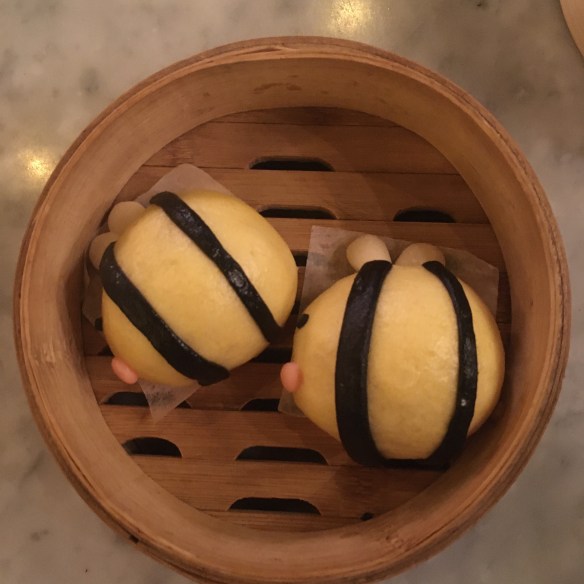
bee bao

NaBloPoMo 2019

When you’re working through a challenge, who helps you?  What is it about them, how are they most helpful?  How not?

Through the years I have learned what I can get from certain people.  I know to call this person when I need validation, that person when I need a devil’s advocate.  I also know which people to avoid altogether—those who cannot be trusted with my vulnerability or confidence.

But when I need to hold space and tension with an issue, to patiently look at it from different angles and process the perspectives, I look to my peer coaches.  I feel gratitude and gladness for these friends today, after my LOH group had our monthly peer coaching call.  As we progress through our 10 month leadership training, we take tenets and skills home from each retreat to practice.  Monthly Zoom calls have no agenda, other than to reconvene, share, and mutually support.  Every time I come away appreciating just a little more how nothing in life—work, personal things, social context—can really be separated from anything else.

These friends are not my first or only coaches, however.  In 2005 I started working with Christine, my life coach.  Every session, 14 years later, is still transformative.  How is this possible?  Curiosity.  Christine coaches every call squarely and unwaveringly from this perspective.  It was not long before I realized how powerfully this method could alter my own encounters with patients.

10-22-19-2

The best coaches have no preformed or decisive answers.  They have the uncanny ability to ask the best questions–Open, Honest Questions (OHQs)–which then lead clients to their own best answers.  They help frame and reframe problems.  They point us to alternate perspectives and help us open our minds to narratives other than the ones we too often grip so desperately.  It was my second year in practice when I started asking coaching questions to patients, and I have never since feared any symptom, syndrome, or answer.  When there is no clear diagnosis or answer for someone’s distress, I can just keep asking until something helpful emerges.  Most often it’s not a single piece of information that gives clarity; rather, it’s the story that materializes.  Coaching skills help me help my patients find and tell their stories of health and wellness, illness and pain, agency and action.

Here are the tenets of true Open, Honest Questions, from the LOH syllabus:

  • The best single mark of an honest, open question is that the questioner does not know the answer and is not leading toward a particular answer.
  • Ask questions aimed at helping the other person come to a deeper understanding (help them access their own inner teacher).
  • Ask questions that are brief and to the point without adding background considerations and rationale—which make a question into a speech.
  • Ask questions that go to the person as well as the problem or story—for example, questions about feelings as well as about facts.
  • Trust your intuition in asking questions. Inviting metaphors or images can open feelings, new lines of thinking, and unexpected possibilities.
  • Try to avoid questions with yes-no, right-wrong answers.
  • Avoid advice disguised as questions.

My best friends are my peer coaches.  And now I have my LOH cohort-mates.  We make no judgments about one another’s circumstances, feelings, or experiences.  We make the most generous assumptions about our motives.  Our role in each other’s lives is almost never to give advice; rather it is to hold space, listen reflectively, offer moral support, hold up core values, and help one another query thoughtfully and honestly.

IMG_1918

Questions asked and reflective statements made on the call today:

  • If you left work tomorrow with enough money to be unemployed for 6 months, what would you do?
  • How does it feel to speak (your issue) out loud?
  • When you think about current state compared to past, how does it feel physically in your body?
  • Sounds like you’re working on a core tension.
  • What do I/you want now?
  • What’s roiling around in you?
  • Who around you can get creative with you?

We each bring diverse questions and challenges to each call.  But somehow we always relate deeply, and listening/querying helps us each learn from every other.  Today I saw central themes emerge around identity, contribution, voice, and meaning.

In the end, I think there are few things more important in life than meaning and connection.  These are the gifts from my peer coaches, and they always make me better, no question.

IMG_2645


NaBloPoMo 2019:  What Makes Me Better

IMG_2639

My friends, it starts again woohoooooo!

National Blog Posting Month occurs every November, a 30 day daily blogging challenge apparently founded in 2006, inspired by National Novel Writing Month, or NaNoWriMo.  I think this will be my fourth attempt, and it gets easier and more fun every year!

This year’s theme originates from a sense of both gratitude and anticipation.  Increasingly I feel compelled to do more, contribute more, help more.  When I look around I am consistently humbled by those who go before me, on whose broad and strong shoulders I stand.  So I dedicate this month to all of you.

IMG_2646

November 1:  Role Play Makes Me Better.

I was converted to the Church of the Necessity of Role Play in 2003.  I had previously belonged to Tribe of Full-Socket Eye Roll at Role Play.  That year I had the privilege of attending a Stanford Faculty Development Program series.  It was a 7 week clinical teaching program for physicians.  Every week we practiced a specific teaching skill, on camera, then had to watch ourselves and critique our own and one another’s performance.  Even though each ‘encounter’ was only a few minutes, and we were all pretending, it felt real enough to translate into concrete behavior changes in real life—for all of us.

Since then I have always employed role play when teaching motivational interviewing (MI) to medical students.  At first I played the noncompliant or resistant patient, and had students take turns trying MI skils on me.  When I noticed myself feeling defensive and belittled in that role, I realized what the students were missing, and how it could enhance their empathy.  So I started having them take turns playing both patient and physician.  That was an epiphany for us all.  When I attended the Harvard Lifestyle Medicine Conference MI session in 2015, I experienced yet another layer of important experiential learning.  In dyads, we not only took turns playing patient and physician, but we practiced both directive and MI styles of counseling.  The contrast on both sides of each of those interactions solidified in both my cognitive and limbic brains why MI is a superior counseling method for behavior change.

This week at ICCH I innocently volunteered to play the physician in yet another role play.  Little did I know what I was in for.  I should have seen it coming, as the workshop title was “Teaching Medical Students How to Deal with Challenging Patient-Physician Encounters.”  I, unknowingly, stepped into a scenario of recurrent asthma exacerbation brought on by stress, due to domestic violence.  I felt anxious with a circle of international colleagues watching, and also confident that I could enter the play encounter the same as I aspire to enter a real one—present, open, grounded, kind, loving, and smart.  The physician teacher who played my patient stayed solidly in character and immediately drew me in with her slumped posture, dejected facial expression, and barely perceptible voice.  And she, like so many victims of violence, was not giving it up easily.

I had to conduct a medical interview as well as a psychological one, at times alternating between them.  I wanted to get at what I suspected (first generalized stress, and then clearly violence at home), but we had just met, and she really wanted to get out of the hospital.  Her fear was obvious; but she held its cause close to her chest, like the rest of her, until she could trust me.  I approached with general words at first, “Anything else going on lately?”  I kept my questioning as open ended as possible, and tried to leave space for her to answer.  Nothing.  Then I confessed my own inner dissonance:  “I feel like there’s something else…”  When that didn’t work, I continued with the general history.  No other chronic medical problems, no surgeries; allergies that can trigger her asthma, but no recent exposures.  You have 4 young kids, a full time job, a house to take care of.  Are you partnered?  Yes, married, to Bob.  Pause; a breath.  Then, “How does Bob treat you?”  Pause.  Why do you ask me that?  “I’m asking about abuse.”  And then it opened.  How did you know?  “I’ve been doing this a long time…  And someone close to me was abused.”  Do I look like her?  “You remind me of her.”

She was mortified that I would tell anyone.  How could I possibly help, then?  There were longer silences as I, frantic on the inside and slow breathing on the outside, racked my brain for solutions.  The harsh reality eventually settled on us both:  Neither of us could do much about her situation in that moment, her asthma attack was resolved, and the longer I kept her away from her family the worse I might make everything for her in the near term.  We agreed that I would look for ‘stress management’ resources, and I would give her my phone number.  And I would discharge her later that day, back to her violent husband, who had promised he would never hit her again.

It was so real.  I was almost able to forget about the audience.  I was personally invested in the health and well-being of this one person in front of me.  I imagined if she were a real patient.  Would I actually give her my phone number in this moment?  Absolutely I would.  We had to start somewhere, and I was the only person who knew, who could connect her to resources for help.

After it ended, I felt pretty drained.  We had both been tearful at times.  I also felt proud to have gotten through—both the exercise and to my patient.  I connected.  And even though I had no immediate solutions, I had established a relationship that had hope for helping a person who really needed it.

I have not encountered this scenario in real life in a while—that I know of.

I hope I’m not missing something, somewhere, for somebody who needs me.  Yikes.

Role play makes me better.  It reminds me to always beware my blind spots, to keep practicing, and to remember the deep humanity of every person I meet.

Honesty and Integrity

IMG_4487

NaBloPoMo 2018:  What I’m Learning

Last day!  I’m feeling a little elated.  Not sure if it’s Day 30 relief and success, the abnormally large caffeine load I had today, or my awesome breakfast date…

I wish you all to have a friend like Donna.  She is one amazing woman.  A leadership coach, wife, mom, and fellow cosmic journeyer, I count myself infinitely lucky to know her this time around on earth.  I bet we’ve known each other longer than that, though.  We met in this life about 9 years ago.  I can count on one hand the number of people I remember propositioning for a coffee date on our first meeting, and Donna is one.  We meet every two or three months to commune, share, and grow.  I consistently experience two or three separate intellectual and spiritual epiphanies each time.

Today was no exception, and possibly even an exponentially positive anomaly.  Like I said, I’m caffeine loaded and coming off a 30 day freestyle writing challenge—I was primed!  The conversation was so profound I had to type out some notes afterward, as I sense future writings to spring therefrom.  Day 30 was the perfect day to meet her!  I have synthesized and integrated deeply this month thanks to this daily blogging discipline, and sharing with Donna was the quintessential culmination of it all.  I now share with you my favorite segment from our egg-and-toast-laden love-in.

I described a values exercise I did reading Dare to Lead by Brené Brown.  From a list of over 100 words including accountability, courage, faith, openness, respect, and truth, I had to choose two core values, or think of two of my own.  Brown writes:

The task is to pick the two that you hold most important.  …almost everyone…wants to pick somewhere between ten and fifteen.  But you can’t stop until you are down to two core values.

Here’s why:  The research participants who demonstrated the most willingness to rumble with vulnerability and practice courage tethered their behavior to one or two values, not ten…  and when people are willing to stay with the process long enough to whittle their big list down to two, they always come to the same conclusion that I did with my own values process:  My two core values are where all of the ‘second tier’ circled values are tested.

Values list

Dare to Lead, page 188

I listened to this book twice before I received my hard copy from Amazon.  I could. not. Wait!  In anticipation of doing the exercise, I thought the whittling process would take a long time—that I would agonize over it.  But as I skimmed the pages approaching the list, in a cosmic flash, I realized my two: Honesty and Integrity.  It was one of those ‘you just know’ moments, but I had to check in.  Really?  Was I sure?  How did I know?  How could I prove it?  I turned the page and scrutinized every word, comparing it in importance to these two.  Accountability?  Yes, but not as much.  Equality.  Fairness.  Gratitude.  Learning.  Openness, Optimism, Stewardship, and Wholeheartedness:  all important, but not nearly so much as Honesty and Integrity.  I was done.  As surely as I felt self-actualized in seventh grade, I am sure these are my core values.  A few days later, I was describing this moment to another thoughtful and astute friend.  She mulled for a moment and said, “Yes, I agree, I see these as your core values, too.”  Wow, I cannot think of a higher compliment.

Today when I told Donna, her first response was, “Honesty and Integrity… What is the distinction between the two?”  What a great question!  I had a vague, intuitive idea, but had never taken the time to think it through.  As happens so easily when I’m with Donna, and as a person who talks to think, the answer poured forth after only a few seconds.  I used a real life example:

Let’s say my friend asks me, “Does this dress make me look fat?”

Honesty compels me to answer truthfully.  Yes.  Honesty keeps me from lying.  That is outside of my core values, no can do.

Integrity helps me choose my words.  This dress does not flatter your figure the way a different style would.  We are here to choose the dress that makes you look positively stunning and we will not leave until our mission is accomplished!  Integrity frames my response in line with all of my other, ‘second tier’ values: kindness, diplomacy, empathy, love, loyalty, and all the rest.

Thus, Honesty tells me what I cannot do.  It gives me constraints and standards.  Honesty is the guardrail, the floor for my code of conduct.  Integrity then tells me what I can and must do.  It defines the realm of possibility, meaning, and purpose—the Why, How, and What.  How can I be the best friend, mom, doctor, wife, speaker, and leader?  It is the accelerator and steering mechanism that keep me in the lane of who I am.  Or, Honesty is the launch pad; Integrity creates the universe of potential.  I swear I got goosebumps.

Phrases that recur often in my speech and writing are “walk the talk” and “lead by example.”  I always ask myself if I exemplify these, and they are the yardsticks by which I measure all those who lead me.  One cannot do either without Honesty and Integrity at work all of the time.  Brené Brown calls integrity “living into our values rather than just professing them.”  Hallelujah.  I feel the most at home, confident, and grounded when I know I’m living deeply in my Honesty and Integrity.  When I’m outside of these, I feel viscerally uneasy.  I cannot tolerate it, or I can only with great suppressive efforts to manage the dissonance.  I lose sleep; I get irritable and restless.

Practicing Honesty and Integrity is not always easy, though.  Facing the ugly and disappointing truths about myself and my dysfunctional patterns, and then holding myself to a higher standard of conduct—internal benchmarks of behavior and relationship—these aspirations create stress and tension on multiple levels of consciousness.

In the end, though, I know that as long as I hold these two values in front, they will light my right path.  I know I will make mistakes.  There will be times when my behavior absolutely does not exemplify these values.  I wanted to write a blog post right after my A-ha! moment reading the book.  But I was afraid someone would recall a time they witnessed the opposite of these values in my actions, and call me out on it.  But I’m not afraid anymore.  I’m not perfect.  And I’m striving every day.  That’s good enough, because it is my best.  Honest—I swear on my Integrity.