I will mix 2 cups of soft, full fat ice cream with 1.5 cups of all purpose flour and 1.5 teaspoons of baking powder. I will spread it in a greased loaf pan and bake it at 350 degrees for about 45 minutes. Sourdough, it is not. And I cannot wait! I have Daughter to thank for this adventure, among others.
She found B Dylan Holis online last year, and we are both big fans. He has a music degree and lives, I think, in Wyoming. He posts brief, hilarious, informative, and educational baking videos on TikTok, and cross posts on YouTube. Recipes come from vintage periodical cookbooks and community compilations, many from the early 20th Century. Sometimes he records extended versions of his most popular videos, with deeper explanations of recipe origins and historical food culture. I love BDH because he is at once respectful and irreverent, knowledgeable and curious. And he’s fun. All of his videos are experiments. Some recipes turn out as gross as we anticipate, and some surprise us. Check him out, I bet you’ll like his work.
Daughter also loves Overly Sarcastic Productions, or OSP. ‘Red’ and ‘Blue’ are friends and the primary narrators and animators. “We make videos about myths, literature, and history — because learning can, in fact, actually be enjoyable, despite what prior experiences might have shown you.” Daughter plays the videos in the car, the kitchen, the living room. Once again, respectful irreverence rules, as well as sharp wit and lightning fast history and literature lessons. Their Pope Fights series especially fascinated Daughter, and provided rich context when we watched TheBorgias on Netflix this past summer.
We also admire Hank Green, who posts videos on all things biology, science, and history. He aims his YouTube content at both teachers and students, but it’s his TikToks that we love–little diatribes about random things, and almost always funny and informative. It’s just wonderful that creative, smart, and effectively communicative people now, in the 21st Century, have easy access to expansive platforms to educate and entertain. We just have to be discerning about our consumption.
Finally, check out Cinema Therapy! Alan and Jonathan, a filmmaker and licensed therapist, respectively, are also old college friends who love watching and talking about movies. Their videos parse out stereotypes, tropes, relationship dynamics, communication skills, and overall filmmaking wonderness, all with laughter and pragmatism for application in real life. They elevate our awareness of things we take for granted in entertainment, making us more thoughtful and conscious consumers of our movies.
It’s harder every year to put down our devices. Media abounds, and it’s too easy to let FoMO drive our lives, getting stuck scrolling through meaningless, valueless drivel. I think Daughter has found some worthwhile programs, though. We do our best to moderate. She has expanded my world, and I am grateful.
[Note: this post discusses only binary, cis-gender, heterosexual romance, as that is the genre I currently consume.]
Buckle up, friends, we are taking a ride!!
Okay so never in a million years would I have guessed or predicted that I would binge romance audiobooks, and yet here I am. I have finished 46 books in 8 weeks–omg that’s almost one a day, holy cow! And that does not count the ones I have repeated!
Every year I have a brief period when I get a little tired of intellectual non-fiction. Here in 2022 it happened about 3/4 of the way through A Republic, If You Can Keep It by Neil Gorsuch. I finished eventually, and highly recommend it–he reads it himself; you can kind of space out during the pedantic parts, and still get to know him (a little) and his jurisprudence (at least a little). I especially recommend it for my progressive friends; but that is for another post.
During these cerebral time-outs, I scroll around on my Audible account for fun books included in my membership. For whatever reason, The Fix-Up by Kendall Ryan caught my interest this time, and it all started there. “Every reader deserves a hot hero and a happy ending,” her website says. Hallelujah, I say!
One of my favorites, and my first recommendation to many friends–great reviews so far! And Blakely’s novels are generally lighthearted and fun!
Around book #4 my book club met. I debated whether I should tell my new friends what I was doing (how fascinating)–I, the fiction shunner. Then, cosmically, one of them started talking about how she skips over the sexy parts in romance novels she reads, clearing the path for me to share–openly–because I most definitely do not skip the sexy parts! That night I learned a few things: 1. All of my book club friends have enjoyed romance novels; 2. A novel cannot be shelved as romance unless the ending is indeed ‘happy’; 3. There are ‘closed door’ romances, wherein sexual activity is implied, and ‘open door’ ones, which describe it all in detail (my books’ doors swing wide open). Since then, sharing with more and more friends, I have also learned: 4. Romance may be the best-selling book genre; 5. Almost all of my women friends have read them, but we don’t talk about it (still fascinating!); 6. Almost none of my friends can name any cis-het romances written by cis-het men; and 7. None of us know any such men who have read or would read romance.
“Brain Candy.” That’s how one of my friends describes it. It’s pure entertainment, total vicarious escapism. I agree! That’s why we seek it, no? How better and farther to get away from the mundane and stressful grind of responsible, daily adult life? That’s definitely what I wanted.
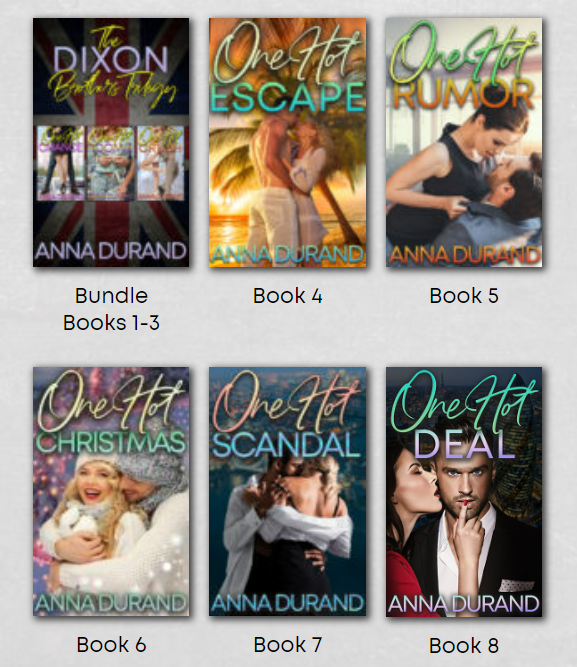
Finished all but Book 8; highly recommend–short, fun books that don’t take themselves too seriously.
It’s all so predictable and formulaic, which I love, because I can just relax and enjoy. The stories all follow roughly the same arc: Immediate attraction. Some obvious, primary barrier to togetherness (distance, prior relationship wounds, age gap, coworkers, some other made up reason). Supportive friends and family who “knew all along you two were meant for each other, duh.” By about 20-30 minutes left you’re home free, no more conflict, just happy ever after. I had never heard the word kismet before now, and it comes up everywhere in this genre. And there is an entire romance novel language–for body parts, sex acts, desire in all its forms! The best books hook you right away with witty banter, engaging premise, or just hot sex. My favorites have smart, sassy, free-spirited heroines, lots of cheeky dialogue, and fun plot twists.
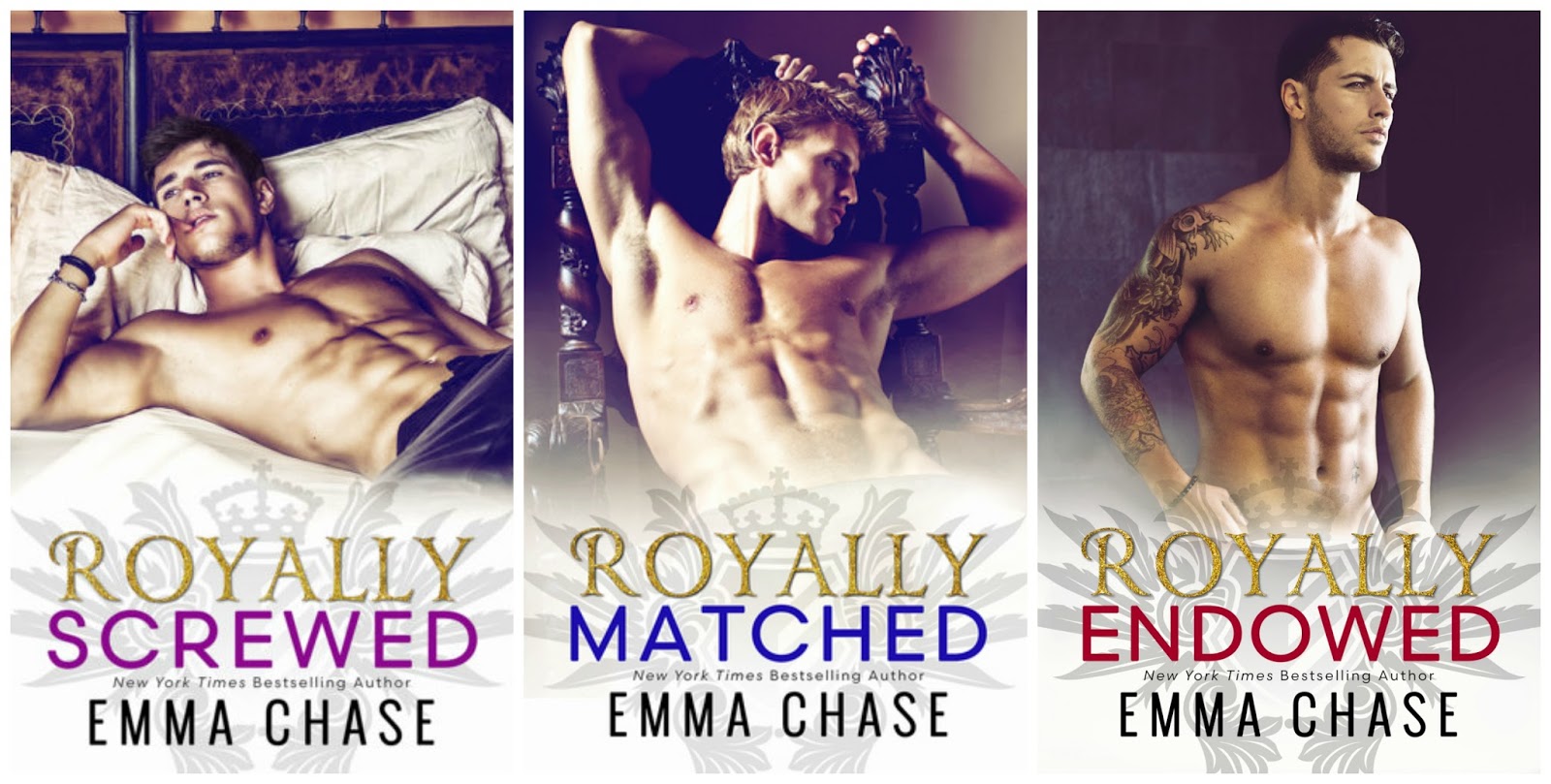
All of these books are stand alone novels, and it’s also fun to read them in series. I loved this set, too.
These books have really refreshed my outlook on life and relationships–that was a total surprise! They remind me what it was like to be in love–that optimistic, impetuous, idealistic promise of a bright future, that whatever comes, we can face it together. It’s us against the world, baby! At book #29 I journaled notes for this post: “…stories that remind us of how we all want/long to love and be loved.” These 8 weeks of romance consumption have, remarkably, cracked the mortar of my cynical emotional turrets, and loosened some heavy armor I did not realize I had accumulated. Yahoooo!
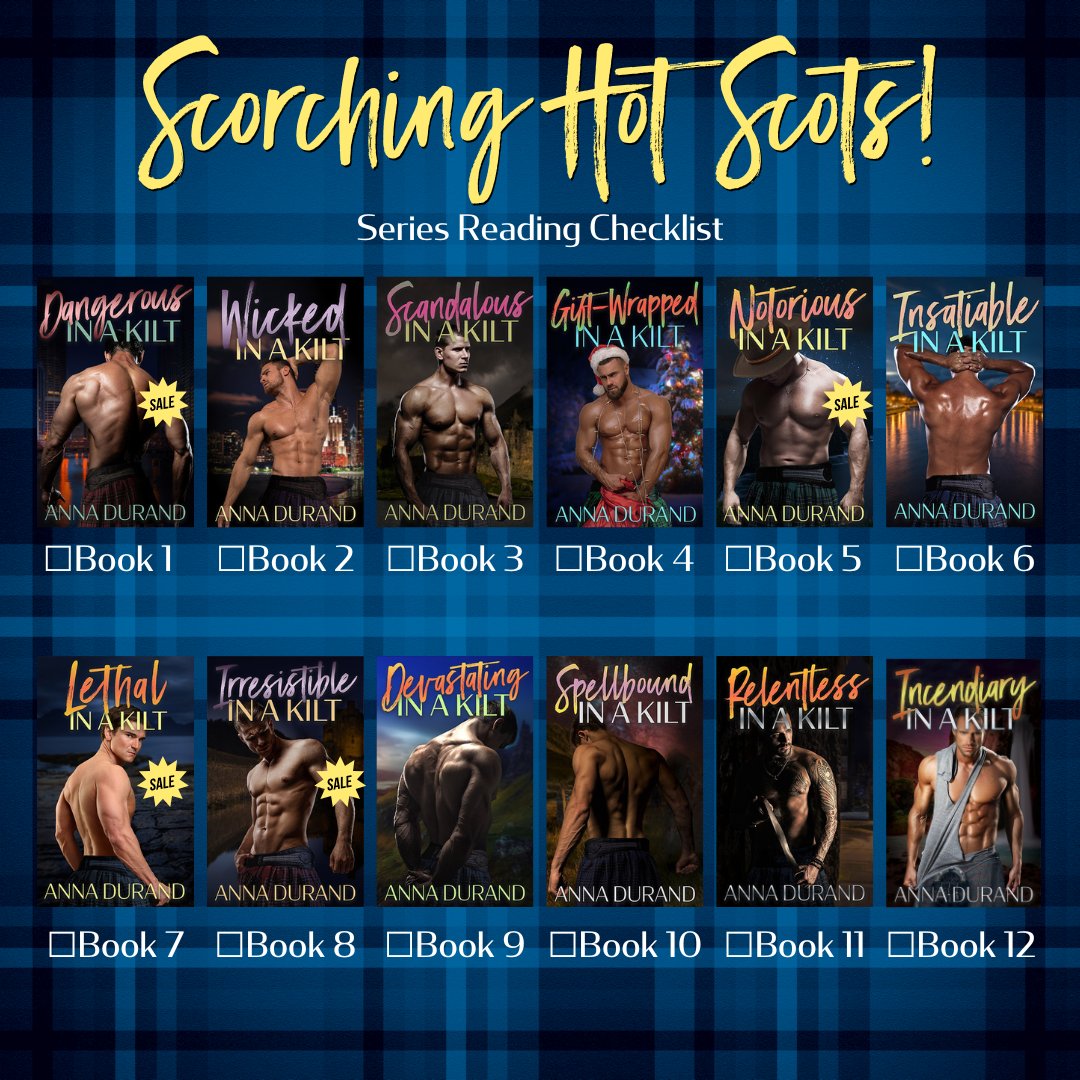
Working my way through these (listening first to all of the ones read by Shane East).
I have shared these epiphanies with two male friends–dear brothers on the thoughtful, relational, self-reflective journey of life. They were so supportive and loving, listening as I marveled and waved my hands. Their eyes widened along with mine when we asked ourselves, what would it take for men to also be able to enjoy these fun, erotic stories that get us women so (energized), and then be able to share about it safely [insert gobsmacked emoji here]?
Because here is what I think makes these novels so important, and why we should all consume them (I highly recommend listening, especially if they are read by Shane East):
Contemporary romance novels celebrate and validate, unequivocally and unapologetically, two things that our culture and society insidiously shame us for:
Women’s libido and erotic sexual desires
Men’s intrinsic need for deep emotional connection
They do this by writing from both partners’ perspectives, describing their honest emotions, inner conflicts, self-delusions, and fears. But since these books are mostly written by women and consumed by women (as far as I know–to my cis-het male readers–do you read [write!?] romance?), I wonder if the male characters I read resonate with men who read them? Hence my query for romance novels written and/or consumed by men…
And they exist, hooooraaaaaaayy!
Turns out, authors Leigh Greenwood, Jessica Blair, Emma Darcy and others are men writing under female pen names (huh–more to unpack there, eh?). Now I have to get my hands on their books–will I relate to their female characters? Many have also pointed me to Nicholas Sparks, so he’s on my list, too. And guys, there’s even an article that lists 7 romance novels to gently set you and your gender on the romance path! “The best thing about romance is that love is for everyone!” it proclaims, and I wholeheartedly agree! What will it take for you to dip (or dive) in? What’s the best thing that could happen?
So there you have it, my unexpected, uncharacteristic (or not?), utterly awesome and ongoing journey into romance audio novels. I’ve never consumed this many books in one year in my life, by a long shot, and I could not possibly be happier about it. Not sure when I’ll get back to the other stuff… (she smirks)
The Joy Luck Club movie came out in 1993, when I was in college. I cried my eyes out when I saw it, and it still gets me. But the true depth of its implications has emerged only gradually, in layers, over the years.
The stories of moms and daughters, and Chinese moms and daughters, specifically, are depicted poignantly, intimately, tragically. I relate to it all in my bones, in my DNA. They are my grandmother’s story, coming of age during the second Sino-Japanese War, World War II, and then the Communist revolution. They are my mom’s story, immigrating to America at a time when communicating with home across the ocean and sending money could only be done by snail mail. And they are my story, of the second generation, integrating from my family’s country and culture of origin into 1980s suburban Denver. To see and hear it, to experience it all reflected back to me so vividly on screen, was overwheming and indescribable back then. Now that whole sweep of generational trauma, connection, loyalty, and sometimes conflict, was displayed for all of my white American peers to regard. How would they take it? Would they think it was weird? Would they make fun? Dismiss? Degrade? It was deeply personal for me, and maybe only entertainment for them.
Another generation later, in 2018, Crazy Rich Asians came out, and now it was Daughter’s turn to be moved–maybe not to tears–but viscerally all the same. It was the mahjong scene, omg–we both had a gleeful outburst right there in the theater. I learned to play from my parents, and my kids have learned to play from both elder generations. We bond boisterously around the card table when we go home to GongGong-PoPo’s house, and I think Daughter inherited her grandfather’s gift for strategy and surveillance of opponents’ moves. It is a quintessentially Chinese game. The presence and pride of our cultural identity radiates warmly, as from an ancestral reunion, summoned by the distinct, unmistakable clattering of mahjong tiles. Once again, the meaning we derive from the movie, and that scene in particular, is significance we can share fully with only some outside of our nuclear family.
Son read The Joy Luck Club by Amy Tan in English class a couple years ago, and wrote a paper on it. I was so proud I shared exerpts with friends via email, subject “Mom brag”:
“Between each mother and daughter, the contrast between traditional Chinese and mainstream American cultures is strong, leading to many disputes over authority and independence. This power struggle turns most of the mother-daughter interactions into fights which clouds out any feelings of love. The conflicting core beliefs and values prevent fluid communication, which turns it into a cycle of repeated fighting. It isn’t until both sides take a step back and reevaluate their standpoints that any affectionate relationship can build. As Rose Hsu Jordan expresses, ‘Chinese people had Chinese opinions. American people had American opinions’ (191). Though our differences may divide us, it should not stop us from recognizing our shared humanity. While some differences cannot be helped, they should simply be observed and acknowledged. Among different cultures, compromise does not mean losing one’s own culture, but rather opening to new possibilities to create a more unified and diverse world.”
Hmmm, he is his mother’s son, yes?
…And the title of this post feels a bit off, no? It occurred to me after watching Joy Luck Club with Daughter tonight, because these stories are all about reconciliation. “Never too late,” in this context, refers to relationship repair. These movies focus on family relationships, and those between, within, and across cultures. When we are seeking, or at least willing, we can always connect, and reconnect, even after rupture.
It’s not easy. Ruptures occur for valid reasons, often from deep hurt on all sides, also often commited unintentionally. We armor up to protect from getting hurt again, thickening skin, forming callouses, blunting sensations of and sensitivity to closeness and vulnerability. That protection costs us, though, sometimes much more than we realize.
This potential for repair could be infinite, no? …Even when we honestly cannot imagine it. We readily endorse efforts to reconcile between estranged family members, partners, and close friends. These relationships matter concretely; they form our core social circles and daily interactions. But we can zoom out, too, and look for ways to repair collective ruptures across social tribes, ideologies, ethnicities and cultures–the people and groups whom we too easily, if unknowingly, conceive as abstractions rather than real, flesh and blood human beings whom we canknow–people with feelings, goals, and the same needs as we have ourselves.
I think it is always possible to repair, to heal, to get to peace in hard relationships, even if it’s only one-sided and often different from how we plan or imagine. It’s up to each of us to resolve for ourselves, and if we can enroll our counterparts, even better. I imagine this aligns with Viktor Frankl’s philosophy, though I have yet to read his work first hand. Sometimes we aren’t willing to invest, to tolerate and pay the emotional risks and costs, respectively. It’s an intentional choice, like so many things in life. Most of the time, though, especially if we have support, I think it’s worth the effort.




 Healing Through Connection