

Anybody else feeling deeply conflicted and fatigued right now?
It’s getting late and I still have to prepare for the workweek ahead. Lots of exciting movement and connection on the Book front, and so many ideas for future posts on the Crowns Trilogy (binged books two and three again last weekend) and Heart of Champions, a movie Son and I eagerly watched together that speaks to everything I espouse about teamwork. So much to dissect about humanity and leadership–which all applies to what’s going on in our country right now. Awesome–I will dig in soon! But for now I’m just tired and overwhelmed.
Please find below an update from last week’s post and a compilation of what agitates me and gives me hope (mostly the latter).
I will try to muster something more coherent and thoughtful next week, friends.
ODOMOBaaT.
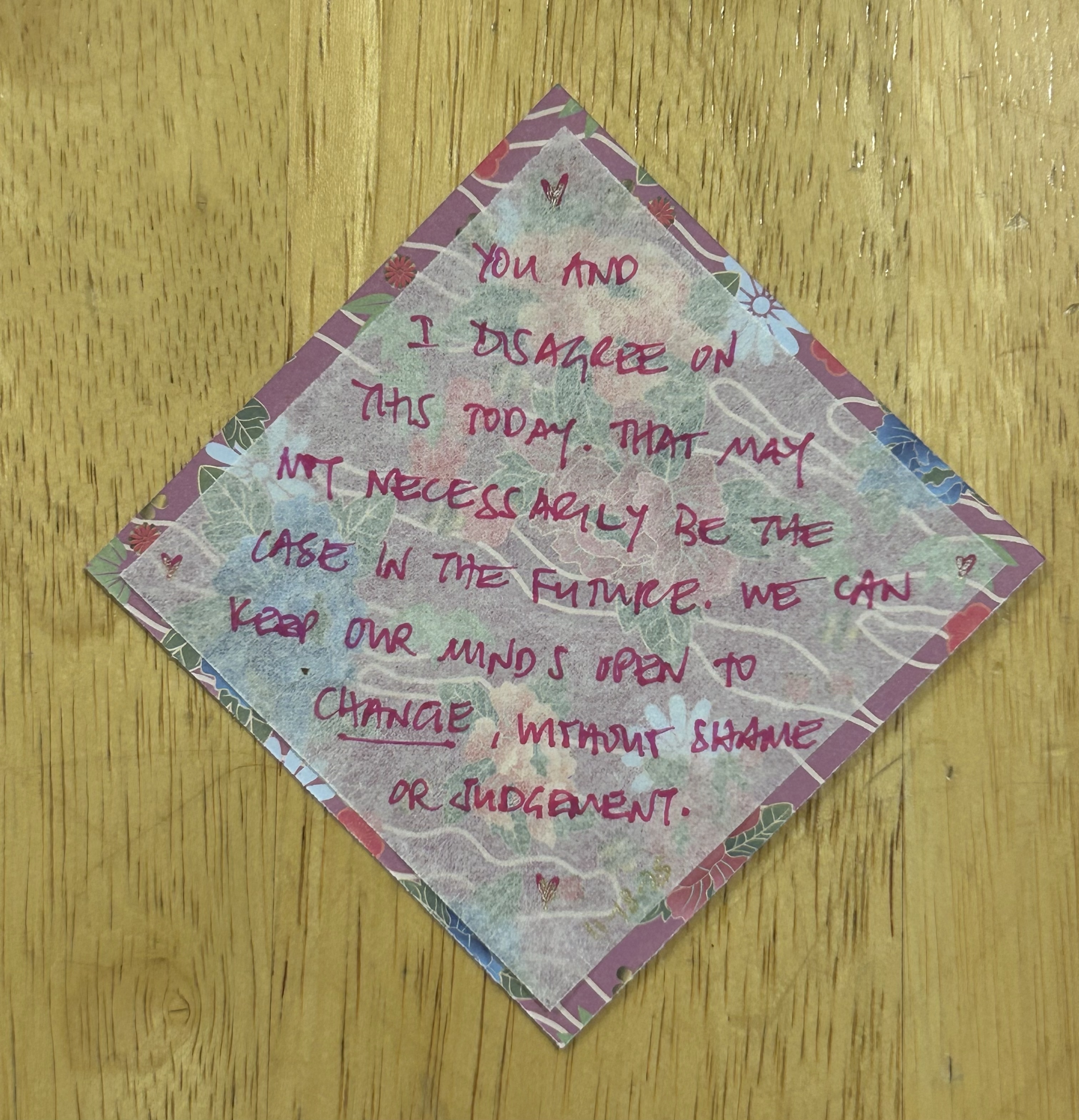
Friend J, my staunchly conservative high school classmate, and I spoke on the phone for 90 minutes on Tuesday. We agreed more than we disagreed, though our disagreements loom heavily on my consciousness. I always feel connected and reassured after my calls with Red voting friends. But disappointment and frustration inevitably set in later when I realize they seem wholly unmoved by my thoughtful, well-reasoned, and well-articulated arguments. HA! I suspect they may feel the same… or maybe they feel sorry for me, or dismiss my concerns as delusional and irrelevant. I wonder if they fear I do the same to them? Somehow I doubt it, though I know people on both sides who do this, which shoots us all in the collective civil discourse foot. I realize as I write this, how I truly may not understand and cannot relate to a conservative ethos. Or rather, I can understand it intellectually but cannot relate limbically, where it counts. Regardless, I’m grateful for my conservative friends who are still willing to connect. Three more actively reached out to me this week and I have two dates on the books this month, one that will involve cooking together, which I especially look forward to.
Thank you to all who provided feedback on last week’s post, including comments here, texts, emails, or replies on social media. I had not expected such an energetic response, and it means so much to me to receive such earnest engagement. I hope we may all continue the important, uncomfortable, and grappling conversations, in service of connection and de-escalation.
What Worries Me
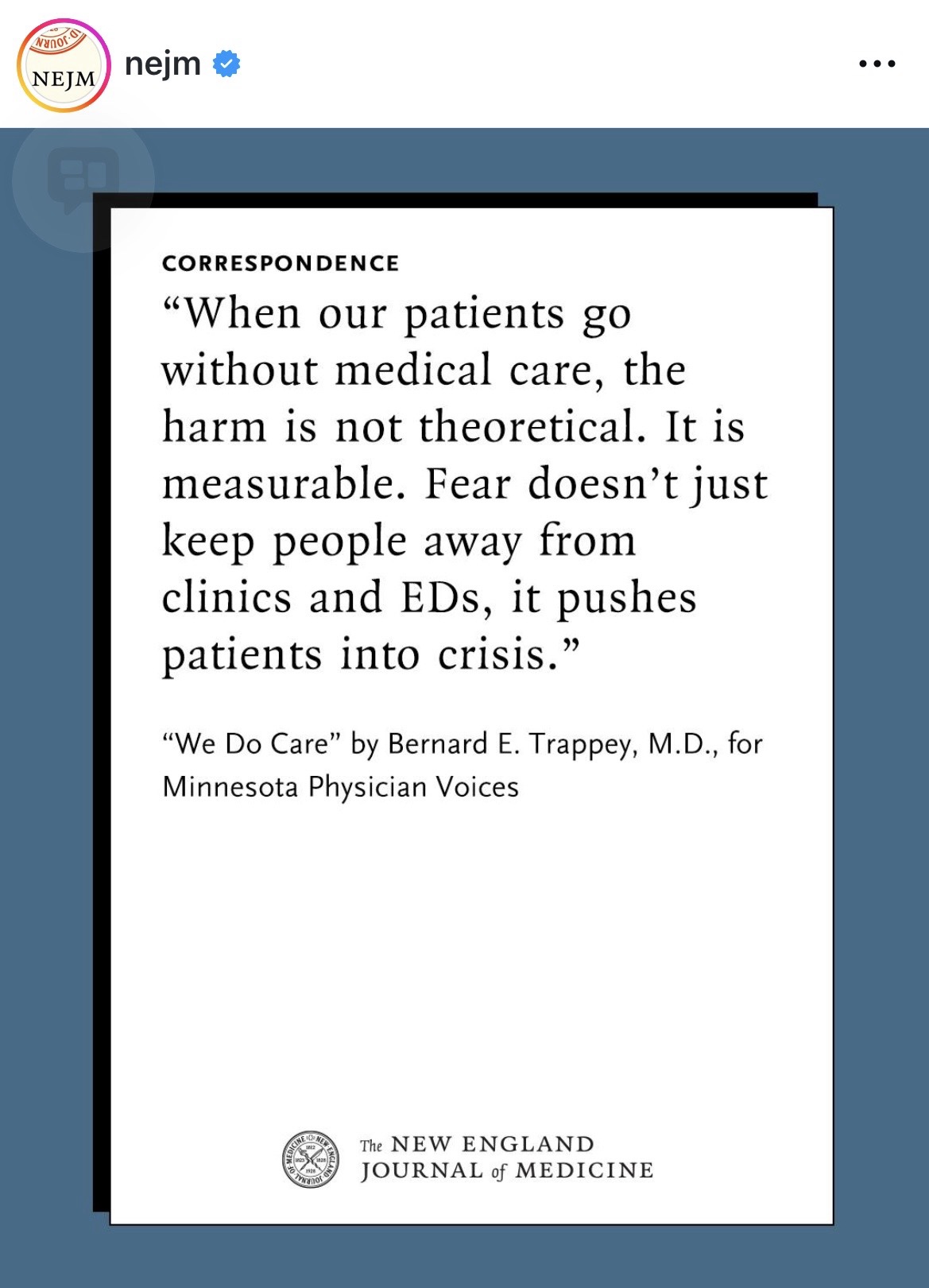
Federal immigration and border patrol abductions cause active, direct, and mortal harm to people. The lack of due process prevents any kind of record or recourse for their medical care, the morbidity and mortality of which boggles the mind. That our federal government is the original perpetrator of such traumatic pain and suffering to so many, regardless of immigration status, is beyond egregious. Racial profiling resulting in violently forceful detainment, separating parents from their terrified and then unattended children, rightly causes people of color (because this isn’t happening to white people), regardless of immigration or citizen status, to avoid leaving their homes, forgoing necessary medical care (eg labor and delivery, wound care, cancer care). It’s sickening and makes me rage. Hear from a veteran physician in Minnesota as she lists case after case:

It’s about our shared humanity, my friends. I wrote to my libertarian friend tonight, “The more I perceive this administration actively, directly, and mortally harming people with less and less accountability, the harder it is to accept anyone’s argument for having voted for it. The direct human costs (as I and so many perceive them) for whatever broader economic or ideological gains is just too high and unacceptable.” ICE and border patrol treat people ‘way worse than any other law enforcement agents; they follow no standards for respecting people’s rights, human or otherwise, and act with impunity and violence. The officers who shot Alex Pretti continued to work for days afterward, moved elsewhere ‘for their safety’–as if they were not a danger to anyone based on their shooting of an unarmed man. Even now it’s unclear what kind of investigation will take place, and whether it will be objective or trustworthy in any meaningful way. Does any legitimate law enforcement agency operate with this profound lack of oversight and accountability?
My heart rate, blood pressure and nausea rise even as I write this.
ODOMOBaaT.
What Gives Me Hope
From Politico, January 29, 2026:
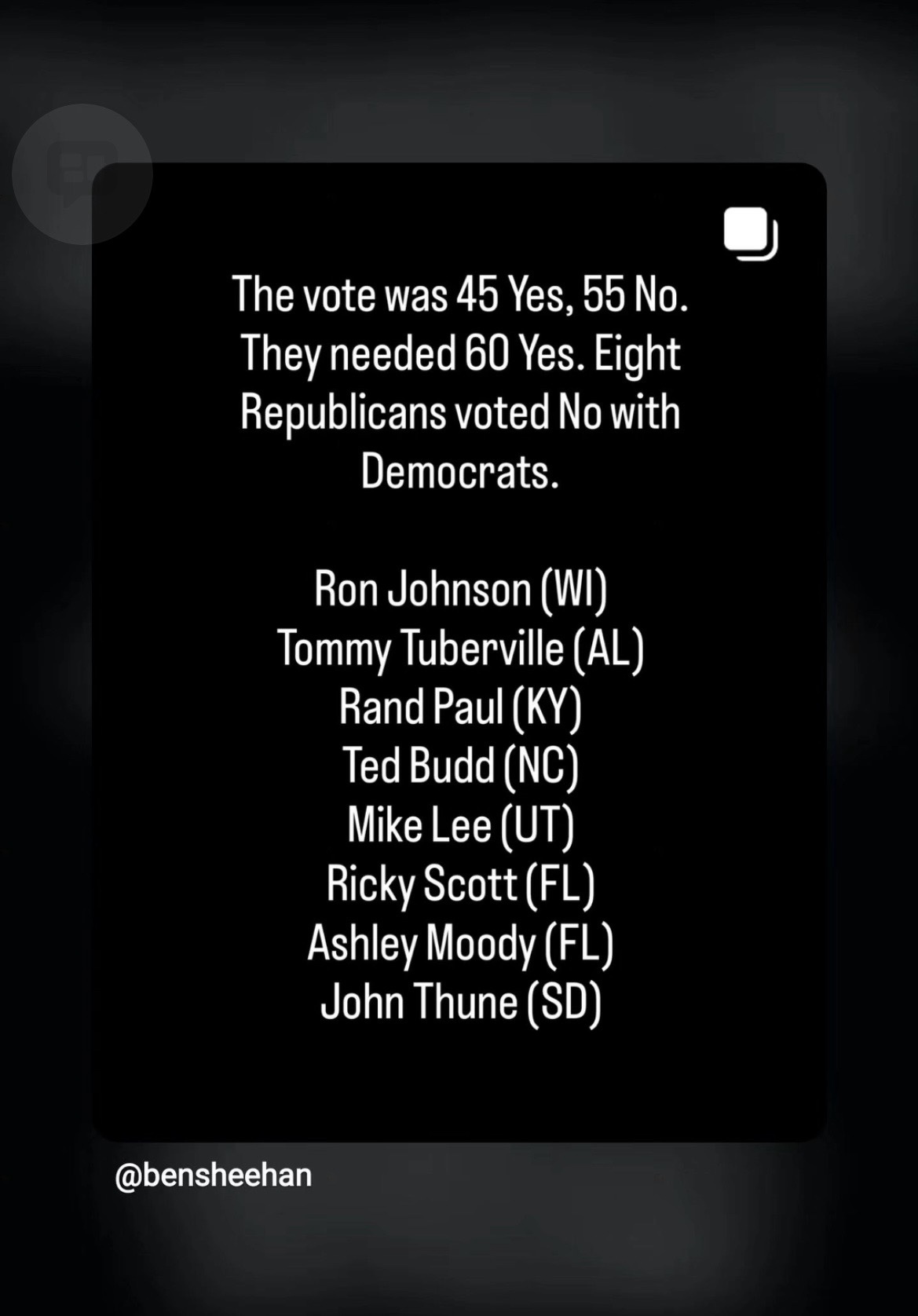
“Eight Republicans joined every Senate Democrat to block sweeping government funding legislation from advancing Thursday amid ongoing negotiations around a potential offramp to avert a lengthy shutdown of several agencies.
The Senate voted 55-45 against moving forward with a six-bill package that would fund, among other things, the departments of Homeland Security, State and Health and Human Services, as well as the Pentagon.”
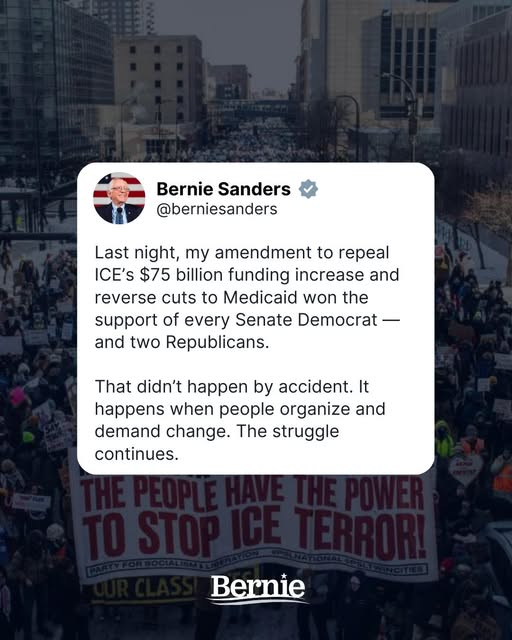
From <a href="http://<iframe src="https://www.facebook.com/plugins/post.php?href=https%3A%2F%2Fwww.facebook.com%2Fberniesanders%2Fposts%2Fpfbid02MQM14h42JRDaaKAB4vbpTFt2evRcQccE3shyxDfKD77JLUzw6atvKYhCZBytHkxal&show_text=true&width=500" width="500" height="498" style="border:none;overflow:hidden" scrolling="no" frameborder="0" allowfullscreen="true" allow="autoplay; clipboard-write; encrypted-media; picture-in-picture; web-share">Bernie Sanders’s Facebook Page, yesterday:
From Justice Patrick Schiltz, Chief Judge of the District Court of Minnesota, a Bush appointee and former clerk for the late Antonin Scalia, in an order filed January 28, 2026:
“…That does not end the Court’s concerns, however. Attached to this order is an appendix that identifies 96 court orders that ICE has violated in 74 cases. The extent of ICE’s noncompliance is almost certainly substantially understated. This list is confined to orders issued since January 1, 2026, and the list was hurriedly compiled by extraordinarily busy judges. Undoubtedly, mistakes were made, and orders that should have appeared on this list were omitted. This list should give pause to anyone—no matter his or her political beliefs—who cares about the rule of law. ICE has likely violated more court orders in January 2026 than some federal agencies have violated in their entire existence. The Court warns ICE that future noncompliance with court orders may result in future show‐cause orders requiring the personal appearances of Lyons or other government officials. ICE is not a law unto itself. ICE has every right to challenge the orders of this Court, but, like any litigant, ICE must follow those orders unless and until they are overturned or vacated.” [boldface added by me–cc]
Braver Angels and the Builders Movement:
Braver Angels will host “a National Webinar on America’s Deportation Policy this Friday, February 6th, from 8:00 – 9:30 pm ET. We will both be panelists—along with Congressman Brian Fitzpatrick (R-PA), Congressman Tom Suozzi (D-NY), Gaby Pacheco, Peter Skerry, David Izquierdo, and Jorge Pineda. We will get into all the issues involved, and most importantly, we’ll explore how America climbs down from this scary confrontation and get to what we need as a nation: cooperation!” I am registered to attend. I hope to see some of you there.
Take the time to read and watch this collaborative Facebook post from Builders with Helene Biandudi Hofer, journalist and co-founder of The Good Conflict with journalist and author of High Conflict Amanda Ripley (I highly recommend this well-researched, well-written, and practical book):
“Why Republicans backed a Democrat in this small town…
In a town where red dominates and Democrats rarely run, respected Republicans supported a Democratic candidate. Leadership had stalled, decisions were made on autopilot, and the town seemed to be coasting instead of planning for the future.
Joe Lamanna ran on showing up—joining boards, serving as chair, and engaging with neighbors. He focused on the work, the people, and the community, not the left-right divide. Some criticized him; others recognized his competence and dedication.
He didn’t win, but the results were striking: nearly half the vote and far better performance than previous Democratic candidates. Beyond the numbers, the campaign sparked conversations and connections that had been dormant for years. Neighbors started talking, sharing ideas, and reconsidering assumptions.
It’s a reminder that local politics doesn’t have to mirror national division. Change starts with participation—showing up, asking questions, and engaging with your community. Even small actions can shift the conversation and open space for progress.”
Here is the Instagram link if you don’t use Facebook.
Also from <a href="http://<iframe src="https://www.facebook.com/plugins/post.php?href=https%3A%2F%2Fwww.facebook.com%2FBuildersMvt%2Fposts%2Fpfbid0jSYQKB1XDBsMCqFWTqLNfap5QJR6fC98mvNk7GcQuGoCg9Mngrr9iNFwFLu5hR8Vl&show_text=true&width=500" width="500" height="496" style="border:none;overflow:hidden" scrolling="no" frameborder="0" allowfullscreen="true" allow="autoplay; clipboard-write; encrypted-media; picture-in-picture; web-share">Builders on Facebook, Five points on which I imagine we can all agree, and if not, please, let’s talk about it (as they invite us at the end):
“A “recent CBS poll found 59% support deporting people who are in the U.S. illegally, but only 37% approve of how deportations are being handled.
That tells us something important:
People want enforcement AND accountability.
So here’s a question for you  If enforcement is
going to happen, should it follow the same basic rules we expect of any law enforcement agency?
Here are some nonpartisan, practical reforms many Americans across parties are talking about.
Do you agree or disagree?
1. No anonymous agents
Require visible identification for ICE officers. No masks. No mystery. If someone has government authority, the public should know who they are.
2. Independent investigations after deaths or serious injuries
Federal agencies shouldn’t investigate themselves. Independent oversight builds trust, especially after fatal encounters like the recent shooting in Minneapolis.
3. Clear limits on where enforcement can happen
Prohibit enforcement actions at vulnerable places like hospitals, schools, and churches. Public safety shouldn’t mean people are afraid to seek medical care or send their kids to school.
4. Homes require a real warrant
ICE should only enter homes with a judicial warrant signed by a judge—not administrative paperwork. That’s a basic Fourth Amendment principle, not a radical idea.
5. Body cameras for every enforcement action
Mandate body cams across the board, just like many local police departments. Body cams protect civilians from abuse and officers from false claims. Accountability cuts both ways.
What would you add? What would you change?
Reply. Disagree. Improve it.” [boldface added by me–cc]
From The New York Times, today:
“For one constituency, Mr. Pretti’s death did more than grant permission to criticize. It confirmed a long-held fear.
For decades, the conservative case for the Second Amendment has rested largely on the premise that an armed citizenry is the last defense against government tyranny. N.R.A. fund-raising letters once warned of “jackbooted government thugs.” The language was apocalyptic, the scenario hypothetical.
Minneapolis made it real. Masked federal agents killed a legal gun owner who had never drawn his weapon.
Gun rights groups pushed back. Gun Owners of America posted on social media: “Peaceful protests while armed isn’t radical — it’s American. [The First and Second Amendments protect those rights, and they always have.] GOA will hold any administration accountable.”
[bracketed text added from original post by me–cc]
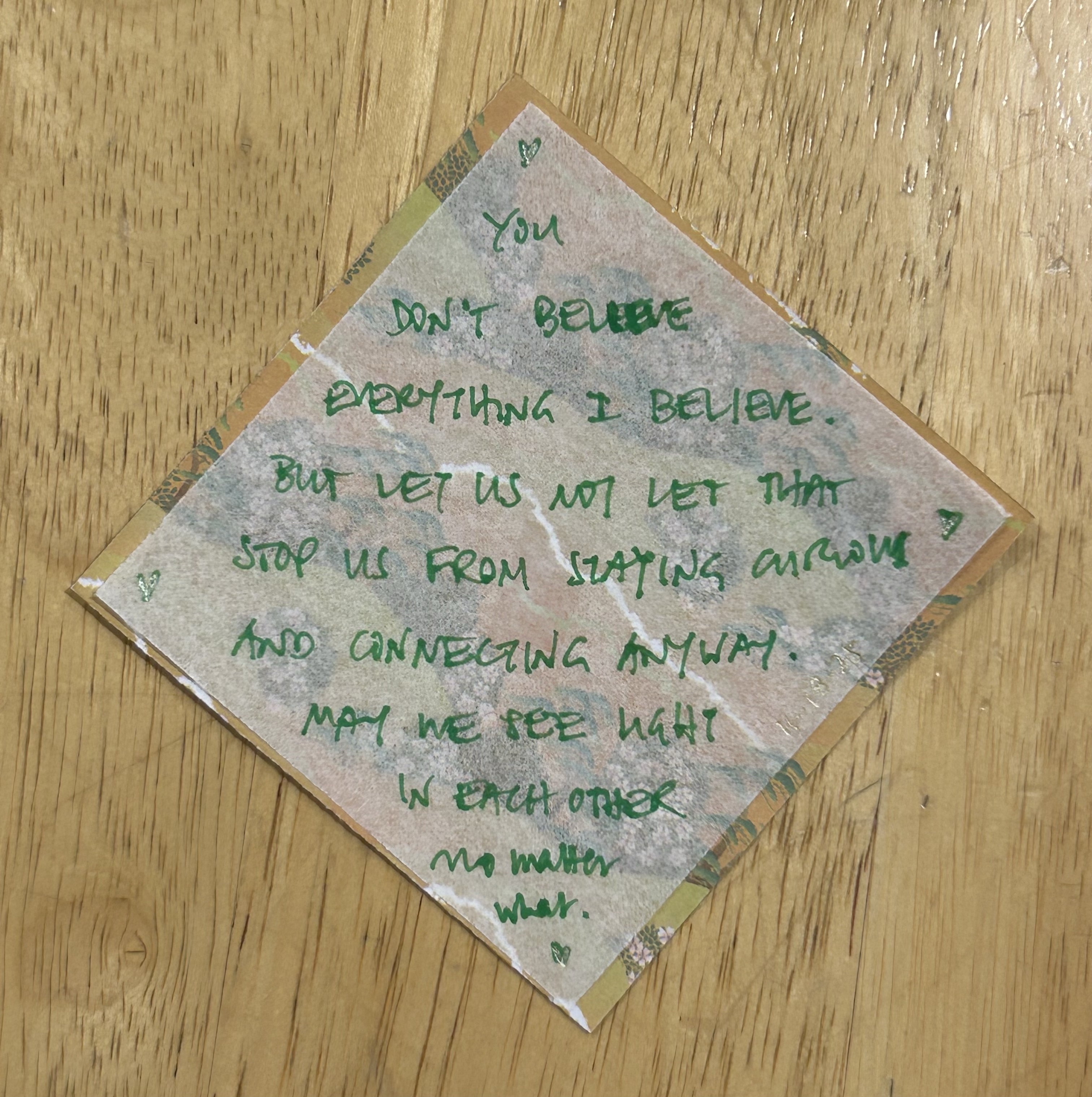
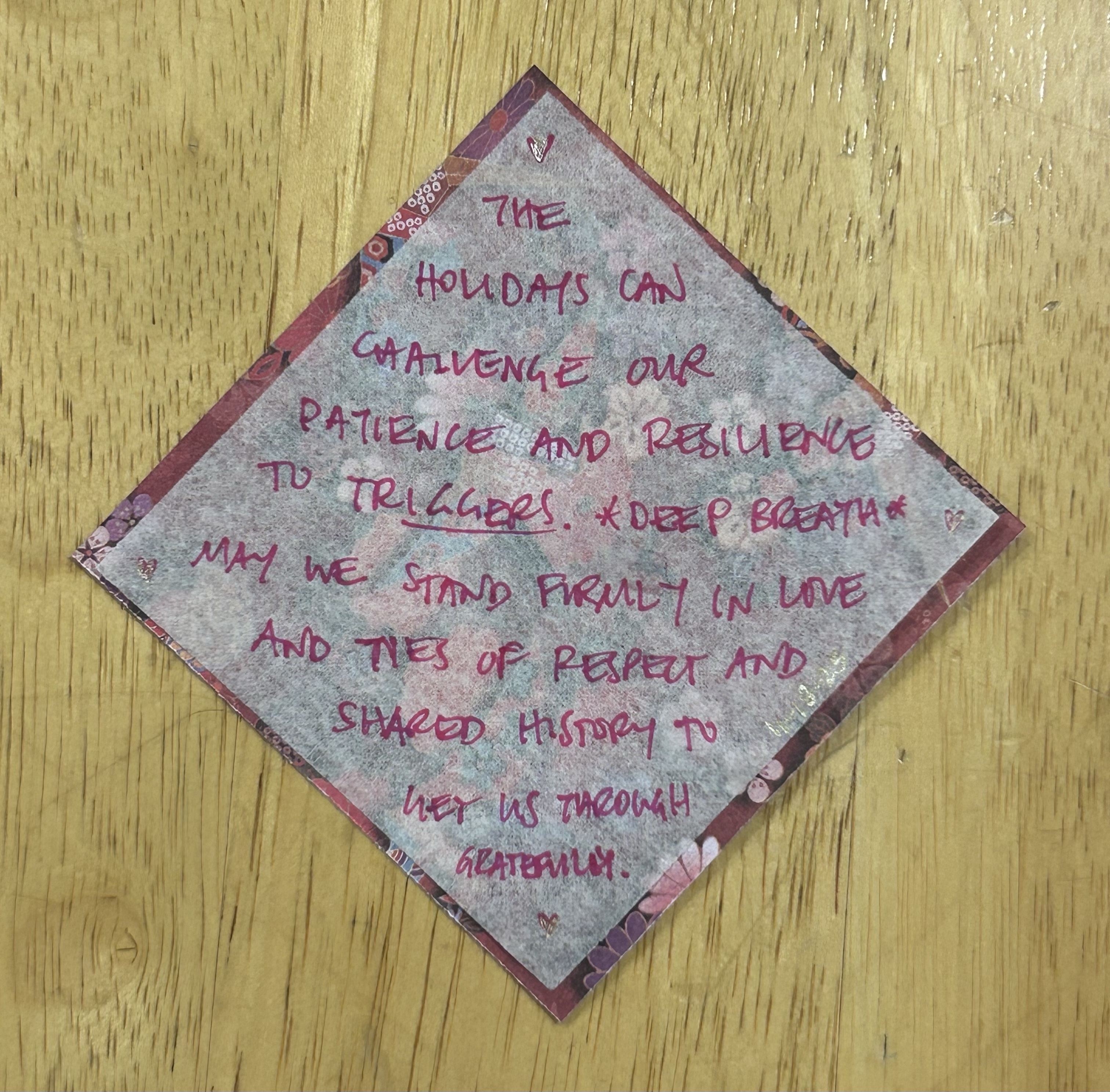
To my Red voting friends: I don’t need you to relinquish your conservative ideals. We need both conservative and progressive perspectives intact and healthy for productive debate and earnest policy negotiation.
But we are well beyond the conservative vs progressive debate here.
This is about the government hunting and abusing people without any due process or accountability.
The only way this gets better is if we all call forth our shared humanity and rise together to stop it.






 Healing Through Connection