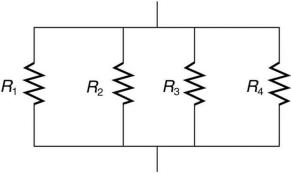
Holy hell, what a week. How are you feeling? Most people I know express some combination of shock, resignation, rage, disbelief, hopelessness, gloom, and resentment. I’m trying hard to practice Radical Acceptance. It’s similar to the second arrow principle, in that at the very least, it lessens my own suffering from our collective circumstance. But more than that, it allows me to focus more on what I will do, than seethe around my negative reactions.
I’m thinking of the Twitter account named Yes, You’re Racist. Apparently the owner wants to identify the white supremacists who marched in Charlottesville, to publicly shame them and possibly get them fired from work. At least one person has lost his job based on a photo posted to the account. What do you think about this? I admit, my first reaction was positive. Yes, call them out, make them accountable, I thought. But then I wonder what good will this do? Will the guy who got fired from the hot dog place suddenly think it was morally wrong to attend the march? Or will he interpret his employer’s action as further proof that the liberal left conspires to restrict free speech and assembly, thereby deepening his animosity toward anyone who opposes his views from the left? Will it open any space in his mind to consider why white supremacy is wrong, or help him acquire empathy or compassion toward any marginalized group? Or won’t it just drive his racist expressions underground? Doesn’t public shaming like this run the risk of re-closeting these people, so their grievances foment in the dark, only to be released again under pressure, in some act of overt violence?
I think about the fights between marchers and anti-protestors—between those who wish to incite violence, and those who succumb to the provocation. To be clear, the Neo-Nazi, white supremacist marchers who descended on Charlottesville represent a vile and unacceptable set of ideas. They are the villains. And, fighting violence with violence is never a good solution.
So, we ask, what can we do? How do we respond? Maybe it’s because I’m on vacation this week, communing with nature in the mountains and watching the annual Perseid meteor shower from 10,000 feet, on a clear, literally stellar night, surrounded and awed by our millennia-old universe. It keeps me from stalking Facebook quite so many hours a day, and gives good perspective. I feel somehow more capable of saying, This is how things are. It sucks. It’s wrong. And I can still make a difference.
In the end, I believe Only Love Can Win. Blaming, shaming, belittling, and otherwise demeaning people for certain beliefs, actions, or associations—hating them—does not help. What does help is offering compassion and empathy, and listening to understand. I know I have said and written it many times, and I know many will argue that now is not the time to ‘get soft.’ But believe me, practicing love in the face of hate is anything but soft. Let me share some resources that illustrate this, and that hold me up. This is a very long post, and I hope you will stick with me ‘til the end.

Agape Love
Maria Popova, curator of the illuminating blog Brain Pickings, inspires me with her summary of Dr. Martin Luther King’s 1958 essay “An Experiment in Love.” I refer to this article often since January 20. Dr. King explores six tenets of nonviolent resistance (below). It reminds me that while I vehemently oppose bigotry, racism, sexism, misogyny, xenophobia, and fascism, I can do it with a peaceful heart, full of love for humanity, and with faith that even my small contribution of said love can make a difference. Here are the highlights of her piece, MLK’s words quoted:
- Nonviolent resistance is not passive cowardice. “For while the nonviolent resister is passive in the sense that he is not physically aggressive toward his opponent, his mind and his emotions are always active, constantly seeking to persuade his opponent that he is wrong. The method is passive physically but strongly active spiritually. It is not passive non-resistance to evil, it is active nonviolent resistance to evil.”
- The goal is connection. “Nonviolence … does not seek to defeat or humiliate the opponent, but to win his friendship and understanding. The nonviolent resister must often express his protest through noncooperation or boycotts, but he realizes that these are not ends themselves; they are merely means to awaken a sense of moral shame in the opponent. The end is redemption and reconciliation. The aftermath of nonviolence is the creation of the beloved community, while the aftermath of violence is tragic bitterness.”
- Separate the people from problem (as William Ury et al would say). “The attack is directed against forces of evil rather than against persons who happen to be doing the evil. It is the evil that the nonviolent resister seeks to defeat, not the persons victimized by the evil… [Regarding racial injustice:] We are out to defeat injustice and not white persons who may be unjust.”
- Be prepared to pay the cost. “The nonviolent resister is willing to accept violence if necessary, but never to inflict it. He does not seek to dodge jail.”
- Manage thyself. Do not allow yourself to descend to the depths of hate while you fight hate itself. Cultivate love instead. “The nonviolent resister not only refuses to shoot his opponent but he also refuses to hate him. At the center of nonviolence stands the principle of love…To retaliate in kind would do nothing but intensify the existence of hate in the universe. Along the way of life, someone must have sense enough and morality enough to cut off the chain of hate. This can only be done by projecting the ethic of love to the center of our lives. This is Agape love… Agape means understanding, redeeming good will for all men. It is an overflowing love which is purely spontaneous, unmotivated, groundless, and creative… Another basic point about agape is that it springs from the need of the other person… The Negro must love the white man, because the white man needs his love to remove his tensions, insecurities, and fears… Agape is not a weak, passive love. It is love in action… Agape is a willingness to go to any length to restore community… It is a willingness to forgive, not seven times, but seventy times seven to restore community.”
- Hope. “Nonviolent resistance … is based on the conviction that the universe is on the side of justice. Consequently, the believer in nonviolence has deep faith in the future. This faith is another reason why the nonviolent resister can accept suffering without retaliation. For he knows that in his struggle for justice he has cosmic companionship.”

10 Ways to Fight Hate
One of the first pieces I read after the events on Saturday was this article from the Southern Poverty Law Center, listing ten ways to fight hate. So while I carry that peaceful heart full of Agape love, these are the concrete things I can do right now (highlights quoted):
“The good news is, all over the country people are fighting hate, standing up to promote tolerance and inclusion. More often than not, when hate flares up, good people rise up against it — often in greater numbers and with stronger voices.”
- Act
- Join Forces
- Support the Victims
- Speak Up
“Do not debate hate group members in conflict-driven forums. Instead, speak up in ways that draw attention away from hate, toward unity.
“Goodness has a First Amendment right, too. We urge you to denounce hate groups and hate crimes and to spread the truth about hate’s threat to a pluralistic society. An informed and unified community is the best defense against hate.
“You can spread tolerance through social media and websites, church bulletins, door-to-door fliers, letters to the editor, and print advertisements. Hate shrivels under strong light. Beneath their neo-Nazi exteriors, hatemongers are cowards and are surprisingly subject to public pressure and ostracism.
- Educate Yourself
“Most hate crimes…are not committed by members of hate groups; the Southern Poverty Law Center estimates fewer than 5 percent. Many hate crimes are committed by young males acting alone or in small groups, often for thrills. While these perpetrators may act independently, they are sometimes influenced by the dehumanizing rhetoric and propaganda of hate groups.”
- Create An Alternative
“Do not attend a hate rally. As much as you might like to physically show your opposition to hate, confrontations serve only the perpetrators. They also burden law enforcement with protecting hatemongers from otherwise law-abiding citizens. If an event featuring a hate group, avowed separatist or extremist is coming to your college campus, hold a unity rally on a different part of campus. Invite campus clubs, sororities, fraternities and athletic organizations to support your efforts.
“Every act of hatred should be met with an act of love and unity. Many communities facing a hate group rally have held alternative events at the same hour, some distance away, emphasizing strength in community and diversity. They have included forums, parades, and unity fairs featuring speakers, food, music, exhibits, and entertainment. These events give people a safe outlet for the frustration and anger they want to vent. As a woman at a Spokane, Washington, human rights rally put it, “Being passive is something I don’t want to do. I need to make some kind of commitment to human rights.”
- Pressure Leaders
Form relationships with community leaders before a hate incident occurs.
Encourage leaders to name the problem.
Push leaders when they show bias or fail to act. [And do it respectfully—ad hominem never helps.]
- Stay Engaged
- Teach Acceptance
“Bias is learned in childhood. By age 3, children can be aware of racial differences and may have the perception that ‘white’ is desirable. By age 12, they can hold stereotypes about ethnic, racial, and religious groups, or LGBT people. Because stereotypes underlie hate, and because almost half of all hate crimes are committed by young men under 20, tolerance education is critical.”
- Dig Deeper
“Look inside yourself for biases and stereotypes.
“We all grow up with prejudices. Acknowledging them — and working through them — can be a scary and difficult process. It’s also one of the most important steps toward breaking down the walls of silence that allow intolerance to grow. Luckily, we all possess the power to overcome our ignorance and fear, and to influence our children, peers, and communities.”

Breathe Deep, Stay on the Path, and Engage
How would you confront a white supremacist in person, face to face? Would you share a meal with him/her? I saw this video clip on Facebook, of a young Chinese-American man, Eddie Huang, sitting down to dinner with Jared Taylor, an older, white nationalist man, and founder of American Renaissance, to discuss Taylor’s perspective. The American Renaissance site espouses genetic differences in intelligence and the propensity to commit crimes between races, among other things. Taylor states that historically, Europeans have “killed more people per capita” than any other group, and attributes this to them being “more technologically advanced.” He voted for 45 because his policies would “slow the dispossession of whites in America.” He says he wants to keep whites a majority in the United States, or else they “no longer control our own destiny.”
I imagined myself in Eddie’s shoes, and I could not fathom how I could stomach this conversation while eating. Actually I think he stops, while Taylor continues to eat—Chinese food. I don’t know anything about Eddie Huang other than what I see in this video, and I admire him. He sits down and engages respectfully, thoughtfully, and firmly, with a person who basically thinks he does not deserve to be an American. Could you do that? I’m not sure I could. And what would the world be like if we all trained to do exactly this?
Thank you for reading to the end. My point here is that we can oppose and resist more effectively than with rage, shame, and violence. I know I won’t make everybody put down their clubs and fists with my small words, but this is where I stand, and I commit to speaking my stance as much and as loudly as possible. I pledge to do my best always to profess what I am for, more than what I am against. I commit to a practice of Agape love, Radical Acceptance, Mindfulness, and Peaceful, Respectful Activism. I would love your company on this journey.



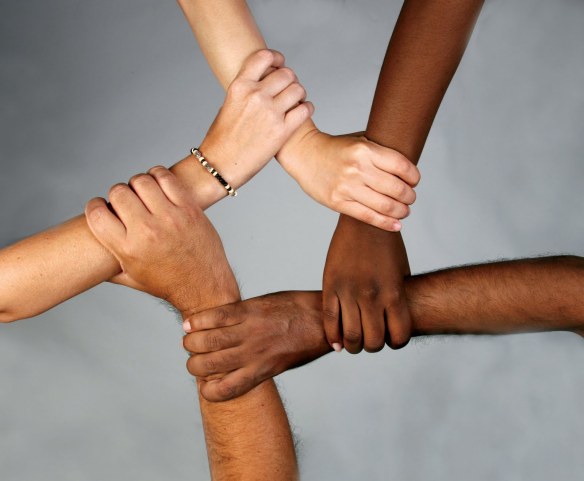



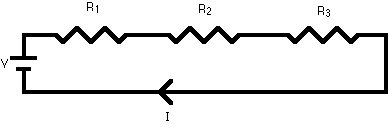 You may recall from physics class that when resistors are placed end to end in an electrical circuit, their total resistance is the sum of their individual impedance units. As the current passes through one resistor, it encounters the next one, and the next, one after another, slowing its progress. I like to see today’s activist groups in this way, each contributing several layers to the dense, thick paper barricade at the windows of democracy as we know it, defending it against attack. And the more we can stand united, supporting one another, the stronger we will be. Could our resistance even be exponential, rather than simply additive?