
Relationships

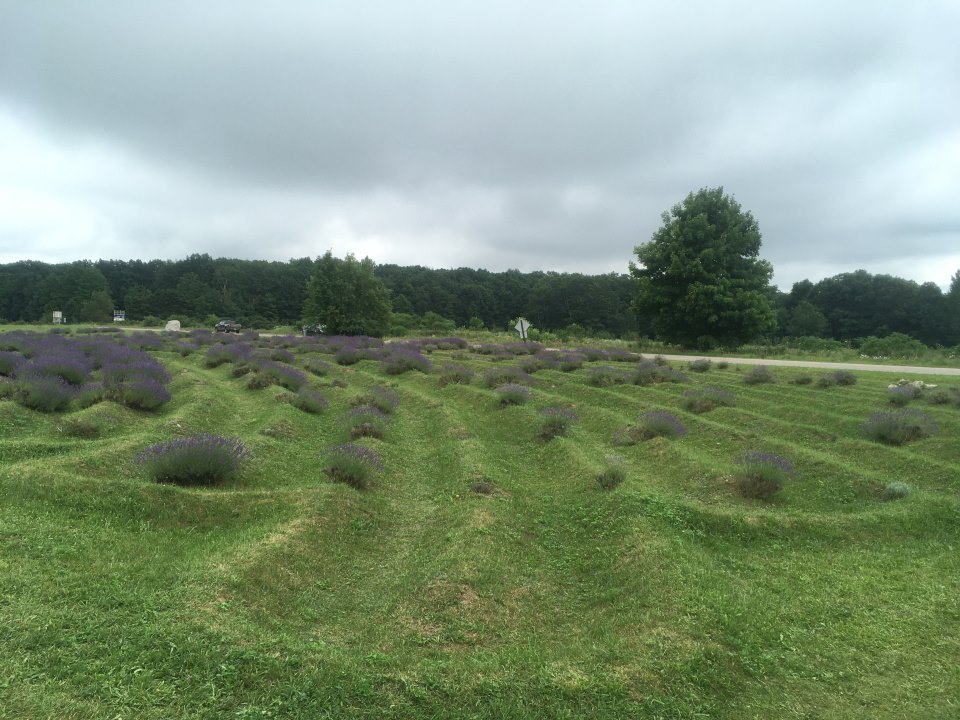
Photo by Lyra Luu, June 2023

“Let’s talk about your relationships. What’s already good, and what could be better?”

It has never occurred to me to ask a patient (or anybody, really) about their relationships this way. … How would that go, do we think? I feel like there’d be a pause… It might feel a little awkward? Maybe a bit invasive? Too personal and too broad at the same time? I think it could be potentially amazing.

As I ask myself now and am about to write, what happens feels akin to navel gazing from 10,000 feet. How do I show up in my relationships? How am I the exact same person everywhere, to everybody, all the time, and how do I also alter, mask, suppress, or overexaggerate? Why? How do I feel about any/all of it, and what does that tell me? How would others answer, people who know me primarily in one context and not others? What if they answered differently from how I expect? Oh, how fascinating!

What does the question set bring up for you, I’m so curious?

So, what’s already good about my relationships:
–I care a lot about the quality of my relationships and I cultivate them thoughtfully, with great attention, intention, and love, even when it’s hard.
–I hold my relationships strongly and loosely at the same time. Seneca said, “Ponder for a long time whether you shall admit a given person to your friendship; but when you have decided to admit him, welcome him with all your heart and soul.” I often don’t ponder long; I know quickly when I want to be friends with someone. And then I’m all in. Until I’m not, which happens sometimes. I can let go when it’s clear that holding on does not serve me or the other person. I’m also open to reconnecting later–life is unpredictable and relationships are fluid, so attuning to conditions and adjusting containers as it all flows and evolves is a practice in acceptance and flexibility, which I value. I think this serves me as well as those I’m in relationship with.
–I am a conscientious student of relationships; I let all of mine teach me and I learn from observing others. I think this makes me a better person overall.

What could be better:
–My relationship with my body. The cosmos moved me to watch “Good Luck to You, Leo Grande” before writing this post today. HIGHLY RECOMMEND, especially for middle aged women like me who feel past their prime, physically attractive years. Emma Thompson is my hero for portraying her character with such rawness, honesty, and grace. I feel better about myself after watching this movie, and I think that will continue to improve.
–Revising old narratives. When I’ve known someone a long time or had particularly intense interactions with them, I tend to hold tightly to the stories I tell about them. I label them, then confirmation bias runs away with me in subsequent encounters, sometimes for many years. This is high risk for dysfunctional prejudice, both negative and positive. Mantras work well for me in general… I wonder what words I can pull on to remind me to reassess, revise, and amend, for all our sakes?


So what’s already good about your relationships?

What’s good about how we all relate collectively?
Tribes. Whoever and wherever your are, I hope you have at least a few groups in which you feel true belonging. Sports fandoms, book clubs, D&D campaigns, improv classes; work teams, professional societies, PTA, with your besties. We all function better when our connections with others are strong and tight. When these connections cause our tribes to uplift other tribes in turn, and not denigrate or oppress, even better.
Potentialagain. So interesting, how ideas resurface in each post so far this month. Psychology, anthropology, sociology, education, medicine, marriage, and just life in general–if you study and attend long and broadly enough, the core practices of good relationships in all domains start to distill and clarify. We may put forth different parts of ourselves and show up very differently in any given role or environment, and in the end we are all still human, with all the same social, emotional, and relational needs. It. Is. NOT. Rocket science! So no matter how bad it all gets and how poorly we do it today, we can always do it better tomorrow. Resources for learning abound.

What could be better?
–Navigating Polarity and Complexity. A primary pitfall of tribal membership and identity is us vs them thinking, orienting tribes in competition rather than collaboration, with one another. Differences are inevitable, and when manged well, they make us productive and constructive. Managed poorly, they incite war and destroy lives. We would do well to avoid oversimplified, overgeneralized, and judgmental expressions of out-groups voiced by the loudest and most extreme among our in-groups, and acquire both personal and collective communication skills that help bridge differences rather than escalate them.
–Leadership by Example. Government. Come on, folks. We, the citizenry, must expect, demand, and elect better. Those of us who know better, though, must also hold our local leaders to higher standards of relational behaviors and practices. Easier said than done, and in the long run, well worth the individual and collective effort.
–Masculine and Feminine Integration. This just occurs to me tonight as Daughter and I watched again the Cinema Therapy episode on toxic, or ‘limiting’ masculinity, contrasted by Aragorn of The Lord of the Rings movies. I’m not referring here to women’s liberation and militant feminism. I’m thinking of moving our culture to a place where assertiveness and courage in women, as well as tenderness and vulnerability in men, among other complex qualities in each, are equally valued, cultivated, and upheld. We can move from an us vs them, either/or, this not that, to an all and, ‘we each contain multitudes’ cultural gender mindset. When we are all allowed and encouraged to be our whole emotional and psychological selves, our relationships will be un(currently)fathomably more meaningful and fulfilling.

Ooo, fun. This concludes posts on the 5 reciprocal domains of health, asking what’s already good and what could be better, for myself personally and for all of us collectively. Turns out this appreciative inquiry, strengths based prompt structure really does both helpfully constrain and free my writing, at least so far. I’ve been talking about these five domains for many years, and never quite in this way. How eye opening. I hope you’re enjoying the posts so far, friends! I really look forward to the rest of the month!
Stress Management

Anybody else feel daunted thinking about stress managment lately? [wide eyed emoji]

It’s November of the hardest year in my recent professional memory, and the escalating stress levels I witness every day show no signs of abating. My patients are sleeping poorly, gaining weight, and their blood pressure continues to rise. They miss quality time with loved ones and rethink their life paths more seriously now than ever. Strangers on the street seem increasingly confrontational. The world is once again embroiled in war and violence. Our stress management skills are called forth, no question.

I attended the second ever Harvard Medical School coaching conference in the spring of 2009, where I met Benjamin Zander and The Art of Possibility became my personal development bible. Roz Zander, co-author, former wife, and decades long collaborator to Ben Zander, died suddenly this year. I hope my writing and impact may honor her, as these 14 years of my inner and outer work, sparked by the Zanders at that meeting, made me a better person that I would otherwise have been, founded on the practices in their book.

**Deep breath**

It’s been at least a decade, and I still ask patients to assess work stress in terms of threat and challenge. Threat stress–basically fight or flight–is physiologically taxing, meant to last seconds (not years), and costs us our health if prolonged. Challenge stress is activating, productive, and beneficial. I also query about personal fulfillment from work–meaning. We can tolerate very high levels of stress, even prolonged threat, if it’s worth it to us.

Parenting may be a better example than work. When we fear for our children’s well being, and even their lives in crises, how do we manage that? Is there any worse threat? We’d all rather it be ourselves suffering than our kids, right? How do we cope when we have no control?

At the risk of sounding arrogant, I feel very confident in my stress management skills. This is not to say I don’t experience severe stress or feel its consequences. I just move through it much more easily and with a lot less suffering now than in the past. I feel a lot less threat than challenge. Briefly, the practices:
Breathe. Ever since my first medical assistant posted “TAKE A DEEP BREATH” at my workspace, I have appreciated the calming effect of one deep breath, physically and psychologically. We can breathe ourselves through childbirth, injury, emotional trauma, and myriad other urgent and emergent situations. Deep breathing stimulates the de-escalating parasympathetic (rest and digest) nervous system, balancing the autonomic hijack mediated by the sympathetic system. I breathe along with patients when I listen to their lungs. I inhale deeply when listening to books, and during strenuous exercise. It is my central grounding practice.
Accept. “It is what it is.” This has nothing to do with how I feel about it. But the sooner I separate what is from what I want it to be, the less I suffer. Obviously I find this much easier to do for things I care less about. But even for big things, like the state of our healthcare system, the brokenness of our government, and my estimate of the ultimate demise of humanity (I think five more generations, give or take), just being with what is, as a first step to figuring out what to do next, helps me suffer a lot less.
Withhold judgment. I’m really good now at not jumping to conclusions and not making sweeping judgments about people based on limited information. I am able to separate judgment of actions from people’s character and humanity. If you’re screaming at my team and me, you are clearly unwell. We can hold you accountable to your actions and still show you compassion and respect. I don’t have to think you’re a bad person. This way, I don’t take your negative actions personally, and I can stay calm and even.
Get help. I ask every patient every year about their emotional support network, because it matters. Mine is phenomenal and I could not be more grateful. But I only know they are so because I call on them enough and they on me. Rarely I am disappointed, and I learn to turn elsewhere. I cannot overstate the profound importance of tribe and connection. It is my raison d’etre.
Move. When daughter was admitted to the hospital and I stayed with her there, I made sure to get on the ellipitical each day that week. When I go too many days without movement, I get edgy and stuck in my thoughts. My stress is exponentially more manageable if I protect my workouts, which I have now done for many years.
Attune and differentiate. My greatest stressors involve other people. Friction, tension, grating, colliding, etc. Since my LOH leadership training helped me articulate these complementary concepts, I recognize now that attuning/aligning with others, as well as differentiating and standing firm in my own core values and practices are equally important and fluid in their dynamics. Feeling out that optimal integration in any given interaction is rewarding in itself, and the outcomes are always better when I attend to both, knowing that I am showing up true to myself. What more can I ask of me?

So what could be better? Anything, really. For the rest of my life, new stressors will continually emerge. In his book Master of Change, Brad Stulberg quotes a statistic that in an average adult life, we will experience 34 major disruption events, which works out to about one every 18 months. Sounds about right to me! So I can expect to be challenged and trained in all of these skills and more, usque ad mortem. I only hope I can keep learning, applying, improving, and growing. Bring it.

I feel less harshly about our collective, societal stress management skills and outcomes than I do about our obessions and ironies with exercise and nutrition. Really, I think everybody’s doing the best they can, with the skills they have, in the circumstances of their lives at any given time. I just wish our environments didn’t create and perpetuate so many of our stressors in the first place.

So what’s already good?
Potential. We are all surrounded by one another. So every encounter, any time, any place, is an opportunity to do people-ing better. In any given relationship, if anyone is willing at all, there is always the chance for repair after rupture. Humans are innate learners; we can continually acquire the skills to stop impaling ourselves with the second arrow of suffering, after the arrows of pain hit us in daily life. We can even hold one another up and heal our injuries together.
Books, teachers, resources. Those aisles and shelves of stress management books really are dense, and I can say with conviction from first hand consumption that the knowledge and potential benefit living in those pages is immense. For those with the bandwidth to actively seek, consume, digest, and apply, lives can be transformed, especially if shared, discussed, and practiced together.
–Sometimes it really doesn’t take much. Your friend calls to check on you. A stranger helpsy you carry your groceries. When we say ‘it’s the little things,’ we speak truth. Small acts of kindness and incidental connections will not solve our hardest problems, but we must not underestimate their profound potential to help, and for that help to amplify in unexpectedly large ways. What’s more, both the helper and the helped benefit from the encounter.

What could be better?
–Teach it explicitly. There is a movement afoot among Dialectical Behavior (T)herapists to formally incorporate stress management skills into school curriculum. DBT organizes life skills around four central pillars: Mindfulness, Emotional Regulation, Distress Tolerance, and Interpersonal Effectiveness. Within each module are sets of practices, many with campy acronyms to help us remember. I refer patients to the DBT skills website often, not just to help them cope better themselves, but to help them model better coping skills to their children, direct reports, and leaders. Simply having the confidence that we can handle whatever comes our way, because we know what to do, decreases stress exponentially. What if we learn these skills in childhood, before the chaos of adolescence and serial tumult that is adulting? Can you imagine?
–Relational Leadership Training and Valuation. Leadership done well is a practice in empathic, compassionate, accountable, and transparent stewardship. It is a way of being and doing, one that requires high level self-awareness and self-regulation, and excellent attunement and communication skills. Right now I think leadership training focuses a lot on transactional communication, superficial team dynamics, and not enough on building leaders’ stewardship mindset and deeper relational skills. We should require evidence of these skills for promotion and provide communal support and feedback to strengthen their practice. This would reduce overall stress in organizations by building cultures of empathy, compassion, accountability, and transparency from the top. Workers’ stress, in my observation, stems in large part from toxic cultures set by relationally inept leaders.

So, another plot twist, but maybe not really. My solution to stress management optimization is relationship-centered: first relationship with self, then between self and others, and then between/among those who know us, by way of example setting.

Stress is complex. Its optimal management is a lifelong practice. It’s never too late to start, and no skills practice is too small or wasted.

“The only way out is through. The best way through is together.” I think that applies here.

It Came Up In Conversation

Friends, how are you?

So many people are having a really hard time right now. I feel it all around, and it’s heartbreaking. So much pain, both first hand and vicarious; such powerlessness, leading to agitation, rage, and despair… or at least an angsty restlessness, a deep vibrational yearning for things to be very different from how they are. **deep breath** Whatever you have going on, I wish you all you need to suffer as little as possible.


During one clinical encounter this week, Patient and I sensed a vague yet deep restlessness in her. At the end of the visit I had no useful advice to give. Rather than disappointed or apologetic, though, I felt stimulated. From her low energy starting point, I felt wide space for potential, and a rapid slew of questions coming on. So I grabbed my notepad and scrawled as they emerged:

  1. How much do you want a life change?
  2. If change then how, in what way?
  3. Why–what will that give you?
  4. What are the steps?
  5. Who can help (assume you need help!)?
  6. How will you measure progress?

As I wrote, I changed “(do you need help?)” to “(assume you need help!)” and “success” to “progress” in real time.

Looking back, I’m not sure she really wanted to engage with these questions, which felt okay to me. I did not intend to pressure her into doing anything. I did, however, want to share my sense of possibility, openness, curiosity, and agency on her behalf. No urgency or requirement to answer anything, I told her. To “live the questions,” as Rilke wrote, is all we need sometimes. Turns out I ask these questions of myself pretty regularly. Maybe that’s why they came to mind so readily.

What/how do these questions move for you, if anything/at all? What other questions do they spark, if any? What else?


“What proportion of your daily routine/decisions/actions/default activities are driven by convention, social norms, or otherwise extrinsic factors?”

Yet another spontaneous question, this time arising while looking in another patient’s ears and talking about their very young kids’ multiple sports and activities, the intensity and schedules of which rival that of my high schooler. “It’s what you do,” they said.

Getting married, having kids, buying a house, climbing the corporate ladder; PTA, kids’ sports, yoga, pickleball, having an opinion on everything: How much do we do these things because “it’s what you do”? Please understand, I’m not necessarily judging any of it. Social norms have purpose; they provide structure and order in our messy human lives. I also think it’s good to consider, regularly and often, how our personal values and goals align with our myriad forceful cultural defaults.

Where do convention and personal integrity intersect for maximum benefit, fulfillment, growth, and contribution?

I really like this question, I look forward to living it for a while, and I’m grateful to my patient for helping me form it.


Hey, National Blog Posting Month (NaBloPoMo) starts November 1! My 2023 theme reveal will drop here on October 31, so stay tuned. This will be Year 9 for me, and I think it could be transformative…


OK friends, now I get to tell you about my Big Fat Hairy Project.

I pitched my first ever book proposal to a kind young agent in June and received generous encouragement in response. Over the ensuing months, I have found myself stymied by fear and imposter syndrome, possibly to the point of physical pain. Admonishing myself to simply plant BUTT IN CHAIR was not enough to make me produce any content. Things shifted recently, though, not sure how or why. Maybe it’s the season? Maybe it’s seeing body changes in both function and appearance after 7 months of regular strength training, convicing me that I can do new and hard things? Maybe it’s connecting more closely with readers and writers, an innately inclusive, generous, and encouraging tribe? Regardless, there is movement afoot. Yay!

On October 15 I committed publicly to a nightly book work discipline: Typed word count, handwritten journal page count, time spent reading/researching, etc.–whatever I did, I resolved to track and share. I knew at some point I would need to actually write editable words in larger numbers–the shittiest first draft is better than no draft at all. But it was not until yesterday that I committed to something concrete there, too: 500 words three times a week or 1500 weekly words, however I can get them out.

Friends, the first 871 wildly imperfect words of my book now exist. O. M. G. And I will add more tonight! HOLY MOLY, is that momentum I feel? I have a weekly skeleton schedule written out: no book work required on days I see patients, at least to start. And I still need to consume books for my sanity (176 titles started this year and ohmygoodness, some are so good!). *sigh* I feel good in body and mind, joyous, solid, and buoyant, in this resolve and commitment.

If you’re interested, follow me on Instagram at @chenger91. Every Sunday I will post a photo of the laptop and my inspriational writing mug. Each day of that week I will log book work in that post’s comments. See 10/15 and 10/22 on the page now!

I wonder how I will stick to this and also write 30 blog posts in 30 days? WHOOO KNOWS?? It’s okay, I get to invent and evolve my way–nothing to lose! And I resolve to have FUN. Let’s do this.