Holding Belonging

Everybody wants to both belong and stand out. The skillset for success here is attuning and differentiating at the same time.

In elections, and in 2024 especially, I perceive voting by many as rejection of the party that rejects us–that makes us feel like we don’t belong. Let us take a moment to let that idea sink in. At first it may seem irrelevant or even childish–and if we recognize it in ourselves, maybe we cannot imagine how ‘the other side’ could possibly feel the same, since they are the ones rejecting? But let’s get still and try to imagine how that could be? Within and among our layers of relationship–personal, professional, cultural–that feeling of rejection and being left out/behind is visceral and profoundly threatening, even when abstract. People feel it on both sides of this election, no question, and that feeling is also profoundly human. It’s vulnerable, raw, existential, and feels for many to be quite literally, not figuratively, life-threatening. If we can bridge even a little understanding around this fundamental and paradoxically shared experience, then we may actually get traction on healing our divides.

This idea of belonging as it relates to politics occurred to me early this month and faded; something calls me to post it tonight. Looking back, I actually already wrote a version, “Attune and Differentiate,” back in February 2020:

“…I listened again to Brené Brown’s Braving the Wilderness.  I highly recommend this book to help us all, conservatives and progressives alike, to engage (not avoid) one another this election year with a lot more compassion, civility, and mutual respect.  Throughout the book Sister Brené shares personal stories as well as evidence from her research that define true belonging, which I think of as another expression for self-actualization and self-transcendence.  In her words:

True belonging requires us to believe in and belong to ourselves so fully that we can find sacredness in both being a part of something, and standing alone when necessary. But in a culture that’s rife with perfectionism and pleasing, and with the erosion of civility, it’s easy to stay quiet, hide in our ideological bunkers, or fit in rather than show up as our true selves and brave the wilderness of uncertainty and criticism.

“Attune and differentiate:  these two practices are not only not mutually exclusive, they are essential and integral for whole person and societal health and well-being.  Read the book to adopt her four practices to advance true belonging, for yourself and for all of us:

  1. People Are Hard to Hate Close Up. Move In.
  2. Speak Truth to Bullshit. Be Civil.
  3. Hold Hands. With Strangers.
  4. Strong Back. Soft Front.  Wild Heart.”

What makes us exclude others?

Once again I’m convinced it’s fear–likely many fears at the same time, all threatening our sense of safety and security. It relates to identity and values, which inform ideology, which manifests in tribes.

I wrote in November 2017:

“…I’m thinking tonight about tribal pride and tribalism—the benefits and risks of belonging.

“We all need our tribes.  Belonging is an essential human need. To fit in, feel understood and accepted, secure—these are necessary for whole person health.  And when our tribes have purpose beyond survival, provide meaning greater than simple self-preservation, our membership feels that much more valuable to us.  But what happens when tribes pit themselves against one another?  How are we all harmed when we veer from ‘We’re great!’ toward ‘They suck’?”

Clearly, many of us have spoken and written about this for years now. And though the movement to bridge divisions grows, we also quite clearly have not kept up. *sigh*
And it’s okay. Human relationships, tribal and otherwise, are an infinite game of fluid context, evolving technology and interaction, and chronic recurrent conflict. I have no illusions of ‘world peace’ in any abstract sense. I think all we can realistically work for now is a return to civility–but not the kind that ignores or erases difference and disagreement. Rather, I want a more thougthful, intentional, and respectfully engaging civility, one that emanates from mutual recognition of our shared core humanity–every. single. one of us.

We all belong to one another, like it, want it, know it or not.

In the first post of this month, Holding Wholeness, I wrote, “…any leader–man, woman, or otherwise–must own all parts of themselves to lead to their full potential. The strong and the soft, the masculine and the feminine, the committed and the flexible, the differentiated and the attuned–these polar and balancing aspects of our nature make us whole humans. People who live in their wholeness lead by example, by inspiration, by resonance with the wholeness of those they lead. They are leaders because we are moved to follow them; we feel their integrity and want it, aspire to it for ourselves.”

I had not planned to reference attunement and differentiation as bookends to this month of reflective posts–each day’s topic emerged in real time. And of course the same ideas recur, right? The ethos of this blog is consistent, if nothing else.

If we want to heal our divisions, I submit that we start with healing ourselves. We all/each have our own inner work to get to true wholeness, true and deep belonging to ourselves first, as Brené Brown writes. There is no interconnection without intraconnection standing right alongside, if not walking ahead. This requires humility, curiosity, and psychological safety, which fosters courage. I feel so impatient, so I can practice self-regulation. We all have our work.

I Hold Belonging for Us tonight. Whether or not we recognize, accept, or embrace it, we all share this need. How fascinating the metamorphosis of its expression and manifestation at the personal and local versus the government and policy levels, no? OH there is so much more to explore here. For now, though, I just Hold it. Belonging. What if we each take a few minutes, a few times, in the next several weeks and months, just contemplating the idea, encouraging ourselves to include as many people in our intersecting tribes as possible? It reminds me of loving kindness meditation–emanating belonging from our inner circles out to all of humanity. It costs energy and risks ego. The rewards of understanding and connection, in my strident opinion, far outweigh the costs and risks.
Be Myself, Change Myself, Be the Change

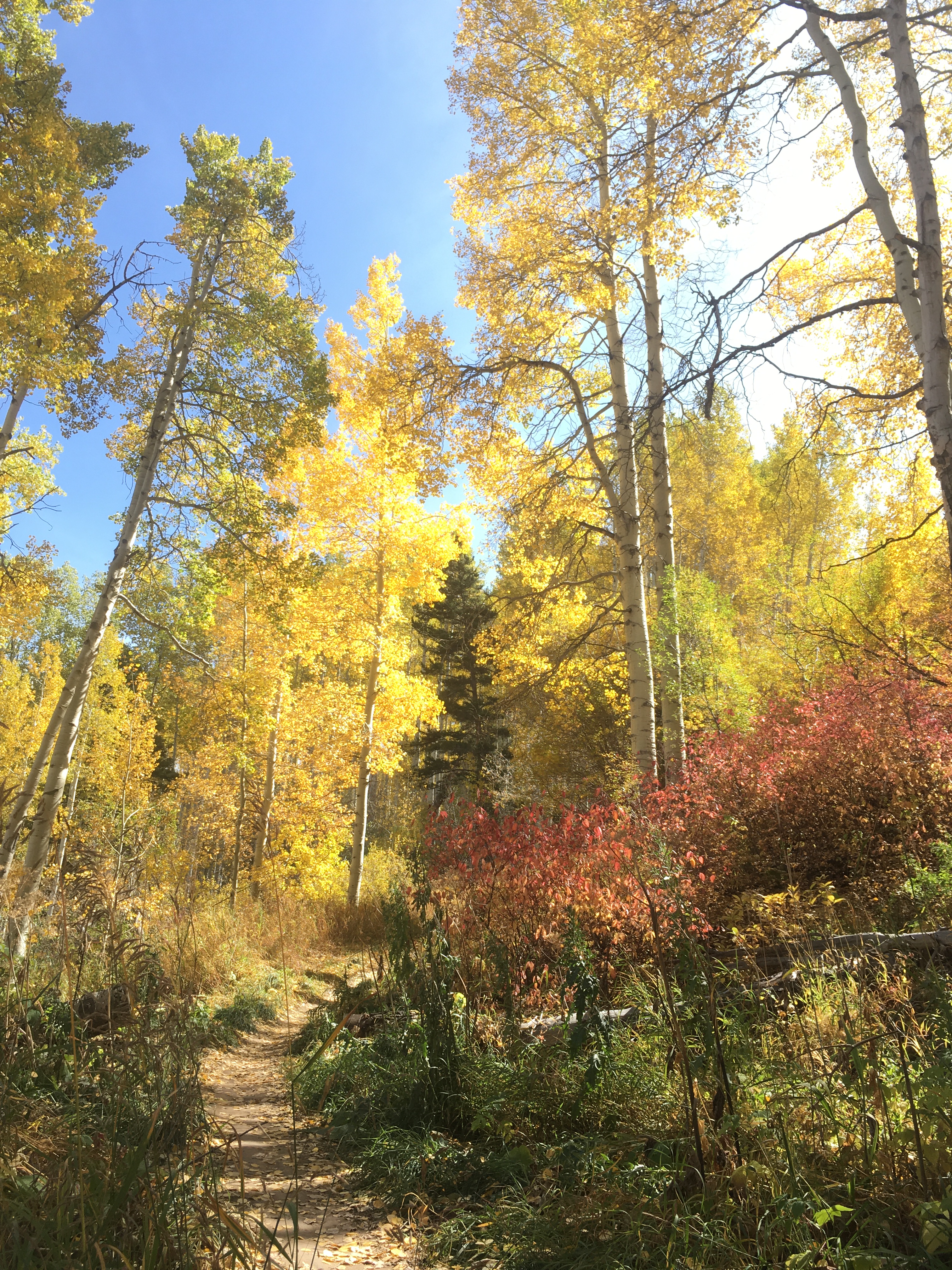
Vail, Colorado, 2019

We are who we are from a very early age, maybe even before we are born. AND, we also constantly evolve throughout our lives. 

This is one of my favorite paradoxes.

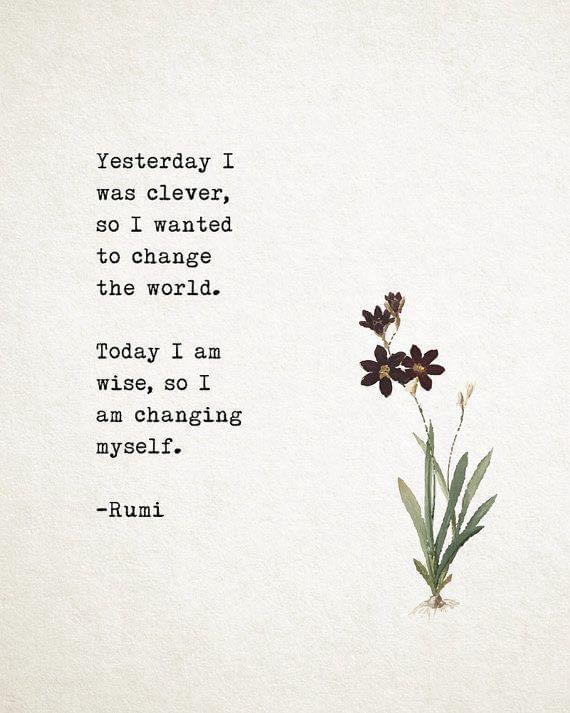
Image shared on Instagram–one of my favorite quotes

I’m thinking a lot lately about Outer Peace. Our world swirls and bubbles with chaos and toxicity, so many psyches apparently living on the knife edge between tolerance and breakage, between breathing and screaming. How often are we tempted to yell, kick, throw things, or simply stop whatever we’re doing and just cry a while? How do we hold it together and simply function ourselves, much less help anybody else, and/or make any positive difference in the universe?

The longer I live the more I (re)learn that it’s about core values, goals, and trade offs, and not ego. Change is not about fighting. It’s Inner Peace in service of Outer Peace.

“Yesterday I was clever,” I knew better than everybody else. I was smart, and I wanted to show it. I came at rather than coming alongside, made simple and superficial assumptions, jumped to (often wrong) conclusions. This part of the quote expresses the necessary adolescence that we all go through in life–personal, social, and professional–the ‘know it all’ phase that our elders tolerate knowingly because their own elders did the same for them. Impetuous and defiant confidence, disregarding boundaries, testing and finding limits and resonances, if only subconsciously and often painfully. It is the organic growth and pruning of youth to early adulthood. If we’re lucky, we have mentors to guide us, helping us navigate the morass with fewer mental, emotional, and spiritual nicks, bruises, and fractures.

“…so I wanted to change the world.” Because it *should* all be a certain way, the way I think, because I know what’s right. Those who agree with me are my friends; those who don’t are not. I’m oversimplifying. But this is not far from a persistent mindset reality in our social groups well past physiologic adolescence, and not least among those who determine and enforce policy. Change the world how? According to my own world view and life philosophy, however rigid, narrow, and closed. I wonder about the (inverse?) correlation between how tightly we hold onto our rigidities and how far we have traveled, how diverse our experience, how many different cultures and realities we truly understand and empathize with? I submit that if we are honestly paying attention, if we open our eyes, minds, and hearts to the depth and breadth of any given human’s life experience, it instantly puts our all-knowing and arrogant ego in its place, which is at the back of the ‘world change’ bus.

“Today I am wise, so I am changing myself.” I am still clever–perhaps ever more so with age. With wisdom, however, I apply my cleverness in a different, more mindful, relationally intelligent way. I realize that power to change is not power over, it is power to. Strong arming (which includes coercing and shaming) rarely creates lasting, meaningful change, at least not without deep human cost. When I look inward first, seeing how I myself relate to and connect with that which I wish to change, therein lies my strength. I approach any problem from an ultimately human and humane perspective, which makes me more credible, more creative, more holistic in my problem solving. This is a big ask, requiring vulnerability and a willingness to step ‘way outside of my comfort zones. How does this give me any kind of peace? Don’t I risk losing myself, my identity entirely, when I make such daring attempts at real inclusiveness?

Who am I, that I can withstand this broadening, this profound stretching of perspective?

I am clear. I am centered. I am grounded, focused, and engaged–in my Why, in my Just Cause, in my commitment to playing the infinite game of human relationship and connection as long as I possibly can. To be me, my Best Self, means constantly evolving through lived experience, while hewing closely to my core values of honesty, integrity, curiosity, humility, generosity, and kindness. My inner peace comes from knowing, at the end of each day, that I did my best to show up this way, even when it was hard. 

It’s hard when I’m attacked, dismissed, or rejected for asking open, honest questions, for challenging social norms and ‘the way we do things,’ for facing and abutting over and over the rigid, the narrow, the closed. It’s hard when I discover my own rigidity, narrowness, and closures–oh man, that is tough to take. And the practices bring me back; they de-escalate, defuse, disarm, and rejuvenate: Breath. Mindfulness. Writing. Talking. Connection.

Inner Peace may not come immediately or even for a while after a disruption. But it does come, and each training episode strengthens my skills. The peace I eventually feel, then, grows and deepens; it integrates synergistically. It cannot help but then exude, at least while it lasts, until the next trial. Intervals between trials lengthen because what disrupted my peace last year rolls off of my consciousness today. Episodes shorten as I am able to breathe and regulate through them more effectively and efficiently. I become elastic, supple–strong and soft. My peace grows, and I grow with it, as does my capacity to share it.

I am me this whole time, learning, practicing, training, ad infinitum. I am me, rooted while growing. I am me, the change I wish to see in the world.

Time, Books, Bread, and Love

What is/are your love language/s?

According to Gary Chapman’s popular book The Five Love Languages, mine are, in order: quality time, words of affirmation, receiving gifts, physical touch, and acts of service. Since learning the framework, I have observed for Husband’s and Kids’ languages, and become more fluent in a few of their respective dialects. Some are easier to pick up than others! It’s humbling to think how friends and family may feel rejected by me when I respond sideways to their bids for love, because I don’t understand their intent. “Rats!” as friend Eileen would say. I can do better!

On the other hand, how wonderful when I can converse in love speech with someone in appreciation and joy? Words are definitely my currency–quality time for me means being together talking, and not just about pop culture and current events. I consider any thoughtful or personal verbal expression a gift, and especially anything via snail mail. I get positively giddy when I open the mailbox and see colored envelopes, interesting stamps, and omg stickers–it all just makes my heart sing.

Friend and fellow writer Nicole recently recommended the book Write For Your Life by Anna Quindlen. It’s a fast, easy, and heartwarming read by the veteran journalist and novelist. It validates my insatiable need to write–for myself and for sharing–and inspires me to do it with ever more abandon and joy. Quindlen reflects on the timeless relevance of Anne Frank’s diary, and our collective delight in finding old letters between lovers from the past. She wishes her parents left more words on paper, in their own hand, now that she can no longer connect with them in a tangible, tactile way. Even if you’ve never thought writing could stimulate, soothe, inspire, or connect you, this short work may convince you otherwise. Spending quality time with yourself and your thoughts, processing through pen on paper, may yield ideas, insights, and epiphanies that come no other way; and those who read them subsequently may benefit and connect to you in ways you cannot yet not imagine. So inspired was I after reading, that I bought multiple copies of WFYL and gifted them to friends. With each volume I selected a specific journal to go along. Pleather- and cloth-bound, blank, lined books invite original composition with artfully embossed covers: windblown trees; “Be the Change”; “ZEN AS F*CK”.

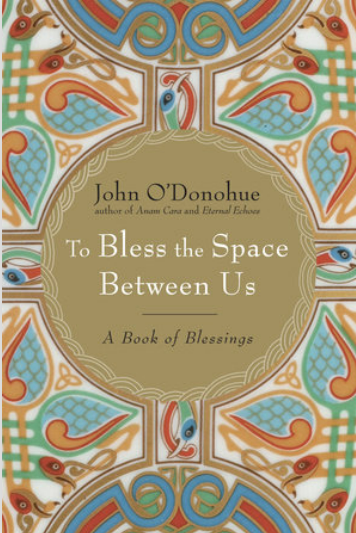
For my friend who took on a big new hairy leadership role, I included 6 additional works: The Art of Possibility, Benjamin and Rozamund Stone Zander; Switch, Chip and Dan Heath; Big Magic, Elizabeth Gilbert; Rising Strong, Brene Brown; Drive, Daniel Pink; and The Infinite Game, Simon Sinek. To the one who stands together with his wife at their respective professional crossroads, I accompanied Quindlen with John O’Donohue’s wisdom in To Bless the Space Between Us. His poems soothe, uplift, warm, and reassure, promoting reflection and also whispering, coaxing our own wisdom to emerge from within. Sharing others’ words, wiser and more eloquent than my own, is another way I love my friends.

When I can get the timing right, of course I also include some sourdough in the gift bag. Sven continues to thrive, leavening my loaves reliably for a over a year now. His heirloom flour descendant, whose products my gluten-intolerant friends can eat without consequence, has finally also developed that fruity aroma that I recognize as my starter. There is something special about giving and receiving gifts we make (or write) by hand, with our time, talent, and treasure. It’s just another level of love, expressed concretely and tangibly.

Nobody questions the value of sharing and expressing love between friends and family.

But what about between colleagues? Leaders and those they lead? Systems and their contingent members? What does it take to learn and attempt to speak anybody’s ‘love’ language? When we do personality tests at the office and find out who’s an introvert or extravert, who thinks versus feels their way to a decision, can we as leaders and coworkers make the effort to communicate–to relate–on another’s terms in addition to our own? I fail at this day after day; rats! I can do better!

In the end it’s about how we each feel seen, heard, understood, accepted and loved–why limit this essential and life-sustaining human reciprocity to ‘loved ones’? Better yet, why not include all with whom we are in any relationship among those we consider ‘loved‘? It may require quite a brave and committed redefinition of and reorientation to ‘love’, no? But how might this inspired shift in perspective, even by only a fraction of one degree, profoundly alter the course of business, healthcare, education, government–everything?