Women Elevating Women

How is everybody this fine August evening?

How is it August already!? *sigh* I hope we have all savored the summer (here in the Northern Hemisphere) and all it has to offer. There is just something about the longer, brighter days–I know there are myriad researched psychophysiologic effects, but I’m too lazy to look them up. Happy to just revel in them! Energy, activity, growth, flourishing–we humans are part of nature… Life occurs in seasons, and the lushness of summer blooms, the bees’ bumble-busy-ness, watching kids play joyously outside–it all just activates me, makes me frankly elated.

So today I got particularly excited thinking about how women romance authors hold one another up. I have noticed it for a while, and it hit me anew this afternoon. Here’s the story:

Shane East has joined the Creator crew over on Quinn, ‘the app for audio erotica.’ [To read more about this relatively new medium and its social value, see this article from the New York Times and a brief interview with Quinn founder and CEO Caroline Spiegel.] He joins other well known romance narrators on the site such as John York and Zachary Webber. The short form stories are apparently extremely spicy, and people love them. Scripts for the audios vary in origin, written by the voice actors themselves (men, women, and nonbinary folks), established romance authors, and fans alike. Not every piece is explicitly credited.

Shane’s debut on Quinn has been widely anticipated and very well received: As of this writing, about 60 hours out, his first audio has garnered over 4100 plays and almost 800 subscribers. Amidst the deluge of praise, I happened to catch an Instagram story posted by romance author Elodie Hart, acknowledging her good friend Holly June Smith for writing Shane’s inaugural script. It struck me again how often this happens in the romance world.

I see authors regularly promote one another’s work in their weekly newsletters and social media accounts. These magnanimous women include Sara Madderson, Nana Malone (who also co-founded Audio in Color, a non-profit dedicated to increasing diversity and representation in the romance and audiobook industry), Marni Mann, Sierra Simone, Lauren Smith, and Lili Valente. They post about how they collaborate, commune, and just have fun creating together. How wonderful! How generous, loving, and mutually beneficial! Is there any other profession where this happens so commonly?

I think about athletes, thought leaders… It always makes me happy to see blended teams play together in Olympic and All-Star games. Simon Sinek directly addresses his rivalry with Adam Grant in his book The Infinite Game. He frames this competitive relationship positively, as it drives his own professional excellence. In academic research, where resources are limited and science moves quickly, the culture is the opposite of collaborative and mutually admiring–‘cut throat’ is often the prevailing attitude.

Is there no sense of competition in romance writing? I have no idea. I just notice the love of women holding up other women.

I have written before about allyship, especially men of women. Shane East consistently upholds and amplifies his female colleagues, and continues to do so on this new platform.
How would it be if we all amplified one another, in humility and generosity, regardless of gender? Is that realistic? There are still so many gender-based power and status dyamics in multiple (most? all?) domains of human relationship… And yet, we can’t know how social norms will change unless we challenge them, right? Romance and erotica still make a lot of folks very uncomfortable; hence the heavily guarded anonymity of some creators. I understand and respect this; I feel minimal urgency to change it, because I see the tide turning, accelerating toward mainstream cultural sex positivity every year. In my mind, this makes gender parity more likely in the far future. Every little step counts. I know this is just my own perspective, having immersed in the romance world only recently. Maybe that’s why I feel compelled to write about it often, to express my own solidarity and allyship with the progress of sexual and relational freedom for all.

Challenging the status quo does not have to be adversarial, or even direct. Romance novels don’t change social policy. I don’t imagine it’s many authors’ primary objective to activate readers and listeners to lobby Congress or protest in the streets. As throughout history, fiction illuminates humanity and speaks, however quietly yet forcefully, to our very souls. It moves us, sometimes ineffably and other times powerfully, to examine and act. Social change happens in drifts and then shifts, slow and then fast, with forward and backward steps, on a long, jagged arc toward acceptance and inclusion. Human relationships are more complex now than before, and also fundamentally unchanged: we are all here to love one another and help us all live our best lives.

I never would have guessed that my whimsical romance obsession would yield deep and divergent thought and personal evolution. The friendships, the discussions, the self-discovery and intricate connections to shared humanity—it has all been just such a gift, I get goose bumps.

As we enter this last stretch of summer sun and warmth, I sincerely wish for us all to notice humans treating other humans well. It’s okay to feel cynical about humanity, even most of the time. But let’s not allow this to close us off to opportunities for connection when they occur. In fact, I encourage us to actively seek those opportunities–I promise, they are everywhere.

How Are You a Helper?

Photo by Eileen Barrett

I have thought actively about this question for weeks now, if not many years.

It’s easy to see doctors, nurses, teachers, and childcare workers as Helpers–we do it for a living. Do you consider yourself a member of a Helping profession? Why and why not?
Here is my premise: We are all Helpers.

I just spent two days at Readers Take Denver, my first ever book event (it’s all about romance, surprise!). I skipped my annual national professional society meeting, in the city where Son goes to school, to attend this giant convention where I would meet some of my favorite voice actors and fellow Shane East fanatics. It. Was. Glorious.

I decided to get the whole experience, so I registered to volunteer for parts of the event. I was assigned to help Susie Tate for an afternoon, taking pictures with readers and moving books. I knew of her but have not read or listened to any of her work. Turns out she’s a doctor in the UK! We hung out between signings, and when anyone approached the table I got so excited to help a fellow woman physician writer connect with her readers! What a privilege. Looking back on our conversations, it stands out to me that Susie’s work as both physician and romance author helps people immensely. She may see 50 patients a day in her general practice clinic, and when someone is sick she knows how to navigate the system to get them admitted while also caring for everybody else on her schedule. It’s heroic. She draws on her medical knowledge and experience in writing novels with complex characters, living relationships of struggle and redemption. Readers and listeners relate to her stories and gush about how much her books mean to them. Susie Tate and all of her romance author peers are Helpers, no question.

Let’s also consider the amazing, talented, generous, and gifted romance narrators, shall we? I have now met Shane, as well as Jason Clarke, Sofia Lette, Kit Swann, Angelina Rocca, Gary Furlong, Henry Kramer, Sean Crisden, Lessa Lamb, Chris Brinkley, Aaron Shedlock, and Teri Schnaubelt. Not only do they bring these empathic stories to life in our ears, but they are, themselves, some of the most kind, compassionate, present, thoughtful, and attuned people I have met. It makes sense, right? They engage with stories every day, putting themselves in a diversity of characters’ shoes, minds, and hearts, all in service of helping us relate more deeply and meaningfully to our shared humanity. Wow. Helpers. God bless ’em all.

En route to Denver, I texted my Ethos friends (who are all basically 20 years my junior):

The Ethos Breakfast Club showed up! Encouragement, reflection, validation, humor, and love flowed forth more than I could have imagined, and I felt immediately buoyed. I was able to present at the convention not just to Shane, but to everybody I met, all me and all in, feeling humbly confident, grounded, and attuned. If you are a friend, you are a Helper! In times of struggle, pain, defeat, and fear, who but our friends lift us up? In times of joy, accomplishment, celebration, and connection, who but our friends ampify the light most brightly? I say often, “The only way out is through; the best way through is together.” It is a truth I hold sacred; none of us does anything without help from others.

And it was on me to ask for the help I needed, no? Helping oneself, in this case knowing when, where, and on whom to call, is a life skill, as important as any other. Individualistic Western culture promotes a delusion of self-made-ness that harms us. With help from one another, we can learn to balance independence with interdependence and live richer, more stable, and more fulfilling lives. We simply cannot overestimate how much human connection helps and heals.

Know it, like it, want it or not, we are all in relationship. All humans, everything in nature, the cosmos. Therefore, anytime you do something that makes anything better for anyone else, you Help us all. Stocking grocery store shelves. Driving a city bus. Growing food. Performing standup comedy. Listening. Parenting. Taking care of yourself.
Imagine if we defined any given job or activity as Helping? How would this change our perspective about its role in society? How would we show up differently to the work in this new context? ‘Helping,’ as a concept, feels very different from ‘providing a service.’ The former is personal; the latter is transactional.
Helping is connecting, person to person, recognizing and honoring shared humanity.

Identify as a Helper.

How could everything be better if we all practiced this, even a little bit?

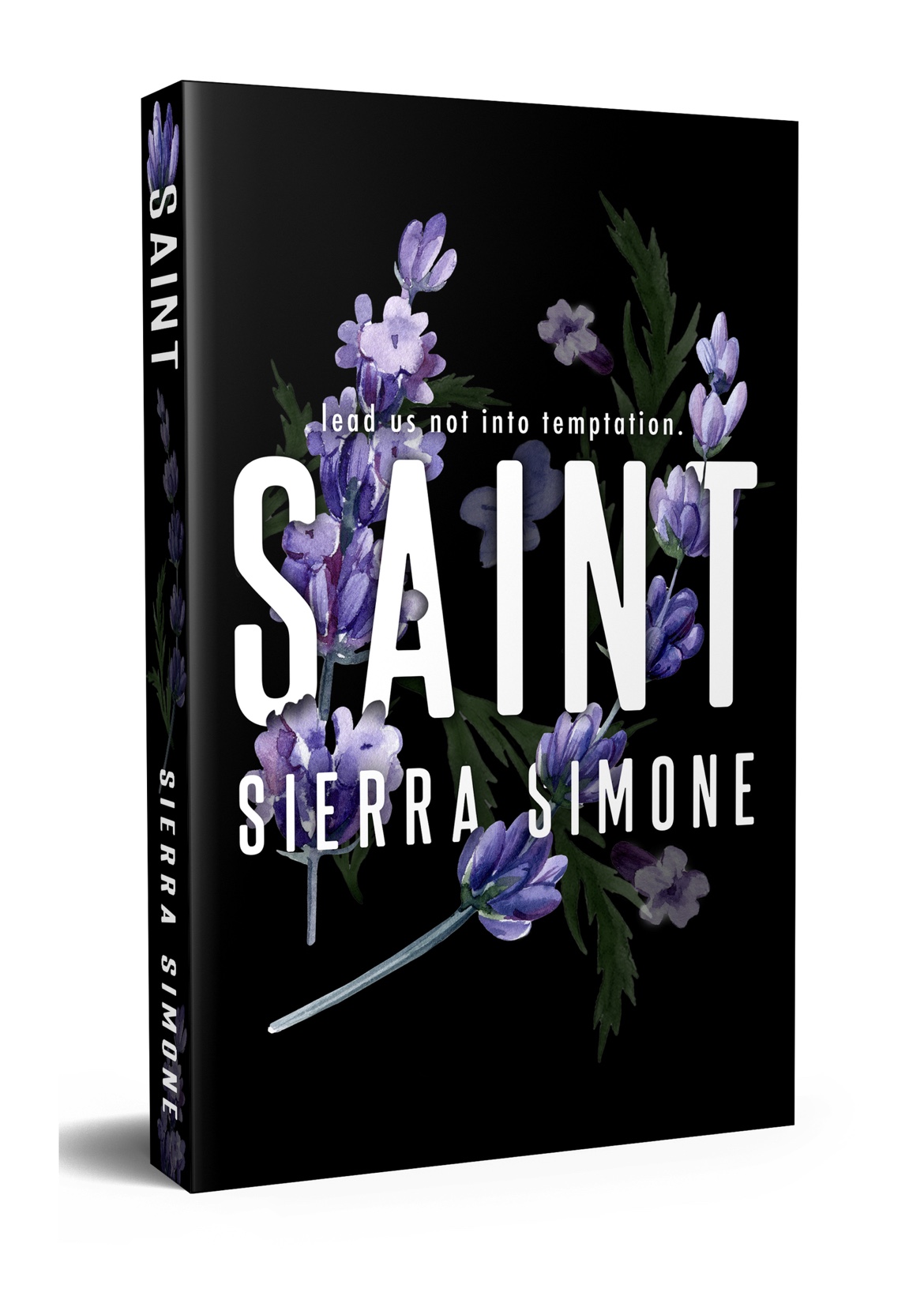
Loving Lessons from Saint by Sierra Simone

My dear friends, thank you for tolerating the continuous gushing about my romance immersion, 12 months now and still going strong! This post is about more than just the smut, I promise.

Disclosure: Spoilers!

My review of Saint by Sierra Simone on Goodreads (MM = male/male):

“Only my second MM romance. Captivating. So empathically and compassionately written, descriptions of the intrinsic experiences of mental illness, moral conflict, honest self-exploration and accountability open listeners’ minds and hearts to the depth of our fellow humans’ emotional, spiritual, and relational lives–with self as well as others. Sierra Simone‘s voluminous and passionate love of and attention to history shine so brightly, and her writing is both utterly sophisticated and completely relatable. Again, as in Sinner, social commentary is rendered gently, if clearly. This book could be read/heard and thoroughly enjoyed simply as sexy, contemporary romance. And with just a little more contemplation, its meaning and impact become so clearly and importantly much, much more.
Jacob Morgan‘s and Sean Crisden‘s performances move and resonate. Morgan’s accents bring us to Belgium and France with vocal ease. The narrators’ expert acting proves that voice alone is enough to convey all we need to know and feel another’s experience.”

OK SO: Sierra Simone. O.M.G, a QUEEN of language and expression, holy cow! Of all the romance authors whose work I have now consumed (and there are so many more, I will not know them all in this lifetime), her voice stands out, rich and vibrant. “…utterly sophistocated and completely relatable”–maybe I aspire to be so, hence my zealous admiration–because while I cannot think of better words to decribe her work, I know she can.

I have now listened to all three full length novels in the Priest Collection and I highly recommend them all. Jacob Morgan narrates with others, and his voice acting is simply superb, so honest and real. Inspired to listen by the Facebook Shaneiaks group live chat with Sierra and Shane East, once again I cannot thank this community enough for broadening my exposure, experience, and insights from fiction! Sierra is known for her explicitly erotic writing, and she describes in the chat how she came to commit, BOOBS OUT you might say, to writing spicy (‘ghost pepper’ level) romance for her own creative fulfillment. It so happens that doing this resonates deeply with readers and listeners everywhere–such a shining example of the far-reaching ripple benefits of open and audacious authenticity. I was moved to tears by Sinner and to deep thought by Saint, to the point of ordering the latter in print to annotate–only the second print romance I own so far.

The thoughts and feelings evoked by these stories almost escape verbalization. Journaling to untangle it all, I could only list the broad topics approached, addressed, probed, and articulated, individually and all intersecting: Racism. Religion. Spirituality. Grief. Blame. Conflict. Paradox. Love. Lust. Intimacy. Self-delusion. Fear. Shame. Communion. Self-love. Self-compassion. Honesty. Reconciliation. Peace. Commitment. Flexibility. AND. Reformation. Relationship, omg: Parental. Fraternal. Platonic. Romantic. Intimate. Carnal. Spiritual. Intellectual. Multidimensional. Eternal. It’s all an intense, existential jumble, yet conveyed wholly and elegantly in a couple hundred pages of writing, through only dialogue and narrative. Amazing.

The Catholic Church. Simone notes at the beginning of Priest: “I spent the majority of my life in the Catholic faith, and while I’m no longer Catholic, I still have the utmost affection and respect for the Catholic Church… That being said, this novel is about a Catholic priest falling in love. There is sex, more sex, and definitely some blasphemy. (The fun kind).” Her attitude toward the church is respectful, even reverent, as she clearly acknowledges its flaws and failures. Her criticism is loving, never disparaging or rude. How would our world be altered if more of us could take this approach to change and justice?

I think I liked Saint in particular because of the courageous and difficult journey Aiden takes toward integration–to know that he may carve a unique and unprecedented path to being wholly devoted to God without sacrificing any part of himself. I wanted so much for him to embrace that infinity loop of polarity navigation–self-acceptance and independence from dogma and wholehearted communal spiritual participation. Simone’s portayal of church leaders, always local and in personal relationship with the heroes, is so empathetic–they exemplify the ideal spiritual leaders and pastors–helping people through their personal conflicts and crises with love, compassion, humility, and non-judgment.

Characters on journeys to becoming their whole selves, loving each other in the process, helping each other self-actualize–is that what moves me? Isn’t that what heals? In the context of a social structure that has so much of its own paradox–such profound benefits of faith and community and also radically high risk for severe dysfunction, omg… Is there an institution other than religion, that harbors such gaping potential for both healing and harm?

Simone shows how to maintain a loving, open perspective, accepting both poles of the Church, by writing how three brothers in one family react to the same trauma (sister sexually assaulted by priest, later dying by suicide)… Her books do not generalize, dehumanize, demonize, or judge anyone or anything in broad strokes. She does not throw anyone or anything away, nor does she dismiss, excuse, minimize, or deflect. The novels don’t necessarily explore deeply–or I should say explicitly? They are not political or sociological commentary at their core. But through the characters’ struggles and stories, we get to consider myriad gray areas and dig, if we wish, patiently and lovingly, into deeper meaning, both collective and individual, shared and private. The characters’ relationships bridge diversity of race, gender, sexuality, and other aspects of humanity; their moments of epiphany, empathy, and connection emerge in gentle starkness, drawing readers/listeners into vicarious, second hand emotional education.

The ancillary characters all play important roles–obvious and blatant in message–necessarily. They remind me of my own role as physician: I get to observe you, my patient, and your life, as a third party. I am not in your life with you, for the most part. I get to stand and walk next to you when you come to me; I witness. I can know you, and you get to control (much of) that. I can only pry so much; you can choose to withhold. And I may still, if I pay attention, see you. Because our relationship is low-stakes and imbalanced (my role is only to survey and advise, much like the mentors, teachers, and pastors in these stories), I have the freedom to speak frankly, objectively, and lovingly… You may receive my advice more openly than from loved ones because of my credentials and the nature of our relationship. What a fascinating and meaningful privilege.

I wonder how people reject these stories–what do they object to, what are the emotions, triggers, rationalizations, and other factors? To me, these stories can be taken as lessons in honesty. Maybe that’s why I love them so much, because honesty is important to me, and barriers to honesty and self-relection can be formidable in the context of such strong, dogmatic social norms as in the Catholic Church, so heavily steeped in ritual, tradition, and institutionalization. Maybe I see these stories as exemplary works for culture change–fiction as vehicle for social movement–duh-HA! Does anyone expect that from romance? It’s unexpected and, I think, deliciously subversive. Such artful integration, BRAVA. More, please.

God bless Sierra Simone and authors everywhere and in all times, who make us think, feel, and connect, to be and do better.