After posting “Questions for Connection” last Sunday, I started listening to David Brooks’s How to Know a Person: The Art of Seeing Others Deeply and Being Deeply Seen on Tuesday–cramming for book club on Thursday, of course, having added it to our list months ago. Perfect timing! The whole book, as you may imagine, discusses the what, how, and why of human connection, and it speaks to my soul, omg! From developmental psychology to conflict resolution, education to culture, and told through his and others’ personal stories, Brooks distills decades and generations of objective and intuitive knowledge and wisdom into a fast, easy read/listen that points us all toward both the doing and being of presence and attunement to one another. There is an entire chapter on asking good questions, which I obviously appreciated.
Illumination was a novel idea to me, however, and I look forward to reading and marking up this chapter in the hardcover. Brooks describes illuminators as people whose presence–their posture, mannerisms, words, and ability to listen, absorb, reflect, and connect–lights others up. They are the ones who make us feel safe, who open us up and thicken our social ties. I have thought and written for years about the importance and impact of feeling seen, heard, understood, accepted, and loved; illuminators do this for and with us. This is how I wish to show up to everyone in my life–patients, family, friends, colleagues, online acquaintances, and strangers alike. The book provides skills and practices to do just this, and though I estimate my proficiency to be reasonably high already, Brooks presents pearls that inspire me to do better yet.
He also discusses Accompaniment, the attitude of escorting, even stewarding, one another on our respective life journeys. The concept evokes a sense of deep empathy, kindness, and reverence for our shared humanity that feels so lacking these days. Subsequent chapters discuss suffering, despair, empathy, hard conversations, and personality traits that affect our relationships to self, others, and society at large. “We are all walking each other home,” Ram Dass says. Hallelujah.
I finished HTKAP in plenty of time for book club, excited to explore and discuss with my friends. Our conversation was warm and connecting, and Mary shared yet another deck of questions meant to bring people (teens, in this case) closer. Sue even stayed the whole time, which was a big deal, and I think speaks to the successful intended effect of the book. How wonderful.
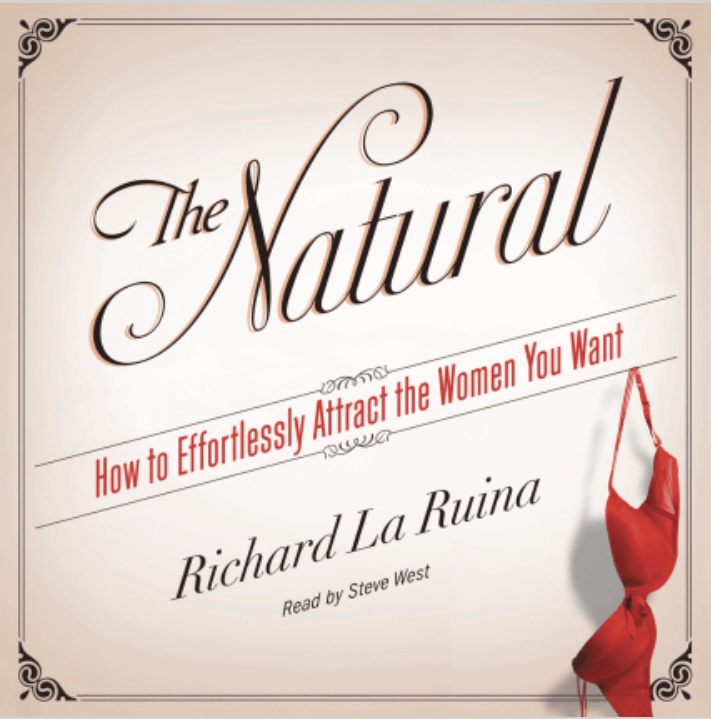
Published in 2014, eight years after founding his seduction and dating coaching business PUA (pick up artist) Training, some of the book has perhaps not aged well (eg the parts about touching, and use of the word ‘control’). The direct and sometimes blunt descriptions of ‘types’ of women and scenarios, and the granular scripts he presents as highly successful interactions made me cringe sometimes, as I imagined being the woman in the situation. But I found myself nodding as often as I squirmed. I make no judgments about pick up artists, their goals, and their methods, as long as everything that happens between them and the women they engage with is fully consensual, lucid, and mutually fulfilling.
Two things stand out to me about The Natural, especially in comparison and contrast to How to Know a Person.
First, La Ruina is remarkably open about his personal experiences throughout this book, similar to how Brooks is in his. He chronicles his journey “From Geek to Natural” in the first chapter. Son of a single mom in a rough neighborhood of London, bullied in school and having no strong male role models, he took the initiative to turn his nonexistent romantic life around and learn how to be more interpersonally effective with women. He devoured books on psychology and communication, and sought teachers. He practiced regularly, diligently leaving his comfot zone, trying different techniques, recording and analyzing successes and failures. He created an organized and consistent, though flexible and customizable method for approaching, engaging, and yes, seducing women, which he shares openly and transparently in detail in the book; we readers and listeners get to witness his transformative journey.
Throughout the book La Ruina’s honesty strikes me. I hear him (through Steve’s voice) as humbly confident, offering his personal perspective, learnings, and earned expertise to benefit others: men who feel like he used to feel around women–awkward and intimidated. He makes appropriate asides to point out that women are not simply marks for conquest; that seduction is, in fact, a process of connecting with another person on a human level–albeit with a specific and often carnal objective. He admonishes readers/listeners to be respectful and honest, to attune to women’s nonverbal cues, to practice excellent self-awareness and self-regulation. He addresses consent, sexually transmitted infections, and expectation setting. He distinguishes between same night sex and a one night stand: sex on the first meeting does not necessarily have to be the only time, and seduction can lead to anything from casual sex to casual dating, to long term relationship. I find myself mildly disconcerted and oddly appreciative at the same time.
Second, when I get still and consider these two books, written by men from different generations and with apparently divergent goals, I can see them both as treatises on relationship and communication. Both enumerate a set of skills and practices for connecting with other humans through face to face interactions. These skills involve presence, active listening, real time energy attunement, and caring for our counterparts. Brooks discusses more esoteric and philosophical topics, as his goal is to get us to think both more deeply and globally about humanity’s current state of collective disconnection and how to remedy it. La Ruina simply wants to help men get laid, but in a way that makes them better versions of themselves in the process.
Both of these books remind me of Presence by Amy Cuddy, another book that I love. You may have seen her TED talk, “Your body language may shape who you are”, on how posture influences self-confidence, self-efficacy, and others’ perceptions of us. Ten years ago I started “power posing” before presentations–standing tall with feet wider than shoulder width, arms extended, palms open, chest out, calling forth my credentials and expertise to show up all me, all in, to my audience.
The skills, techniques, and practices for listening, asking questions, and attuning to others in both Brooks’s and La Ruina’s books parallel Cuddy’s suggestions for attending to posture and body language. At the end of her TED talk she says, “fake it ’til you become it”: In effect, act like you’re calm and confident. Imitate it, do it with your body until you can really feel it–wholly embody it–in your mind and spirit also. In all of these books, I hear the authors showing us how and what to do, on our way to being the person who does these things naturally–attuning to others, empathizing, understanding, attending to their needs, and connecting, which also feeds ourselves in turn.
Whether our goal is to inspire an audience, support our friend through their struggles, or take a woman (or man–it occurred to me multiple times that the techniques La Ruina recommends for seducing women could easily apply to men–because it’s all about making the other person feel seen and appreciated) willingly and happily to bed, both the being and the doing matter. Our expressions and actions reflect our attitudes and intentions. When all of these are aligned, we are authentic. We can sense when this is not the case, but we don’t necessarily require 100% alignment to engage willingly with someone–we often give one another the benefit of the doubt and leave room for improvement, as long as we feel safe enough.
Illuminators may vary in mission and goals, apparently. If our job in this lifetime is to walk with one another and make our respective journeys a little less painful, a little more joyful, and more lovingly meaningful in connection, then How to Know a Person, The Natural, and many other resources can help us. I never thought I would listen to, much less admire, a pick up artist’s practice manual, and here I am. There is learning to be had everywhere and anywhere, my friends! I’m excited to see where I find it next.
The best books make me both feel and think deeply. The Code of Us by Liv Evans has done so to such a degree that I will not do it justice in this post–I’m still hung over! But processing the story must start somewhere, and if I can move someone here to read or listen to it and discuss, then it will be worth the effort.
Mia, a dedicated neuropsychologist, researches artificial intelligence. Her husband, Arden, creates beautiful sculptures out of things people throw away. Their devoted love story serves as the steadfast anchor for a novel that throws into question everything we may think we know about cognition, memory, technology, relationship, and evolution–about how we think and feel about humanity itself.
Arden agrees to serve as Mia’s alpha subject for her ‘replicated intelligence’ project, meant to preserve and enhance human memory in service of improving people’s quality of life–eventually, when the product is fully developed. When a traumatic brain injury renders him essentially brain dead and on the brink of actual death, she and her two colleagues and close friends rush to implant Arden with a chip that brings him back to life, body and mind, with the still nascent but fully functional technology. Told in alternating present day and flashback, a complex journey of loving intentions, ethical dilemma, grief and loss, unintended consequences, and social implication unfolds.
While the plot engages, stimulates, and challenges me intellectually, it’s the emotional and relational evocativeness–the human(e) relatability–that makes this book an instant treasure in my library. In a mere 188 pages (5:37 hours, narrated by the multitalented Jodie Harris and Steve West), Evans examines–presciently, brilliantly–myriad potential complications and consequences of artificial intelligence–intellectual, social, legal, psychological, and corporeal, among others.
To ground the exploration in an unwavering love story, though, centers readers’ attention on the relational implications, which speak directly to my raison d’etre. Of all the questions that emerged in 10 pages of journaling on this book, the one I most wish for us all to consider is, “How does AI, in any given space, uphold and protect the humanity of all whom it touches?” I almost dismissed it as too difficult a question to attempt answering. But the more I consider the complexity, inevitability, and acceleration of this technology, the more I feel convicted that we, the human creators and consumers of AI, must step up to ask and answer exactly such challenging and overwhelming questions. We are called to be more thoughtful, considerate, inclusive, and complexity-tolerant than we have ever been, by a long shot.
Whatever we do will always be imperfect. There will always be unintended benefits and harms, and our attempts to weigh, compare, and justify it all will always leave many unsatisfied and frustrated. So how do we proceed? How do we show up to engage with the most complex adaptive problem that many of us can ever fathom? What mindset(s) will minimize the risk of nefarious, greedy, and inhumane forces overtaking the altruistic, humanitarian, and egalitarian ones?
Last fall was the first time I thought and wrote in any depth about how AI will change medical practice. Since then I open more and more to the potential benefits, led by my astute and altruistic colleagues in primary care, who model thoughtfulness, compassion, and critical (neither blind nor cynical) appraisal and application.
As my own learning progresses, some key concepts emerge that I will hold in front. They will evolve, obviously, and I ground them always in the commitment to enhancing human to human connection, no matter what tool is considered.
Acceptance with conditions
Humans innovate. We create. We aspire, imagine, and push boundaries. It is the greatest gift of our intellect, and also a potentially fatal flaw. What’s done cannot usually be undone. I accept it all in iterations, fear and trepidation giving way slowly to cautious possibility. That said, nobody should be given carte blanche to advance technology unfettered. Banning development only drives it underground, where the presence and risk of nefarious forces increases, in my estimation. Thus, we must accept and embrace our discomfort with the unknown and uncertain, ask the hard questions, and grapple with the ardent persistence of true infinite game masters.
Transparent and mindful accountability
Ethics committees are a good start. Checks and balances on the runaway flaws of primarily capitalist ventures must be established and maintained. Open source data and outcomes sharing will be key for minimizing harm, I think. That conflicts directly with the competitive financial drivers of innovation, I know. So we must, somehow, wrestle earnestly, honestly, openly, and in good faith with the novel humanitarian complexities and problems that AI creates. We must do accountability better than we ever have which, sadly, is not saying much.
Agile and adapative commitment
There are no words better than exponential acceleration to describe the march of modern technology. We have built this kite that flies ever higher and faster, and if we hope to influence its path at all, it will take more than the string and gym shoes we started with. We must invent the tethering, weighting, and conveyance materials, structures, and vehicles in real time. The faster and more fully we accept the inexorable progress of AI, the more effectively we may flow with it rather than against, to move swiftly and smoothly to manage its ethical, humanitarian, and social implications and consequences.
Critical hope and optimism
Be warned: The Code of Us is not a romance novel, despite its love story core. The book does not end happily, though the end of the book is not necessarily the end of the story. It took a few days for me to identify all of my emotions, led by sadness in depth and intensity. Liv Evans summons, with incredible economy of language, a viscerally, if not cognitively coherent (and thus quintessentially human) cacophony of feelings that at once proves the undeniable shared humanity that fiction evokes, and yet wholly defies full articulation. I don’t think I have ever journaled ten pages about any book, and I’m still intellectually, emotionally, and existentially entangled. Surprisingly, it feels light rather than heavy. This book teaches me a lesson that recurs: With every degree of acceptance, I gain a commensurate measure of liberation. Despite so many egregious examples to the contrary, I still believe humans can transcend our most self-serving, collectively self-destructive tendencies. I believe we have the capacity to collaborate for the common welfare. We just don’t readily exercise it. I have called myself a cynical optimist. Today I choose critical optimist, because we simply must proceed. We must hold onto that kite and not allow ourselves be dragged. In medicine we learn critical appraisal skills: how to evaluate data and evidence for validity and application. When the data is good, we accept it and apply, until new and better data shows us otherwise.
My opitimism is not blind. It is realistic and evidence-informed, if not fully evidence-based. I will deepen my acceptance, demand transparency and accountability, and train for adaptive cognitive and emotional agility. I intend to run with rather than get dragged or trampled.
We humans may destroy ourselves in the end, and that will be what it will be. Until then, however, I still have hope that we may yet save ourselves.




 Healing Through Connection