A Five Year Plan

The Lodge at Whitefish Lake, Whitefish, MT September 2025

It’s been a dense few weeks, friends! Or a dense year, maybe, as these blog posts appear late more often now than in a while. Life! I’m okay with it; eleven years is a long time to maintain a project that was only meant to last one. I’m just happy to be here! Family came in last weekend, and I’m about to fly myself tonight, so this post will serve for two weeks. Hope everybody is well and happy!

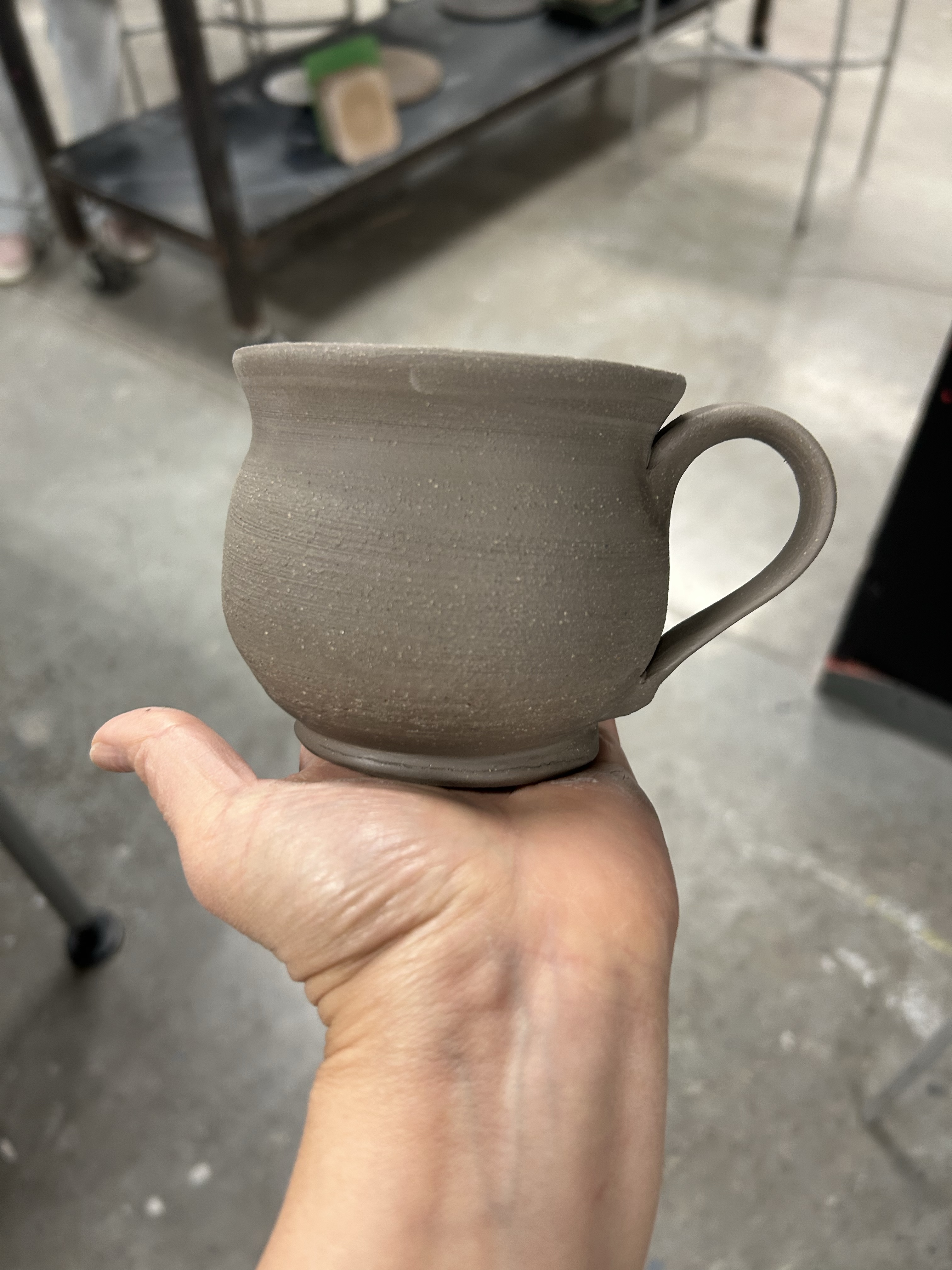
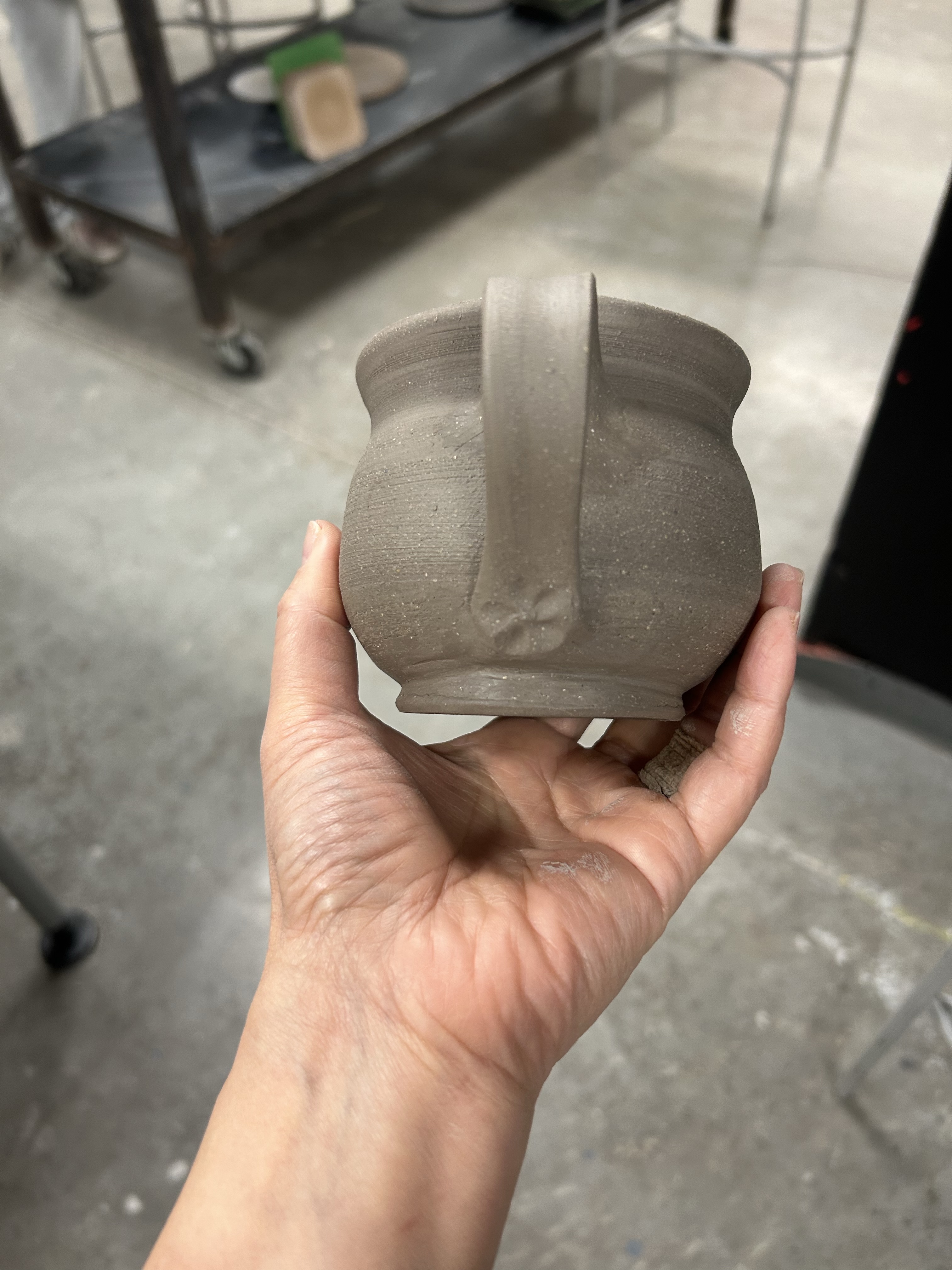
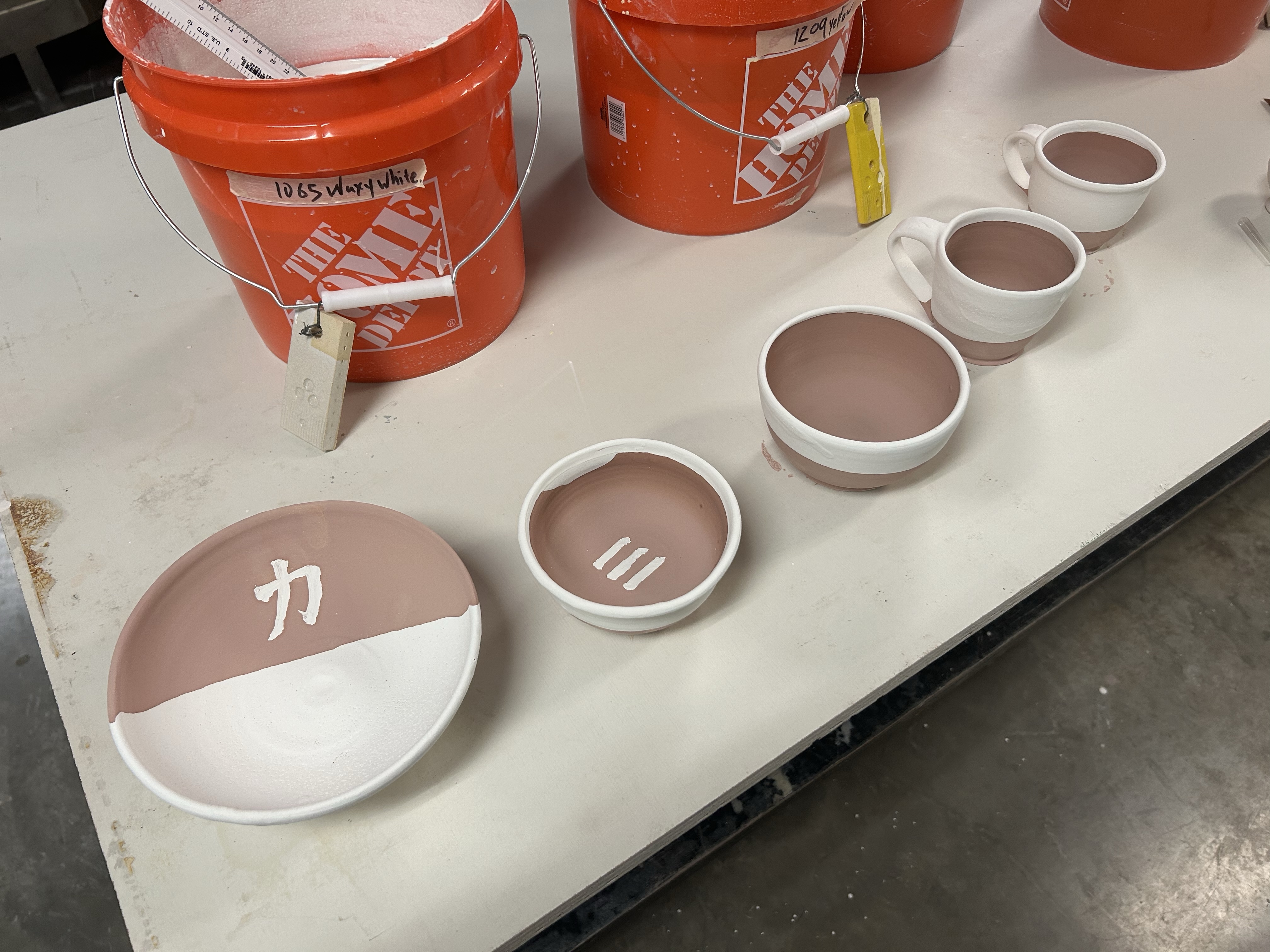
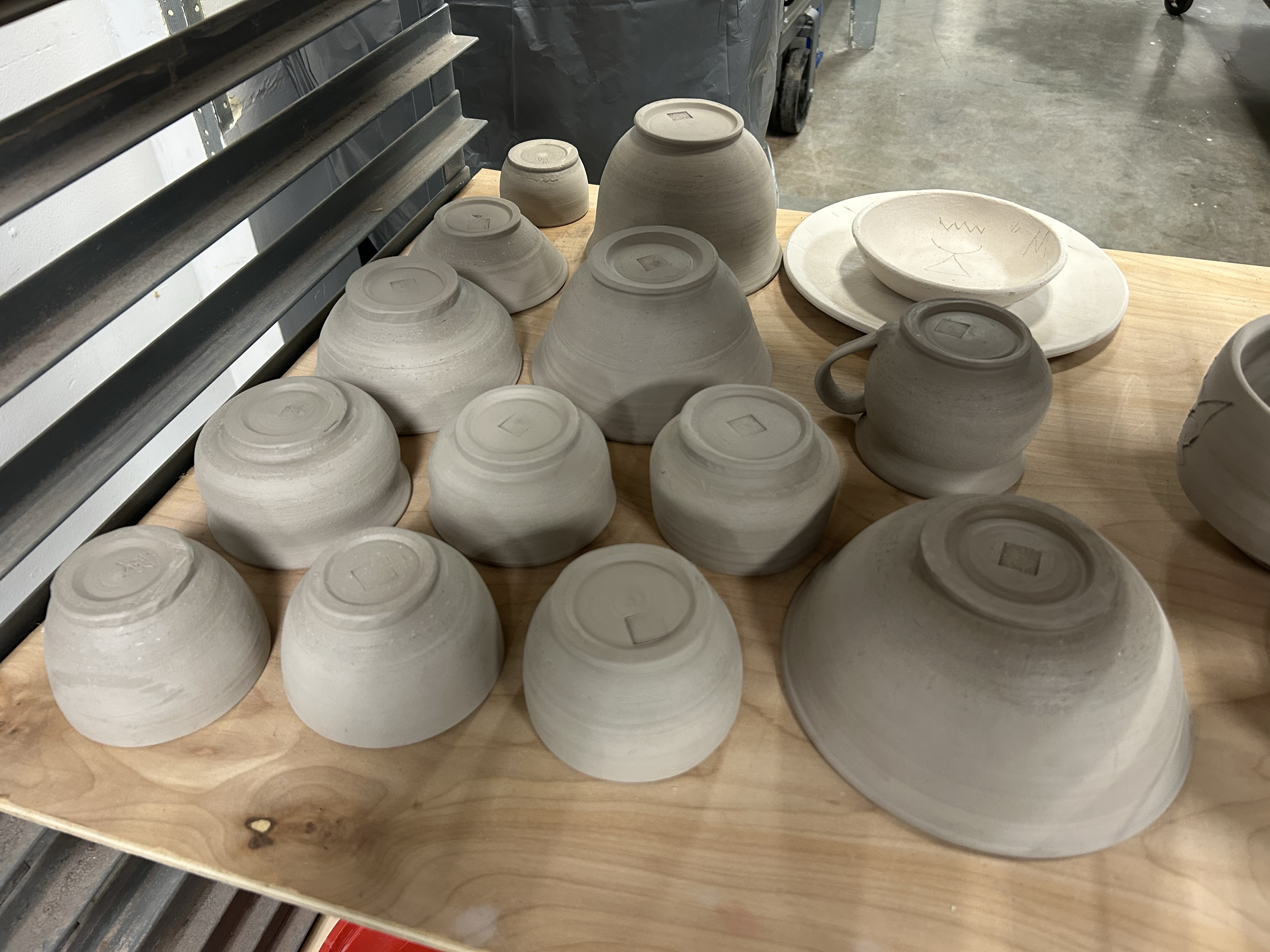
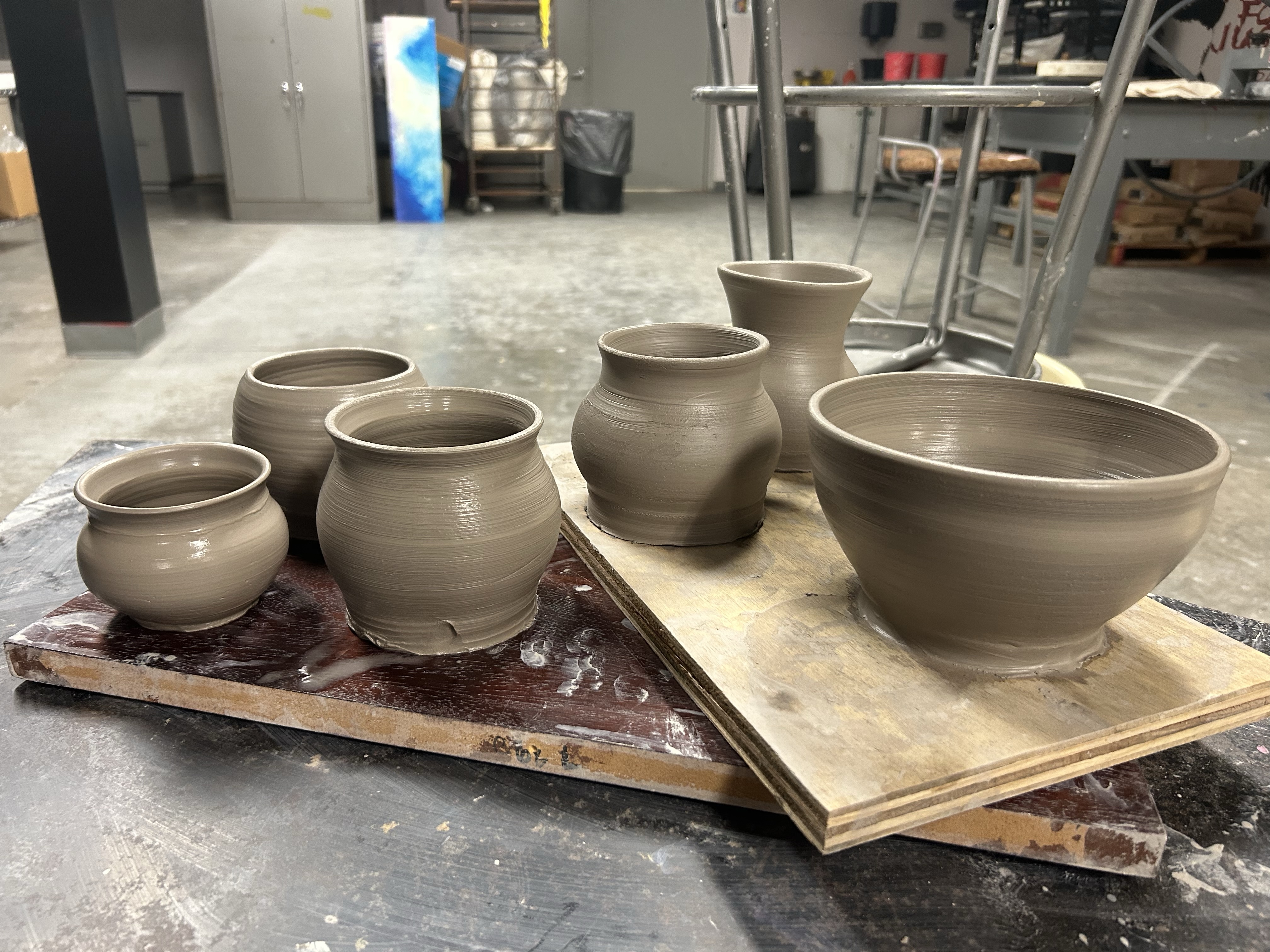
Daughter and I signed up for a pottery class back in June, 12 weeks ago, I realize today. It took a food twelve hours to call forth the muscle memory from 26 years ago when I made over 400 pots, and now I’m making progress again. The first batch yielded 27 pieces, teaching me how the glazes behave when layered. By the end, barring catastrophe, I will have over 50 creations to use and share this time. See below for photos!

I recently saw a patient who will retire in the coming year. Their annual exams brought us both warm connection over the years, and we agreed that they are as healthy as they could be on the threshold of this life transition. At the end of the day they asked me to include some parting advice for the next five years, a new request for me. How fun! Now I wonder what I’d write for any patient when I see them (potentially) for the last time. What would I write for myself? For the kids? My parents?

What advice would you write to yourself and your loved ones for the next some years? For your leaders? For our legislators and judiciary? How do you already think and communicate in these terms?

I listened to Simon Sinek’s The Infinite Game again yesterday and today. He writes in terms of business and professional leadership, but his premise of an infinite mindset applies to how any of us may choose to live. Inspiring. One of the reasons I get behind on the blog is that I’m writing Love Letters to Patients (LLTP) every week. Every time I think I will address their medical concerns, I end up writing about their life, their relationships, and their impact on me… and my aspirations for them–for us all. I intend to edit and organize after one full year; that will be Book. Can’t wait to share it with you all. Meanwhile, I think this extemporaneous ‘five year plan’ may give you a taste of what that bigger project may feel like. What think you? 🙂


OK so in case I don’t see you next year (or ever again! 😦 ), you asked for my advice for the next five years.  AWESOME, this will be my first time writing something like this, let’s see what emerges ! 😀

  1. Continue to prioritize the most important things to you–the people and activities that give your life meaning.  I think you are already very good at this, and after retirement you will have time, energy, and resources to engage and invest even more, no?  How fulfilling!
  2. Physical fitness will be important. I love John’s advice of using gym time to fill in the small gaps in lower body strength that you may not get from your usual activities.  We discussed the ways you can tell if you’re still fit–getting up and down from the floor or low chairs/stools, feeling confident that you can embark on any new physical activity without limitation (hiking, skating, playing a new sport), etc.  Functional movements in the gym are key for this: forward lunges approximate going down the stairs.  Squats are getting up from a low chair.  Deadlifts are bending over and picking up something from the floor.  It’s the eccentric movement–the controlled deceleration–that is key for fall prevention: Think walking downhill quickly without hyperextending, torquing, or losing balance in your ankles and knees.  
  3. Stay open to learning anything.  Hang out with curious people who know different things from you and are generous with sharing.  Say yes to trying new things.  Spend time with folks from all generations.  I really think this keeps us young–openness, curiosity, exposure to and engagement with novelty, and just growing our neural networks in any possible way–visual, auditory, tactile, intellectual, emotional, and in movement!
  4. Assemble your medical pit crew, if needed.  You have a primary care doctor, and you have us at Exec Health for exercise and nutrition advice once a year.  Events may lead you to need medical specialists in the future, eg physical therapy, personal training, talk therapy–who knows?  But finding *your people* in each of these domains, and connecting them whenever possible so they may compare notes and coordinate care, will give you all more connection and improve outcomes, in my opinion.
  5. Vet medical and health information in the public domain with a very critical mind.  Sadly right now, that includes information coming from the federal government.  Avoid influencers and even medical professionals who are selling products or services for very high prices.  Look at financial relationships between public figures and the products they recommend.  The number of non-evidence based, fear-mongering, capitalist health and wellness businesses increases every year, and I have yet to vet one that I recommend.  Review things with your doctor before you pay for anything she did not recommend herself.
  • I think that’s pretty good general advice–not just for you but for us all…  Thank you for stimulating the thoughts!  Please tell me what you think and if you want me to add/address anything else.
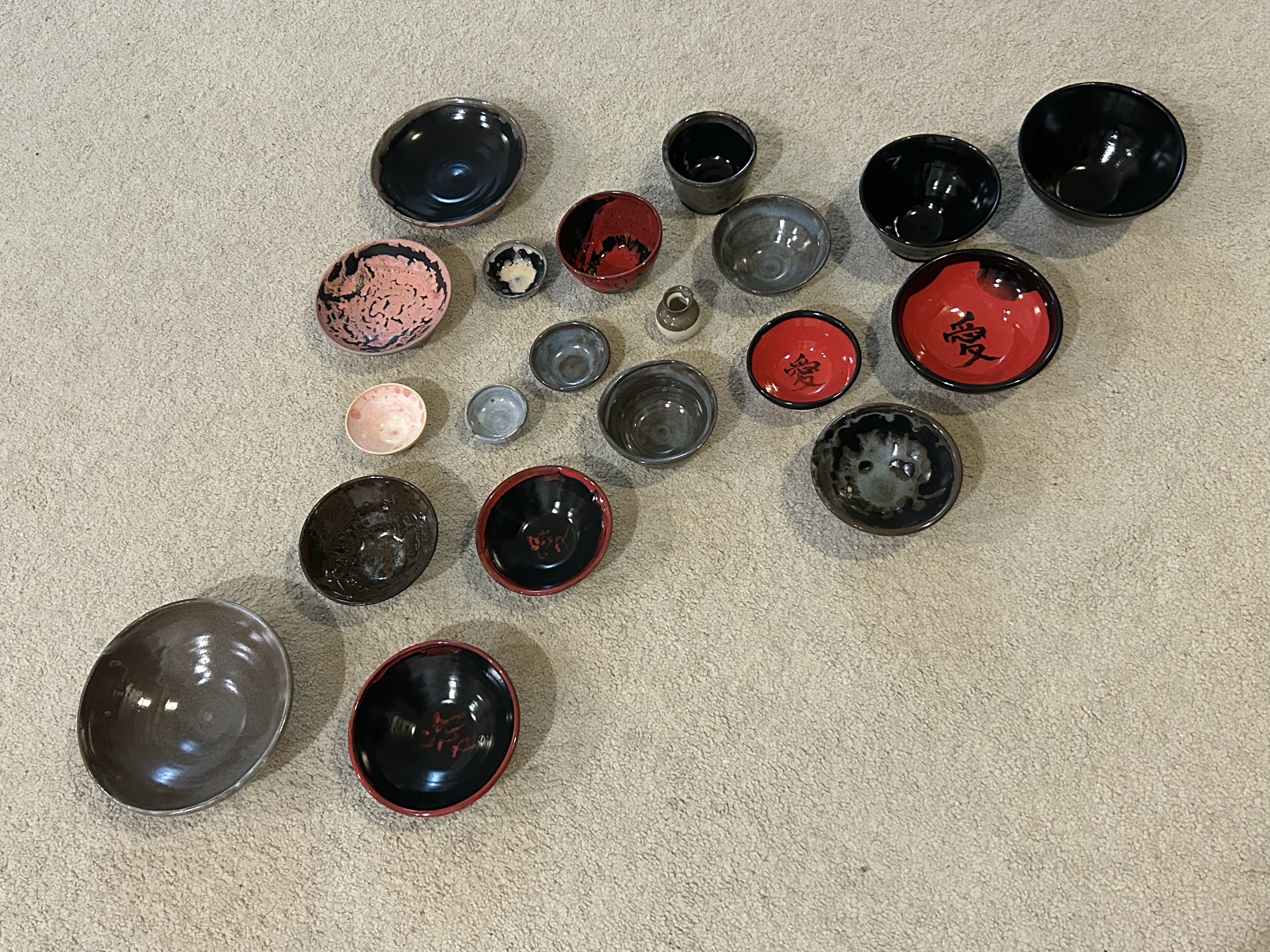
First pottery haul in 26 years. Not all beautiful; every one gratifying.
My best vessel and handle yet!
Accidental finger dents turned into a cute flower, which may be my signature hereafter
Waxy white over blue; two intended for the Ethos kitchen
The upside down ones are mine. Can’t wait to glaze them all!
Practicing for more mugs–learning how much clay and how to make a good cylinder first.
Also hoping to get at least a few ramen bowls out of the lot.

The Second Mountain

Ok friends, really quick tonight because I’ gotta get to bed on time!

I had a wonderful conversation with an exec recently who senses himself at a threshold. He has been remarkably successful in his career, not only by societal standards of status and income, but by his own ethical standards of leadership and purpose. Now in his mid-fifties, he looks ahead to closing the conventional corporate chapter of his life and opening the next– he’s just not sure what it will be. It’s not likely to be board work, as so many do. He seeks more meaning, more purpose, a legacy that he can be personally proud of, perhaps? I suggested that he work with a coach to help him think/talk through it, and as I listened more, I thought coaching itself may be his calling. I had an inkling that I knew an inspirational phrase for this life stage, this slow burning fire of positive middle-age transition, but I could not locate it.

As I ended my 100 Pregnancies post asserting that we all have agency to respond to and live life as we choose, I thought of another friend whose work is now a morass of chaotic uncertainty due to the current administration. In reply to the post, she messaged me, “As I start to contemplate retirement and what comes after, I feel almost giddy with possibility. It’s almost like I get a do over of that young adult chapter where all doors where open to me, but I felt so duty-bound and worried about making good choices that I didn’t appreciate it. What a luxury to have another chance to appreciate possibility and to pair it with intention and agency!” She is my people, obviously.

I replied (also giddily), “I (spoke) with someone about this age and exactly what you’re describing–like one more, great opportunity to be and do our best–to fully live into our intentions with the benefit of everything we have lived to date!”

Oh, I should tell you all, I have put down Book for now. After a year of trying fitfully and in earnest, it’s just not happening yet. Instead, I feel called to demonstrate and amplify civil political discourse–Healing Through Connection–through continued short form writing and public speaking. I have connected with a wonderful branding coach to help me expand my audience and innovate my method–anything is possible, and I’m attached to nothing. I’m not giving up my day job; it gets better every year, actually, and new collaborative possibilities shine on the horizon. Still, for ten years now I have cultivated and documented this ‘passion project’–a mission to make our relationships better in every domain, using any and all tools and practices that align with my values of honesty, integrity, curiosity, humility, and kindness. It overlaps with and mutually informs my clinical practice–the most cosmic integration that I built myself and also evolved completely organically.

This series of interactions and reflections on my way to the treadmill tonight finally unlocked that inspirational phrase in my memory–The Second Mountain! I listened to this book by David Brooks when it released in 2019:

“Every so often, you meet people who radiate joy—who seem to know why they were put on this earth, who glow with a kind of inner light. Life, for these people, has often followed what we might think of as a two-mountain shape. They get out of school, they start a career, and they begin climbing the mountain they thought they were meant to climb. Their goals on this first mountain are the ones our culture endorses: to be a success, to make your mark, to experience personal happiness. But when they get to the top of that mountain, something happens. They look around and find the view . . . unsatisfying. They realize: This wasn’t my mountain after all. There’s another, bigger mountain out there that is actually my mountain.

“And so they embark on a new journey. On the second mountain, life moves from self-centered to other-centered. They want the things that are truly worth wanting, not the things other people tell them to want. They embrace a life of interdependence, not independence. They surrender to a life of commitment.

“In The Second Mountain, David Brooks explores the four commitments that define a life of meaning and purpose: to a spouse and family, to a vocation, to a philosophy or faith, and to a community. Our personal fulfillment depends on how well we choose and execute these commitments. Brooks looks at a range of people who have lived joyous, committed lives, and who have embraced the necessity and beauty of dependence. He gathers their wisdom on how to choose a partner, how to pick a vocation, how to live out a philosophy, and how we can begin to integrate our commitments into one overriding purpose.

“In short, this book is meant to help us all lead more meaningful lives. But it’s also a provocative social commentary. We live in a society, Brooks argues, that celebrates freedom, that tells us to be true to ourselves, at the expense of surrendering to a cause, rooting ourselves in a neighborhood, binding ourselves to others by social solidarity and love. We have taken individualism to the extreme—and in the process we have torn the social fabric in a thousand different ways. The path to repair is through making deeper commitments. In The Second Mountain, Brooks shows what can happen when we put commitment-making at the center of our lives.”

I’m starting to think this blog, Book (eventually), and my commitment to relational leadership have all been my Second Mountain. Duh-HA! I also feel myself at another threshold now–empty nest and potential for even more personal expansion. Daughter is not the only one getting ready to launch! So might I live yet a Third Mountain?

What precipice meets you right now? How do you feel about it? Where do the feelings manifest in your body? Who else knows and can hold the space, un/certainty, excitement, trepidation, and giddiness with you?

Two more books come to mind, both that I also listened to years ago:
Changing on the Job by Jennifer Garvey Berger and
The Infinite Game by Simon Sinek

So let’s see where and what this all goes, eh? Very exciting!

The Code of Us: Opening Mind and Heart to Difficult Possibility

Spoilers likely, dear readers!
_______________________

The best books make me both feel and think deeply. The Code of Us by Liv Evans has done so to such a degree that I will not do it justice in this post–I’m still hung over! But processing the story must start somewhere, and if I can move someone here to read or listen to it and discuss, then it will be worth the effort.

Mia, a dedicated neuropsychologist, researches artificial intelligence. Her husband, Arden, creates beautiful sculptures out of things people throw away. Their devoted love story serves as the steadfast anchor for a novel that throws into question everything we may think we know about cognition, memory, technology, relationship, and evolution–about how we think and feel about humanity itself.

Arden agrees to serve as Mia’s alpha subject for her ‘replicated intelligence’ project, meant to preserve and enhance human memory in service of improving people’s quality of life–eventually, when the product is fully developed. When a traumatic brain injury renders him essentially brain dead and on the brink of actual death, she and her two colleagues and close friends rush to implant Arden with a chip that brings him back to life, body and mind, with the still nascent but fully functional technology. Told in alternating present day and flashback, a complex journey of loving intentions, ethical dilemma, grief and loss, unintended consequences, and social implication unfolds.

While the plot engages, stimulates, and challenges me intellectually, it’s the emotional and relational evocativeness–the human(e) relatability–that makes this book an instant treasure in my library. In a mere 188 pages (5:37 hours, narrated by the multitalented Jodie Harris and Steve West), Evans examines–presciently, brilliantly–myriad potential complications and consequences of artificial intelligence–intellectual, social, legal, psychological, and corporeal, among others.

To ground the exploration in an unwavering love story, though, centers readers’ attention on the relational implications, which speak directly to my raison d’etre. Of all the questions that emerged in 10 pages of journaling on this book, the one I most wish for us all to consider is, “How does AI, in any given space, uphold and protect the humanity of all whom it touches?” I almost dismissed it as too difficult a question to attempt answering. But the more I consider the complexity, inevitability, and acceleration of this technology, the more I feel convicted that we, the human creators and consumers of AI, must step up to ask and answer exactly such challenging and overwhelming questions. We are called to be more thoughtful, considerate, inclusive, and complexity-tolerant than we have ever been, by a long shot.

Whatever we do will always be imperfect. There will always be unintended benefits and harms, and our attempts to weigh, compare, and justify it all will always leave many unsatisfied and frustrated. So how do we proceed? How do we show up to engage with the most complex adaptive problem that many of us can ever fathom? What mindset(s) will minimize the risk of nefarious, greedy, and inhumane forces overtaking the altruistic, humanitarian, and egalitarian ones?

Last fall was the first time I thought and wrote in any depth about how AI will change medical practice. Since then I open more and more to the potential benefits, led by my astute and altruistic colleagues in primary care, who model thoughtfulness, compassion, and critical (neither blind nor cynical) appraisal and application.

As my own learning progresses, some key concepts emerge that I will hold in front. They will evolve, obviously, and I ground them always in the commitment to enhancing human to human connection, no matter what tool is considered.

Acceptance with conditions

Humans innovate. We create. We aspire, imagine, and push boundaries. It is the greatest gift of our intellect, and also a potentially fatal flaw. What’s done cannot usually be undone. I accept it all in iterations, fear and trepidation giving way slowly to cautious possibility. That said, nobody should be given carte blanche to advance technology unfettered. Banning development only drives it underground, where the presence and risk of nefarious forces increases, in my estimation. Thus, we must accept and embrace our discomfort with the unknown and uncertain, ask the hard questions, and grapple with the ardent persistence of true infinite game masters.

Transparent and mindful accountability

Ethics committees are a good start. Checks and balances on the runaway flaws of primarily capitalist ventures must be established and maintained. Open source data and outcomes sharing will be key for minimizing harm, I think. That conflicts directly with the competitive financial drivers of innovation, I know. So we must, somehow, wrestle earnestly, honestly, openly, and in good faith with the novel humanitarian complexities and problems that AI creates. We must do accountability better than we ever have which, sadly, is not saying much.

Agile and adapative commitment

There are no words better than exponential acceleration to describe the march of modern technology. We have built this kite that flies ever higher and faster, and if we hope to influence its path at all, it will take more than the string and gym shoes we started with. We must invent the tethering, weighting, and conveyance materials, structures, and vehicles in real time. The faster and more fully we accept the inexorable progress of AI, the more effectively we may flow with it rather than against, to move swiftly and smoothly to manage its ethical, humanitarian, and social implications and consequences.

Critical hope and optimism

Be warned: The Code of Us is not a romance novel, despite its love story core. The book does not end happily, though the end of the book is not necessarily the end of the story. It took a few days for me to identify all of my emotions, led by sadness in depth and intensity. Liv Evans summons, with incredible economy of language, a viscerally, if not cognitively coherent (and thus quintessentially human) cacophony of feelings that at once proves the undeniable shared humanity that fiction evokes, and yet wholly defies full articulation. I don’t think I have ever journaled ten pages about any book, and I’m still intellectually, emotionally, and existentially entangled. Surprisingly, it feels light rather than heavy. This book teaches me a lesson that recurs: With every degree of acceptance, I gain a commensurate measure of liberation. Despite so many egregious examples to the contrary, I still believe humans can transcend our most self-serving, collectively self-destructive tendencies. I believe we have the capacity to collaborate for the common welfare. We just don’t readily exercise it. I have called myself a cynical optimist. Today I choose critical optimist, because we simply must proceed. We must hold onto that kite and not allow ourselves be dragged. In medicine we learn critical appraisal skills: how to evaluate data and evidence for validity and application. When the data is good, we accept it and apply, until new and better data shows us otherwise.

My opitimism is not blind. It is realistic and evidence-informed, if not fully evidence-based. I will deepen my acceptance, demand transparency and accountability, and train for adaptive cognitive and emotional agility. I intend to run with rather than get dragged or trampled.

We humans may destroy ourselves in the end, and that will be what it will be.
Until then, however, I still have hope that we may yet save ourselves.