I am *almost* there with the pistol squats, baby! I can now get down to and up from an upright yoga brick on my right leg, with the left foot off the floor for 3.5 reps. The left knee is still bent at 90 degrees. So in the coming year, I bet I can get to full hip and knee flexion on the standing leg, and full knee extension on the ‘pistol’ leg. It’s a goal, woohoooo! I feel no pressure, only aspiration and fun.
Setting joyful, pressure-free, functional, and achievable yet challenging goals gives us self-efficacy. Achievement despite struggle in one domain gives us confidence in other aspects of life. We stand a little taller, speak a little firmer, and walk with a little more runway vibe. We own our agency. We get strong and confident, which makes us harder to threaten. We know we have power to, so we feel less need to exert power over. It’s a win all around.
Let’s get fit, yes?
May you move your body in joy and strength, in peace and community. We are built to move and do together!
2. Moving the body trains the mind which helps sleep which rest(s) both body and mind. Fitness in one domain positively impacts fitness in others. Any action counts.
3. Michael Jordan I am not. But I can follow his example of dedication, discipline, and excellence. Fitness transcends athletics.
4. Fitness applies to more than the physical. Where could we be more fit in life? What do we need to get better? Wishing us the support that helps!
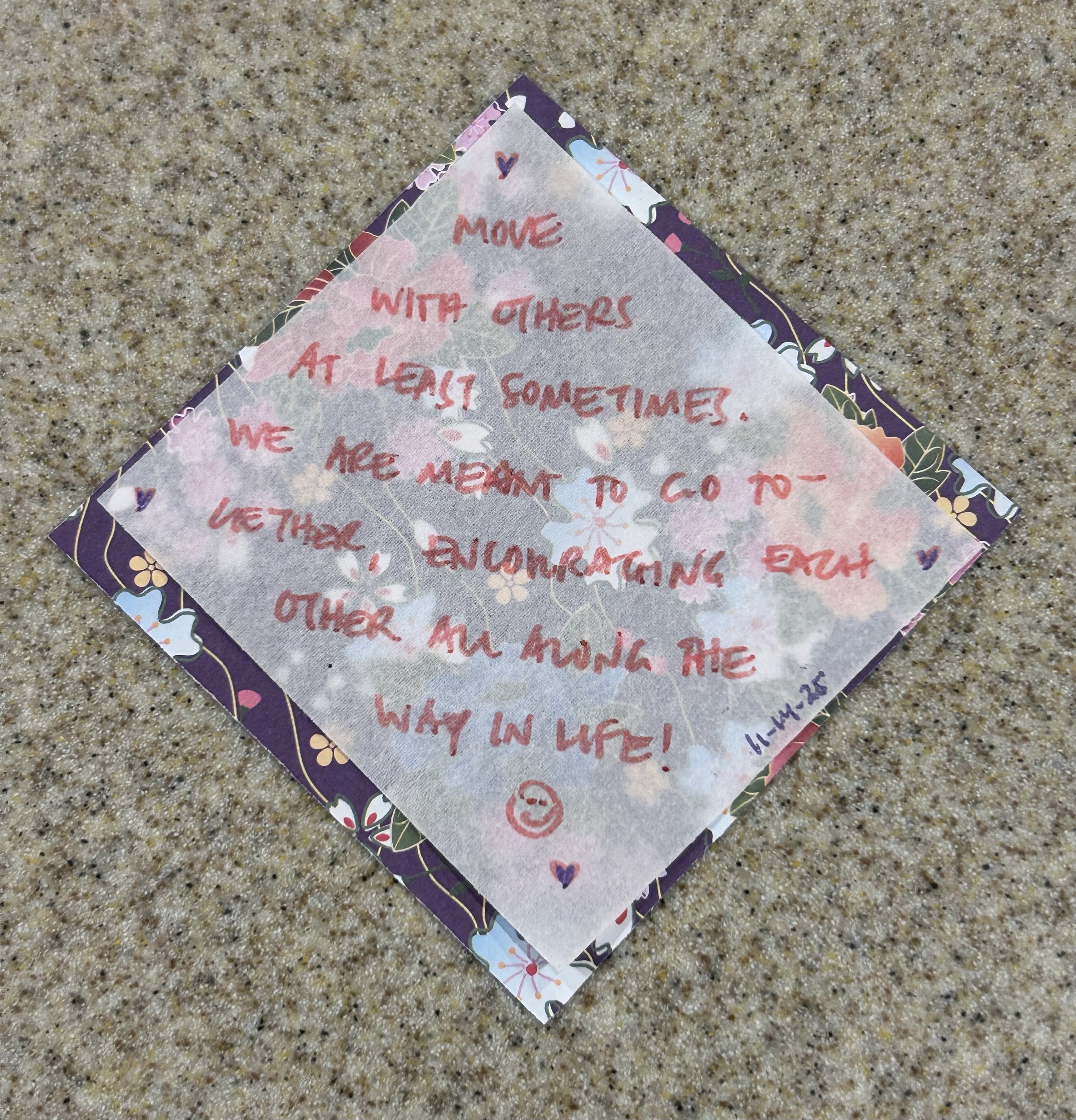
5. Move with others at least sometimes. We are meant to go together, encouraging each other all along the way in life!
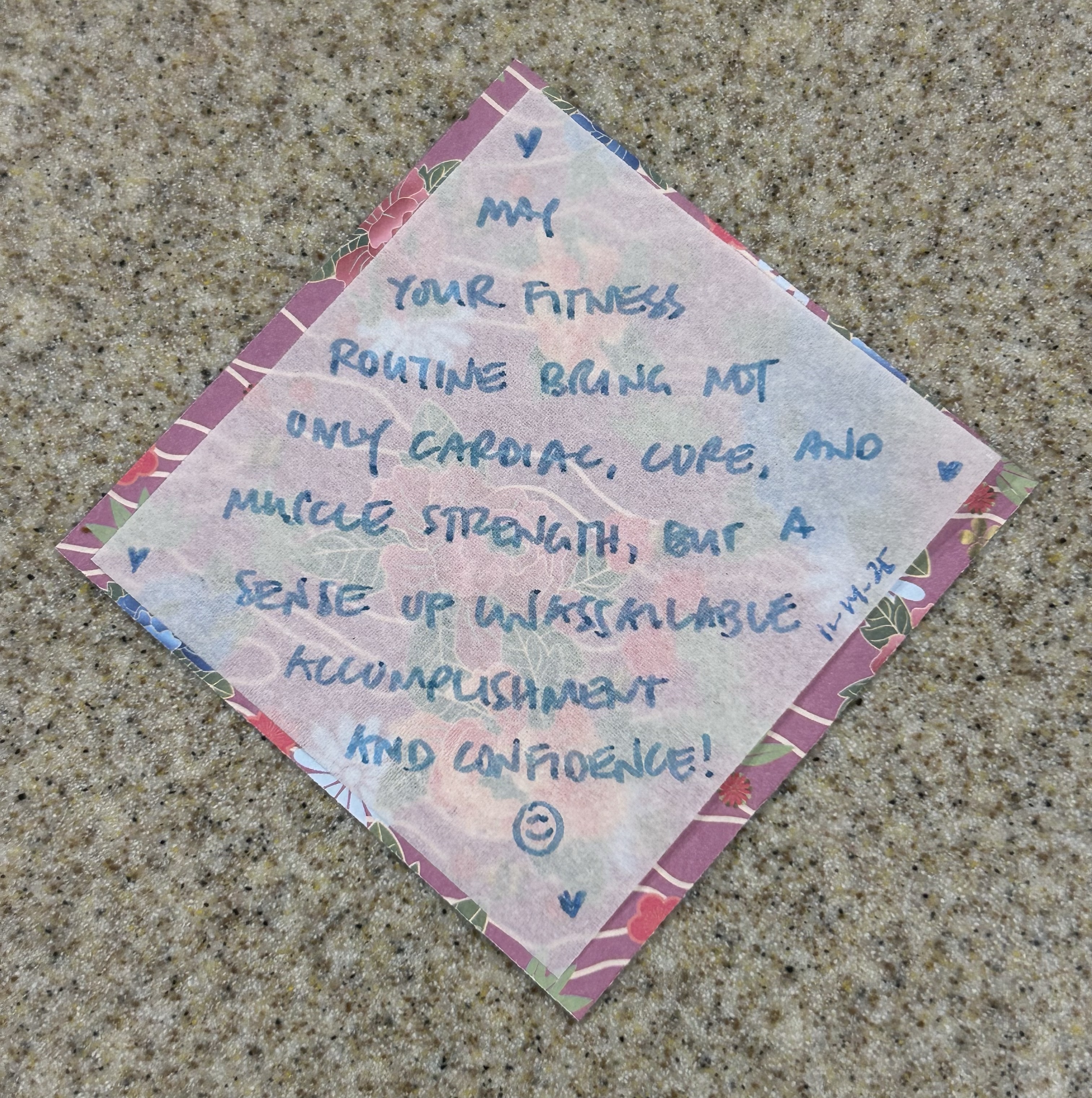
6. May your fitness routine bring not only cardio, core, and muscle strength, but a sense of unassailable accomplishment and confidence!
7. “All or something,” The Betty Rocker says. I wholeheartedly agree. Even one breath can make a world of difference. It all counts. Now go get it!
8. Hey in case you need encouragement: Dancing counts! So shake that booty. Joyful movement is awesome exercise.
9. Attack this workout! You’ got this! We can do haaard things! Then we go to the bakery and get treats.
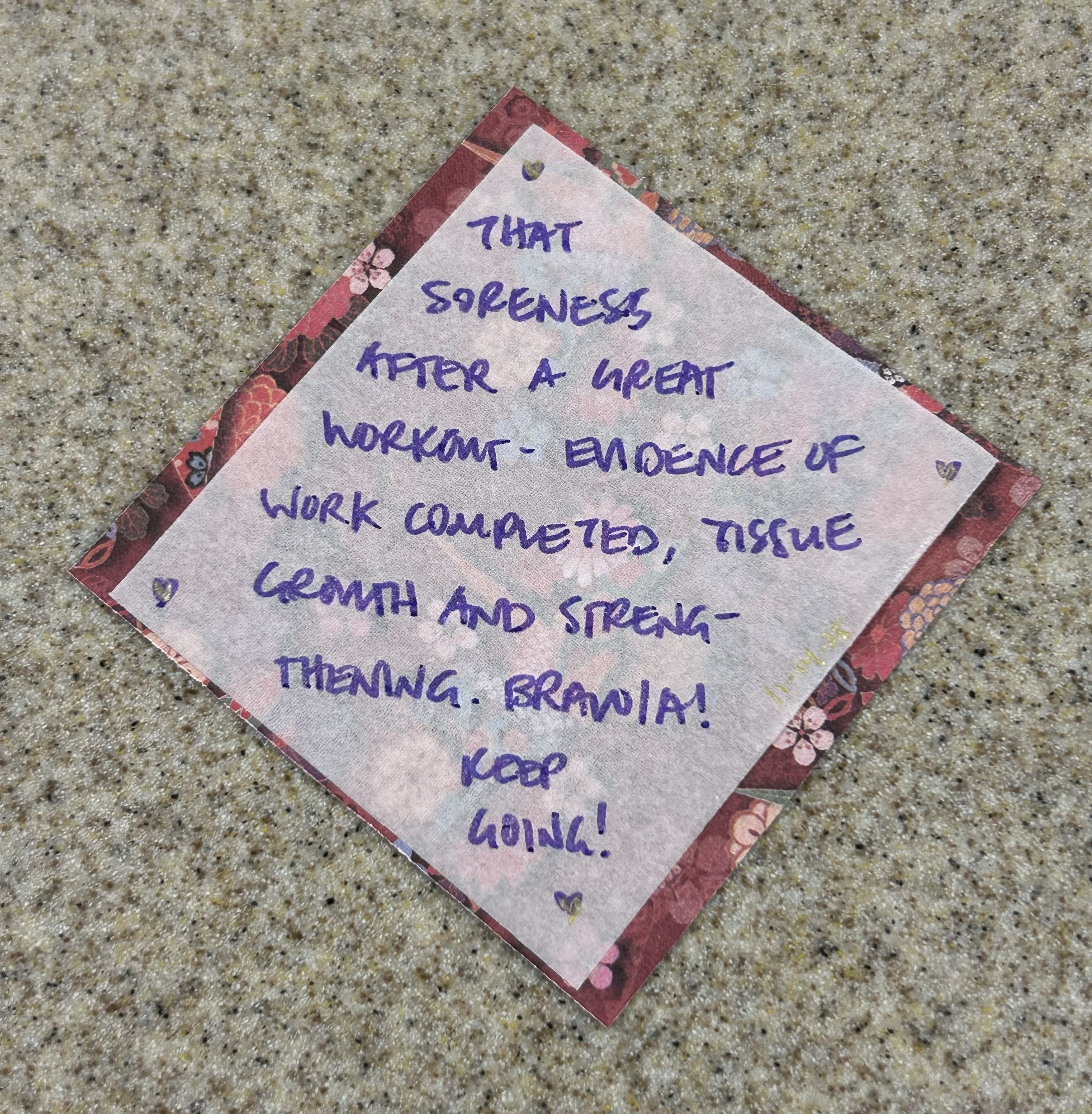
10. That soreness after a great workout – evidence of work completed, tissue growth and strengthening. Bravo/a! Keep going!
11. The five attributes of physical, psychological, relational, and organizational fitness: Stable, Strong, Flexible, Agile, and Resilient.
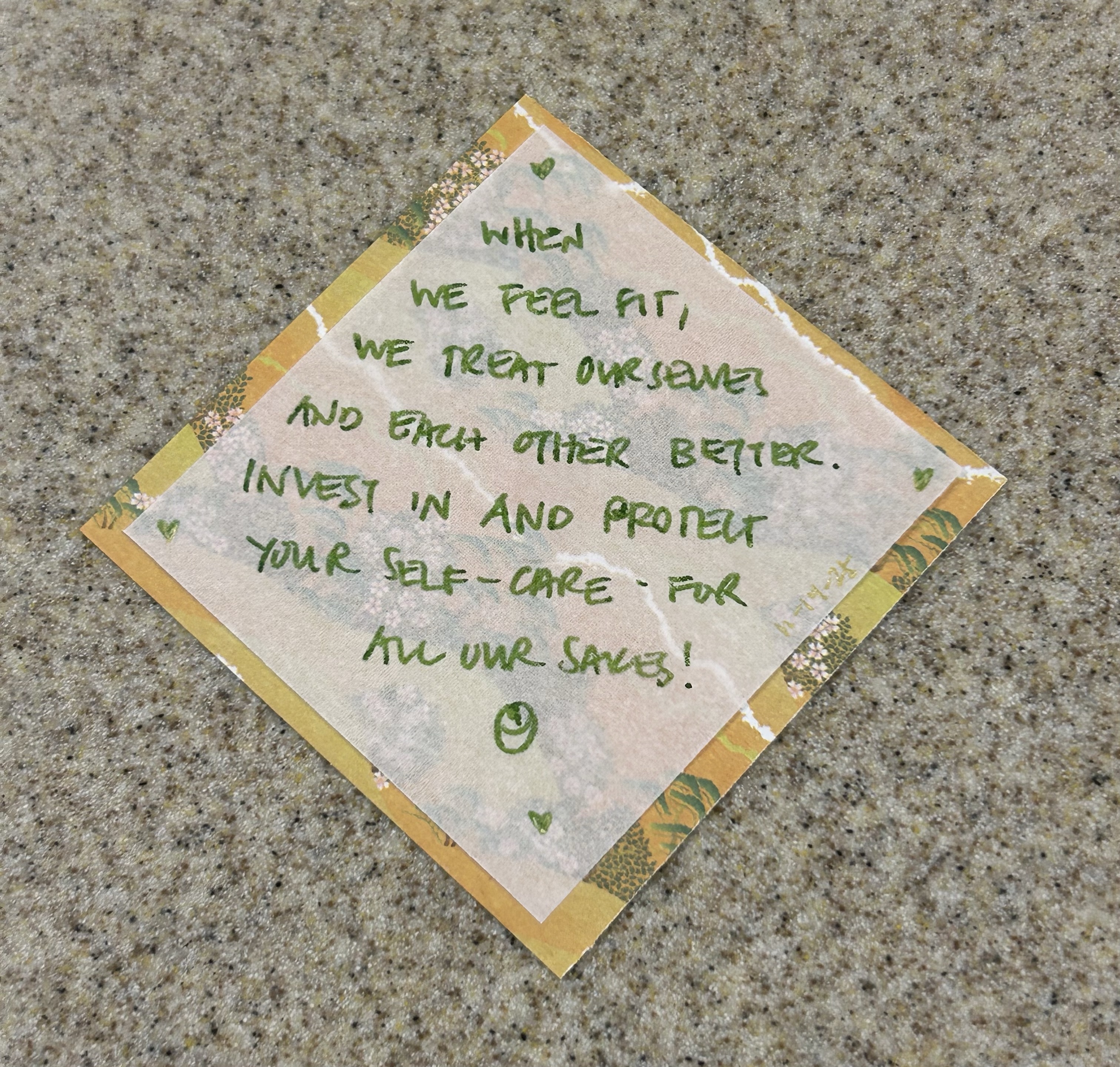
12. When we feel fit, we treat ourselves and each other better. Invest in and protect your self-care — for all our sakes!
Oh and if anyone is interested, here is my workout playlist! Until tomorrow, friends.
It’s been a week, friends—I shall spare you the details. Suffice it to say that somewhere along the way I started to ask myself the question above. As I prepare to kick off a series of wellness presentations based on the idea that we Lead from Any Chair—that how we show up for ourselves and others has power and impact whether we intend it or not—I must check in on my own integrity. How do I show up?
I jotted notes for an “Impact and Impairment” post a few days ago:
Progression of stress: What are the first signs, when and what do I notice? Are they thoughts? Body sensations? Moods? What are the smoke alarms, and can others detect them before I can? What do I do in response to awareness? How am I impacted by this stress right now—sleep, workouts, eating? And how is my function? Am I getting everything done that needs doing and would I notice impairment soon enough and have the resources to recover? What does the housefire look and feel like?
Lazy Susan unicycle: I can’t remember the last time I thought of this image, which I wrote on this blog many years ago. Sometimes life feels like holding a lazy Susan in each hand, loaded with life things and spinning in opposite directions, while unicycling through traffic wearing a scratchy pant suit. That it came to me this week felt like a sign that I felt the impact of everything, no question—volume, intensity, risk—all my stress management skills and mantras called forth and tested: ODOMOBaaT Goals and trade-offs Do what you can Do what works Commit and Flex
After my last commitment on Friday I could finally breathe and relax. All I wanted to do was cut and write jar smiles. It was positively meditative and recharging, for hours while listening to romantasy in the most delicious voices—that was all day and night yesterday—ready to attack today! Then the WiFi crashed at home (fixed now, thanks Hubs). No problem, there’s a café down the street, I could cram all internet-requiring tasks into a single time window and crank through. I’ got this!
I started to wonder how constraints like this could make me more efficient in general, which led me to question my own capacity for discipline. I estimated it as moderate, and the words ‘good enough’ emerged with force. How do we define ‘good enough’? Looking back, I compared my grades in high school to college and med school, and realized that what mattered was not the grades themselves, but whether I thought I was showing up to my full potential, and whether it mattered to me. Whatever grade I got was ‘good enough’ as long as I had done the work that was worth the costs to me at the time. In retrospect, I have always had a strong intrinsic sense of the value of my energy and effort. Except for some parts of residency, I have rarely self-sacrificed or burned out in any pursuit that I can recall.
I found the lower limit of my half-assedness in college, when my life task balance seesaw hit the ground with a resounding thud. It was the first quarter of physics—mechanics. I hate physics. Hubs and I were just starting to date. I chose to hang out with him rather than study the week of the second midterm and failed the exam spectacularly. I got a C for the class; that did not feel good. I have studied enough and not failed another exam since.
Morning pages. Exercise. Blog writing. Patient care. Parenting. “Yes, I am disciplined and also flexible,” I journaled today—in the morning but not formally as Morning Pages. “Consistency…80/20? I am consistent enough to get the results I want—mostly…” I don’t have the body I want (very ambivalent relationship with my body at the moment—more on that another post, perhaps); yet I put forth all the effort I can muster each day in that direction. “For now, I feel ok with my body the way it is because I know in my thinking brain that I am strong and healthy… And in my feeling brain I still kind of hate how fat I am now compared to before… But would I rather be that shape and weaker? Hmmm… I think given the choice, I might actually choose me now.” That felt good, and I’m glad I took the time to write it out.
When I look at the long arc of action in the domains that matter—exercise, patient care, relationships, and even nutrition, where healthy habits are still such a struggle—I show up consistently and reliably with my core values, highest goals, and integrity in front. When things get heavy and stressful I feel it, as we all do. It’s very uncomfortable and I don’t like it. I think it’s fair to question my responses, to assess whether I do what I recommend to others in such circumstances, and what I have written every week on this blog for the past decade.
Our culture pressures us to be perfect. Impossible. Traffic gets heavy, the suit gets sweaty, and things fly off the lazy Suzan. Sometimes we must put it all down and reset. Then we get back on, maybe with lighter loads on smaller roads. We get to decide. Slowing down and taking time to look behind, here, and ahead can help ground us in perspective and confidence that we are indeed showing up how we want—compassionately and consistently.
There has never been a better time to be menopausal than now.
It has taken 20+ years in practice, and living it first hand, to truly understand the experience. For those who don’t already know: This sh*t is real. I feel almost apologetic to all of my women patients for whom my advice to date has fallen flat, even as I have done my best to earnestly listen and understand. Now I feel the struggle in my own body and I get why it is so hard to explain or tolerate. But I could not know what I did not know; there is no substitute for learning through living. Thankfully, the current state of menopause science and culture has turned an important corner. We finally talk about it openly, normalize it, and study women as a unique and whole demographic unto ourselves, and not in comparison to men. This is my first post summarizing my understanding and recommendations to date.
By ten years ago, I had noticed two primary attributes of my women patients who sailed through menopause, compared to those who suffered the most. First, they were at peace with the whole idea. Menopause presented no threat, did not undermine their personal identities or attitudes about youth, beauty, etc. Second, they had their health habits in the five reciprocal domains established well in advance: Sleep, exercise, nutrition, stress management, and relationships.
That said and notwithstanding, each woman’s menopause experience is acutely unique and influenced by myriad more factors than simply personal habits. Genetics and external circumstances together probably drive as much or more of our menopause ‘outcomes’, in complex intersections with our own agency and behaviors. I will not discuss habits or personal practices in this post. Rather, I offer 1) a distilled description of the experience so that my women patients and peers may feel seen and understood and the men in their lives might also get an inkling, and 2) some resources I have found helpful personally and for patients, both men and women.
The Experience (aka The Shitshow)
Altered metabolism and body habitus The most prevalent and distressing symptom of menopause in my practice is weight gain and mass redistribution. We thicken around the belly and get squishier in general, even if our lifestyle habits have not changed. I think many of us accept this to some extent–unless we have been naturally thin our whole lives, it’s not surprising to see and feel the slide into a widening body shape around age 50. But for a great many women this is incredibly tormenting, because we have exerted heroic time, energy, and resources to barely maintain the middle aged body we had to start with. Look no further than America Ferrera’s monologue from last year’s Barbie movie to see how the pressures of body shape and social norms of youth and beauty make the changes of menopause such an insidious source of pain, shame, and self-loathing for so many women, not to mention just feeling generally lesswell in our bodies altogether.
Sexual changes Vaginal dryness, low libido, and pain with sex rank highest among the sexual complaints I hear from my perimenopausal patients. The last couple of years I have asked my men patients specifically about how their partners’ menopause experience influences their own sex life and overall relationship, and the conversations have opened up more meaningfully than I could have imagined. I want to acknowledge here, with great sincerity and appreciation, the quiet and earnest concern and compassion these men express for the women they love. So often men feel flummoxed and helpless, wide-eyed bystanders living in the wake of erratic and recurrent storms wielding only flimsy umbrellas, watching their partners brave wild winds and waves, wondering when it will all calm the f*ck down. Relationships weather the tumult of menopause how they will, many with torn sails and damaged hulls when waters finally recede.
Compounding the direct negative changes in sexual health and function, all of that body shame described above looms large and dark. Sexual relationship is sensual at its core, and when a woman feels poorly in and about her body physically as well as psychologically, sensual connection, both to self and partner, becomes exponentially harder. As a culture we are finally allowing women to talk about this openly, and we all, women and men alike, benefit from the awareness.
Sleep disturbance I have known for a long time that two things make everything else feel ten times worse: dehydration and sleep deprivation. Sleep can get severely deranged in menopause, both in its central nature and also from vasomotor instability–hot flashes and night sweats. Of the five health domains, sleep can be the hardest to manage because we feel the least in control of it. Both men and women tell me there is hardly a worse feeling than being exhausted and still not being able to sleep. Consider when you have been chronically sleep deprived: How well did you handle stress? How effective, patient, and loving could you show up for those you lead at work, and for your family at home? How clearly could you think and focus, accomplish life tasks each day? Now imagine all of this, on top of feeling suddenly like a fat, unattractive slug who can’t even enjoy an orgasm to relax. Problems and threats often loom larger and scarier at night, and the struggles of menopause are no exception.
When I think of menopause in just these three simple, intersecting aspects (there are so many deeper and more complex consequences of this life phase), I have to marvel at how we women hold it all together so remarkably well every damn day.
Some Resources (I have no financial or other interests in any of these entities)
The Menopause Society I consider this to be a standard source of evidence-based, clinically sound information and advice. There are sections for both healthcare professionals and patients. It’s just dry and requires time and patience to navigate. I use it like the WebMD of menopause.
Let’s Talk Menopause This resource is new to me and I will continue to explore. It looks promising as a credible source for information, experience, and a diversity of advice. The podcast features interviews with practicing physicians on topics relevant to our daily lives.
Dr. Jen Gunter I have followed Dr. Gunter for years and she is a badass. Seasoned OB/gyne physician, gifted writer and author of The Menopause Manifesto (which I have not yet read but my colleagues recommend highly), her advice is evidence based and she sells no products; she simply writes and shares information on social media.
Esther Perel I have followed Esther Perel for many years, since I listened to her book Mating in Captivity and watched her TED talk on the psychology of infidelity. I recommend patients to peruse her website for articles and courses on intimacy, communication, and relationship.
Stacy Sims Exercise physiologist and researcher Stacy Sims has advocated for many years that “Women are not small men.”(TM) I am not deeply familiar with her premise or programs, but my colleagues in menopause domains respect her and recommend her work. She is also easy to follow on social media.
The Betty Rocker Bree Argetsinger is consistently empathic, compassionate, encouraging, and realistic about menopause and all its implications for health. She shares extensive fitness, nutrition, and mental health articles and programs, all presented in readily digestible and actionable portions. You can also follow Bree on Instagram.
Dipsea, Quinn, and Romance in General We don’t always have the bandwidth to overhaul our sleep, exercise, nutrition, stress, and relationship patterns. And sometimes sexual health and connection just needs a little spicy nudge to get going. I have written about Quinn and referenced others’ writing on romance fiction as vehicle to sexual re-awakening and un-inhibition. The advent of these platforms, as well as the rapidly rising popularity and accessibilty of romance audiobooks and their creators (authors and voice actors alike)–which women and their partners increasingly experience together–elevate women’s sensuality, and thus sexuality, at any age and in any body. The romance community leads the long overdue movement of sex and body positivity in the West. Thank goodness.
If we women live long enough, menopause is inevitable. We each get to choose how we will approach and travel our individual journeys, and I’m so gratified to see a wide, deep, and diverse community of helpers emerging to cheer us on. Increasingly I advise addressing decision making as first defining goals and trade-offs. What do we want, and what are we willing and not willing to do to get it? I recommend reassessing often and honestly, and recruiting the most valuable support and feedback we can access.
This post serves as my first personally curated patient information handout on menopause. It is certainly far from comprehensive, and will undoubtedly update and evolve over time. There are so many valid and effective resources out there, and I thank colleagues, patients, and friends alike for pointing me to so many of them.
We’ve come such a long way, and have so long yet to go. So let us celebrate the wins and march onward together, yes? The only way out is through. The best way through is together.








 Healing Through Connection