
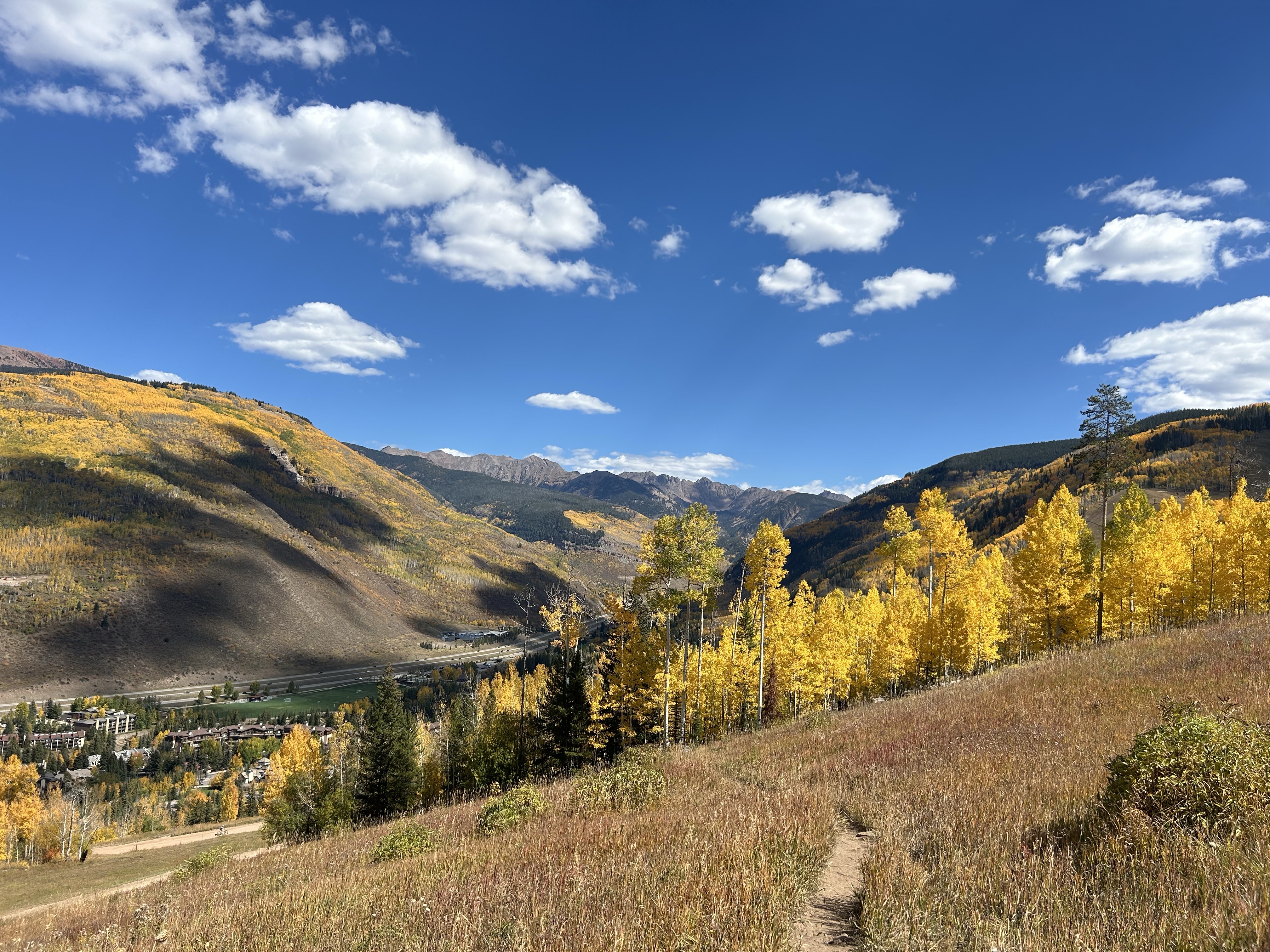
A5R: A Practice to Ground and Grow

Allostasis: Maintaining stability through change.
Order – Disorder – New Order.

Attune. Attend. Assess. Adjust. Adapt. Repeat.

I’ve thought of this undulating process for some weeks now. The ideas are still a work in progress, and today I feel moved to introduce them here. A5R.

Healing Through Connection turns ten years old in a couple weeks. When I look back at early posts, those words still resonate; I’m still the me who wrote them. And ten years on, of course I’m not the same me! Ha!
A year ago in Be Myself, Change Myself, Be the Change, I wrote, “We are who we are from a very early age, maybe even before we are born. AND, we also constantly evolve throughout our lives. This is one of my favorite paradoxes.”
In Root Down to Branch Out in 2021: “Sturdy, anchored stability | Supple, limber mobility | In dynamic balance | Life of healthy growth | Evolution in action”

Technology, environment, culture, and human relationships change exponentially faster now, and we are not physiologically equipped to cope. –Or are we?

Early humans who survived into old age had naturally energy-conserving metabolisms. When calories were scarce, tribal elders who stored more fat could eat less and live long enough to pass on their communal wisdom to younger generations. I’m convinced this is why most of us tend to gain weight with age, especially if we are not finely attuned and attentive to body signs like hunger, satiety, and non-physiologic drivers of eating and (non)movement (more on this in another post, maybe). Who among us can eat at 50 the way we ate at 20 and not feel almost immediate consequences now that never occurred then? Movement, sleep, mental acuity, hearing, and vision, among other things, all change over time, naturally, predictably, in nature’s most efficient and effective way, all so the species can survive.

Which traits of modern humans will allow us to persist healthily into the 22nd Century and beyond? Whose progeny will thrive five and ten generations from now, and why?
More importantly, what traits, practices, and skills will help each of us, and all of us collectively, thrive now, in this lifetime?

Stable. Strong. Flexible. Agile. Resilient.
I still think of these as the five attributes of fitness of any kind—physical, mental, emotional, relational, organizational, cultural, …and political.
“Be stubborn with the [mission]. Be flexible with the [method].” I riff from Jeff Bezos here, I think.
Is the way we’ve always done it the way that will keep working? Is it optimal?
Is change for its own sake–taking sledgehammers to old ways just because they are old–the best way forward? Can we honestly assess methods passed down through tradition, improvised in response to crisis, and advanced by those in charge, and see/admit both benefits and flaws clearly?

A5R happens anyway. Everything changes eventually, and we change with it, willingly or not. Sometimes we drive, other times we can ride. Getting dragged is most painful. So if we can be a little more intentional–Anticipate and Act in Advance (omg its all A words?)–how much smoother might life all go for us, individually and collectively?

Conservation and Progress.
Youthfulness and Wisdom.
Strong and Soft.
Living toward Death.
What other relevant paradoxes and polarities do we grapple with today and forever?
How can we do it better, suffer less, and get to inner and outer peace sooner?

Attune. Attend. Assess. Adjust. Adapt. Repeat.

Be and live Stable. Strong. Flexible. Agile. Resilient.

Stay open, curious, humble, honest, and accountable.

Learn. Grow. Evolve.

Celebrate the Wins

53# kettle bell, 15 swings, 2 rounds (after one round at 44#), as part of the Ethos HIIT circuit this morning. It’s the heaviest kettle bell swinging I’ve ever done in this setting, woohooooooo!

Got to spend quality time with Son yesterday. Watched two movies together: “My Spy: The Eternal City,” which is the sequel to “My Spy,” which we watched during our 2020 pandemic summer trip, and “Ride On,” a heartwarming father-daughter reunion film starring Jackie Chan and spoken all in Mandarin (highly recommend!).

This post makes 32 in 32 days, my longest blogging streak ever, and #663 total. When I started I thought I’d be happy if I lasted a year. Win.

It occurs to me that four weeks on from the election, political and interpersonal tension may have eased a bit? Possibly the holidays have an abating effect? Another thing to be thankful for, yes? And now I have multiple notes to self, all linked in last night’s post, for when I feel the agitation coming back on–29 anticipatory admonishments to walk my talk.
Once again I’m humbled to realize that I take for granted how easy it is to be open and curious in some contexts. I also too often fail to realize how exponentially harder it is in others–and that is when I fail. But that is why I train–so I may execute more easily and effectively exactly then. This weekend I managed to do better than before–WIN!

Finally finished What Is Health? by Peter Sterling, referenced in Master of Change by Brad Stulberg. What a dense and intense review of basic science and human physiology (basically the first two years of med school), and then the most validating exposition on how it’s our systems that make us sick far more than our individual failings. Listening to the acknowledgements has pointed me to Guns, Germs, and Steel by Jared Diamond, currently restimulating my non-fiction brain with authority! I wonder if I can muster the attention and focus to finish The Fourth Turning by Strauss & Howe before year’s end? That would be such a win! And I look forward to many more exciting non-fictions in the queue: I Never Thought of It That Way by Monica Guzman, The Amen Effect by Sharon Brous, Possible by William Ury, and Trust by Pete Buttigieg, among others!

Tonight I get to write snail mail, journal, and prepare for a new workweek renewed and refreshed from a lovely long weekend connecting with people who make my life better. So much to look forward to this month, my friends. Now I’m going to light the Christmas tree, make myself a hot beverage, and settle into more words.
It doesn’t get much better than this.

Holding Love

from Instagram, 11/20/2024

I’m tired tonight, friends.

Husband says he sees November as stressful for me every year (for the tenth year in a row now), referring to the 30 days of daily blogging. I don’t want to admit it, but it’s at least partially true. It shows in my eating habits, I didn’t quite have my edge in the gym yesterday, and there are likely other consequences. I’m not losing sleep these last couple years, which is a drastic improvement from before. And I’m still cooking regularly now, which is also better! So it’s not bad news at all; this is good stress. It’s probably a 95% challenge, 5% threat sensation, and 10/10 meaning. It’s already two-thirds over, and I think these posts could be some of my best writing yet. Win-win-win!

One of the biggest challenges the last 20 days (starting 10/31) has been fully articulating an idea that may have only occurred to me within 12 hours of posting. I feel I have met that challenge well, and I’m proud of the output so far as it is honest and offered wholeheartedly.

My first solid idea for tonight’s post came to me while eating dinner and listening to What Is Health? by Peter Sterling. It was so exciting and also quite complex, so I procrastinated. It needs to marinate a bit more. Then the universe sent me the Instagram story in the photo above from my friend James. It reads:

Unconditional love really exists in each of us. It is part of our deep inner being. It is not so much an active emotion as a state of being. It’s not ‘I love you’ for this or that reason, not ‘I love you if you love me.’ It’s love for no reason, love without an object.” –Ram Daas

My immediate response to James: “OMG YAAAASS!!! What if we all tapped into this deep well of Agape just a little more every day!?!? [Home Alone face emoji, smiley surrounded by hearts emoji]
James replied, “Yes, what if?? What’s stopping us?”
We agreed that conversation is best saved for our next in person communion.
I shared the story on my own account with a similar admonishing question, feeling a full body rush of joy, optimism, and possibility.

We tend to think of love as an emotion. We probably experience it as such at least some of the time–a limbic sensation that comes over us and then dissipates–a signal of something to pay attention to, something that matters to us. But I learned recently that love is more of a drive, like hunger or thirst; it manifests consistently, if in waves, impelling us to behave and relate in ways that advance our own survival. Romantic love drives us to partner and procreate. Pair bonding and parental love drives us to tend to our progeny so our genes may live on for another generation. So if we think of it this way and apply it to relationships in nested scale (family unit, village, state, nation, all of humanity), how does that alter our perspective?

To me, it all suddenly feels so simple. We are all here to love one another, to help us all survive and thrive. We are all someone’s child. Many of us are someone’s sibling, someone’s parent. I hope we are all someone’s good friend. We all share this planet, this lifetime. We are all here. Now. Living. Doing our Best. So when I’m tired, I can relax and rest in this one simple idea: Love.

What if we accept Ram Daas’s premise? What if unconditional love really is part of our deep inner being? And what if we fully accepted, acknowledged, and manifested this just a little more every day? How would that feel? What would we do as a result? How would we be?
I feel at peace. I feel confident that we can figure it all out, whatever it is, ODOMOBaaT–one day, one moment, one breath at a time. I smile more. I approach people with ease and friendliness, as if any person I meet could be my next new good friend. I am my favorite self.

So I Hold Love for Us tonight, friends. It took 20 days for it to emerge this month. I wondered when and how it would come up; it was #6 on my pre-NaBlo prep list of 30 things to Hold. How does it feel when you Hold Love? Where and when is it easy and difficult? How and what do you do when it’s really hard?

What if …?