Share Your Platform

Hey friends!  I’ve recorded a screen video!  To many of you this may seem no big deal.  But it’s a huge milestone for Luddite me, and who knows when I ever would have tried it if not for Ozan Varol!  Readers of this blog know how much I admire Ozan, a rocket scientist, law professor, all-around benevolent contrarian, and generous sharer of his platform.  …And now you can get a tour of his Inner Circle site from yours truly!

I first found Ozan on my Facebook feed when he wrote about changing people’s minds. It resonated with me immediately. So of course I downloaded his free e-book, signed up for the Weekly Contrarian newsletter, and binge-listened to his Famous Failures podcast. Ozan pointed me to some of my favorite books of 2019, such as Insight by Tasha Eurich and Sex At Dawn by Chris Ryan and Cacilda Jetha.

Throughout 2019 Ozan grew and connected his community of readers.  Christina, Renu, Judith and I participated in the first ever Idea Lab (as they are now known), where three of us each shared a project and we all coached one another through ideas, process, and execution.  Ozan launched the Inner Circle maybe a year ago.  Here readers (I consider us all impending friends) connect around more ideas, projects, challenges, and common interests.  Ozan floats concepts for future blogs, shares resources that spark his curiosity, and generally stimulates thoughtful and wide-ranging collaboration from all over the world.  And oh, my gosh, the people I’m meeting!!

Dr. Karen Shue has recently joined and I really want know better this writer, neuropsychologist, and all around curious being who maintains three websites, see here, here, and here.

Tony Coretto, an apparent modern-day Renaissance man, writes about building the life you want, and he has built quite a life, from what I can tell.

What I appreciate the most about Ozan is how he leads by example.  He grounds his questions in curiosity and openness.  His comments encourage, and also challenge us to broaden our perspectives, as he broadens his own by inviting diverse viewpoints with respect and non-judgment.  There is no shortage of nonconforming views on any given community forum thread.  And yet I never feel animosity or confrontation, not even close.  Opinions are offered, not espoused.  IC folks come to learn, share, commune, and grow, because we see Ozan doing it right along with us.

When Ozan invited me to record the Inner Circle walkthrough video, I had no idea how to do it.  I asked my Facebook friends, and Don came through with Screencast-o-matic.  So user friendly, even I could figure it out in a morning!  It took only three tries, and voila, a viable, extemporaneous tour of a site I love!  And now I have a fun new skill—my horizon is widened and I seek new ventures in which to practice and grow.  Ozan gave such a kind shout out to me and this blog in the walkthrough invitation email.  And now I’m invited to host a community call around a topic of my choice.  Holy cow!  I am so humbled and grateful for it all.

***

I have a mentor at work, who supports me similarly.  So often he has introduced me to other organizational leaders, setting up calls and meetings to share ideas and initiatives.  His introduction affords me some instant ‘street cred’ with people who would not otherwise care to know me.  I don’t take this lightly, and I am beyond appreciative. 

How can I make the most of these most generous opportunities?  How can I be worthy of the possibilities?  It’s not that I feel unworthy; I understand that Ozan and my mentor see real potential in me and want to help me develop it.  I just don’t want to waste a shred of these openhanded gifts.  They lift me.  How can I pay it forward?

What do you do when someone elevates you like this?

***

In these intensely surreal and existentially trying times, people all around me express helplessness.  How can any of us, individually, exert any meaningful agency to change anything for the better when everything everywhere is so colossally out of control?

I believe we can always help.  Each of us occupies a sphere of influence; our attitudes and actions ripple out indirectly many layers beyond.  So, one way I can elevate more people is by sharing my own platform, small as it is (yet).  I used to feel sheepish when much of any post was someone else’s words.  Not so anymore.  When I find pieces that speak to me, that resonate and integrate with my core values and my cause, why not amplify widely? 

Maybe I have some valuable street cred to share, too.
Why Identity Matters

“You have a Chinese face,” my mom said to me.  I was ten years old, maybe twelve.  I can’t remember how it came up.  But the message was twofold and clear:  1. What makes you different from almost everybody around you is visible.  You cannot hide it, you cannot escape it.  2. People will judge you for it, so like it or not, to them, you represent us—your family, your ethnicity, all people who look like you.

That was it—straightforward truth, unvarnished.  And I understood immediately.  There was a gravity, an importance to her expression.  It was not meant to apply pressure or expectation; Ma was simply teaching me about reality so I would be prepared to meet it when I left home, whether it was at the mall or farther out in the world.  And I felt equipped to meet the challenge.  We lived in an affluent suburb.  My parents are both educated professionals.  They are still leaders in the Chinese community, heading initiatives to liaise with “Americans” in business, government, and news media.  Growing up I was known as the ‘smart’ kid—I fit the Asian nerd stereotype.  And people were impressed that I was also bilingual, could paint classical Chinese art and perform classical Chinese dance, and also play volleyball and win at statewide speech tournaments.  I thought I represented well.

I brought my Chinese-American identity with me to college, where I estimate about 20% of my fellow undergrads were Asian.  In medical school, residency, and now in practice, there are still proportionally more Asians than in the general population—we are an overrepresented minority group among physicians.  But we are still a minority, occupying proportionally few seats in medical and academic leadership. 

Once again I find myself in this strange, middle, white-adjacent space, considering how I can and should use my unique identity for the greater good.  How does an anti-racist message land differently/better/worse when I express it?  How do my white colleagues hear me differently/better/worse from/than my Black and other underrepresented minority colleagues?  Do I have a bridge role to play here?  Or should I keep my head down and my mouth shut (this is unlikely)?

Someone told me recently that our racial (and other) identities do not matter at work.  We should just think of ourselves as doctors, teachers, engineers, CEOs.  I respectfully and vehemently disagree.  If I were ‘just a doctor’ I would not be the only one fluent enough in Mandarin to care for non-English speaking Chinese patients without a translator.  If my Black colleagues were ‘just doctors,’ they would not inspire young Black kids to become doctors themselves.  If women physicians and surgeons were ‘just doctors,’ there would not be so many women physician groups all over social media, where countless of us seek reassurance that we are not insane, weak, and otherwise broken for all of the horrible, unbelievable-yet-totally-believable discriminatory experiences we endure at work in 2020.  And so many of us would not have our own stories of women in medicine who went in front and inspired us, encouraged us, and gave us the wherewithal to follow. 

Medical culture slowly evolves to see and treat patients as whole people, not just sets of diagnoses.  When will we come around to seeing ourselves and our colleagues also as whole people, interconnected, inseparable, and in need of full integration, inside and out?

* * * * *

The two articles below describe well how our ‘identity blind,’ assimilation-centered work cultures harm our Black colleagues, especially now.  Please take a few minutes to read each, and really try to put yourself in the writers’ shoes.  For us, taking this perspective is a choice; not so for them.

Maintaining Professionalism In The Age of Black Death Is… A Lot  by Shenequa Golding

I just witnessed the lynching of a black man, but don’t worry Ted, I’ll have those deliverables to you end of day.

…If I am to perform my duties for 40 hours a week, it’s asinine to assume that the life I live outside of those 40 hours won’t rear its head. Whether I’m a sleep deprived single mother of two or a struggling college student who really needs this internship to graduate, the belief that only the part of me that fattens your bottom line is allowed in the workplace, is stifling.

This is magnified for young black professionals who are recruited for their culture, but told, in so many words, that their blackness and the struggles that come with it are to be left at the door.

 …Forgive us if our work isn’t up to par, we just saw a lynching. Pardon us if we’re quiet in the Zoom meetings, we’re wondering if we’ll be the next hashtag. Spare some grace if we’re not at the company happy hour, because the hour of joy that most adults look forward to has been stolen from us due to the recent string of black death.

We’re biting our tongues, swallowing our rage and fighting back tears to remain professional because expressing that hurt caused by witnessing black death is considered more unprofessional, than black men and women actually being killed.

So if you can, please, be mindful. Your black employees are dealing with a lot.

7 Things That Need To Be Said About Black Trauma In Predominantly White Workplaces  by Samantha E. Willams

You know what’s worse than America treating racism like a new album that just came out? People moving on like nothing ever happened.

Over the last few weeks, you’ve probably noticed most of your white colleagues have abandoned their outrage over George Floyd and Breonna Taylor, trading it in to enjoy summer’s finest things — sailing, bonfires and lake house getaways. But not us. Those tough and uncomfortable conversations everyone boasted about having have slowed (maybe even stopped), and once again Black trauma in the workplace has been placed back in the hands of Black employees. While I wish I could say everything about this is new or shocking, the truth is we’ve been here before.

…The day was July 7, 2016…  That morning I did all the things one does to “maintain professionalism” because let’s be real, as Black professionals we often feel like we can’t be caught slipping (aka displaying feelings). But when putting my best face forward failed, my colleague asked what was wrong? I explained my stoicism was due to Sterling’s and Castile’s death, which was ultimately the result of the racism and systemic oppression that plagues our country, constantly making Black people a target.

What came next was disappointing but not surprising. Her response was, “Well, did you know him?” In that moment, just as it had in others, it became clear that Black trauma had no place, no weight of relevance in white workplaces. This wouldn’t be the last time Black trauma was ignored, displaced or misunderstood.


Love Letters for My Soul

Taking a break from COVID, racism, equity and other heavy things this week, my friends.  It’s too much, what with RBG’s recurrent metastatic cancer and John Lewis’s death.  I’ve been glued to my phone and computers all week, reading, digesting, observing, integrating, posting, connecting and conversing.  I had at least three important ideas for the blog, and they all need to marinate longer.

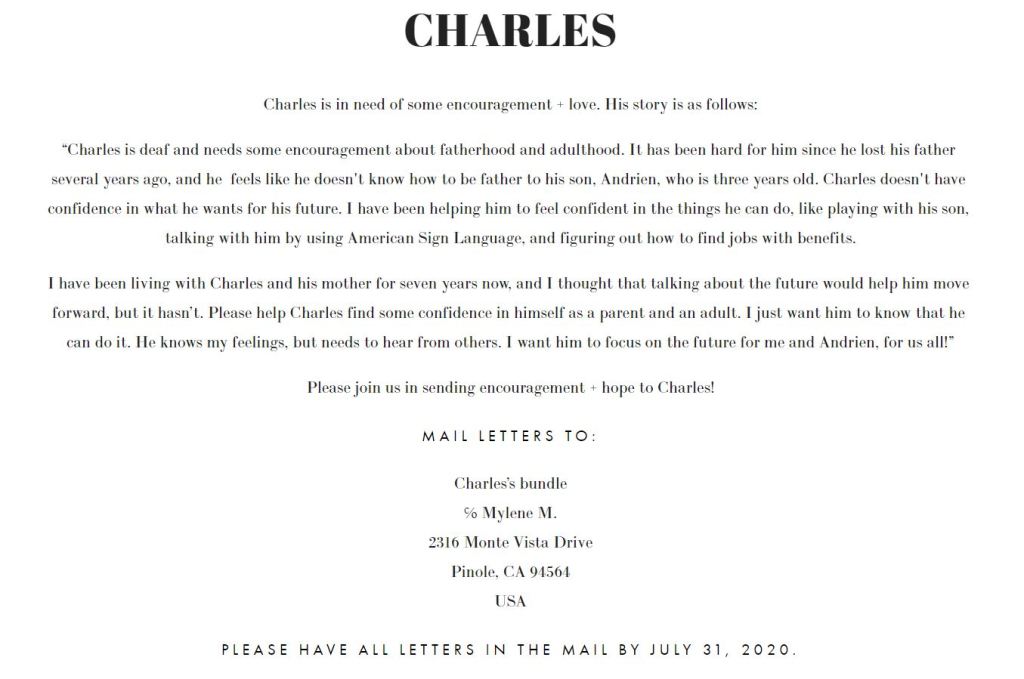
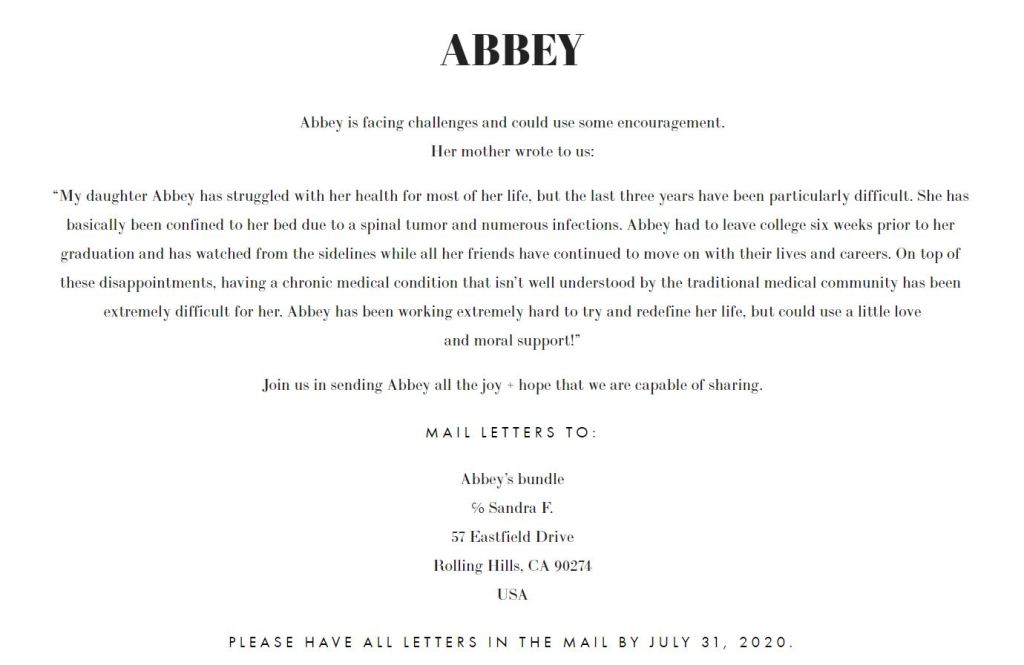
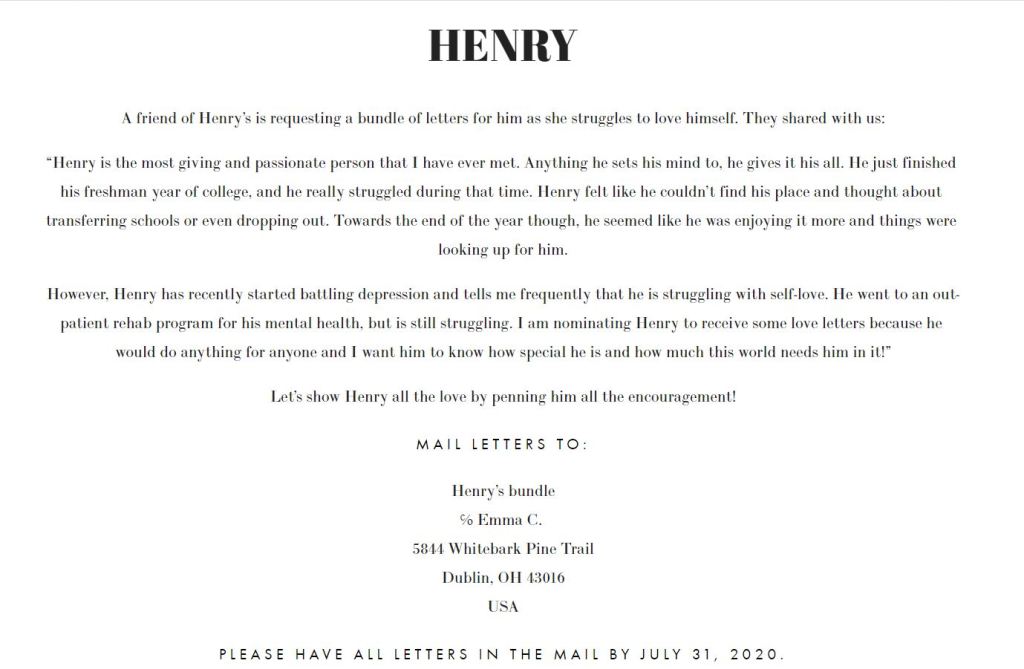
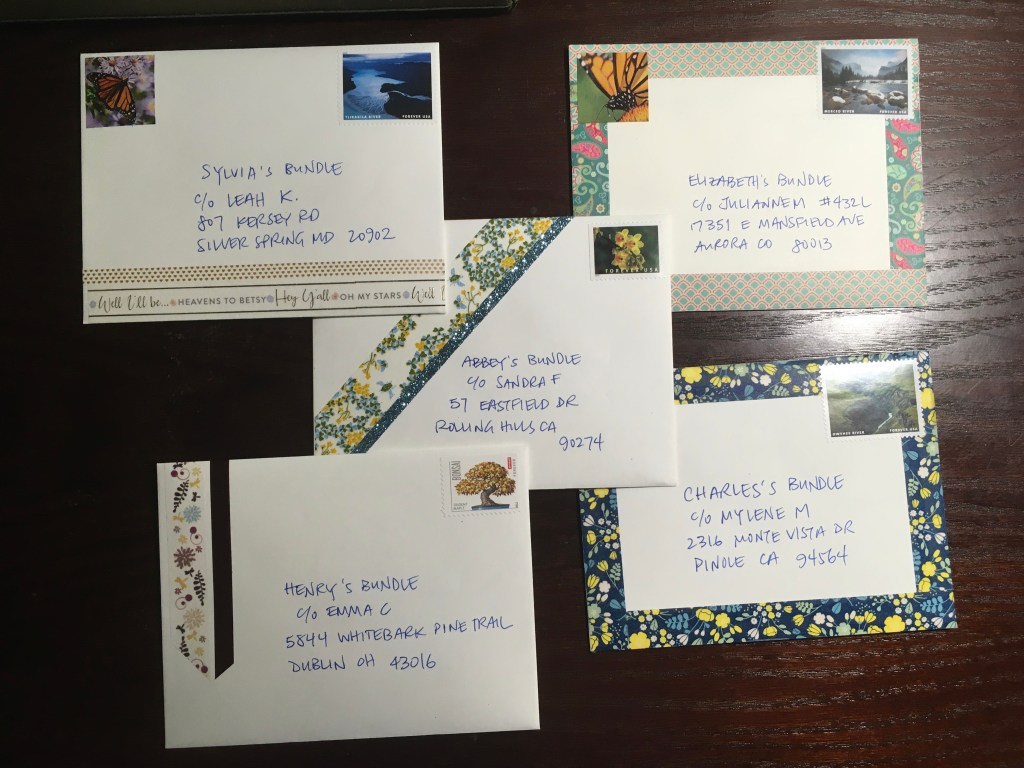
But I still had to write!  I owe letters to three friends, and they can wait.  What needed doing tonight were five love letters to strangers. 

Sometime this spring, while sheltering at home, I discovered More Love Letters.  Their mission is simple:

Deliver hand written letters to people who could use some extra love via snail mail.

People submit nominations for letter recipients, and every month the MLL team selects five to post.  Each recipient’s nominator writes a heartfelt request, and supplies an address.  Letters are requested to be postmarked by the last day of the month (but I bet they’d take some tardy ones, because they are sent with love?).  Tonight I wrote my second ever set of love letters, on washi tape stationery, of course.  I may have more cards and tape than I will use in my lifetime, so I’m more than happy to share!  Maybe next month I will include a blank card and envelope as a gift for the recipient to pass along—I’ll even put a stamp on it!

In this time of tumult and conflict, of heaviness and stress, reaching out to offer some light to others heals me.  They will not know who I am (well, unless they happen to read this post, I guess), and I will not get a card back in reply.  I get to write some encouraging words that might brighten someone’s day.  But I do it for myself as much as for them.

Maybe you could use a mutual pick-me-up, too?  Each one took less than five minutes.  The words came easily, organically, and happily.  “Holding you in light,” “Sending love and support,” “Wishing you everything you need in this crazy time.” Easy peasy, written sincerely–it feels so good.  You don’t have to write to all five nominees—do what moves you.  Maybe you’ll be inspired to also drop a note to your best friend, your colleague who’s challenged, or someone who recently crossed your mind, who’d probably love to know you were thinking of them.

Now is exactly the time to connect, don’t you think?

Oh and I have no financial or other interests in this organization. I just love that they encourage connection and snail mail, two of my favorite things.