There Is a Good “I” in TEAM

IMG_1167

The joke goes like this:  “There’s no ‘I’ in team… Yes there is; it’s hidden in the A-hole.”  The point of the joke is valid:  Self-absorbed and self-serving individuals make bad teammates.

Yes, AND:  There must be certain kinds of I’s on any good team:  Each of us must have a uniquely contributory identity and role in order for our team to function well.  Diversity—of experience, ideas, and perspective—is always the strength of a good team.  Homogeneity leads to extinction in nature.

Also, we all have to get in the same boat and row in the same direction—each of us I’s must join wholly in the We in order for Us to accomplish anything meaningful.  It is the balance of the Good I and TEAM that determines an organization’s success.

The Good I:  Self-differentiation

We all recognize the kind of “I” who makes team life miserable—that person who’s always competing, always one up-ing us, constantly reminding us how great they are, wondering why we don’t notice.  But then there are the I’s whom we respect.  They exude a quiet confidence, speak their truth with grace.  We seek their opinion even, or especially, when we know it will differ from our own.  Anyone on the team could be either of these people: captain, quarterback, goalie, setter, relay anchor, department chair, CEO, professor, senior resident, intern, president.  Standing out for the sake of lording power over others, or advancing one’s own interests at others’ expense, is the “hidden I” in the A-hole.  This is the bad I.

The ability to stand up and out for our core values and integrity, even in the face of anxiety and external pressure to conform, however, is the Good I; it is an expression of self-differentiation.  To do this well, and to contribute to the team as a creative individual, requires self-awareness, emotional and social intelligence, and self-regulation.  In order to self-differentiate effectively, we must work on ourselves, not just promote ourselves.  It’s not about getting what’s ours in a world of scarcity; it’s about owning our talents and claiming our agency to make a unique and meaningful contribution to the whole.

TEAM: Attunement

If all we ever do is work on ourselves, however, without looking up and around, we may disregard important relationships.  I may have an important contribution to make.  But if I cannot communicate my ideas in a way that you understand, or if I come off as condescending, arrogant, dismissive, aggressive, or otherwise unpleasant, I undermine my own effectiveness, and stymie forward progress of the team.

The ability to withhold judgment, seek understanding of and from others, and recognize their unique and important contributions, is the art of attunement.  Simply, it is the practice of awareness and constructive responsiveness to others.  When I am attuned, I know when I need to set context before pitching my idea.  I observe my colleagues’ posture, body language, tone of voice, and facial expressions.  I query for (mis)understanding.  I hold space for open dialogue, debate, and idea exchange.  This kind of resonance, when successful, facilitates the wave propagation of teamwork, and advances objectives faster and more efficiently with the synergy of morale.

Some might see self-differentiation and attunement as opposed or dichotomous—you can or should be one or the other.  Rather, we should consider them as complementary and counterbalancing.  We should each pursue proficiency and mastery of both skill sets, and practice them as both individuals and as whole teams.  I can be both a self-differentiated and attuned leader of my department.  My department can be both a self-differentiated and attuned member of my organization.  My organization can be both a self-differentiated and attuned member of our profession or industry.  And we can all, individuals and organizations alike, be both self-differentiated and attuned members of society at large.

TEAMS get things done when we well-self-differentiated I’s attune to one another and march together on our shared mission—regardless of the size, mission, or make-up of our teams.  Every successful team is made up of individuals who claim their unique strengths, and then direct those strengths in service of the greater good, the overarching intention of the We.

Such harmonious and resonant balance is the quintessential win-win.

Insight While Driving to Work

IMG_4426

Training for Better Angels, it occurs to me:
Confidence in excellent communication skills in order to enter difficult conversations without bailing or lashing out… is akin to the core stability required to get into and out of a deep squat.
It’s the bending down, feet flat, head up, in control and not falling over, that is the challenge—not the forcing up in a quick, mindless burst of brute strength. Bearing the load all the way down and standing back up gracefully, without causing or suffering injury: that is where our real power lies, in the gym and in conversation.

A Community of Champions

IMG_1161

Spoiler Alert:  Big Bang Theory Series Finale!

* * * * *

When was the last time you felt totally safe, at work, to address the central relational challenges that hold you and your team back from your best performance?

How often at work can you really assess and evaluate your own interpersonal skills, their impact on those around you, and on the organization as a whole?

How much time and energy do your teams waste being stymied by relational issues, stuck in redundant, dysfunctional power struggles up and down the organizational hierarchy?

How do you feel in your body just reading these questions?  Perhaps tense and frustrated?

* * * * *

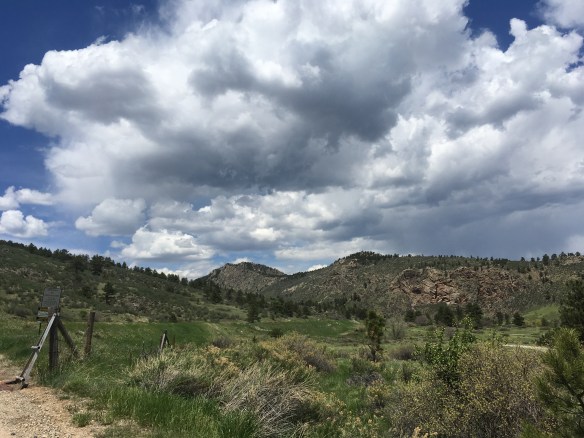
We, the eight participants and two faculty members of Leading Organizations to Health Cohort 11, reported palpable heaviness upon convening for our second training retreat last Tuesday.  Despite the Colorado spring bursting with blooms, wildlife, and vast clear blue skies, dark clouds hung over our collective consciousness, each for our own reasons.  Throughout the week we shared stories of successes, challenges, conflicts, power and powerlessness.  We practiced appreciative inquiry and relational coordination, and explored the insidious impact of unearned privilege.  We spent three days in intense skills training, supporting one another through viscerally gnarly role plays and open, honest feedback about how we impact the group.

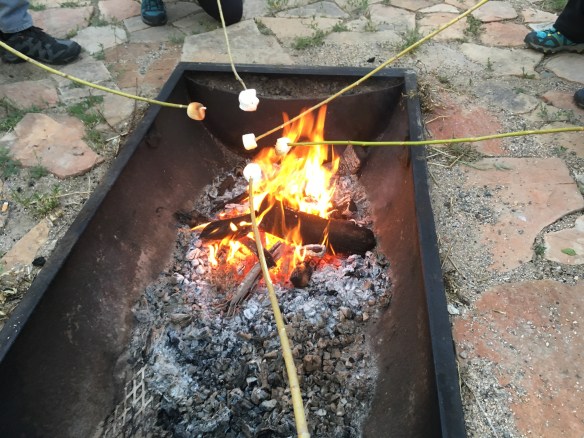
In the midst of all this deep work, we also shared meals, walks, a horseback ride, and life stories around a fire pit and drippy s’mores.  As we debriefed around the circle on the last day, something had shifted:  overall we now felt refueled and energized.  The air buzzed with the anticipation of learners on the verge of integrating our emerging skills, excited to bring it all home to practice.  The clouds had parted.  We will keep in touch through peer coaching groups—our newly established, intense-support network.  In my heart, I feel we are really becoming a family.


IMG_1176

I headed to the mountains straight from the session, for 24 hours of processing and decompression (and more washi tape card-making).  More and more I marveled at what a rare opportunity I have in LOH, to be led and learn to lead in this relationship-centered way.  For these ten months I am immersed in a professional learning lab, experimenting with different ways of speaking, acting, and being, safe among fellow professionals also grappling with this skill set.  It just does not get any better than this!

IMG_1110

On my way down from the mountains, I listened to an interview with Bonnie St. John on Ozan Varol’s podcast, Famous Failures.  She is the first African-American to win medals in Winter Paralympic competition as a ski racer; she is a lower extremity amputee.  She is also an author, an entrepreneur, and a former member of the Clinton administration.  Her story is inspiring, please take a listen!  At the end of the interview she describes asking a former coach about how he built champions.  He said he never built individual champions; rather, he built communities of champions.  You can only push one person so far, he said; but an allied group of people will hold one another up, push each other harder, make each other better, take one another farther.

That is exactly how I experience LOH—my best self is challenged and called forth in the most loving and professional way.  We hold space for all our struggles, allowing the learnings (epiphanies, in my experience!) to emerge.  It is deeply and literally inspiring.  Though I already do so much of this inner work on my own, there is a profound and unparalleled synergy from learning in this group—we serve as one another’s pit crew for the journey toward our better selves at work and in life.

IMG_1089

Nobody succeeds alone.  In the series finale of The Big Bang Theory (my favorite TV show of all time, which I missed while at LOH!), Sheldon (the obliviously self-centered genius) finally realizes this.  During his Nobel Prize acceptance speech, he acknowledges his sudden and profound appreciation for his family and friends, crediting his success to their unconditional love and support, and recognizing them in front of an international audience.  LOH made this finale even more meaningful to me than it already would have been.

It is always through the struggles that we grow.  When struggle together, any and all successes are amplified exponentially.  My nine new friends will make me immeasurably more successful, both professionally and personally, than I would ever be without them.  God bless them all, and may the work we do together ripple out for the benefit of all whose lives we touch.

IMG_1185