You Can’t Pee!

DSC_0294

NaBloPoMo 2017: Field Notes from a Life in Medicine

When my son was little we lived in an apartment where the kitchen was a separate room, with only a small window through which I could see what he was doing in the living room while I cooked.  Once when he was about five months old, I looked out and he was lying on the mat in the middle of the floor, playing happily with the toys dangling from arches overhead.  I swear I only turned around for a minute, and when I looked back he was gone.  Empty mat, toys still dangling, no kid, no sounds.  I can’t remember what I was doing, but it felt like a slow motion eternity getting out of that damn kitchen to find him.  Something heavy must have fallen on him or he was otherwise suffocating or dying, for sure.  …He had just learned to roll over, and he had rolled and rolled and rolled himself into the space under the air conditioning unit near the window.  He was turning over a dried jasmine leaf he’d found on the floor.  Not long after that I decided I had to buy food preparation gloves.  Just in case my kid needed me anytime I was handling raw meat, this would save me the infinitude of time it would take to wash my hands—I could just pull the gloves off and bolt!  Because you know, 30 seconds could mean life or death for a toddler in his own living room.

Please laugh—I did today when I told the story to a friend.  It came up as we explored the phenomenon of moms putting everything for their kids before themselves.  We compared notes on how long we had ever held our urine.  What mom has not done this?  You can’t pee!  Because you never know which minute you’re not with your children will be the one during which your neglect will kill them.  Thankfully children grow and become more independent, and we can free our bladders again eventually.

It’s not just moms, though.  One of my teachers in the hospital gave herself a urinary tract infection as a resident.  She had so much to do every day, so many patients who needed her that she felt guilty taking time to pee.  I did the same thing in clinic for many years.  I could not justify making patients wait another minute when I was already 15 (usually more) minutes late seeing them. I don’t do this anymore.  In a fit of efficiency last week, I stepped into the restroom after I set my lunch to microwave for 2:00.  It literally takes only a minute to pee.  I don’t usually run late these days, but even if do, now take care of my needs first.  It’s better for me, and better for my patients, whose doctor is not distracted by preventable physical discomfort and dying to end the interview or exam to get some relief.

Our culture still expects moms, doctors, nurses, teachers, and many others to sacrifice selflessly in service of our charges.  UTIs are the least important consequence.  Over 50% of physicians in the US report at least one symptom of burnout, and 400 doctors kill themselves annually.  That is the equivalent of my entire medical school, dead, every year.  It’s not all because of the job, but the obligatory selfless-giver mentality in medicine definitely contributes.

So whatever helping profession you are in, please take time to take care of yourself.  We need you whole and healthy to take care of the rest of us and our children.

Go pee.  I will wait.

Just Do It My Butt

DSC_0367

Happy late Monday, all!

Continuing my critical analysis of our American medical system…  This is not what I set out to do on November 1, I swear, and I have other more interesting prompts to expound on after today, I promise.  For now, thank you for indulging me in this rant of sorts:

My friend posted this article today, explaining how most methods of trying to get people to take their medications do not work.  It cited this meta-analysis, which concluded that “Current methods of improving medication adherence for chronic health problems are mostly complex and not very effective, so that the full benefits of treatment cannot be realized.”  It also reviewed findings from another study, concluding that, “A compound intervention integrating wireless pill bottles, lottery-based incentives, and social support did not significantly improve medication adherence or vascular readmission outcomes for AMI [acute myocardial infarction—heart attack] survivors.”  The piece basically asserts that behavioral economics, or the art and science of ‘nudging,’ will not by itself heal what ails our behaviors, despite what Thaler and Sunstein suggest.

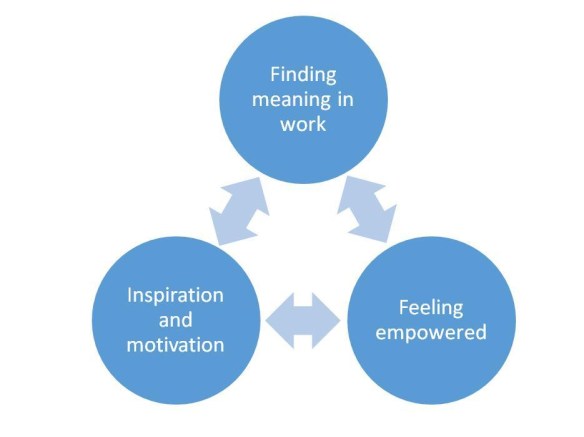
The discussion on my friend’s page then centered around ideas like motivational interviewing, coaching, and the like—methods that have been shown to improve likelihood of overcoming addiction, obesity, and other behavioral maladies.  It occurred to me that this is the best part of my work: asking the important questions to help patients identify meaning and intrinsic motivation for behavior change, and collaborating in such a way that they own the plan because they have an authentic hand in crafting it.   And even then it can take years for new, healthier habits to entrain, because we are complex beings each with myriad influences affecting our actions at any given time.  When I can sit and listen to what makes meaning for my patients (if they know—if they don’t then it can get really interesting or really not, it’s hit or miss), and talking about what the future might look and feel like with a few relevant changes, I bask in my professional heaven.

But who can actually do this in the modern American healthcare system??  It takes time, and as we all know, time is money.  It also takes training and resources.  We are not born knowing how to perform motivational interviewing and cognitive behavioral therapy, and even today, these skills are not necessarily mainstream medical school curriculum (well if we’re being honest, communication skills in general are still given short shrift, which boggles me).  Physicians can and do learn these skills. But they don’t necessarily have to.  Medical systems which include dieticians, exercise physiologists, and health psychologists can deploy these team members to support patients in their health journeys.  But does your doctor’s office have this kind of set up?  Does your insurance pay for these services?

Most likely the answer is no.  It’s shocking and dismaying, because this approach is proven to be successful in important ways.  I refer here to the Diabetes Prevention Program.  This study was published 15 years ago, on February 7, 2002, in the New England Journal of Medicine.  From the link, here is the study design summary:

“…Participants from 27 clinical centers around the United States were randomly divided into different treatment groups. The first group, called the lifestyle intervention group, received intensive training in diet, physical activity, and behavior modification. By eating less fat and fewer calories and exercising for a total of 150 minutes a week, they aimed to lose 7 percent of their body weight and maintain that loss.

“The second group took 850 mg of metformin twice a day. The third group received placebo pills instead of metformin. The metformin and placebo groups also received information about diet and exercise but no intensive motivational counseling.

“All 3,234 study participants were overweight and had prediabetes, which are well-known risk factors for the development of type 2 diabetes. In addition, 45 percent of the participants were from minority groups-African American, Alaska Native, American Indian, Asian American, Hispanic/Latino, or Pacific Islander-at increased risk of developing diabetes.”

What do you think happened?

“Participants in the lifestyle intervention group-those receiving intensive individual counseling and motivational support on effective diet, exercise, and behavior modification-reduced their risk of developing diabetes by 58 percent. This finding was true across all participating ethnic groups and for both men and women. Lifestyle changes worked particularly well for participants aged 60 and older, reducing their risk by 71 percent. About 5 percent of the lifestyle intervention group developed diabetes each year during the study period, compared with 11 percent of those in the placebo group.

“Participants taking metformin reduced their risk of developing diabetes by 31 percent. Metformin was effective for both men and women, but it was least effective in people aged 45 and older. Metformin was most effective in people 25 to 44 years old and in those with a body mass index of 35 or higher, meaning they were at least 60 pounds overweight. About 7.8 percent of the metformin group developed diabetes each year during the study, compared with 11 percent of the group receiving the placebo.”

Lifestyle modification surpassed medication alone in preventing progression to overt diabetes in these high risk patients—almost double the benefit.  Well duh, you say, we all knew that.  We just need to eat less and move more.  But did these people ‘Just Do It?’  As if we can wake up one day and open a shiny new box of motivation that suddenly removes all of our circumstantial, emotional, and habitual barriers to optimal health?  No.  These patients were intensely supported by a dedicated, multidisciplinary team, day in and day out, for the long haul.  Every week patients reject my team’s offers to explore strategy for habit change, saying, “I know what I need to do, I just have to do it.”  Seriously, if it were that easy we’d all be doing it already (she screams as she pulls her hair out in knotted handfuls).

So, if this unequivocal study came out a decade and a half ago, why have we not implemented its procedure in primary care practices across the country?  I’ll wait while you think it over…

It’s money, of course, right?

It’s not that people in charge of healthcare spending don’t care about patients.  It’s that the financial returns of such an investment occur too far in the future to make for a good P&L calculation today.  Most insurance companies do not cover patients for the long run, so why should I expend all these resources to get you healthy today, so you can be healthy later and cost Medicare less many years from now?  The more I think about it, the more it makes sense to me to have a single payer system that can truly invest in our health, as a population of individuals, from birth to death.  And since habits and behaviors are established at very early stages of development, doesn’t it also make sense to have the medical/healthcare system integrated with the education system?  If we are a nation dedicated to the health and well-being of children so they can become healthy and well adults, why would we allow junk food in our schools and cut physical education?  What private, for-profit entity in its right capitalist mind would want to take that on?

Well, I trust you get my point.  It’s late and I have committed to writing every day this month, so I must stop here tonight.  Thank you again for your indulgence as I strode into the weeds on this one.

Hope to see you back tomorrow!


Eat What You Kill

IMG_6023

NaBloPoMo 2017: Field Notes from a Life in Medicine

Sounds like a mantra from a survival reality show, right?  Akin to “Eat or be Eaten,” “Kill or Be Killed.”  It’s also a common reference to the prevailing business model in our American scarcity-minded, competition-driven, fee-for-service healthcare culture.  How ironic, the application of these words to this profession.  It was explained to me essentially as, “Every man for himself, and you’re a minion.  You are expected to be ‘productive’ in this business to justify your compensation and contribute to the bottom line.  We measure productivity by number of patients seen and accompanying collections.  Pull your own weight or there will be consequences.”

Of course, from a capitalist business standpoint, this makes sense.  I provide a service that others require.  I should offer it widely, accommodate customer expectations and demands, expand my suite of offerings early and often, and charge for everything.  The more I can get customers to consume and pay, the better off my business.  I have a fundamental problem with this approach when the practice of medicine focuses on business first and patient care second.  Nobody admits to this attitude, of course it’s about patients first, everybody says.  Then my colleague makes a suggestion for patient care improvement, or I express concern about conveyor belt medicine burning doctors out.  Inevitably, the primary response from leadership is something along the lines of ‘that costs too much,’ and ‘that’s the only way to keep the lights on.’  I understand the math.  I despise the premise.

Medicine and healthcare delivery should always transcend the detached, transactional, and ruthless nature of the free market.  Chris Ladd, a conservative thinker and writer, describes this idea eloquently here.  It occurred to me today, replying to Stacey Holley’s comment on my post about spending time with patients, that even those who profit from our flawed American system are also terminally distressed by it.  Insurers, hospitals, pharmaceutical companies and their executives live in a constant state of fight-or-flight defensive posturing, fearing for their livelihoods in market share, revenue, solvency, and survival.  How tragically ironic.

Personally, I have difficulty envisioning a single-payer, government run healthcare program as the primary delivery system in the United States.  Our culture is simply far too individualistic, too fundamentally ingrained with ‘every man for himself.’  However, I think we can still work with the concept of universal healthcare, wherein all people have access to basic preventive and catastrophic care, regardless of income or status, without risk of bankruptcy.  A strong argument can be made that the only entity who could or should be truly invested in the health and well-being of all of us, throughout our lifespan, is our government, particularly in the realms of prevention and health maintenance.  We just need to loosen our societal grip on ‘that’s just how it works,’ and ‘I need to get mine,’ and allow ourselves to be led more by our collaborative, altruistic, and humanitarian leanings.  In my experience, diverse groups of intelligent and energetic people, working toward ambitious and aspirational goals, generate synergy.  This kind of cooperation fosters passion, joy, inspired creativity,  and magnificent innovation.  Who knows what novel solutions we may invent, if we only put down our spears and work together?  And isn’t that the hallmark of American ingenuity?

Medicine and health should be a heartening, collaborative, communal effort wherein we all do our best to help ourselves and each other reach our highest potential.  We are better than our current system, in which truly everybody suffers more than necessary.  I refuse to accept ‘Eat What You Kill’ as any kind of descriptor for my work or that of my colleagues.  We can do better, imagine and create more for ourselves and one another, than this primitive notion.  I know there’s a healthier mantra inside me somewhere…

What can you think of?