So much suffering, friends—everywhere, all the time, every day. It’s overwhelming.
Our current circumstances feel like the most distressing case of sensory overload I have ever experienced: intense, prolonged, and complicated. Paradoxically, I also often feel like my head and heart could explode from sheer hopefulness—at no other time in my life have I felt so much potential for meaningful, positive collective change. We stand on the knife edge of a continental divide of sorts, simultaneously overlooking the worst and best extremes of humanity.
People. Are. Losing it.
Patients with underlying anxiety and depression are increasingly agitated and even combative, at home and in the clinic. They threaten themselves and/or office staff, sometimes with mortal results. Lifelong friendships are ending from irreconcilable differences over politics, ideology, and disagreements over social distancing and masking, among other things. People lash out in rage at the slightest, often innocent provocations. We doom scroll on social media, amplifying and reverberating (mis)information in our echo chambers, driving ourselves to the cliff’s edge of sanity with fear, fury, and hatred.
I watch it unfold before my eyes, escalating in the past few weeks. I have joked for a while that the world may end in my lifetime; now it feels less and less like a joke.
How we do process it all? How do we get through?
Physicians, therapists, nurses, and many other professionals make a living watching and listening to people through their suffering. Often we cannot cure people’s problems; sometimes it feels like we can’t even help. But the truth is we can always help—all of us.
By simply being present to someone in pain, we help. By not looking or running away, by sitting and facing them full on, we help. By allowing, even embracing our own discomfort, and holding safe, quiet space for another’s suffering, we help. We know this because when we suffer, the loving presence of others is what heals us first.
I cannot take away your depression or anxiety. I cannot create a stronger social support network for you. I cannot get you a job, bring back your deceased loved one, make the pandemic go away, or stop the next police officer from profiling your son by his skin color. But I can sit with you in your grief. I can stand in solidarity with you and advocate for our common cause. Most importantly, I can take good care of myself so I can keep showing up for you and all those who may need to lean on me from time to time. I have those who let me lean on them sometimes, too, and I make sure to thank them often.
To witness means to see. The best witnesses make us feel seen, heard, understood, accepted, and loved, no matter what. This is what we can do for one another right now. It is the highest calling of humanity, to take care of each and every other as ourselves. It is an infinite rather than a finite calculation. Love shared is multiplied, not divided. Caring for you feeds me too, whereas disconnecting from you costs me more than I know, and diminishes us all.
“Although the tale of human experience is certainly universal, it contains unique elements for each us and we continue the art of storytelling, both verbally and nonverbally, each and every day. While some stories are sweeter than others, all long for the benefit and necessity of a witness, for a witness assures us that our stories are heard, contained, and transcend time; for it can be said that one is never truly forgotten when one is shared and carried in the hearts of others.”–Kristi Pikiewicz, PhD
The only way out is through. The best way through is together.
Taking a break from COVID, racism, equity and other heavy things this week, my friends. It’s too much, what with RBG’s recurrent metastatic cancer and John Lewis’s death. I’ve been glued to my phone and computers all week, reading, digesting, observing, integrating, posting, connecting and conversing. I had at least three important ideas for the blog, and they all need to marinate longer.
But I still had to write! I owe letters to three friends, and they can wait. What needed doing tonight were five love letters to strangers.
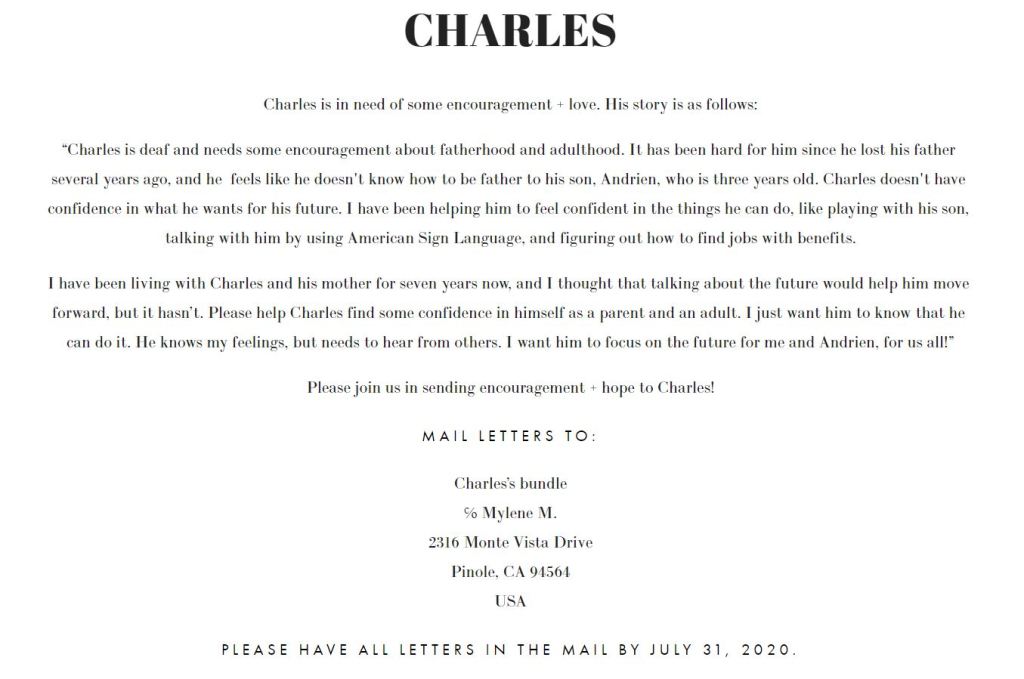
Sometime this spring, while sheltering at home, I discovered More Love Letters. Their mission is simple:
Deliver hand written letters to people who could use some extra love via snail mail.
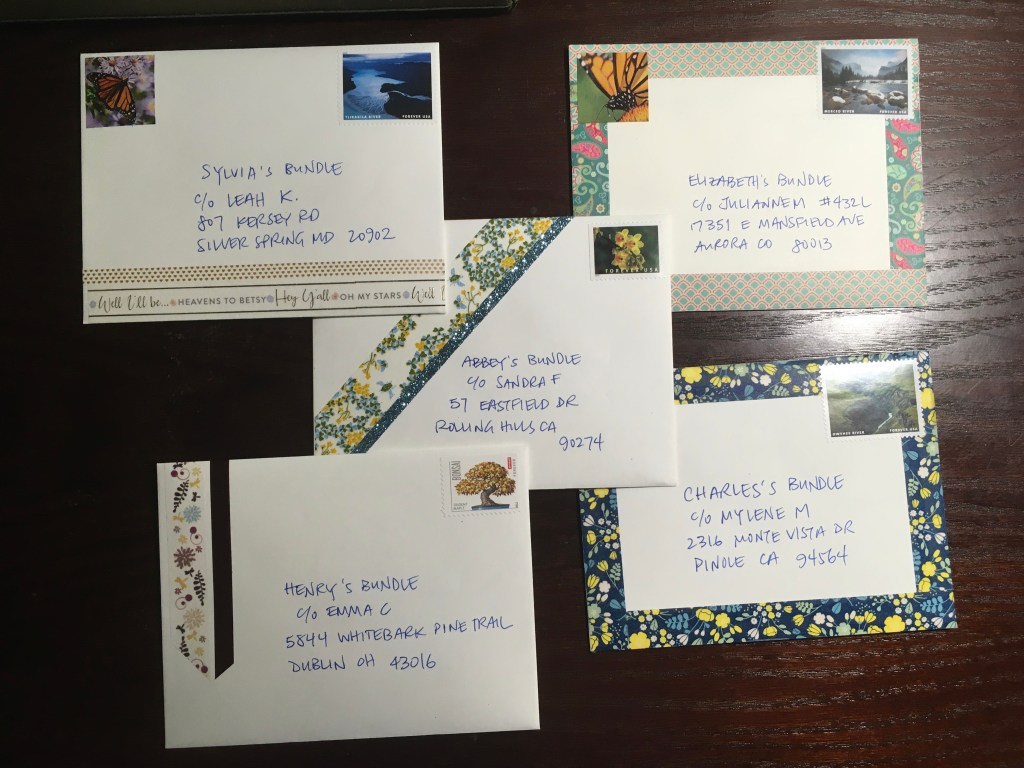
People submit nominations for letter recipients, and every month the MLL team selects five to post. Each recipient’s nominator writes a heartfelt request, and supplies an address. Letters are requested to be postmarked by the last day of the month (but I bet they’d take some tardy ones, because they are sent with love?). Tonight I wrote my second ever set of love letters, on washi tape stationery, of course. I may have more cards and tape than I will use in my lifetime, so I’m more than happy to share! Maybe next month I will include a blank card and envelope as a gift for the recipient to pass along—I’ll even put a stamp on it!
In this time of tumult and conflict, of heaviness and stress, reaching out to offer some light to others heals me. They will not know who I am (well, unless they happen to read this post, I guess), and I will not get a card back in reply. I get to write some encouraging words that might brighten someone’s day. But I do it for myself as much as for them.
Maybe you could use a mutual pick-me-up, too? Each one took less than five minutes. The words came easily, organically, and happily. “Holding you in light,” “Sending love and support,” “Wishing you everything you need in this crazy time.” Easy peasy, written sincerely–it feels so good. You don’t have to write to all five nominees—do what moves you. Maybe you’ll be inspired to also drop a note to your best friend, your colleague who’s challenged, or someone who recently crossed your mind, who’d probably love to know you were thinking of them.
Now is exactly the time to connect, don’t you think?
Oh and I have no financial or other interests in this organization. I just love that they encourage connection and snail mail, two of my favorite things.
This weekend I reflected in gratitude at my LOH experience in the past year. After resonating with Dr. Suchman’s moving keynote at a physician health conference in 2018, I sought him out to express thanks. He encouraged me to apply for the program. Then he coached me twice on getting institutional support, something I had never done before. All through the program, he and Diane Rawlins, two of the best teachers I have had (and that is saying a lot), led us all through ten months of complex conceptual learning and skills practice. Even better, they helped us synthesize and integrate learning between sessions, applying concepts through practice in our natural habitats, knowing we could report back to the group to debrief and trouble shoot before heading back into ‘the trenches.’ LOH runs annual reunions, refreshers and mixers during which attendees from different cohorts can meet, bond, and both expand and tighten our community of lifelong learners. In the time of COVID, alum meetings have occurred about every two weeks over Zoom, from the comfort of our homes all across the country. The more I think about it, the more I wish everybody had this kind of safety and support—this loving learning lab and community—to acquire scary new skills that, when practiced, benefit many more people than just us learners.
I imagine this may be what participants in the White Men’s Caucus feel. Read all about it in Four Days to Change, which I started and finished in about three sittings. –No really, read this book. It provides a unique and profoundly important perspective on the true meaning of inclusion, that is, white men absolutely need to be included in leading and benefiting from systemic change for equity, not just passively doing the changing for others’ sake. During the Caucus retreat, white men are both challenged and supported to dig deep into their own privilege. Inescapable mirrors of truth and profound discomfort, and also of love and compassion, surround them for four days. They are expected to feel tremendous guilt and shame, both natural emotions that occur on the path of self-discovery and humility. But rather than weaponizing these feelings, facilitators love the attendees through them, shepherding them through the emotional (shit)storm to a place of self-compassion and forgiveness. This is where their outward humility, openness, and sincere advocacy for inclusion and diversity take root—because they experience it first hand from their teachers and peer learners. Leadership is hard enough, but leading initiatives in diversity, equity, and inclusion is a whole other dimension of complexity. How can we expect any leader, white male or otherwise (but white males especially), to do it well alone, without a core peer group willing to hold their feet to the fire with both love and conviction?
I wrote earlier this year, “Practicing inclusion INCLUDES the OWG (Old White Guy) ‘oppressor’! If we talk only about him needing to include others, while we make him feel excluded himself, how can we ever expect to enroll him in our cause or even behave in the way we ask? We do how we feel. And when we feel threatened and marginalized, especially from a place of loss, we act accordingly.”
Michael Welp writes in Four Days, “(My mentor) inspired me when he (said), ‘The only way to touch other white men is through love.’ His words have always stayed with me. However, the overall pattern observed in my dissertation was that white male diversity advocates disconnected from other white men and drew most of their support from white women and people of color. They were frustrated and angry toward other white men.”
Imagine people of your own tribe, a tribe you may lead in good faith, suddenly confronting you about biases and prejudices that you never knew you had, telling you how you’re harming people all around the tribe, and that you have to change it all now, adopt a new set of beliefs and initiatives today, and they will accept nothing less than your complete and unquestioning compliance because you are simply in the wrong. Would you respond better if they came at you with such accusations and demands, or came alongside you with a grave and critical invitation to curiosity and learning together, for the good of the whole tribe, yourself included? Which approach is more likely to yield tangible results in the near term? Which one is more likely to still engage you in the long term?
We can learn important lessons from addiction medicine. Patients succeed in rehab with a lot of grit and commitment. They also benefit from the unyielding support and dedication of treatment staff and various environmental safety precautions. But relapse rates are high (40-80%) in no small part because the safety and support so crucial to getting sober in rehab too often simply do not exist in an addict’s natural habitat.
The converse was found to be true among American servicemen who fought in the Vietnam War. Up to 20% of them were found to be addicted to heroin while overseas. But upon return, only 5% of those who recovered relapsed. After rigorous study (by a well-respected woman researcher, whose results and report were initially questioned and even derided—but that’s for another post), it is now widely accepted that the environment plays a key role in our behaviors, habits, and ability to change. Soldiers in Vietnam, as James Clear writes, “spent all day surrounded by cues triggering heroin use: it was easy to access, they were engulfed by the constant stress of war, they built friendships with fellow soldiers who were also heroin users, and they were thousands of miles from home. Once a soldier returned to the United States, though, he found himself in an environment devoid of those triggers. When the context changed, so did the habit.”
The system often dictates, or at least strongly influences, how we perceive, think, behave, and relate. And we are the system, every one of us. By assimilating to the dominant white male culture, even as we see ourselves as resistors, we perpetuate it. But when we resist by only opposing our white male counterparts, without also enrolling them in the resistance movement as equals, we also undermine our own progress. Everybody deserves the safety and support to do their own personal Reckoning, Rumbling, and Revolution, as Brené Brown describes in her book Rising Strong. Real positive change is grounded in vulnerability, humility, and courage. If we really expect our white male leaders to change in ways fundamental and profound enough to advance equity in any meaningful way, they need the safety and support to reckon and rumble with their resistance, their rage, their fear, culture, identity, relationships, memories, realizations—all of it—with people they can relate to and who can hold them up fully, who will not turn away from or against them. As I wrote last week, more and more I see that perhaps only other white men can truly do this.
To be clear, this post is not an apology for white male supremacy and the vast suffering this mentality has wreaked all throughout history. I just think it’s important, and too seldom attended to, that white men also suffer in and from the culture they dominate. And in order to really change this culture for the better, we all need to support one another, white men included.