What Emerges from Crisis:  Connection, Learning, and Contribution

IMG_2126

“What observations/discoveries/learnings have you noticed in these weeks?”

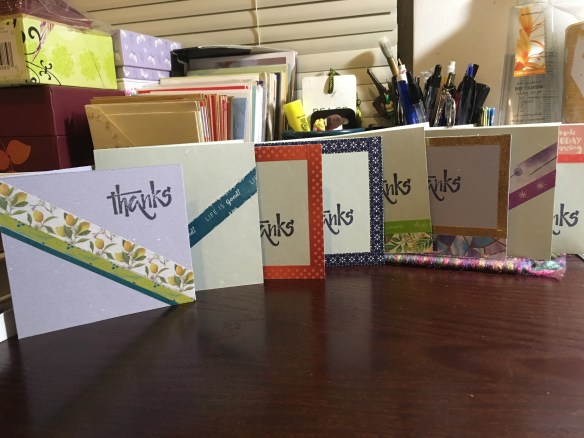
In phone calls, emails, and snail mail to friends, I find myself asking this question repeatedly.  This exercise yields two wins:  1) I’m connecting to my people all across the country; 2) I get to answer for myself, and new insights emerge each time.

How are you connecting with your people in these weeks of physical separation?

What have you had to reframe, create, and experiment with to make life work in our sudden new reality?  How does it feel?  What are you learning?

* * * * * *

 Inconvenient Emotions

Very early in the pandemic, when I realized my clinical volume would drop to practically nothing, I started to feel something akin to survivor’s guilt.  I still feel it—I am not on the front lines; I myself am not in harm’s way, as so many of my colleagues are.  I feel relief for not having to be there (yet).  Then I feel guilty for feeling relieved.  So I try to make myself useful, giving Zoom presentations on wellness to colleagues and firesides on Instagram for the public.  Life has settled into something of a routine.  I do video calls, helping with operations management and team organization from an armchair (standing desk).  Turns out I enjoy working from home!  And I feel guilty for enjoying anything about this time of unprecedented global disruption.  Hello, mental and emotional whiplash, my inescapable human companion.  Thankfully, self-compassion practice keeps me sane.

* * * * * *

Acceptance with Agency

“The first step to changing your circumstances is to accept them.”  Wut?  I have grappled for years to understand this concept; today I think I finally got it (thank you, Donna!).

Today I choose to define acceptance as a state of possibility, rather than of resignation or victimhood.  Sometimes it helps to describe something by pointing to its opposite:  What happens when we refuse to accept what is?  Often we cling to what we think should beWhat should be is a narrow set of unmet expectations that keeps us anchored to the past, or at least to an unreality that simply does not exist.

What happens when we finally accept what is?  We are liberated to ask some important questions:  How do I feel about what is?  What are the best and worst potential outcomes from here?  What do I want to be different?  How can I effect that change?  What is my work here?

Accepting what is brings us over the threshold from the narrowness of what should be to the wide possibility of what could be, where our agency is what we make of it.

* * * * * *

Optimism + Cynicism = Peace

Some days I get so excited, reveling in human ingenuity and resilience!  Look at the transitions we all made, practically on a dime, moving healthcare and education online, organizing COVID testing and creating treatment protocols, constructing hospital wards in convention centers, initiating clinical trials, and sharing experience and data internationally at breakneck speed!  All this learning and application, holy cow, how could we not be smarter, more connected, and better after all of this?

By being human, that’s how.  Despite our great capacity for survival and adaptation, we are creatures of habit and products of our environments and relationships.  We revert more easily than we convert.  On cynical days I think, “Nothing will change.  We will stay the same stupid species we have become, just a couple hundred thousand deaths closer to our own stupid, eventual extinction.  And we will deserve it.”

Here’s the fascinating thing, though:  I vacillate in this false dichotomy lightly, even though the emotions on both sides can get intense.  We humans are such a complex enigma, capable of profound love and selflessness, and also unfathomable hatred and destruction.  That’s simply what is—we are all of these things, intricately complicated in our nature.  Each one of us possesses an infinite set of potential vectors for connection and/or destruction.  But I still get to choose what to do with my time, energy, and resources in this lifetime.  It’s my call.  So I’m okay; I’ got this.

* * * * * *

Co-Creation:  The New Normal

The last two years I have had the privilege to work with colleagues around our vision, mission, and values.  I have studied various work cultures, observed and interviewed associates and teammates.  LOH taught me the language and framework to synthesize my own, evolving style of relational leadership.  During this downtime—this unearned vacation—I have time and space to consider a bigger picture.  What about our culture best manifests our mission and values?  How did this facilitate our successes in reorganization and mobilization?  What held us back?  What needs to happen (change?) in order for us to emerge from this crisis in learning and growth, rather than in fear and trauma?  These questions apply professionally, personally, and societally.

My strengths lie in relationship and connection.   Throughout this long journey to flatten the curve (and it will be months), I can contribute my insight, observations, and talents at synthesis, creativity and vision, to make our new normal as mindful, intentional, collaborative, and functional as possible.  I can paint a vivid picture of where we could go.  I can embrace dissenting voices and find alignment in apparently divergent interests.  I can help us be better.  This is the contribution I can make.

What will your contribution be?

10-22-19-2

All Good Things Must End

moon path LOH

Setting moon, Sylvan Dale Guest Ranch, Loveland, Colorado.  Photo courtesy of Dr. Karen Cornell

Friends, Leading Organizations to Health has graduated Cohort 11, the Class of 2020.

Ten months ago I started at my Hogwarts, the leadership training program that has definitely made me a better leader.  But more importantly, it made me nine amazing new friends and a much better person.  Today, on the last day of the last retreat, it all came together in the most beautiful way, and I am beyond grateful.

These ten months were the best elective educational experience of my life—they really gave college and med school a run for their money.  We immersed in a curriculum dense with abstract concepts of interpersonal communication and organizational change management.  We then translated the theories into tangible skills in an experiential learning lab, applied to specific challenges brought by my 7 cohort mates and me.  Over four in-person retreats and monthly Zoom calls, we shared, supported, and coached one another in the tenets of relationship-centered leadership.

We bonded in a similar way to residents on call:  Gathered for training, bringing different backgrounds and perspectives, participating in a common curriculum but each with a unique learning path, eventually to disperse and practice in different settings across the country.  We eight now share a connection of stories and struggle that nobody else can know.  We are a tribe.

Thus, I grieved the goodbyes long before we arrived in Loveland this last time.  But I also trusted our master facilitators to help me manage this, by both their loving and authentic presence and the very structure of the program, which is founded on contemplation and self-awareness.  I also felt an abiding faith in the friendships we all grew this past year.  As with my best friends from college and medical school, I knew we would maintain contact and connection, just in a different way.  We can’t stay in the nest forever—now is the time to fly.

In thoughtfully constructed journaling exercises and discussion groups, we reflected, consolidated, and synthesized ten months of learning.  We also examined our personal and professional evolution over this time, growth and movement in fluidity and complexity.  We explored aspirations and imagined the future state of this work in our natural habitats.  Finally, we sat in a closing circle.   Having each shared our own reflections, the group offered each friend observations, affirmations, and well wishes in what I can only describe as the most loving communion.  Each person’s strengths were articulated and amplified.  We acknowledged one another’s challenges.  We celebrated each other’s engagement, perseverance, contributions and triumphs.  Finally, sustained mutual support was extended around the circle, wholeheartedly and without qualification.

In my opinion, we formed the kind of community that we all want to lead.  Tony and Diane led us all by example, deliberately, artfully, and mindfully.  They live the principles they teach; they lovingly and patiently showed us the way.  In the end we discovered our own capacity to each write our own next chapter(s).  By making us feel seen, heard, understood, accepted and loved these ten months, our teachers inspired us to do the same for others.  And that is the strongest foundation for building our houses of positive change agency.

Now we go forth.  We’ got this.

Onward from 2019: Learnings and Intentions

IMG_3635

Friends!  WHAT a year, no?  How are you feeling here at the end?

In this post:  3 key learnings, 3 high intentions, and my 6 recommended life readings.

What resonates with you?

What would you add?

For a thoughtful and inspiring look on the coming year, check out Donna Cameron’s post from yesterday.

IMG_3222

3 Key Learnings of 2019

Complexity

“When we try to pick out anything by itself, we find it hitched to everything else in the Universe.”  –John Muir

“All that you touch, you change.  All that you change, changes you.” –Octavia Butler

We all live in inextricable connection, like it or not, know it or not, want it or not.  Every interaction has potential for benefit and harm, and the scale is exponential.  Some may find this idea daunting, overwhelming, or untenable.  I find it reassuring.  The idea that some cosmic life thread connects us all, that we are made of the same stuff today as that which existed at the dawn of the universe—this gives me peace.  It encourages me that everything I do in good faith could make a difference.  You really never know how far a small gesture or sharing will reach for good.

The 3 Tenets of Relationship-Centered Leadership

Not so much learnings as a synthesis from LOH training, these are the current foundation statements of my personal and aspirational leadership tenets (iterations likely to evolve over time):

  1. Founded on curiosity, connection, and fidelity to a people-centered mission
  2. Attendant to the relational impacts of all decisions, local and global
  3. Respectful of norms and also agile and adaptive to the changing needs of the system

Having defined these ideals for myself, I am now fully accountable to them.  And I hold them as a standard for those who lead me.

Being >> Saying or Doing

Saying and doing compassionate, empathic, and kind things are necessary and noble.  And they are not enough.  These actions ring hollow without honest sincerity behind them.  People feel us before they hear our words.  Our authentic presence, positive or negative, originates from within.  It manifests in posture, facial expression (overt and subtle, intentional and subconscious), movement, and tone and cadence of voice.  Fake it ‘til you make it—saying and doing things because we know we ‘should’—only gets us so far.  We humans possess a keen sense of genuineness—it’s a survival instinct.  If we accept that a meaningful, productive life and effective leadership in particular, require strong, trusting relationships, then we must cultivate true compassion, empathy, and kindness.  That means suspending judgment, managing assumptions, and holding openness to having our perspective changed by all that we encounter (see first key learning above), among other things.  This may be life’s penultimate challenge—our role models include Mother Theresa and the Dalai Lama.

IMG_3446

3 High Intentions for 2020

  1. Continue to ask more and listen better for people’s personal and unique meaning making—not just patients but all people—attend to souls
  2. Let go perfection
    1. All relationships are not great, and it’s not all my fault
    2. Some people/relationships and circumstances challenge my best self and skills more than others
    3. It’s the honest, sincere, good faith effort, and the learning from imperfection and failed attempts that matter
    4. Some relationships are better ended
  3. Guard against judgment, arrogance, and cynicism

IMG_3501

6 Recommended Life Readings—the 6 most personally impactful books I have read in the last decade:

The Art of Possibility by Rosamund Stone Zander and Benjamin Zander.  Scarcity thinking, competition, and looking out for number one hold us all back.  Stepping fully into our central selves, claiming our full collective agency for creativity and collaboration, and manifesting all the good we are capable of—that is the discovery of this book for me.

Start With Why by Simon Sinek.  In my opinion, the most eloquent and resonant writing on the purpose-driven life.  The freedom and creativity that flows forth therefrom—it all just gives me goosebumps.  Sinek’s The Infinite Game may eventually make this list too, once I have integrated its content and learnings more fully.

Rising Strong by Brené Brown.  Strength and vulnerability, confidence and shame, individuality and belonging—these are the essential human paradoxes that Sister Brené reconciles with gritty aplomb through real life stories as well as grounded theory research.

Big Magic by Elizabeth Gilbert.  Be you, all you, all in.  Love thyself—flaws, failures, and falls all included.  Make things.  Because that is what we are put here to do, for ourselves and for one another.

Leadership and Self-Deception by The Arbinger Institute.  Perhaps no book explains the profound importance of being better in order to do better, better than this.  And it took me almost all year to really comprehend, and then begin to apprehend, the concept.

Being Mortal by Atul Gawande, MD.  I started and finished this one on vacation this past week.  Dr. Gawande is my favorite physician writer.  I consider this book required reading for all physicians for sure, but really for all people .  “The death rate from life is 100%,” a wise patient once told me.  In modern western society and culture, multiple intertwined and complex forces hamstring our ability to live and die well and at peace.  This book is a brilliant compilation of heartrending personal and professional stories, neatly folded with history, research, and practical information for improving this sad state of things.  It is also a guide to the hard conversations that we all should really have—now.  It has both validated what I already do in my practice, and profoundly changed how I will do things hereafter.  Thank you, Dr. Gawande.

*****

Best wishes for Peace, Joy, Love, and Connection to all.

IMG_3595