“Every day I get to ask people the most interesting questions I can think of, to help them know themselves better and live into their healthiest, most fulfilled selves.”
What if I answer this whenever someone asks me, “So, what do you do?”
How does this sound, feel, and taste different from if I just said, “I’m a doctor”? How interesting, to think of a narrative having a taste… What flavor do you assign my answer above, as you read it? Maybe I should add some toppings:
“I have the privilege and pleasure of doing work that stimulates both my thinking and feeling brains. I get to use all that I have learned throughout my life, both personally and professionally, in service of connecting with and serving other humans. I exercise deep expertise and knowledge, and am also humbled to learn something new every single day. I love what I do, I impact people’s lives, and it’s almost all ‘just’ by talking to people.”
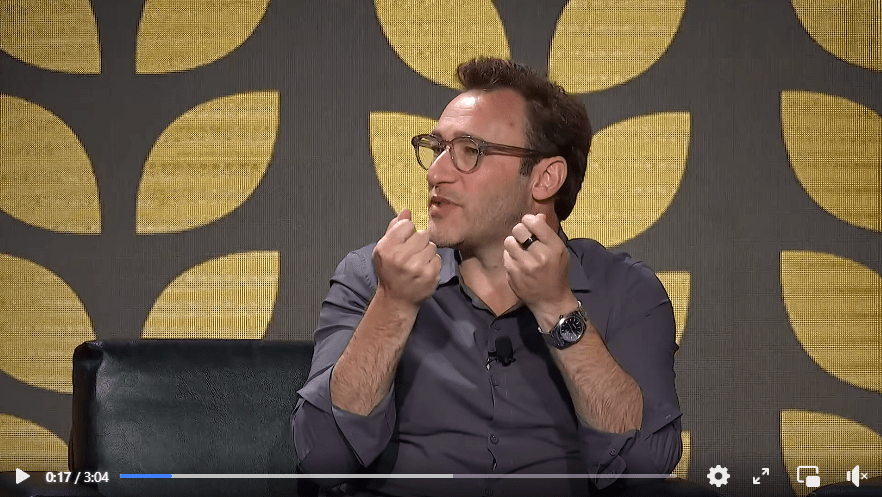
Simon Sinek inspired this post when I watched the video clip of him describing why communicating through stories–narratives–is so important and effective. Thinking of narrative in terms of flavor–what a novel and elegant concept! It takes a totally different perspective on words, from thinking or feeling with emotions to putting it in our bodies. Smell and taste are a primitive sense, and highly associated with memory and emotion. It is literally visceral. So when we tell our stories about work, families, core values, realtionships, struggles–anything meaningful–what happens to that meaning when we correlate it all with a taste? Both for ourselves and those who hear/read our tales? How fascinating!
My first thought watching this video was ‘bitter.’ When I think of the deeply grooved, dysfunctional patterns in some of my relationships, I realize that my narratives—the biases and assumptions I make when interacting with (or even thinking about) certain people—set us up for conflict and discord from the outset in any given encounter. Yikes. For some reason, describing them as ‘bitter’, imagining the taste on my tongue, catches my attention, makes me stop and take notice, more than naming it all as resentment, anger, and grudges. It motivates me to change the narrative, to shift my perspective, make more generous assumptions, withhold judgment, and Give the A. Who wants to taste bitter all the time? I want to make these relationships sweet, savory, and refreshing.
How can we expand this metaphor beyond our own individual stories?
What is the story of your workplace culture? How do the mission/vision/values statements land on the workforce? How would you first describe it in the usual adjectives: restrictive, supportive, rigid, chaotic, backstabbing, upbeat? Then what emotions do you associate: happy, sullen, lighthearted, anxious, safe? What about bodily sensations: tense, relaxed, sleepy, wired, restless? And finally imagine a taste for it: bland, spicy, bittersweet, moldy, rancid, salty, aromatic? How does this exercise affect your perceptions/memories/thoughts/feelings about work? Does it move you to think, say, or do anything differently?
I have never before described my work in the exact words I used above. It feels liberating to find and articulate stronger language for my experience. And it did not take me long to land on ‘sweet’ (I often describe my job as ‘the sweetest gig’–funny how we use this phrasing for things that are just that good) and ‘umami‘ for its tastes. I love what I do. I crave it, savor it. I bask in not just the flavor, but the warmth (it’d definitely warm, not cold or hot) and the texture (rich, dense, smooth with bits of crunch and chew). OH this is fun! My work is the most satisfying meal: marbled, medium rare rib eye with a nice crust, roasted sweet potato, sauteed Brussels sprouts, tiramisu, and chai. Oh and there is some flower salt and pepper on the table.
I wonder how my patients would tell their stories of me and our relationships, and how they would translate those narratives into olfactory and gustatory experiences of us? Am I (are we) bran flakes, kale salad, mac ‘n’ cheese, burnt toast, chia pudding, meatloaf and spinach, blue cheese? The possibilities are endless! And it’s important to query and clarify our unique associations with the flavors we assign. I may think blue cheese is fragrant and lovely; my patient may mean it as putrid.
Now I’m thinking of employee engagement surveys. Wouldn’t it be fun, and actually engaging, to include novel questions like these? Surveyors could easily design questions to indicate whether responses are meant in positive or negative ways, and categorize different foods or meals to represent different aspects of work–breakfast as relationships, lunch as tasks, dinner as meaning, dessert as perks.
Okay that’s enough for now. What a fun diversion this was. Now I’m wondering about figures of speech that reference food and taste…what do we mean to evoke with this language? A post for another time, perhaps.
Onward in curiosity, novelty, learning, and connection, my friends!
From the top of Schoolmarm, Keystone, Colorado, December 2018
Friends!! Happy Happy Old Year!
So many excellent essays and posts everywhere for the New Year, are you soaking them in? Do they lift you up? What stands out for you from 2022?
I have to say, I’m ready for things to be easier and lighter. These last two years were pretty damn shitty for a slew of reasons… and I don’t necessarily wish for anything different. What doesn’t kill us often does make us stronger, and not always. Some of it just maims and scars, and we could be just as strong and well without it. Whatever, it all just is.
Love and gratitude stand out for me… Also commitment, resilience, and of course connection. Connection, actually, is both the beginning and end of getting through hard times, no? The trust, love, strength, respect, and attention we share hold us all up, bond us closer through crucibles of crisis, and magnify themselves, don’t you think?
Three posts resonate in particular with me this week, which I share below. May they lift or ground you, whichever you need. May you notice and receive whatever else you need as well, to start 2023 in peace and confidence, and to sustain that sense of “I’ Got This,” no matter what comes. Oh and as usual, I’ve included my list of books and notable media at the end. Books in [brackets] are yet to be finished; entries in bold are my favorites. My home Word file denotes romance novels in blue, but I think you can figure it out based just on the titles. There is a theme emerging among the romances I love; maybe more on that later. 😉 I created ‘Inspo’ on Spotify soon after writing the Playlist post last month, along with separate ones for writing and workouts. That subscription is well worth the cost!
ONWARD, my friends. All we have is this one life, with one another. Let us make the most of it all, ya?
Let It Be So
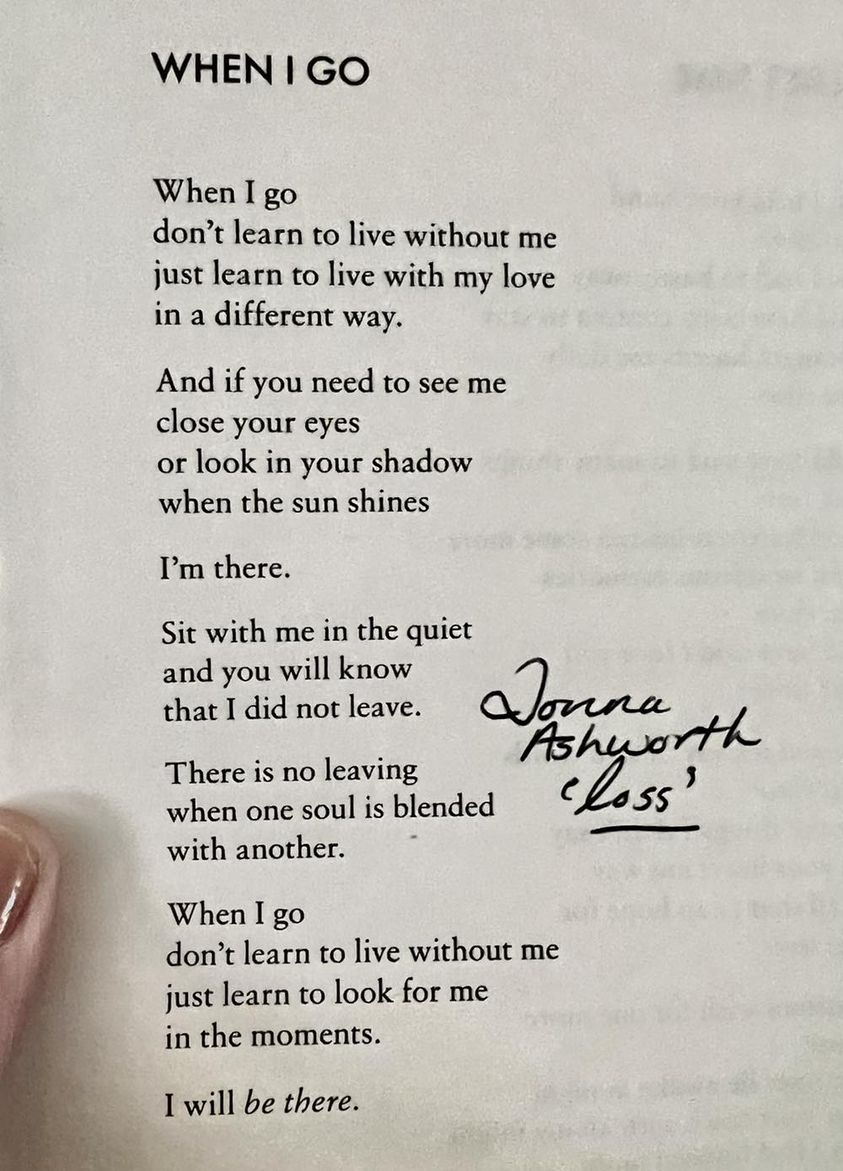
Donna Ashworth wrote the poem “When I Go,” which inspired my post of the same title. In her message for 2023, she reminds us to treat ourselves with a little more acceptance, compassion, and generosity. I wholeheartedly concur–if we can do this better for ourselves, then we are much more likely and able to do it for one another:
“Why do we start a new year, with promises to improve?
“Who began this tradition of never-ending pressure?
“I say, the end of a year, should be filled with congratulation, for all we survived.
“And I say a new year should start with promises to be kinder to ourselves, to understand better just how much we bear, as humans on this exhausting treadmill of life…”
Holding ourselves in acceptance and compassion can manifest in specific practices; we can frame them as resolutions, intentions, hopes, or whatever. For me right now, it all still comes back to self-awareness, self-regulation, and community building… Mindful, peaceful intention in action and interaction, or something like that.
I only recently found Rachel Marie Martin, and her work resonates so far, especially her 23 ‘rules.’ I choose to hold them loosely, some more than others, and I look forward to seeing which ones recur in my psyche over the months to come. If the excerpt here speaks to you, check out the entire list on her Facebook page.
1. Stare fear in the face. So often fear stops us. Instead live fearless – knowing when to stop and when to move and when to be brave.
2. Invest in your friends. Good friends listen and show up. Do the same. Friendship is give and take and give and take. Friends are the ultimate gift.
3. No excuses. You must take care of yourself: heart, body and soul. There is no excuse for forgetting you. Your family needs you to love you with the same tenacity that you love them.
4. Guilt doesn’t need to dictate choices. Don’t let guilt stop you from taking care of yourself. Guilt keeps one stuck.
5. Read real books again. Watch a mini-series. Start jogging. Do something that is not work, not chores, but simply that makes you happy.
6. Love your body. Your aging body. Yes, that. And stop lamenting the wrinkles, but embrace them as another year lived.
How many times do ‘relationship’ and ‘connection’ occur on this blog, I wonder? More times than most other nouns/ideas, I bet. They are my Why. And yet, they are inadequate words to truly express the depth to which I mean them. So I was especially grateful years ago to find John O’Donohue’s explanation of anam cara, ‘soul friend’ in Celtic. That direct translation hardly captures the meaning, either, and his book of this title is a bit dense and esoteric. So I thank Maria Popova for her long form delve, “Anam Cara and the Essence of True Friendship”. Her essays read slowly in the best way–leisurely yet intense intellectual consideration, like sipping the smoothest bittersweet Belgian hot chocolate. I picture the cafe where my best friend from college (an anam cara, for sure) and I always sat, with all the time in the world, enjoying each other’s company and whatever random wonders occurred to us. Read her post in a warm, comfy chair, including the most eloquent quotes from O’Donohue’s writing:
“With the anam cara you could share your inner-most self, your mind and your heart. This friendship was an act of recognition and belonging. When you had an anam cara, your friendship cut across all convention, morality, and category. You were joined in an ancient and eternal way with the ‘friend of your soul.’ The Celtic understanding did not set limitations of space or time on the soul. There is no cage for the soul. The soul is a divine light that flows into you and into your Other. This art of belonging awakened and fostered a deep and special companionship.
“A friend is a loved one who awakens your life in order to free the wild possibilities within you… The one you love, your anam cara, your soul friend, is the truest mirror to reflect your soul. The honesty and clarity of true friendship also brings out the real contour of your spirit.”
And she puts his words in 21st Century context with crystal clarity of their profound, countercultural importance:
“…being an anam cara requires of a purposeful presence — it asks that we show up with absolute integrity of intention. That interior intentionality, O’Donohue suggests, is what sets the true anam cara apart from the acquaintance or the casual friend — a distinction all the more important today, in a culture where we throw the word “friend” around all too hastily, designating little more than perfunctory affiliation. But this faculty of showing up must be an active presence rather than a mere abstraction — the person who declares herself a friend but shirks when the other’s soul most needs seeing is not an anam cara.”
It’s all so much, isn’t it? So much stimulation, emotion, tragedy, possibility, uncertainty, profundity, incredulity, and so much more. *deep breath*
Maybe one of the more important life lessons, that can only come with living it longer, is to hold it all with stronger yet looser conviction. To realize my own mission and have it validated gives me confidence. It also frees me to let go those who can’t see, don’t come along, or even reject it. We all walk our own paths; you don’t have to come on my journey. If our paths cross in a ditch or other obstruction, or your trail looks more interesting or efficient than the one I’m on, I can change directions and choose a new route for a while. There are infinite ways to get to where I’m going. I can just really enjoy and revel in the view as I walk.
To the New Year. Another cycle begins. Bring it.
Books
Pathways to Possibility by Rozamund Stone Zander
Liminal Thinking by Dave Gray
52 Pep Talks for Writers by Grant Faulkner
Useful Delusions by Shankar Vedantham and Bill Mesler
A Little Hope by Ethan Joella
The Wisdom of Your Body by Hillary McBride
Be Water, My Friend by Shannon Lee
Summary of Why We Sleep by Matthew Walker, by Readtrepreneur Publishing on Hoopla Digital
Curious by Ian Leslie
The Icepick Surgeon by Sam Kean
The Other Dr. Gilmer by Benjamin Gilmer
The Upside of Irrationality by Dan Ariely
[The Mindful Therapist by Daniel Seigel]
Plays Well With Others by Eric Barker
[Atlas of the Heartby Brené Brown]
High Conflict by Amanda Ripley
The Lightmakers’ Manifesto by Karen Walrond
Power Moves by Adam Grant
Mentors by Russell Brand
I Am Spock by Leonard Nimoy
I Must Say by Martin Short
Sparks Like Stars by Nadia Hashimi
Be Quiet, Be Heard by Susan Glaser and Peter Glaser
The Midnight Library by Matt Haig
Buried Deep by Margot Hunt
Dirtbag Anthropology by Kate Willett
The All or Nothing Marriage by Eli Finkel
[The Year of Magical Thinking by Joan Didion]
Welcome to Your Teenager’s Brain by Abigail Baird
The Way Out by Peter Coleman
Remarkably Bright Creatures by Shelby Van Pelt
A Republic, If You Can Keep It by Neil Gorsuch
The Egg and Other Stories by Andy Weir
The Fix Up by Kendall Ryan
Playing For Keeps by Kendall Ryan
Part-time Lover by Lauren Blakely
The Ruthless Gentleman by Louise Bay
Delayed Gratification by Lauren Blakely
Instant Gratification by Lauren Blakely
Kismet by Lauren Blakely
The Dream Guy Next Door by Lauren Blakely
Never Have I Ever by Lauren Blakely
Private Player by Louise Bay
Not Until You by Corinne Michaels
If I Only Knew by Corrine Michaels
Satisfaction Guaranteed by Lauren Blakely
Consumed By You by Lauren Blakely
One of Those Flings by Lauren Blakely
Your French Kisses by Lauren Blakely
P.S. It’s Always Been You, Parts 1, 2, & 3 by Lauren Blakely
Special Delivery by Lauren Blakely
Lucky Suit by Lauren Blakely
Cocktail by Lauren Smith
Bossy Brit by Kendall Ryan
One Hot Scandal by Anna Durand
Melt For Him by Lauren Blakely
Portrait of a Thief by Grace D Li
Lethal in a Kilt by Anna Durand
The British Bastard by Anna Durand
Irresistible In a Kilt by Anna Durand
The Pretending Plot by Lauren Blakely
One Hot Christmas by Anna Durand
One Hot Crush by Anna Durand
One Hot Chance by Anna Durand
One Hot Roomie by Anna Durand
Heired Lines by Magan Vernon
The Bromantic Comedies by Erin Mallon
Royally Endowed by Emma Chase
Brit vs. Scot by Anna Durand
One Hot Escape by Anna Durand
The Duke’s Twin by Lauren Smith
Forever Be Mine by Lauren Smith
Royally Screwed by Emma Chase
Royally Matched by Emma Chase
Rory In a Kilt by Anna Durand
One Hot Rumor by Anna Durand
Sweet Liar by Laurelin Paige
Sweet Fate by Laurelin Paige
Incendiary in a Kilt by Anna Durand
He Loves Me, He Loves Me Not by Iris Morland
My Rebound by Carrie Ann Ryan
Devastating in a Kilt by Anna Durand
Two Pretty Lies by Kelleigh Clare
Rivalry by Laurelin Paige
Ruin by Laurelin Paige
Revenge by Laurelin Paige
[Tomorrow, and Tomorrow, and Tomorrow by Gabriel Zevin]
After Friend and I talked about her BEAST lawyer last week, somehow we got to thinking about being at peace with death. I told her I’m okay with it–if it were my time tomorrow, I could accept it. She confirmed that my declaration did not feel delusional or arrogant. I have no intention of dying, and I would not want it or like it, but I would have few regrets, I think. Let me be clear: I would certainly regret any pain and suffering that my death might cause my loved ones. But maybe knowing that I’m at peace with my own mortality would help mitigate their pain? In Being Mortal, Atul Gawande tells us that if the person whose life is ending is at peace (it’s redundant, but there isn’t really another expression for it, is there?) with their own end, then their loved ones are far less likely to experience depression and prolonged grief after their death. This is what I wish for my people. I can go first, literally and figuratively.
A few years ago, another dear friend announced his retirement after nearly 30 years with his company, many of them in leadership roles. His LinkedIn page filled with gushing expressions of gratitude and admiration. I thought about him all day, and wrote him spontaneously in the evening:
…And what will the organization and its people be/feel like without you?
When my kids were little I used to be afraid to die. I was afraid they would forget me, and that I would not have a chance to pass down my core values, to have a hand in helping them become excellent people. But then I realized that as long as I am here, I am the one responsible for that, so nobody else thinks to do it for me. But if I died, and if I lived well, then people would take what they loved best about me and sustain it for my kids in my place. If I were successful in building the village around them, then they would not be dependent on me alone to get what I most wanted them to get.
So now I don’t worry so much about it–partly because they are older and I have had time to instill some things, both by example and by teaching. But also because I trust that my own circle will enclose them and nurture them if/when they are needed. That reminds me, maybe I should remind and thank my circle for doing that. 😄
Today I have even more confidence. The kids are three years older, their complex adolescent personality formation accelerating. I see my imprints deepen, for better or worse, and we have reflected together how they see my influence in their attitudes and expressions. We agree to help one another identify and manage our respective deficits. The tribe is still strong and willing, and I have hopefully been more explicit about my gratitude and aspirations. But really I just trust Son and Daughter to keep me with them, alive or dead, near or far, like Ashworth’s poem says.
I wrote my 30 ethical earworms for posterity last year, saved now among 504 total posts on this blog so far. If they read one a week starting if I died today, that’s almost 10 more years of me in their mind’s ear. They will continue to become who they are, and find the places where I fit, to carry me most comfortably and usefully.
On the path of life, we leave pieces of ourselves all along the way, accumulated and spread among our relationships. What do we do when our loved ones die? We honor them by nurturing, strenthening, and cultivating those parts of them that live within us, more intentionally and meaningfully than when we had them physically with us.
So it’s a Peace & Mortality Mindset of living, I suppose. Try to not take any day, any moment, with any person, for granted. Take advantage of any and all opportunities to connect in meaning and love. Act with reckless abandon on any and all impulses of empathy, kindness, generosity, and compassion. None of us knows when the end will meet us or those we love. What can we do today to make any of it just a little less painful?


 Healing Through Connection