Holding the Space for Personal Acts of Peace—On Listening

IMG_2700

In honor of those who lost their lives this past week:

Alton Sterling, Baton Rouge, LA

Philando Castile, Falcon Heights, MN

Brent Thompson, Lorne Ahrens, Patrick Zamarripa, Michael J. Smith, Michael Krol, Dallas, TX

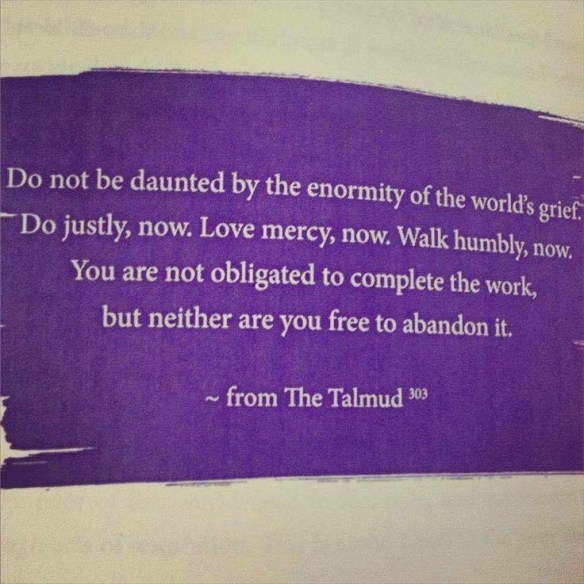
What can I, one person, do, in the face of such tragedy and pain? How can I help?

I write this post to document my personal intentions for living peacefully. Maybe that’s what I’ve been doing all along on this blog—recording the insights, keeping the journal—so I can remind myself of my ideals and aims, when things get confusing and I lose focus.

The way I see it, the temporal juxtaposition of killings on/by ‘both sides’ of the racial divide this past week led to an important shift in the national conversation on race and violence. I know I will not do justice to all the complexities of our issues in one blog post, but I ask your forbearance for my interpretation, as it has led me to greater conviction for what I can do, I, one person.


Listening to Understand

The first step to peace is to get quiet and listen. This is a central practice of Holding the Space.  Before we can solve our problems, especially problems between individuals or groups of people, we must slow down and really hear the narratives of all sides.  But when tragedy, especially violence between groups, strikes, I usually see and hear more shouting, blaming, and demanding, than listening.  At once people stake their positions around an issue, such as racial discrimination or gun control/gun rights.  I see words hurled on news and social media pitting one group against another, each claiming the only right opinion.

I think this is why I have not fully embraced movements like Black Lives Matter and Everytown for Gun Safety. To be clear: my values and opinions align with these groups, no doubt.  I believe that our country has a long way yet to go, to recognize and reconcile institutional racism and a runaway gun culture.  That said, when I claim membership in such a visible umbrella movement, I may be instantly perceived as less open-minded than I am.  “She supports Black Lives Matter; she must be anti-police.  I can’t talk to her.  I can’t tell her why I support cops and I why (her) movement upsets me.”  This sentiment, or something akin, may be conscious or unconscious.  With the person who feels it (and I do think it’s more of a feeling than a thought), already I have lost an opportunity to hear and learn from ‘the other side.’  When that happens, we both (all) lose.  When someone with an opposing view thinks I will not listen, am unwilling to hear them, then what else can they do but shout, blame, and demand?  So by not shouting and demanding loudly from my own camp, I leave myself open to approach, and be approached by, anyone.  I send an implicit invitation for communication and exchange of ideas.

This is the difference I see in the past week. More than debate over police reform and gun control legislation, I see pleas for increased compassion and understanding.  It feels less inflammatory and more contemplative.  Finally, the suffering seems to have quieted us, and we seem ready to engage more civilly.

Others have written and spoken about listening this week, more eloquently than I:

Brené Brown, on her Facebook page, July 7:

I believe that healing racism will require honest conversations about race and class privilege – with our friends, our neighbors, our co-workers, our families, and our children. Yes, these are hard, uncomfortable discussions and we can become paralyzed by the fear of saying the wrong thing or being misunderstood. But we have to be braver than we’ve been because the cost of not having these conversations is paid in lives.

Maria Shriver, on her Sunday Paper, July 10:

There are times in life when answers aren’t what we need. We just need to listen. Listen without judgement. Listen to the wails, listen to the fear. Listen to the divide. Sometimes when someone is screaming for answers they are really screaming to be heard, to be acknowledged, to be understood. Sometimes there are no answers to our questions large and small. Sometimes demanding answers won’t get us the answers we need.

Father James Martin, on his Facebook page, July 10, on the Good Samaritan parable; those you despise have something to teach you:

…Not just that we are called to be compassionate to people that we despise, or think we despise, but that people we despise, might help us. They might have something to give us, to teach us.  That is, we’re called to the person we hate as someone we need…  The Black Lives Matter protestor has something to learn from the Trump supporter.  The Trump supporter has something essential to be taught by Hillary Clinton herself. The fundamentalist Christian has something to learn from the same sex couple.  The pro-life advocate has something important to be taught by the person who works for Planned Parenthood…  Because in times of division, we often think that being kind means telling people that they’re wrong—for their own good, of course.  …Telling them that they’re wrong, or that they’re evil, or that they’re not a real American.  But the deeper message of the parable is a lot harder…  The one you think you hate is about to help you.  The one you think is wrong has something to teach you.  Upon the person you hate depends your soul.  And once you realize this, you cease to hate them, of course.  Jesus is telling us once again that there is no ‘other’.  There is no person who cannot teach you something.  Learn from the one you think you hate.  Listen to him.  Open your mind to her.  That’s your neighbor.  So the Good Samaritan (parable) is not just about the good Samaritan who helps.  It’s (also) about the man by the side of the road, who receives help from the one he thought he hated.

I shared House Speaker Paul Ryan’s remarks on my Facebook page this week.  He used words like respect, compassion, and common humanity.  He cautioned against anger that would “send us further into our corners.”  He upheld the president as ‘rightfully’ saying justice will be done.  I don’t like Paul Ryan, and I don’t particularly trust him.  But I posted his words to remind myself that I need to pay attention—to listen—when I hear people I normally oppose, say something I agree with, even if I am skeptical. Otherwise I contribute to perpetuating the divisions that I say I want to heal.


Listening to Heal

I imagine those who would say that listening is not enough. It will take too long to iron out our differences, if that’s even possible.  We need to act, and act now.  We demand justice now, gun control now, new laws now, change now, end the violence now!   We need boldness, aggressiveness, decisiveness.

I propose that taking time to stop and really listen to our opposition is, in fact, a bold and decisive act.  It certainly goes against convention these days.  If we said to our protesting and rallying peers, “Wait a minute, maybe they have a point… Maybe we should take a moment and hear them out,” how would most of the group respond?  Peer pressure can snuff the flame of inquiry faster than we can imagine.  But make no mistake, listening can and does make a difference in real time.

Recall the fabled story of a depressed teenager on his way home from school. He plans to kill himself this day.  Somewhere along the way, a classmate approaches, and walks with him.  They spend the afternoon in each other’s company, talking, throwing a football, maybe listening to music.  The suicidal teen decides to live another day.  He feels seen and heard, maybe even understood.  Someone has noticed him; he is no longer invisible.

On April 4, 1968, Robert Kennedy made a whole city feel heard. During a presidential campaign stop in Indianapolis, he remarked on the assassination that day of Dr. Martin Luther King.

…Martin Luther King dedicated his life to love and to justice between fellow human beings. He died in the cause of that effort. In this difficult day, in this difficult time for the United States, it’s perhaps well to ask what kind of a nation we are and what direction we want to move in. For those of you who are black — considering the evidence evidently is that there were white people who were responsible — you can be filled with bitterness, and with hatred, and a desire for revenge.

For those of you who are black and are tempted to fill with — be filled with hatred and mistrust of the injustice of such an act, against all white people, I would only say that I can also feel in my own heart the same kind of feeling. I had a member of my family killed, but he was killed by a white man.

What we need in the United States is not division; what we need in the United States is not hatred; what we need in the United States is not violence and lawlessness, but is love, and wisdom, and compassion toward one another, and a feeling of justice toward those who still suffer within our country, whether they be white or whether they be black.

So I ask you tonight to return home, to say a prayer for the family of Martin Luther King — yeah, it’s true — but more importantly to say a prayer for our own country, which all of us love — a prayer for understanding and that compassion of which I spoke.

We can do well in this country. We will have difficult times. We’ve had difficult times in the past, but we — and we will have difficult times in the future. It is not the end of violence; it is not the end of lawlessness; and it’s not the end of disorder.

But the vast majority of white people and the vast majority of black people in this country want to live together, want to improve the quality of our life, and want justice for all human beings that abide in our land.

According to his granddaughter Kick Kennedy, 34 American cities rioted that night, but not Indianapolis.  It was the only city with a large black population that didn’t.  I think this is pretty good evidence for the healing power of listening.  It was not an interactive encounter, but Bobby Kennedy aligned himself with the best of people’s hearts that night—and isn’t that the essence of real listening?

We have hard days ahead. I want to help.

I intend to avoid:

-Speaking and writing in sweeping generalizations

-Following snap judgments about groups, or individuals based on their group membership

-Labeling and shaming people or groups as ‘racist,’ ’ignorant,’ ‘stupid,’ ‘lazy,’ etc.

Instead, I resolve to:

-Ask more questions; say things like, “Tell me more…”

-Listen to people’s stories

-Look for what we have in common—shared interests and values, rather than opposing positions

-Practice awareness of my own biases and how they influence my perceptions, words, and actions


I will listen for peace.

#AtoZChallenge: Withhold Judgment

403532_3541039079225_1032738700_n

My brain is so tired. All month I have racked it trying to figure out what to write next, how to render it most authentically, and finally get it out looking close enough to how I intended.  On top of that, I have also engaged in multiple exchanges on Facebook around gender identity, public restroom use, vaccine rationale, and presidential politics.  It really has been shang nao jin, as we say in Chinese—literally wounding the mind.  I realize these are all activities that I choose, and none of them have significant bearing on the world at large.  And, I would do it all again.  My mental exhaustion is the hurt-so-good kind, like the muscle soreness after a particularly strenuous workout, when I know I have pushed myself to my limit and maybe extended it a little.  The writing and conversations are ways that I engage with my world and practice what I preach—open-mindedness, curiosity, and cultivating connection.

After all of this exploration, conversation, debate, research, and observation, once again I conclude that one of the most important practices for inner peace is to Withhold Judgment. Not all judgment, and not indefinitely, but much and for a while.  Here are some illustrations from the past week:

I shared this post on my Facebook page on Saturday.  I agree with the author’s sentiments, basically that discrimination is wrong and we should open our minds and bathrooms to all people.  I also thought her writing was cogent and forceful.  One of my friends pointed out her name calling, as she labeled supporters of the North Carolina HB2 legislation, and people who boycott Target as a result, as hateful.  He then asserted that the left “can’t argue a point without calling people who disagree with them hateful,” or at least they choose not to. At once I see both sides generalizing in ways that preclude any possibility of meaningful mutual understanding.

After this I became more sensitive to name calling in articles I read. Even ones with relevant data and useful information can be tainted, as I found here, in which the writer calls bigots the same people that the previous author called hateful.  Why must we stereotype and label like this?  Is it just to get published, for attention?  Can we not convey our message just as effectively without all this vitriol?

Finally I read and shared this article, in which the author does not call anyone names directly, but writes a brilliant and searing piece of satire that also inflames and incites.  I suppose that is the point of satire, after all?  It was the comments on this last article that really drove home to me the perilous state of assumptions and judgment that drive many of our interactions these days.  If you support this law, you’re hateful.  If you oppose it, you’re irresponsible.  Perform one act that is, superficially, inconsistent with your professed beliefs, you are forever a hypocrite.  Commit one lapse in judgment and you are instantly unworthy of respect, now or in the future.  Snap judgments can degenerate our encounters to a series of sound bites of rhetoric and aggression.  They seriously inhibit, if not completely destroy, our connections, and they consign us to echo chambers of isolation.

The doctor who rushes me through my 15 minute appointment for a sinus infection, after making me wait 30 minutes already, is uncaring and just wants to make more money. Actually, she just spent the last 45 minutes telling her patient of 10 years that he has metastatic cancer and answering his questions, and she is anxious to get to her son’s school play tonight, his first lead role.

The woman who yells at the receptionist and makes a scene with the nurse is just another angry, entitled patient. Actually, her son was killed by a drunk driver last year, she lost her job and her home, and her mother is dying.

Fellow blogger and talented artist Jodi posted this beautiful piece today, including these words:

Skip the religion and politics,

head straight to the compassion.

everything else is a distraction.

— talib kweli

It really spoke to me, because compassion lives at the core of human connection. If we can remember compassion for one another more often, no matter our circumstances and state of mind otherwise, we can probably also remember to Withhold Judgment and listen for the rest of the other person’s story.  Listening more, yelling less, moving slower to the keyboard, showing up in person, asking more questions for understanding—these are the practices of Withholding Judgment.  Please, let us make the effort; it may save us all.

#AtoZChallenge: Opposition and Openness

be the change

Image from Google long ago; I can’t find the link anymore, sorry…

OH, this is a hard one.  Okay, Okay, I just have to write it.  And OMG, I am now two letters behind!

Oppose, Dictionary.com:

  1. To act against or provide resistance to; combat.
  2. To stand in the way of; hinder; obstruct.
  3. To set as an opponent or adversary.
  4. To be hostile or adverse to, as in opinion: to oppose a resolution in a debate.
  5. To set as an obstacle or hindrance.
  6. To set against in some relation, especially as to demonstrate a comparison or contrast: to oppose advantages to diadvantages.
  7. To use or take as being opposite or contrary.

There is so much Opposition in our world now.  I’m thinking specifically of politics.  Like many of my blogging friends here, I eschew writing about politics because it can have unintended consequences and distract from the intent of this blog.  I have alluded to it (Obtusely) here, and commented on another blog here.  Mostly, I don’t feel qualified to comment on politics.  But a Facebook post I wrote a few days ago keeps nagging at me to be shared, and I have struggled around the best way to present it.  So here goes.

When I look at the list of definitions of oppose, I feel tired.  When I think of the energy it takes to constantly stand against something, I feel listless and drained.  Fighting, resisting, combatting, Obstructing, standing in the way, hindering, disputing, dissenting, contradicting—it’s exhausting.  I think of times when I meet someone new and all they talk about are the things they hate, that they can’t stand, that they want changed.  I cannot wait to get away and find levity.  There are two main consequences of the oppositional mindset that put me off:

Polar Isolation

Oppositional mindset pushes people apart—to extremes.  I think now of my Facebook friends who post incendiary words and images.  They blame, shame, ridicule, mock, and degrade Others.  By others I mean those who do not share a common economic background, political ideology, religion, skin color, profession, or even parenting style.  When I see these, I conduct an internal debate.  Part of me wants to engage, to call my friend out for posting something Offensive, distasteful, unprofessional, or unkind.  I try only to be friends on Facebook with real-life friends, so I know these people are not offensive, unkind people in general.  But each time one of them posts something deriding a group to which I belong, I feel hurt.  So I want to ask them, what are they really thinking?  Would they say these things to me in person?  But I know that social media is a poor venue to hold these conversations.  So I almost always scroll over.  Every time, though, there is residue on my figurative shoe from stepping over these posts.  I have to work harder to think of my friend in the same positive light.  I wonder whether we really do share values like I thought we did—because one of my highest values is to be kind to others.  I feel a distance now that I have chosen deflection rather than engagement.  It feels sad and lonely.

This is not to mention the escalating verbal wars waged by our politicians today.  Suffice it to say, I have stopped watching the news and listening to the radio.  I curate my information in small doses and avoid sensational headlines.  Everybody is out to paint the Others as dangerous, untrustworthy, less than.

When all we hear from our Opponents is how much they hate us, how stupid they think we are, how they wish we would shut the f*** up, we will do one of two things.  We will disengage, or we will engage with acute and increasing hostility.  Either way, we push one another further and further apart, and we end up living in polar opposition.  And as we know, conditions at the ends of the earth are harsh.  It’s a desolate and heartbreaking way to live.

Rigidity, Immobility, and Stagnation

The other consequence of a singular focus on that which we oppose is a complete and total lack of progress.  Two examples come to mind:

My child is jumping on the sofa.  “Stop that,” I say, “don’t jump on the sofa.”  She stops momentarily, then starts again in a few minutes, moved by a spontaneous joy that I have long since forgotten.  I keep repeating, “Stop that, do NOT jump on the sofa!”  The focus remains on what I do not want.  I keep a lookout, and each time she repeats the unwanted behavior my frustration mounts.  I may employ negative consequences—the next time she jumps, I take away screen time, or a stuffed animal.  The stakes climb and everybody gets tense.

I hate my body.  I am 20 pounds overweight, I feel sluggish, none of my clothes look good, and it undermines my confidence.  I keep thinking, I don’t want to be fat, I don’t want to be fat.  So every time I’m faced with donuts that someone brought to work, every time I go out to eat with my friends, I brace myself to guard against behaviors that I know will make me more fat.  I succumb sometimes.  I feel shame.  I keep thinking to myself, What’s wrong with me, why do I keep doing things that will keep me fat, when I don’t want to be fat?

There is a saying, “Energy flows where attention goes.”  I don’t know who said it first.  When we focus on what we don’t want, there we remain.  Even when it’s what we oppose, if we continuously attend to it, precious little energy remains to spend on what we do want.  This constant vigilance and guarding keeps us preoccupied with the problem, and impairs our ability to develop solutions.  What if I changed my focus with my child, and let her know what I expect from her?  “The sofa is for sitting.  Can you please sit nicely on the sofa?  How long can you sit still?”  Now I’m generating movement toward something desirable.  I’m making it a challenge, it could even be fun.  Tension is diffused, and I might tap into that long lost joy a little.  My self-talk around weight could also benefit from a subtle shift.  The difference between I don’t want to be fat and I want to be healthy can be profound.  The former keeps me fixated on and entrenched where I am.  The latter helps me move toward a goal, gives me an aspiration.  What does a healthy person do?  She avoids the break room when donuts arrive, finds alternate routes to the bathroom.  She takes the stairs rather than the elevator.  She chooses salad more often than burgers.  I start to envision my best self, and I feel motivated to pursue it (me).

Letting go of my oppositional mindset allows my creativity to shine through, and a world of possibilities may Open up before me.


Open, Dictionary.com:

  1. Not closed or barred at the time, as a doorway by a door…
  2. (Of a door, gate, window…) set so as to permit passage through the opening it can be used to close.
  3. Having no means of closing or barring: an open portico.
  4. Having the interior immediately accessible, as a box with the lid raised or a drawer that is pulled out.
  5. Relatively free of obstructions to sight, movement, or internal arrangement: as an open floor plan.
  6. Constructed to as to be without cover or enclosure on the top or on some or all sides: an open boat.
  7. Having relatively large or numerous spaces, voids, or intervals: an open architectural screen; open ranks of soldiers.

Letting go of opposition means Opening ourselves to new possibilities of thought, engagement, Outcomes, and connection.  I believe my friends are kind and generous at heart.  I can still oppose their offensive expressions.  If I do it with an open heart, ready to hear their point of view, withholding judgment and honestly listening for understanding, then I can maintain our relationships, even deepen them.  If I can make them feel seen, heard, understood, accepted and loved, despite our differences, then they will be more likely to extend me the same courtesy.

Being open means being vulnerable.  Just because I Offer openness and understanding does not mean my counterpart will reciprocate.  I could be rejected, ridiculed more, hurt more.  These are the risks and costs of openness.

But what of the benefits?  What if my openness actually creates a space for communication and mutual understanding?  What if my friends and I can lead by example?  Could we start a movement toward taking time to hear one another, seeing different points of view, and holding multifaceted perspectives?  Humans and our experiences are complex.  We cannot easily be distilled into soundbites, headlines, cartoons, and labels.  We should not accept such oversimplifications—we should Oppose them.  And at the same time we need to stand Open to the validity of our fellow citizens’ experiences.  We need to remain Open to the possibility—the certainty—that we really do share common values, goals, and hopes.  We need to work harder to hold our hearts Open to one another, reach out and come in from the cold, polar regions, and strive together for a better world for all of us.  We cannot hold hands with clenched fists (another quote, no?).  I would rather hold hands.

***

Here is the video that triggered my Facebook post of April 15, 2016, and the actual post:

I love Bernie. Also, though, I am starting to notice that his severe criticism of ‘the rich’ and his characterization of them as greedy as a group, oversimplifies.  It does so IN THE SAME WAY AS DOES THOSE WHO CHARACTERIZE POOR PEOPLE AS LAZY.  There are greedy rich people. There are also lazy rich people. There are also greedy and lazy poor people.

I agree with Bernie’s core values and his consistently stated vision for our future. I understand that his proposed policies may be unrealistic and unattainable in the foreseeable future, or maybe even ever. But he gives me something deeply meaningful to strive for, and that is the kind of leader I will follow. Even if we never get there, I will happily trudge the path *in the direction* of said future, because it’s where I want to go.  I do not hear or see a clearly stated vision or aspiration from the Republicans.  Bernie inspires me to be a better person, to make my best contribution to society.

We all have a desire to make a contribution. Psychology research over literally DECADES tells us that human nature is wired to be both productive and connected. So these premises that some of us are innately lazy and live for handouts, and others of us are conversely inclined to accumulate wealth only for ourselves and for its own sake, are not only severely misguided, they are dangerous. These toxic assumptions are exactly what keep each side permanently entrenched in opposition. Assumptions turn into accusations, which then engender mutual defensiveness, then offensiveness. It’s no wonder we have devolved into the current political morass.

I want Bernie to soften his language and invite the rich into conversation, collaboration, innovation, and creativity around solving the problems of inequality and disparity.

I want Republican leaders to moderate the voices in their party who blame the poor as personal failures and the sole architects of their downtrodden situation.

I bet most rich people really do care about the poor, just like I believe most poor people really do want to work and be productive members of society.

How much more could we do, how much better could we be, how much movement could we achieve, based on these assumptions instead?