Smile, Laugh, Hug, Repeat

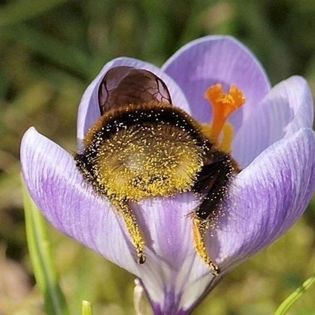
https://cheezburger.com/9757445/your-daily-treat-tired-bees-who-fell-asleep-inside-flowers

NaBloPoMo 2021:  Do Good, Kid

Times are so hard right now.  Tempers are short, nerves are frayed.  We feel edgy, agitated, hypersensitive.  It’s no wonder, with a global pandemic going on two years.  Our work, our kids’ schools, and everybody’s lives are disrupted in more complex ways than we can wrap our heads around. 

And yet, through it all, we persist. For many of us, it’s not been all bad. We slowed down, reassessed, reprioritized, and emerged with a deeper understanding and appreciation for more simple sources of fulfillment in life. If anything, it’s the connections gained from pandemic living that have saved us, and the disconnections that threaten us most.

Even after the acute scourge of COVID, we will still encounter hardships—strains on our patience with one another, acts of nature out of our control, more short tempers and frayed nerves, relationships at risk. How can we fortify ourselves and one another against despair and withdrawal? We can throw ourselves into work, which may hold us up if our jobs are full of meaning. We can numb with food, alcohol, drugs, sex, and other high risk behaviors.

We need something to fan the flames, however small, of hope and optimism—the faith that we will be okay, that we can handle whatever comes, as long as we do it together. I feel so blessed with such amazing people in my life, friends and family alike. Every day I marvel at how I got so lucky. I’m also reminded that I have a hand in these wonderful connections—I cultivate them on purpose. I learned how from my mom, and I see my kids growing in their skills.

To exercise good humor, find joy, and connect with people through that which uplifts—jokes, memes, comedy, and the like—I think we sometimes underestimate the vital importance of these practices in daily life. It’s too easy to get sucked into darkness, to lose the light. But it’s always there, however faint or dim, if we look. We can always find something to smile and laugh about. We can always offer each other a warm embrace (especially if we are vaccinated, masked, and asymptomatic, and even if we are not).

It’s how we share love, and that’s what keeps us going. When we meet people, even if our own mood is sour, we can choose to smile. That one offer of connection can set the path of any encounter on an upward trajectory, lifting all involved. We can share a funny—oh hey look, I wrote about this for NaBloPoMo last year! 😀 Besides The Big Bang Theory and Nathan Pyle, this year I also recommend Awkward Yeti, Upworthy, and any source that offers joy without judgment.

Let’s all hold each other in a little more light, love, fun, and grace, eh? 

In case you have not had your dose today, I just saw this on Facebook now; please enjoy and pass it on:

This starts my 22nd year of teaching middle school. Yesterday was quite possibly one of the most impactful days I have ever had.

I tried a new activity called “The Baggage Activity”. I asked the kids what it meant to have baggage and they mostly said it was hurtful stuff you carry around on your shoulders.

I asked them to write down on a piece of paper what was bothering them, what was heavy on their heart, what was hurting them, etc. No names were to be on a paper. They wadded the paper up, and threw it across the room.

They picked up a piece of paper and took turns reading out loud what their classmate wrote. After a student read a paper, I asked who wrote that, and if they cared to share.

I’m here to tell you, I have never been so moved to tears as what these kids opened up and about and shared with the class.

Things like suicide, parents in prison, drugs in their family, being left by their parents, death, cancer, losing pets (one said their gerbil died cause it was fat, we giggled😁) and on and on.

The kids who read the papers would cry because what they were reading was tough. The person who shared (if they chose to tell us it was them) would cry sometimes too. It was an emotionally draining day, but I firmly believe my kids will judge a little less, love a little more, and forgive a little faster.

This bag hangs by my door to remind them that we all have baggage. We will leave it at the door. As they left I told them, they are not alone, they are loved, and we have each other’s back.

I am honored to be their teacher.

via: Karen Wunderlich Loewe / Facebook

Originally posted in 2019

The Value of Comradery

I’m having a party!

Well, not really.  I’m inviting colleagues to convene on video in the name of professional community and connection, so it’s almost a party.  It’s also my homework!

These six weeks I get to take Stanford’s inaugural online Physician Well-Being Director Course, along with over a hundred other physician leaders.  What a privilege and pleasure!  I’ve already learned so much, and we’re only one third of the way through.  I may have made a new friend—we bonded over our shared tendency to stress eat, and that we are both using the Noom app to overcome it.  It happened during a breakout session to sample a Comradery Group.

Turns out there is clear evidence that community building, done intentionally and purposefully, promotes clinicians’ overall well-being.  “Well, duh,” you might say (I have).  Why did this have to be studied formally?  But I get it now.  When there is objective evidence for direct benefit and a positive cascade (well physicians tend to have higher engagement, higher patient satisfaction, happier teams, and systems that thrive—relationally as well as financially), healthcare organizations are more likely to invest resources to execute the well-being programs shown to work. 

In a Comradery Group, the objective is more than just venting.  It’s about finding meaning, fostering growth, and supporting one another through empathy, querying, and sometimes even challenging—all in a psychologically safe environment.  Groups meet to discuss particular topics and are admonished to stay on task.  There is usually a facilitator.

I have always found communing with colleagues nourishing—particularly across specialties.  More and more, we toil in silos.  Advancing technology accelerates complexity of both diagnostics and therapeutics at breakneck speed in almost every field.  Everybody can barely keep up with their own work, let alone understand what’s happening in anyone else’s.  And with in-person conferences and other professional gatherings banned for the past year, our sense of community wanes further and faster.  Our disconnection propagates insidiously, and we will all pay in the end, physicians and patients alike.

So what better moment to tend and strengthen our connections?

I have a few colleagues from internal medicine, OB/gyne, ophthalmology, and orthopaedics ready to gather in meaning on Microsoft Teams.  Can’t wait can’t wait!  The first rule of Comradery Group is that what’s said here stays here; holding confidence is key to connection and trust.  We can set other rules at our (first) session.  The homework assignment is only to experience a group once, but my secret hope is that my colleagues will get enough from this meeting to consider doing it again (and again!). 

I’ve proposed some sample topics below.  I’d love to discuss any of them, and I’m sure my friends will suggest others.  Take a look—how could you adapt these questions to your own profession?  How are you and your colleagues at risk for burnout, and how do you imagine Comradery Groups could help?

Here’s something new for the blog:  If you answer one of the questions in the comments, I’ll share my own answer to the same in reply (or a separate post!).  Please also feel free to offer a different question, one that holds meaning and importance to you.

Times are hard and complicated.  We humans are social creatures.  The better we can maintain and strengthen our ties to one another, the less we will suffer—no—the more we will flourish

Onward, friends.  We are all we have.

  1. How has doctoring the past year through a global pandemic impacted your professional and personal outlooks?
  2. What lasting lessons from the past year do you want to keep front and center?
  3. What do you want most from your colleagues in other specialties?
  4. How would you change medical education?  Why?
  5. How have you seen medical culture evolve over your career, for better and/or worse?  How has this impacted your personal experience of your work?
  6. What concrete changes have you made to the way you do things, over the years and the past year?  What do you miss and not, about the way things used to be?
  7. What makes a hard day at work?  An easy day?  A good day?  A bad day?
  8. What is your preferred leadership style, as both a leader and one who is led?
  9. What is the value of DEI initiatives at work?  What are the barriers?  Pitfalls?
  10. What’s foremost on your mind right now for your own well-being?  How are you upholding it?

Pandemic Lesson #1: Flexibility

NaBloPoMo 2020 – Today’s Lesson

What have you had to be flexible about this year?  What has this taught you?

It’s not that we cannot make plans anymore.  It’s that we must be willing and able to change them, quickly and effectively, if we want to actually get anything done.  Move all primary care and primary/secondary education online?  Done.  Stop flying?  Okay.  Come back to work and school?  Sure.  Wait no, outbreak, go home again, please?  Fine.  Postpone big vacation 3…6 months… indefinitely…  *sigh*…we can deal.

Many of my patients are actually thriving in the new work from home normal.  Without the constant travel, jetlag, business dinners (the quadruple threat to acid reflux:  late, fatty, large, and full of alcohol), and long commutes, they sleep more and better, spend more time with family, exercise more, and eat healthier.  If all goes well, my executive health job may be obsolete in the next decade, hallelujah! 

Not everybody’s doing well, of course.  60% of the workforce still shows up in person; risk, stress, and burnout are very real, and escalating.  The people who are well are those with choice.  They are the privileged ones.

Most of us still don’t know how the new work life balance will look in the coming years, but we hope to retain and expand the flexibility that has given us some sense of agency and control.  Check out this episode of Hidden Brain to hear a Stanford work from home researcher on implications of this augmented world for all of us. 

What flexibility do you wish for in 2021?

Agency and control in the midst of a global pandemic—how ironic!  Pandemic lesson #2 may be Paradox and Polarities… The last 2020 NaBlo…  Wait for it…