
Women Elevating Women

How is everybody this fine August evening?

How is it August already!? *sigh* I hope we have all savored the summer (here in the Northern Hemisphere) and all it has to offer. There is just something about the longer, brighter days–I know there are myriad researched psychophysiologic effects, but I’m too lazy to look them up. Happy to just revel in them! Energy, activity, growth, flourishing–we humans are part of nature… Life occurs in seasons, and the lushness of summer blooms, the bees’ bumble-busy-ness, watching kids play joyously outside–it all just activates me, makes me frankly elated.

So today I got particularly excited thinking about how women romance authors hold one another up. I have noticed it for a while, and it hit me anew this afternoon. Here’s the story:

Shane East has joined the Creator crew over on Quinn, ‘the app for audio erotica.’ [To read more about this relatively new medium and its social value, see this article from the New York Times and a brief interview with Quinn founder and CEO Caroline Spiegel.] He joins other well known romance narrators on the site such as John York and Zachary Webber. The short form stories are apparently extremely spicy, and people love them. Scripts for the audios vary in origin, written by the voice actors themselves (men, women, and nonbinary folks), established romance authors, and fans alike. Not every piece is explicitly credited.

Shane’s debut on Quinn has been widely anticipated and very well received: As of this writing, about 60 hours out, his first audio has garnered over 4100 plays and almost 800 subscribers. Amidst the deluge of praise, I happened to catch an Instagram story posted by romance author Elodie Hart, acknowledging her good friend Holly June Smith for writing Shane’s inaugural script. It struck me again how often this happens in the romance world.

I see authors regularly promote one another’s work in their weekly newsletters and social media accounts. These magnanimous women include Sara Madderson, Nana Malone (who also co-founded Audio in Color, a non-profit dedicated to increasing diversity and representation in the romance and audiobook industry), Marni Mann, Sierra Simone, Lauren Smith, and Lili Valente. They post about how they collaborate, commune, and just have fun creating together. How wonderful! How generous, loving, and mutually beneficial! Is there any other profession where this happens so commonly?

I think about athletes, thought leaders… It always makes me happy to see blended teams play together in Olympic and All-Star games. Simon Sinek directly addresses his rivalry with Adam Grant in his book The Infinite Game. He frames this competitive relationship positively, as it drives his own professional excellence. In academic research, where resources are limited and science moves quickly, the culture is the opposite of collaborative and mutually admiring–‘cut throat’ is often the prevailing attitude.

Is there no sense of competition in romance writing? I have no idea. I just notice the love of women holding up other women.

I have written before about allyship, especially men of women. Shane East consistently upholds and amplifies his female colleagues, and continues to do so on this new platform.
How would it be if we all amplified one another, in humility and generosity, regardless of gender? Is that realistic? There are still so many gender-based power and status dyamics in multiple (most? all?) domains of human relationship… And yet, we can’t know how social norms will change unless we challenge them, right? Romance and erotica still make a lot of folks very uncomfortable; hence the heavily guarded anonymity of some creators. I understand and respect this; I feel minimal urgency to change it, because I see the tide turning, accelerating toward mainstream cultural sex positivity every year. In my mind, this makes gender parity more likely in the far future. Every little step counts. I know this is just my own perspective, having immersed in the romance world only recently. Maybe that’s why I feel compelled to write about it often, to express my own solidarity and allyship with the progress of sexual and relational freedom for all.

Challenging the status quo does not have to be adversarial, or even direct. Romance novels don’t change social policy. I don’t imagine it’s many authors’ primary objective to activate readers and listeners to lobby Congress or protest in the streets. As throughout history, fiction illuminates humanity and speaks, however quietly yet forcefully, to our very souls. It moves us, sometimes ineffably and other times powerfully, to examine and act. Social change happens in drifts and then shifts, slow and then fast, with forward and backward steps, on a long, jagged arc toward acceptance and inclusion. Human relationships are more complex now than before, and also fundamentally unchanged: we are all here to love one another and help us all live our best lives.

I never would have guessed that my whimsical romance obsession would yield deep and divergent thought and personal evolution. The friendships, the discussions, the self-discovery and intricate connections to shared humanity—it has all been just such a gift, I get goose bumps.

As we enter this last stretch of summer sun and warmth, I sincerely wish for us all to notice humans treating other humans well. It’s okay to feel cynical about humanity, even most of the time. But let’s not allow this to close us off to opportunities for connection when they occur. In fact, I encourage us to actively seek those opportunities–I promise, they are everywhere.
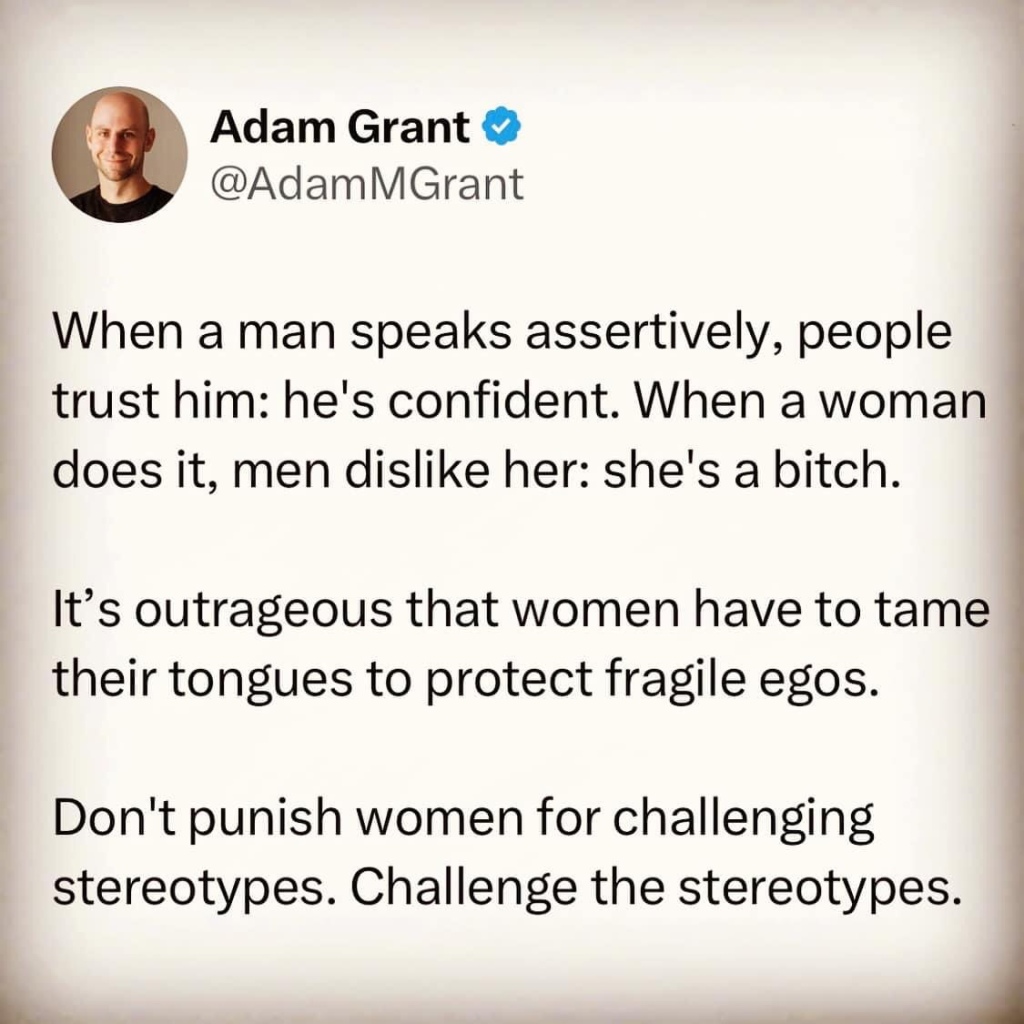

White Male Allies: Please Do This

From Instagram

It was International Women’s Day this past week. I have seen only a handful of men acknowledge and amplify. I’ve had this post drafted for a while now; time to get it out!

My friend’s husband understands: “Here let me exercise my white male privilege.” He steps up, takes the handlebar facing the toddler in the seat, and the supermarket shopping cart sea parts for him, when it did not for her.

He knows he can live a life free from conflict much more easily than she can. He can be ignorant more easily. He bears fewer social costs for any dissenting behaviors.

Certain people just have more power. “You should exercise.” Advice from the doctor carries more weight and influence than from the spouse. Teen peer more than parent. And fellow Cis-Het-Christian-White Male (CHCWM) more than anyone else. So men: how are you helping?

It’s more effective if you come alongside rather than come at. Berating, lecturing, or shaming fellow men to take a hard left from their stereotypes, implicit biases, and internalized misogyny hardly ever works. Rather, use your influence more quietly. Lead by example with your words and actions to the slow off-ramp of self-awareness, self-regulation and movement toward gender equality. Be gentle. Plant the seeds. Water, water, light, fertilize, water, light, water.. and eventually we can repot.

Scale your influence by connecting with other exemplary leaders. Culture change occurs mostly from the top down, and CHCWMs are the CEOs of American culture.

If you’re already there, ready to exercise your influence on behalf of women, to be the best ally you can be, decide how you will act. Start small, like at the gym. Find the muscles of upstanding and train them. Test them for stability, add weights slowly by stepping into discomfort more often; do not push through pain or cause yourself injury, but challenge limits—both yours and society’s. Recruit a coach or buddy—it’s always easier and better to train with a friend.

If you’re not there, start by noticing: fleeting facial expressions, shifts in posture, passing clouds of mood or vibe change—how are the women around you accommodating you and other men automatically, without anyone even noticing, much less acknowledging?

Awareness can be hard. It can incite guilt and regret, even shame and self-loathing. But that is not the goal. The goal is growth and connection. Allow the feelings in, sit with their meaning and discover how they motivate you. That’s what feelings are for, after all. Hold it all loosely, give it space to settle, land where it fits in the cracks of your bias, wedging open a door to being and doing better for your fellow humans.

Then attune to the next signal, the next, repeat. Once enough nuggets have accumulated, your pattern of change energy may emerge, unique to you. Your contribution. How can you show up in solidarity, where does your own privilege do the most good? How can you come alongside and nudge, steer your male peers toward the off-ramp, from implicit or explicit misogyny toward empathic and compassionate inclusion?

We have come such a long way, we women and the men who support and hold us up. We have so long yet to go, though, and we can only move forward with the alliance of all— men and women, and non-binary people alike. When society raises the floor of respect for any of us, it helps all of us. It’s not about conflict and competition. It’s about shared humanity. “I see you. I value you equally to myself and those like me.”

The only way out is through. The best way through is together. Thank you, our White Male Allies, for going together with us.

Calling All Depolarizers! Part 2: Confident Humility


…”So what keeps our inner depolarizer in the closet when it comes to sensitive topics like abortion, immigration, religion, and politics in general? Or in family conflict and workplace politics? I posit that it has, at least partially, to do with two levels of psychological safety: intrinsic and extrinsic.” Let’s talk about the first, which can be thought of as confident humility:

Premise:  I resist/reject/assail challenges to my beliefs and positions because I worry that those challenges will change my beliefs and positions.  If my beliefs are changed, then what does that mean?  Am I weak?  A hypocrite?  Uncommitted?  What will others think of me?  Will I get kicked out of my tribe? Or, maybe I just think I’m right, and I’m simply not open to the possible value of any other perspective? Or I’m afraid that if I’m not right, then I’m just wrong, and that feels too uncomfortable and I don’t want to go there. 

Question:  When does it feel safe to reconsider or challenge some belief I have?   

Answer:  When I don’t have a strong personal investment in my belief—it isn’t material to my identity, tribal membership, or survival, real or perceived.  In his book Why We’re Polarized, Ezra Klein summarizes eloquently the psychological research suggesting that when we perceive threats to our identity (eg gender, sexuality, sports fandom, family, nationality, political party, or other), our response is primarily emotional.  The existential discomfort (experienced as real limbic threat) causes us to reject the challenge, be it information, policies, or other people, employing confirmation bias, rationalization, and other mental self-preservation tactics. 

So, does this mean that we must dilute or divest our personal identities in order to depolarize? Certainly not. I think it does, however, require some honest reflection on how we define and relate to our various identities. Why do we get emotionally agitated about certain topics and not others? Why do debates about abortion cause some people such agitation, and some people not? Why gun control? Immigration? Transgender and sexuality issues? What is it about any particular topic, and how I identify with it, that triggers me? How does it define my in- and out-groups? And how does this constellation of thought, emotion, and behavior affect my personal well-being, relationships, social standing and security? As a result, how do I contribute to divisions or affiliations in my own social circles, and society at large through my words and actions? How much do I care about that last part?

Intrinsic psychological safety means feeling solidly grounded in my core values and the practices that manifest them—it’s a sense of quiet, confident, unassailability.  To me it means cultivating a growth mindset, confident that I am at the same time rooted down and branching out- embracing and navigating the paradox of personal conviction and intellectual humility and flexibility.  Challenging my beliefs then becomes a personal practice of learning, integrating, and cultivating complexity and depth to my opinions, beliefs, and perspectives.  I stir and knead, exercise and expand my mental elasticity and range.  Rather than diluting my positions, all of this training can actually strengthen my understanding, expression, and agility in defense of them.  It gives me the confidence to seek and welcome challenges, knowing that I have enough internal clarity to maintain my core values and also integrate important nuances that may edify them. It is a product of disciplined self-development.

In confident humility mindset, I understand that my position is not, in fact, the only ‘right’ one; it is simply one of many. “Everybody’s right, and only partially,” was one of my first life coaching lessons back in 2005, and has served me well. This mindset allows us to think of ourselves and our opinions as ‘also right.’ It frees us from the burden of having to prove ourselves or exert power over others to convert them. It opens space and time to find middle paths for creativity, collaboration, and connection.

Wonderful!  Now we know how to depolarize ourselves—how to gracefully (even joyfully) integrate personal conviction and intellectual flexibility, perhaps even to move towards advocacy without alienation.  So what holds us back from practicing these skills outwardly, vocally, especially within our own tribes?  Tune in to Part 3 on Extrinsic Psychological Safety, to consider consequences and rewards of standing up and speaking out.