

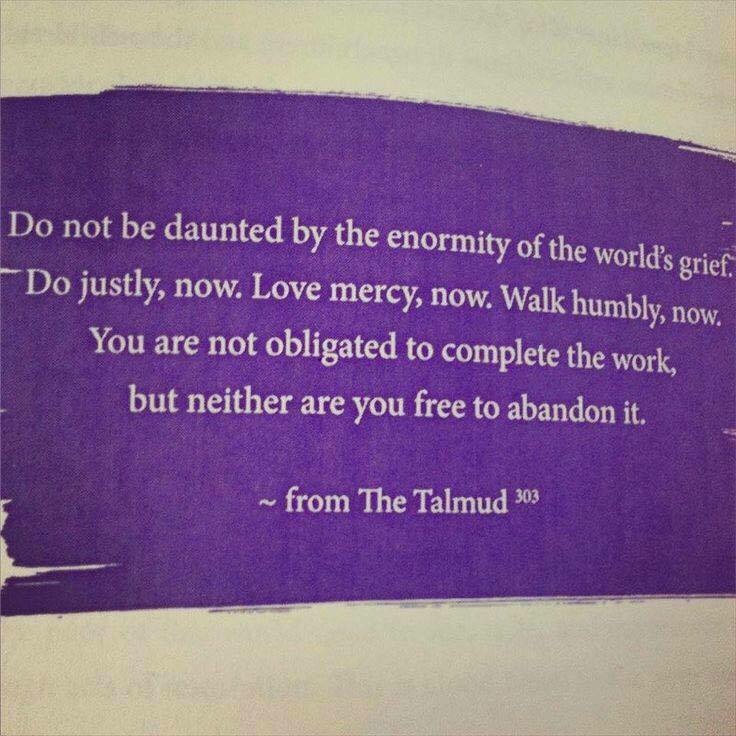
Image from Google long ago; I can’t find the link anymore, sorry…
Oppose, Dictionary.com:
- To act against or provide resistance to; combat.
- To stand in the way of; hinder; obstruct.
- To set as an opponent or adversary.
- To be hostile or adverse to, as in opinion: to oppose a resolution in a debate.
- To set as an obstacle or hindrance.
- To set against in some relation, especially as to demonstrate a comparison or contrast: to oppose advantages to diadvantages.
- To use or take as being opposite or contrary.
There is so much Opposition in our world now. I’m thinking specifically of politics. Like many of my blogging friends here, I eschew writing about politics because it can have unintended consequences and distract from the intent of this blog. I have alluded to it (Obtusely) here, and commented on another blog here. Mostly, I don’t feel qualified to comment on politics. But a Facebook post I wrote a few days ago keeps nagging at me to be shared, and I have struggled around the best way to present it. So here goes.
When I look at the list of definitions of oppose, I feel tired. When I think of the energy it takes to constantly stand against something, I feel listless and drained. Fighting, resisting, combatting, Obstructing, standing in the way, hindering, disputing, dissenting, contradicting—it’s exhausting. I think of times when I meet someone new and all they talk about are the things they hate, that they can’t stand, that they want changed. I cannot wait to get away and find levity. There are two main consequences of the oppositional mindset that put me off:
Polar Isolation
Oppositional mindset pushes people apart—to extremes. I think now of my Facebook friends who post incendiary words and images. They blame, shame, ridicule, mock, and degrade Others. By others I mean those who do not share a common economic background, political ideology, religion, skin color, profession, or even parenting style. When I see these, I conduct an internal debate. Part of me wants to engage, to call my friend out for posting something Offensive, distasteful, unprofessional, or unkind. I try only to be friends on Facebook with real-life friends, so I know these people are not offensive, unkind people in general. But each time one of them posts something deriding a group to which I belong, I feel hurt. So I want to ask them, what are they really thinking? Would they say these things to me in person? But I know that social media is a poor venue to hold these conversations. So I almost always scroll over. Every time, though, there is residue on my figurative shoe from stepping over these posts. I have to work harder to think of my friend in the same positive light. I wonder whether we really do share values like I thought we did—because one of my highest values is to be kind to others. I feel a distance now that I have chosen deflection rather than engagement. It feels sad and lonely.
This is not to mention the escalating verbal wars waged by our politicians today. Suffice it to say, I have stopped watching the news and listening to the radio. I curate my information in small doses and avoid sensational headlines. Everybody is out to paint the Others as dangerous, untrustworthy, less than.
When all we hear from our Opponents is how much they hate us, how stupid they think we are, how they wish we would shut the f*** up, we will do one of two things. We will disengage, or we will engage with acute and increasing hostility. Either way, we push one another further and further apart, and we end up living in polar opposition. And as we know, conditions at the ends of the earth are harsh. It’s a desolate and heartbreaking way to live.
Rigidity, Immobility, and Stagnation
The other consequence of a singular focus on that which we oppose is a complete and total lack of progress. Two examples come to mind:
My child is jumping on the sofa. “Stop that,” I say, “don’t jump on the sofa.” She stops momentarily, then starts again in a few minutes, moved by a spontaneous joy that I have long since forgotten. I keep repeating, “Stop that, do NOT jump on the sofa!” The focus remains on what I do not want. I keep a lookout, and each time she repeats the unwanted behavior my frustration mounts. I may employ negative consequences—the next time she jumps, I take away screen time, or a stuffed animal. The stakes climb and everybody gets tense.
I hate my body. I am 20 pounds overweight, I feel sluggish, none of my clothes look good, and it undermines my confidence. I keep thinking, I don’t want to be fat, I don’t want to be fat. So every time I’m faced with donuts that someone brought to work, every time I go out to eat with my friends, I brace myself to guard against behaviors that I know will make me more fat. I succumb sometimes. I feel shame. I keep thinking to myself, What’s wrong with me, why do I keep doing things that will keep me fat, when I don’t want to be fat?
There is a saying, “Energy flows where attention goes.” I don’t know who said it first. When we focus on what we don’t want, there we remain. Even when it’s what we oppose, if we continuously attend to it, precious little energy remains to spend on what we do want. This constant vigilance and guarding keeps us preoccupied with the problem, and impairs our ability to develop solutions. What if I changed my focus with my child, and let her know what I expect from her? “The sofa is for sitting. Can you please sit nicely on the sofa? How long can you sit still?” Now I’m generating movement toward something desirable. I’m making it a challenge, it could even be fun. Tension is diffused, and I might tap into that long lost joy a little. My self-talk around weight could also benefit from a subtle shift. The difference between I don’t want to be fat and I want to be healthy can be profound. The former keeps me fixated on and entrenched where I am. The latter helps me move toward a goal, gives me an aspiration. What does a healthy person do? She avoids the break room when donuts arrive, finds alternate routes to the bathroom. She takes the stairs rather than the elevator. She chooses salad more often than burgers. I start to envision my best self, and I feel motivated to pursue it (me).
Letting go of my oppositional mindset allows my creativity to shine through, and a world of possibilities may Open up before me.
Open, Dictionary.com:
- Not closed or barred at the time, as a doorway by a door…
- (Of a door, gate, window…) set so as to permit passage through the opening it can be used to close.
- Having no means of closing or barring: an open portico.
- Having the interior immediately accessible, as a box with the lid raised or a drawer that is pulled out.
- Relatively free of obstructions to sight, movement, or internal arrangement: as an open floor plan.
- Constructed to as to be without cover or enclosure on the top or on some or all sides: an open boat.
- Having relatively large or numerous spaces, voids, or intervals: an open architectural screen; open ranks of soldiers.
Letting go of opposition means Opening ourselves to new possibilities of thought, engagement, Outcomes, and connection. I believe my friends are kind and generous at heart. I can still oppose their offensive expressions. If I do it with an open heart, ready to hear their point of view, withholding judgment and honestly listening for understanding, then I can maintain our relationships, even deepen them. If I can make them feel seen, heard, understood, accepted and loved, despite our differences, then they will be more likely to extend me the same courtesy.
Being open means being vulnerable. Just because I Offer openness and understanding does not mean my counterpart will reciprocate. I could be rejected, ridiculed more, hurt more. These are the risks and costs of openness.
But what of the benefits? What if my openness actually creates a space for communication and mutual understanding? What if my friends and I can lead by example? Could we start a movement toward taking time to hear one another, seeing different points of view, and holding multifaceted perspectives? Humans and our experiences are complex. We cannot easily be distilled into soundbites, headlines, cartoons, and labels. We should not accept such oversimplifications—we should Oppose them. And at the same time we need to stand Open to the validity of our fellow citizens’ experiences. We need to remain Open to the possibility—the certainty—that we really do share common values, goals, and hopes. We need to work harder to hold our hearts Open to one another, reach out and come in from the cold, polar regions, and strive together for a better world for all of us. We cannot hold hands with clenched fists (another quote, no?). I would rather hold hands.
***
Here is the video that triggered my Facebook post of April 15, 2016, and the actual post:
I love Bernie. Also, though, I am starting to notice that his severe criticism of ‘the rich’ and his characterization of them as greedy as a group, oversimplifies. It does so IN THE SAME WAY AS DOES THOSE WHO CHARACTERIZE POOR PEOPLE AS LAZY. There are greedy rich people. There are also lazy rich people. There are also greedy and lazy poor people.
I agree with Bernie’s core values and his consistently stated vision for our future. I understand that his proposed policies may be unrealistic and unattainable in the foreseeable future, or maybe even ever. But he gives me something deeply meaningful to strive for, and that is the kind of leader I will follow. Even if we never get there, I will happily trudge the path *in the direction* of said future, because it’s where I want to go. I do not hear or see a clearly stated vision or aspiration from the Republicans. Bernie inspires me to be a better person, to make my best contribution to society.
We all have a desire to make a contribution. Psychology research over literally DECADES tells us that human nature is wired to be both productive and connected. So these premises that some of us are innately lazy and live for handouts, and others of us are conversely inclined to accumulate wealth only for ourselves and for its own sake, are not only severely misguided, they are dangerous. These toxic assumptions are exactly what keep each side permanently entrenched in opposition. Assumptions turn into accusations, which then engender mutual defensiveness, then offensiveness. It’s no wonder we have devolved into the current political morass.
I want Bernie to soften his language and invite the rich into conversation, collaboration, innovation, and creativity around solving the problems of inequality and disparity.
I want Republican leaders to moderate the voices in their party who blame the poor as personal failures and the sole architects of their downtrodden situation.
I bet most rich people really do care about the poor, just like I believe most poor people really do want to work and be productive members of society.
How much more could we do, how much better could we be, how much movement could we achieve, based on these assumptions instead?


 Healing Through Connection