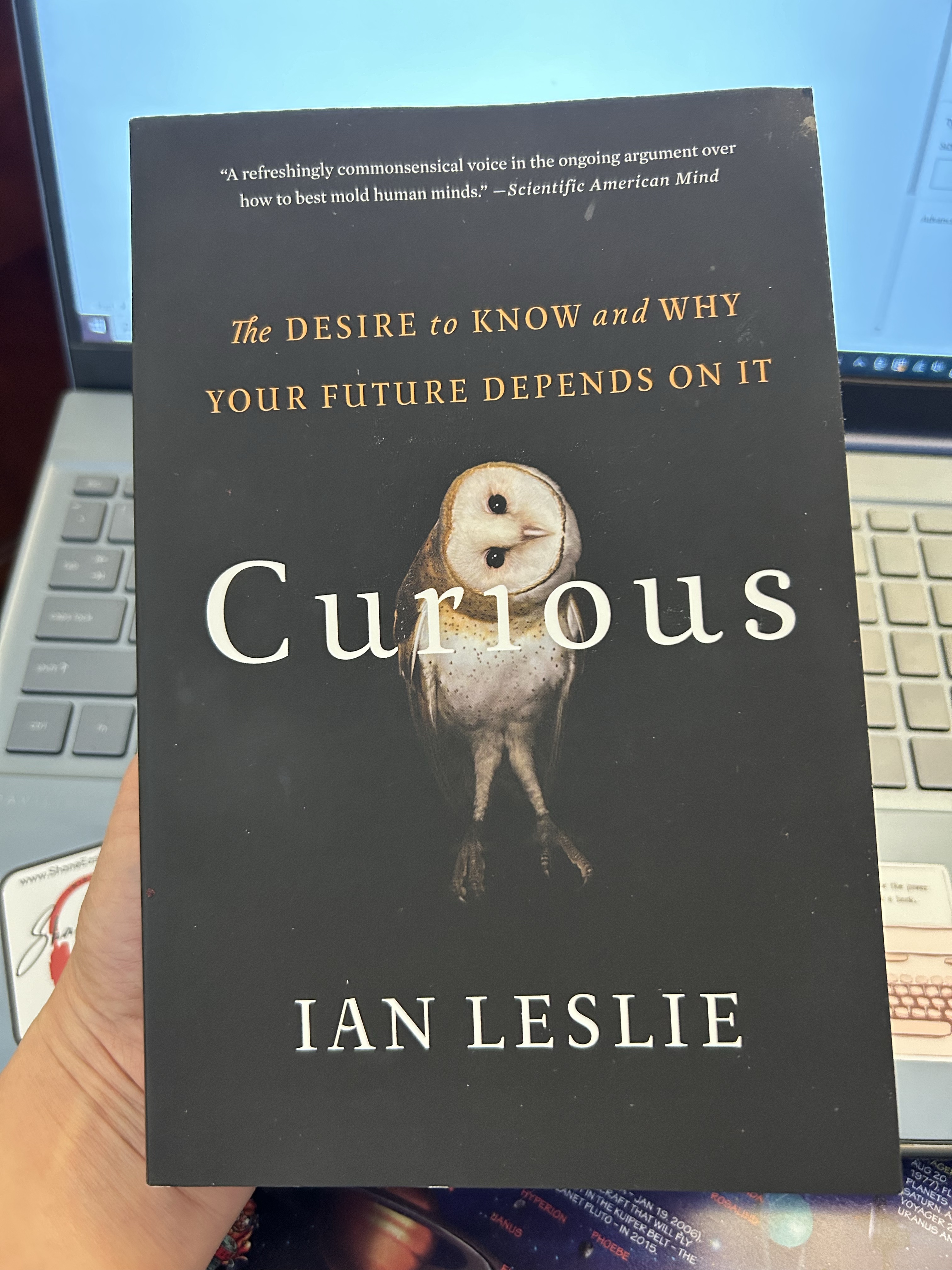
Curious by Ian Leslie

Could the antidote to burnout be curiosity?

I had the privilege this week of presenting a wellness talk to the first year physician assistant students at Northwestern. I have given some version of this presentation to medical students, physicians in multiple specialties, various organizations and businesses, and members of federal and state judiciaries over the past decade or so. It would get so boring if I weren’t continuously learning about wellness–what it means and how to approach it–in all domains of life. The best talks are the most interactive because the learning is mutual, thus in-person, small audiences are my favorite.

This time, the talk was about 20% lecture, 80% query and exchange. What do these students already know, and why not start from there? I asked everybody to sit at the front and forewent the microphone. How many had prior jobs and lives before starting PA school? Who has already experienced burnout and what did/does it feel like? How do they already understand the intersections and mutual influences of sleep, exercise, nutrition, stress management, and relationships? How do they already manage stress well, what are their body signs? How do they structure and maintain their support networks? The students already know the answers to prevention and management of burnout. My job as presenter is to help them recognize this existing knowledge and insight, then fuel and fan their self-efficacy and -empowerment, with some key tips and guideposts along the way, by helping them be more self-curious. I already know how this talk could be better next time, and I may get a chance to present soon to some colleagues in pediatrics.

Last night I wrote about engaging with friends in mutual curiosity and possibility. I love that every day I get to do this with patients, too. J has decided he can retire in the coming year. What will he do after that? No idea, he says, but it has to be something that helps other people, we agree without question. He can move forward with both confidence and conviction, even in utter uncertainty. P has achieved her goal weight on Zepbound and we imagine the possibility of tapering off of the medication in another year or so. What will she need to do it with the least possible anxiety? What supports can we place in her environment to maximize her chances of maintaining healthy eating habits thereafter? How can establishing and strengthening a robust exercise program now help with that transition? B used to love getting ready for Thanksgiving–the planning, crafting, cooking, and gathering. She’s a maker at heart, though life has crowded that part of her into a back room over time. How can she carve out some time and space to honor her inner creative? What could that look like?

All of these conversations beckon patients and me to imagine. Starting with and anchoring to what and how we know and understand our values, priorities, and goals, we can cast ourselves into the unknown in joyful fantasy, led by openness and possibility, nonjudgment and creativity, unfettered by convention or ‘shoulds’. Who knows what great new reality the most outlandish idea could lead to, if we only allow the thought experiment for a moment?

Curiosity is the mindset that saves us, that leads us to the actions, behaviors, and connections that change systems.

“If you want to change the world start with yourself.” We are the system.

Curiosity underlies creativity and collaboration, connection and change.

Is there any problem that does not benefit from a curious mindset? How much better could everything be if we put curiosity ahead of expertise, assumptions, standards, protocols, algorithms, and conventions?
How exciting!

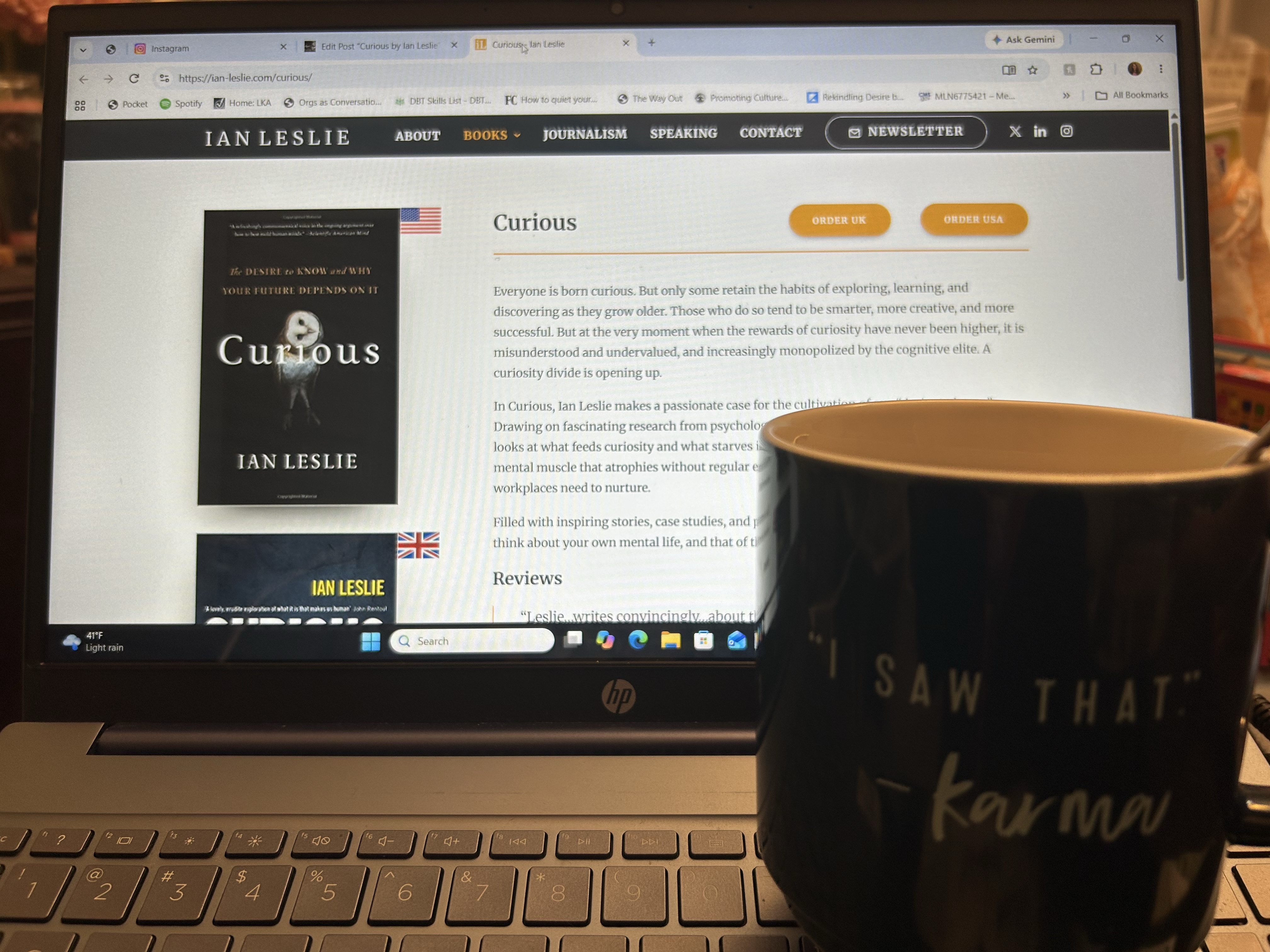
Okay so the book: Curious by Ian Leslie. Highly recommend.
Blurb:
“Everyone is born curious. But only some retain the habits of exploring, learning, and discovering as they grow older. Those who do so tend to be smarter, more creative, and more successful. But at the very moment when the rewards of curiosity have never been higher, it is misunderstood and undervalued, and increasingly monopolized by the cognitive elite. A curiosity divide is opening up.
“In Curious, Ian Leslie makes a passionate case for the cultivation of our “desire to know.” Drawing on fascinating research from psychology, economics, education, and business, Leslie looks at what feeds curiosity and what starves it, and finds surprising answers. Curiosity is a mental muscle that atrophies without regular exercise and a habit that parents, schools, and workplaces need to nurture.
“Filled with inspiring stories, case studies, and practical advice, Curious will change the way you think about your own mental life, and that of those around you.”

Leslie describes three categories of curiosity: diversive (impulse for novelty), epistemic (hunger for knowledge), and empathic (drive to understand and connect with others). OH I just LOVE this! The book takes us from these distinct definitions into how they manifest over a lifespan in education, at work, and in relationships–with self and others. He suggests creative conceptual frameworks and concrete practices to cultivate a more curious, and thus a more interesting and connected, life.

What are you curious about? What will you do with that curiosity today?
Slower, Deeper, Better

Friends, how much do you absorb the first time you consume a book?
How often do you read or listen again, and why?
How does each repeat episode land; what impacts you similarly and differently?

I wrote (again) in April about The Art of Possibility, my favorite book since 2009, how I was inspired to share it with multiple friends in a short time recently, then moved to 
listen and read again
myself after a few years. With the most recent sharing, other books from my past came to mind, Curious by Ian Leslie in particular.  I knew I had listened to it at least twice and bought a hard copy but never actually read it. This time my annual book summary here on the blog came in handy–turns out I listened in 2019 and 2022. I absorbed more at those times than I can remember now, so I brought the book with me to London on vacation this month. I read ¾ of it on the flight back to Chicago.

Wow.  What an oddly novel experience, moving through a book that is already well known to me, but that I had clearly not fully absorbed and internalized.  Pencil in hand, flipping physical pages back and forth, underlining, starring, and writing in the margins, the full arc and organization of information, storytelling, and application of Leslie’s thesis emerges so much more forcefully and elegantly than I can remember from when I had only listened.  Clearly it made an impression then, as I was moved to buy the paperback.  And it’s possible that its impact now is that much stronger because I have lived, studied, and integrated so much else, gained so much more ancillary knowledge, in the five years since my initial listen, making its content that much richer and more meaningful to me today.  Now this studiously and lovingly marked up, dog-eared to the point of thickening (I have loosened that moratorium on myself) paper copy makes me, strangely, both satisfied and proud, like I have something worthy to show for my consumption of—my active engagement with—the text?

Looking back at that book list from 2019, three things stand out:
1. I consumed considerably fewer books that year compared to the years since—few enough to include a brief description of each in the blog post.
2. Many of the books from that year are still favorites, and I remember clearly how each of them impacted and continue to influence me.
3. A much larger proportion of them were read in print, compared to my book lists now.

Screenshot

from Instagram

Who knew I’d become such a voracious consumer of books, and in such a diversity of genres?  I credit my book club for opening my mind to fiction, which paved the way for my romance immersion, still going strong and as joyous and rewarding as ever after 21 months.  I am surrounded by readers, shown daily on social media everybody’s ‘Current Listen’ or new book mail reveal.  I admit to feeling a fair bit of peer pressure to consume and report!  It has pushed me to make time, find the most cost-effective methods of procurement, and hone my time management skills.  I have made amazing new friends from it all, too. I am a better person for this intense period of fire-hose-style audiobook consumption!

And now I think it’s time to slow down a bit.  Having ‘eyeball’ read a few more romances and novels this year, I appreciate how I can savor the story differently from when I hear it—maybe even better, I’m not sure. Kingfisher Lane by Grant Gosch stands out, a sensual romance written by a man, whose grasp of the heroine’s point of view is so spot on I was almost moved to tears.  I marked and folded many pages of that work and still pull it out to reread certain passages.

2019 was the year of Range, The Infinite Game, Insight, To Bless the Space Between Us, Braving the Wilderness, Atomic Habits, and Sex At Dawn, all books that influence me to this day, and that now I’d like to revisit in print.  I own paper copies of all but one, I believe, and have eyeball read only one (To Bless the Space).  Interestingly, that is the one I have also gifted more often than any of the others.

Every year of books both satisfies and edifies me, no matter the genre.  Even if I don’t absorb as much or as well by audio, just having interacted with these texts in this way is better than not, and audio is so much more efficient sometimes. There is just so much marvelous material to experience, so many meaningful stories, cool science, and
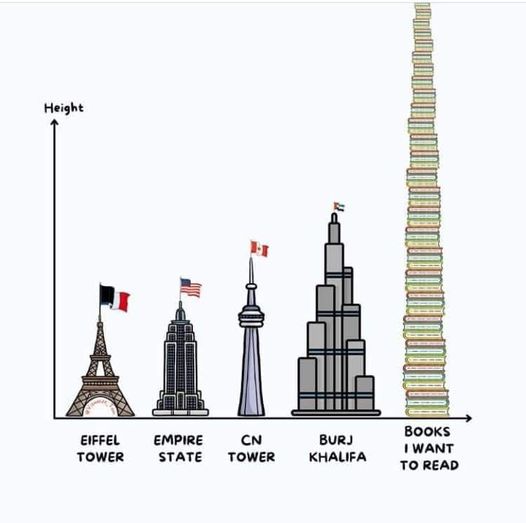
interdisciplinary insights and connections to make, oh. my. God!  Even if I retired today and did nothing but read and listen, my TBR/TBL would only continue to grow, and I would revel in its unfinished glory until I die!

tbr stack

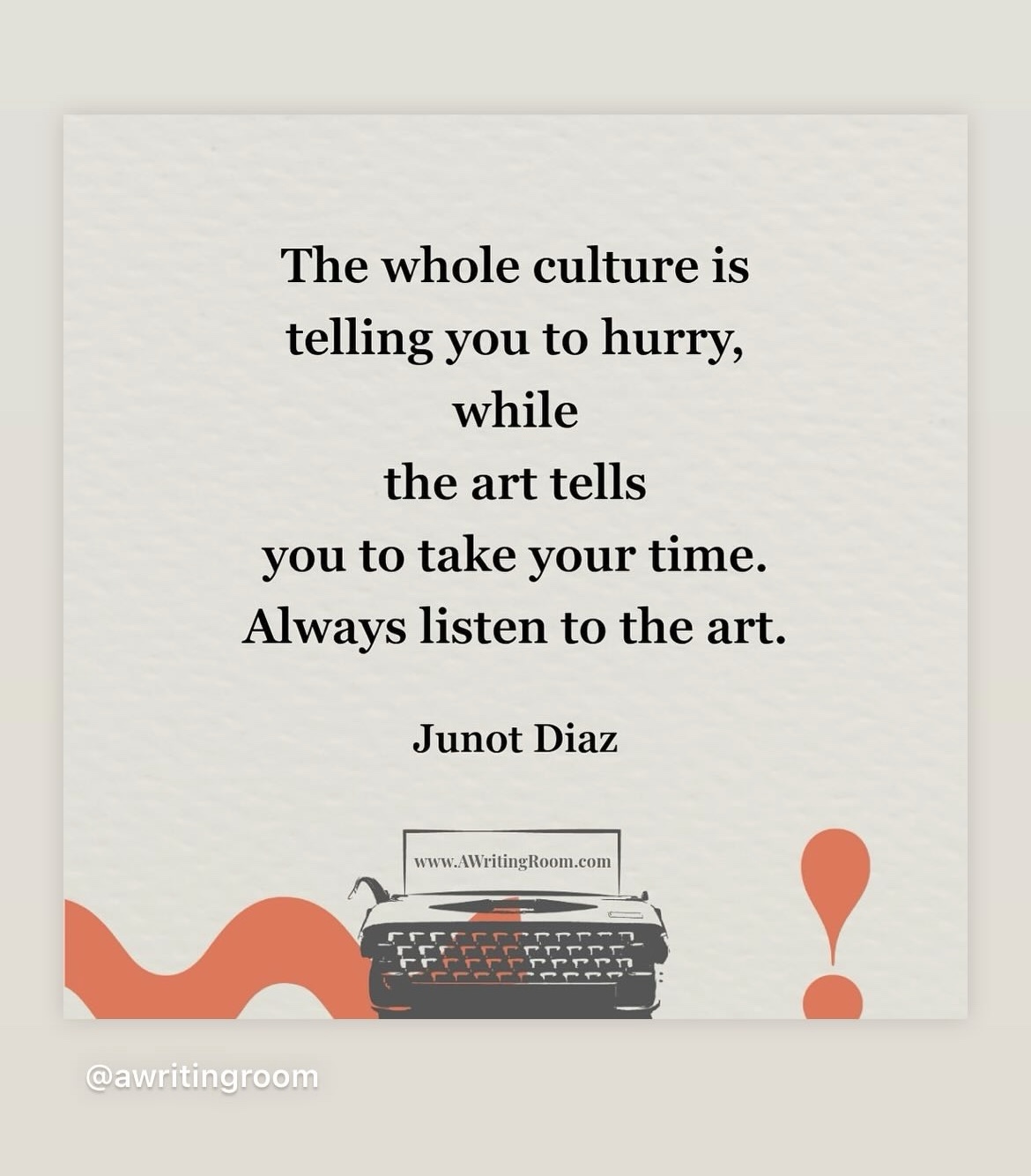
Thus, I set myself a new challenge:  Reassess and reorganize how I spend my time, energy, and resources to make space for slower, deeper, and more meaningful engagement with my chosen books.  Life is only getting shorter; I want to savor and relish the words that others have so painstakingly and lovingly produced.  I respect and admire these authors so much, and appreciate even more their efforts to publish, as I now face the daunting task of attempting to put my own words out in the world at scale. 

OH, this will be so good.  There is no rush.  My Audible library contains over 200 unread titles, and over 300 on my wish list. The Everand lists stand similarly laden, as well as my library account.  My hoarding tendencies may be adequately gratified for now, and I can make my way through the joyous heap with flighty elation and deep contentment.  And, I may finally have a use for my nicer journals—book notes!  How better to put those pretty bound papers to use, profess an excuse to save them all (and continue acquiring more!), and also further solidify my self-study from all things verbal?

Slower.  Deeper.  Better.
Oh yes.