Immensity: A Practice in Self-Awareness

What are your body signs of stress?

Mine was neck pain for the longest time. I could usually relieve it with a brief massage until starting a very stressful job, where I quickly developed daily pain, stinging and tight. Then nothing helped, neither massage nor ibuprofen, only vacation, for 5 years until I left. During pandemic lockdown, low back pain emerged as a new physical manifestation of mental stress. 

For the past month I have had varying degrees of lumbar pain, but it did not occur to me that it was stress related. I must be doing my dead lifts wrong, I thought. I must need to stretch. But nothing seemed to help after a while, and it got worse after Thanksgiving. That weekend, I found out in no uncertain terms how I had hurt someone very close to me. I always had an inkling, but the full impact of my actions became clear in one starkly honest conversation. In the emotional overwhelm, I could only process a little at a time, mentally (hence the I Wish I Was Better For You post–I was actually thinking of a different relationship, but the idea for that post brought up multiple relational regrets all at once). The rest landed squarely and heavily on my back. It was sore during the days, and woke me up from sleep at night with severe pain and stiffness. I was not limited during my Ethos workouts, though–in fact, I felt better during exercise. After a relatively easy session last Sunday morning, I sat the rest of the day writing, and that night felt like I was both 100 years old and got hit by a truck. It was slowly dawning on me, the origin of my physical pain: The full depth and persistence of my relational fuck-ups was unfolding into conscious awareness, and it was painful, quite literally. Looking back, I was also much more tearful than usual in the past month–like leaks of extreme emotion springing forth, portending.

As is often the case, conscious awareness brought alleviation of pain. No NSAIDs, no physical therapy, no yoga, just an emerging understanding and acceptance. And insights: I realized this week that when I get sad, I get sedentary. I lean heavily toward stillness, with a strong urge to write for release, instead of moving, which is how I relieve anxiety and anger. This past month my workouts diminshed and verbal output escalated significantly. Writing helped untangle and clarify thoughts (I knew I was projecting self-loathing, I just didn’t know why), but I think the lack of movment may have perpetuated repression of feelings, thus diverting them into spiraling physical pain. Now I know, Opposite Action helps: Under stress, doing the opposite of my wallowing tendency can keep me healthy. Hopefully the next time I experience profound sadness (or guilt, or shame), I will resist the pull of the comforting though potentially counterproductive chairs and instead get on the elliptical.

My friends also helped this week. When I told them my sorrowful discovery, they held space for it so lovingly, so patiently. No platitudes, no false positivity–only empathy, validation, and compassion. They shared their own hardships, and I helped them hold it, too. How lucky am I, to know these wonderful people, to have them in my corner? The mutual uplift is absolutely synergistic and exponential, as is my gratitude.

I wrote about forgiveness last month, and how withholding it harms the (un)forgiver. Today I understand acutely how it also hurts and plagues the unforgiven. My loved one forgives me, thank God; I think I can forgive myself more easily now that I know that. We shall see.

“Big feelings” don’t just happen to kids. We grown-ups experience big, hard, complicated emotions as much as anyone. ”So much, so much,” as my friend’s daughter used to lament. ’Immense,’ as it occurred to me this week. Elation, gratitude, grief, guilt, regret, joy, humility, connection–it can all really be so much–sometimes too much for a mind to hold. So it puts it in the body for a while.

After several days of chasing–analyzing, journaling, thought experimenting, self-flagellating–I finally ran out of evaluative fuel and just let the feelings be. Rather than mixing, kneading, stretching, and folding, impatiently trying to shape the nebulous into a smooth ball of cognitive comprehension, I put it to sit and ferment a while. It didn’t take long for a form to rise, to show me what it was made of. I see now what’s been happening. Hopefully I can take the learning and apply it next time. [HA! Who knew a post on dark emotions could include a fun sourdough analogy?]

My back feels fine today, better than it has in weeks. Fascinating.

Onward. 
I Just Forget

“I know what I need to do, I just don’t do it.”

I hear this from patients regularly.
Translation: I don’t want to talk to the dietician or exercise physiologist; they’re just going to tell me what I ‘should’ be doing and I’m just going to feel bad that I’m not already doing it.

My colleagues and I talk all the time about judgment and how to avoid and manage it in our practice. We are human and thus subject to social norms, pressures, and biases of weight, physical appearance, etc. And yet I know of no other group of people who practice self-awareness and self-regulation more consistently and humbly. Our objective is always to meet you wherever you are, and help you get to wherever you tell us you want to go, with realistic, sustainable suggestions and support. Still, we cannot control anybody’s response to our consults and feedback.

It feels defensive, the ‘I just don’t do it,’ and ‘I don’t want to talk about it’ responses. Maybe people judge themselves harshly, and also anticipate judgment from us? Who wants to bring that on themselves if they can help it? It makes me wonder, when I get defensive about something, what’s behind it in me? How am I filtering an otherwise benign or even benevolent message? My colleagues and I understand the myriad extrinsic barriers to ideal habits, and how thin the threshold can be between doing something healthy and not. For example, a bowl of whole fruit may sit on the kitchen island for days, untouched. Cookies and candy are much easier to grab and go. But when someone cuts the apples and peels the oranges, they disappear in minutes. Where can we each find our cut fruit equivalent for health habit (or any habit) change?

As I completed another amazing conditioning workout at Ethos this weekend, lying on my back feeling where my paraspinals were tightening and recalling some knee swelling of late, I thought back to the one stretching session I did at home in the last week. DUH, my back felt better in subsequent days. Coach Ryan taught me how to do knee CARs months ago, and it always helps. It occurred to me there, recovering on the floor, that I just forget to do these very helpful things. It’s not that I don’t want to feel better, it’s not that I don’t care about my health; it’s not that I don’t believe that stretching and rotating will reduce pain and swelling. It’s just that I haven’t yet made them into a habit. I do cat-camels and CARs before every workout at the gym and at home, just not at any other time. I might do a few standing quasi-knee CARs in the elevator on the way to the office in the morning–why it only occurs to me to do it then, I have no idea. But it occurs to me sometimes, yay!

This realization came with no shame or guilt, no self-flagellation or judgment. “Huh, that’s interesting,” was my main takeaway. And now I’m wondering how many months of aches and pains I could have saved myself before now. So as I write tonight, I consider how I might create cues to get on the floor and take care of my body in this way more regularly. I can make progress, and that’s what matters. Even once a week will be better than what I’m doing now, and I know I’ll feel better after only a few sessions.

Tomorrow when I see and talk to patients, how can I show up so we can all stand in the ‘Huh, that’s interesting’ perspective, and brainstorm together, with curiosity and possibility, how to bridge the ‘know what to do–actually do it’ gap?

We’re all here doing our best. Assessment of current state–what’s already good and what could be better–can be done without shame, guilt, judgment, or negativity. And everything doesn’t always need to be better! Satisfaction and reveling in what’s already great today has absolute value. So if someone tells me they’re good where they are, I’ll stand with them and bask in the goodness. And we can always reassess later–or not.

Off to stretch my back and rotate the knees, my friends! Have a great week!

Exercise

“There are two kinds of people: those who exercise regularly because it’s who they are and they can’t help it, and those who do it because they know they should.”

When my teacher in medical school said this, I took it as truth. I now see it as partial truth. It reminds me of what little I know of Ayurvedic doshas, an eastern medicine idea of inborn constitutions; the first kind of people above are vata dominant, always active, high energy. The second kind are the rest of us. That said, these ‘constitutions’ are not cut and dry; they exist along a multidimensional spectrum. I don’t know what Ayurvedic medicine says about maleability of constitution, but the older I get the more I think we are all a living paradox: We are who we are from a very young age (before we are even born, in my opinion), and we are constantly changing and evolving throughout our lifetimes.

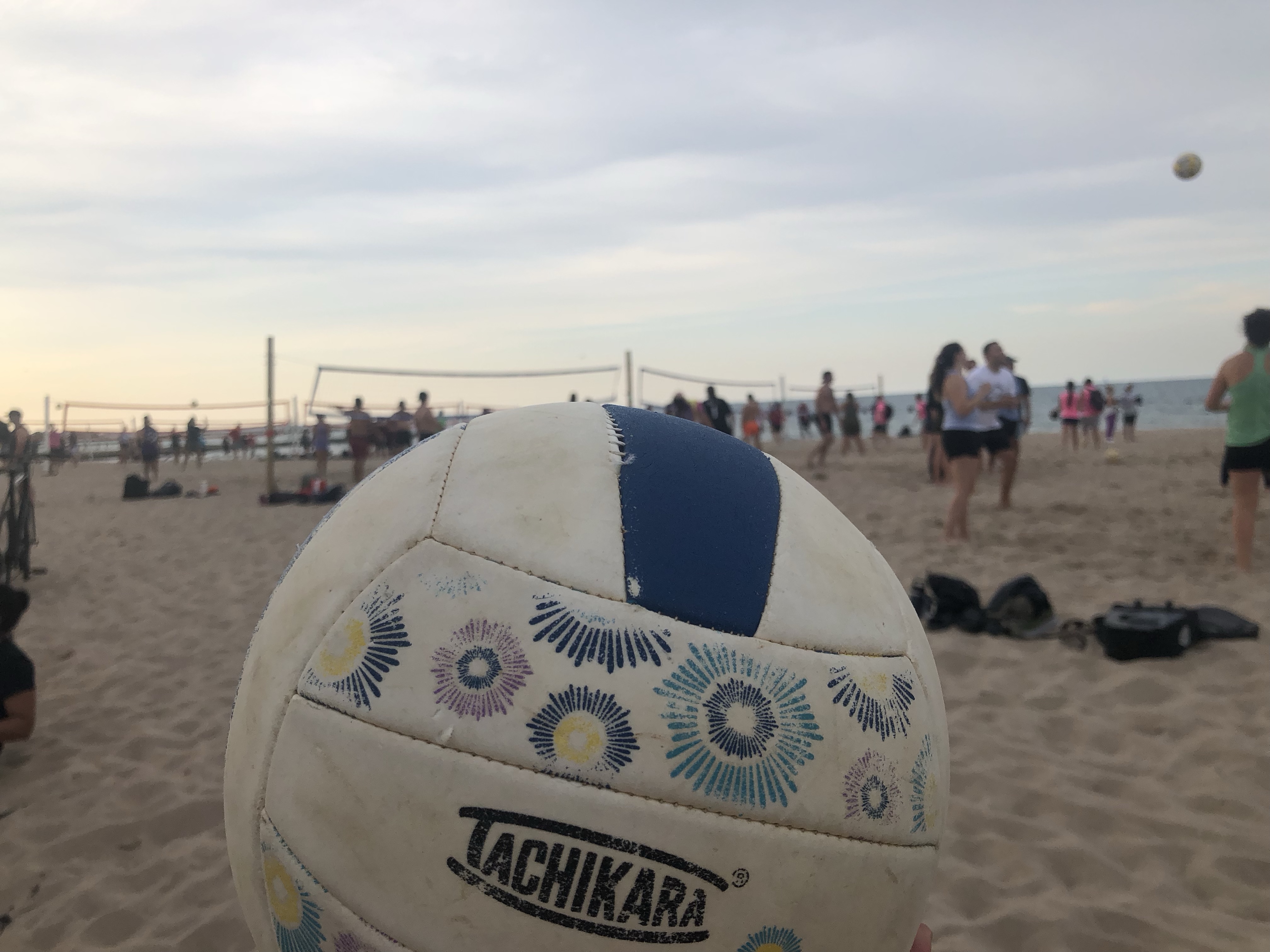
“You’re an athlete, Cathy.” Wut? My trainer Melissa stated it with a tone of irrefutable certainty. We had worked together maybe four months in 2014; she had observed me try and fail at many new movements, and also make noticeable progress along the way. Before that day I would have identified more as ‘mathlete’. In high school, classes were easy. Volleyball was hard. I participated fully in practice and drills, gave full effort in the weight room, all to be an okay player on the team. I did no other sports. But I kept playing at open gyms, college and med school intramurals, anywhere and anytime I could. To this day, I can still hold my own on a volleyball court. That sunny summer day running through her neighborhood, Melissa assigned me a new distinction, one I may never have considered. I have now proudly claimed it, and today my fitness program is firmly established and thriving. Since Melissa met my Ethos coaches six months ago, I have resumed learning, practicing, and training new movements, awakening dormant muscles and integrating them with what’s already strong and stable. My weight is unchanged, yet my clothes fit better. I’m stronger. I feel better about myself.

Consistency. Results. Progress. Tribe. My exercise pattern today is the best I’ve ever experienced. I wonder what it will look and feel like with another six months of training and beyond? After tearing my ACL in 2017, I know to appreciate any session that doesn’t end in injury. So how could my fitness be better? I must stay on the path, no matter how it winds and climbs. Surgery and changes at work disrupted my personal training schedule. So I rehab’d on my own at home. COVID prevented me from joining Ethos in 2020. So sibs and I did HIIT workouts at home over Zoom for three years. I can work out by myself; I know now that I do it exponentially better and have ‘way more fun with others. So that’s the plan–stick with the group that teaches me and holds me up. If I can do that, I’ll live to be STRONG OLD LADY, not frail old lady.


How would we describe American fitness? What is our exercise identity? ‘Bipolar’ and ‘ironic’ come to mind. On one hand we positively obsess over it all. If you live in any urban or suburban setting, you can practically fall out your front door and land in a gym of some kind. Sports apparel’s new fashion (genre?), Athleisure, now accounts for nearly 20% of online clothing sales. So you can at least look like an athlete when you walk around outside of the gym. On the other hand, according to the CDC, “60 percent of US adults do not engage in the recommended of activity,” and “approximately 25 percent of Americans are not active at all.” Well duh. Let’s take a look at just two correlates:

Infrastructure. American geographic sprawl necessitates transportation in the static sitting position, in cars, trains, and buses. Neither roadways nor transit culture make cycling or other self-powered locomotion appealing or feasible to anyone but the most determined, avid, and resourced. Most of us barely walk anywhere anymore, to the point of having to track daily step counts to goad us into getting up and moving at all.

Work culture. “Moreover, more than 80% of American jobs involve mostly sedentary activities,” statistics reported in 2021. This worsened for many with the pandemic, as remote work tied to a fixed computer video screen eliminated incidental movement within and between office spaces and in transit (walking to the train station or parking lot is still walking), reducing workday steps to the distance between bedroom, bathroom, and kitchen.

How can we make this better? Some simple, though not easy, ideas:

Stairs. Build them beautifully and out in the open, as centerpieces of our public spaces instead of last resort, emergency egress. Make it normal and the default to take the stairs instead of the elevator.

“5 of the best office staircase design ideas” –www.robinpowered.com

Get off camera. Do you really need that Zoom meeting? Do you need to meet at all? Whatever can be converted to a (concise!) email or voice call, do it. Hold folks accountable for preparation and brevity so all time spent meeting is valuable and productive. Then give them the time back so they can get away from their desks, accompish more tasks both personal and professional, and get more sleep, so they can be more motivated for the workouts they can now fit into their days.

Sit to stand desks. Make them standard in offices and reimburse workers to get them at home.

Give people balance boards and mini steppers as remote work onboarding gifts.

How else can we modify our systems and structures to lower the threshhold to get off our butts? What do you see around you that’s working already?