100 Pregnancies

Shane East, Instagram, January 28, 2025

“How many weeks to you think the average human lifespan has in it?” asked Shane East on Instagram, on January 28.

I did the ballpark math in my head as I listened to the rest of the reel, and it seemed about right, somewhere around 78 years, I thought. But to express it in weeks gave no perspective for me at the time. Years and decades are much more my speed.

Then, weeks (ha!) later, it occurred to me that pregnancy is measured in weeks, and expected to last 40. So in one of those ah-HA! shower moments, I realized that by the time we are born, we may already be 1% down the road to death. Huh. So if a pregnancy is 1% of an average human lifespan, then a whole lifespan is 100 pregnancies.

Suddenly 4000 weeks had a whole new meaning in terms of duration, potential, and load. What else do (or could) we do (or witness, or cause, or anything) 100 times in our life? How many puberties, summer camps, college degrees, PhDs, MDs, and residencies is 4000 weeks? How many relationships, sex partners, attempted and failed new experiences or jobs?

How else can we frame the length of an average human lifespan to shake our perspective and make different meaning? Why would we want to?

How does the length of your life, to date and pending, make sense to you?
How do you chunk it?

What is y/our relationship with death?

And as the wise Mary Oliver asked, “Tell me, what is it you plan to do with your one wild and precious life?” (Shane has posted this question before, also. He is my people.)

Living toward death–it’s another fun paradox of reality that I love to ponder. And it always brings me back to, “Live in peace to die at peace.” Easier said than done, and I won’t know until the end if I can walk the talk.

Does it feel morbid or fatalistic? Not to me. Rather I feel mindful and realistic, present and optimistic. I get to choose what meaning I make out of 4000 weeks, 100 pregnancies, or however else I consider my time in this body, on this planet, at this time in history, whatever is happening at any time.

I have agency. These days, that may be the most important meaning I can embrace and express.

Uninhibited

I effuse.

Anyone who knows me will tell you so. They will describe my facial expressions, gesticulations, profanity, and hyperbole. I feel strongly and express accordingly. I posted yesterday about how it’s all elevated and amplified (though still regulated) recently: I hug stronger and longer. I praise freely. I call people ‘love’ with accelerating frequency. And I talk about love, sex, and relationships a lot more. I attribute much of this to my now two year-old romance audio immersion.

American culture is such a paradox. At the same time that we hypersexualize both men’s and women’s bodies from a young age, we also harbor a collective and insidious Puritanical streak that shames sexuality in general, and for women in particular. I thought I had overcome the latter years ago. But these two years of spicy romance consumption have shown me my blind spots, for which I am eternally grateful.

Early in my career I met a woman patient who was very open about her sex practices. She had both male and female partners, sometimes multiple at a time. I can’t remember whether her practices were protected or not, but she had no active sexually transmitted infections while I knew her. Looking back, I’m sure my words centered around health risks and relationship safety. But if I’m honest, I judged her. I was young in career and life and could not relate to her behaviors and practices. I am sure she felt my negative moral vibrations, and I regret that to this day. Somewhere along the way I let go that judgment and have since made intentional efforts to make it safe for patients to tell me anything. As long as it’s consensual, lucid, and mutually satisfying, I want you to do whatever you want and enjoy your sex life as fully as possible! There is no standard, and my wish is for all partners to feel maximally fulfilled.

Romance novels have opened my eyes to diverse practices and experiences that I did not know to consider before: polyamorous, dominant-submissive, and asexual, among others, and all of the social, emotional, and relational implications thereof. I have shared my transformations of awareness and openness with patients and friends, and the response has been overwhelmingly positive. Both men and women get curious and then share their own experiences–desires, inhibitions, disconnects, accommodations, sacrificies, epiphanies/discoveries, etc. These days I talk even more openly than before and with anybody about libido, erectile (dys)function, emotional and carnal connection and their intersection, menopause, penile implants, and anything else that matters to someone’s sexual health. I thought I was uninhibited before and Whoa Nelly, watch me now. Based on conversations with fellow spicy romance enthusiasts, my experience is anything but unique.

Romance narrator Victoria Connolly addresses American purity culture, growing up in and now healing from it. She has invited listeners to share their stories; the voluminous response reveals the prevelance of experience and the value of acknowledging and naming it. See her Instagram post and comments c. August 12, 2024: “‘It wasn’t until I started reading primarily spicy romance that I finally got fed up/brave enough to ask him if it’d be okay if I touched myself or used a vibrator during sex because I’d like to come too.’ | If your story sounds like this, you’re in the right place. | Just share the book in the comments that rewired you forever. The one that made you believe you deserved pleasure.”

I mentioned the Quinn app in my recent Women Elevating Women post. Quinn describes itself as “a mobile app and website where you can listen to audio erotica… spicy audio stories, guided masturbation, dirty talk, and more. The audios on Quinn are designed to help you get there, but they also involve fun and interesting plots.” The New York Times reports, “Apps like Dipsea and Quinn have become popular destinations, particularly for some women who find them safe spaces to explore their sexuality.” Hallelujah!
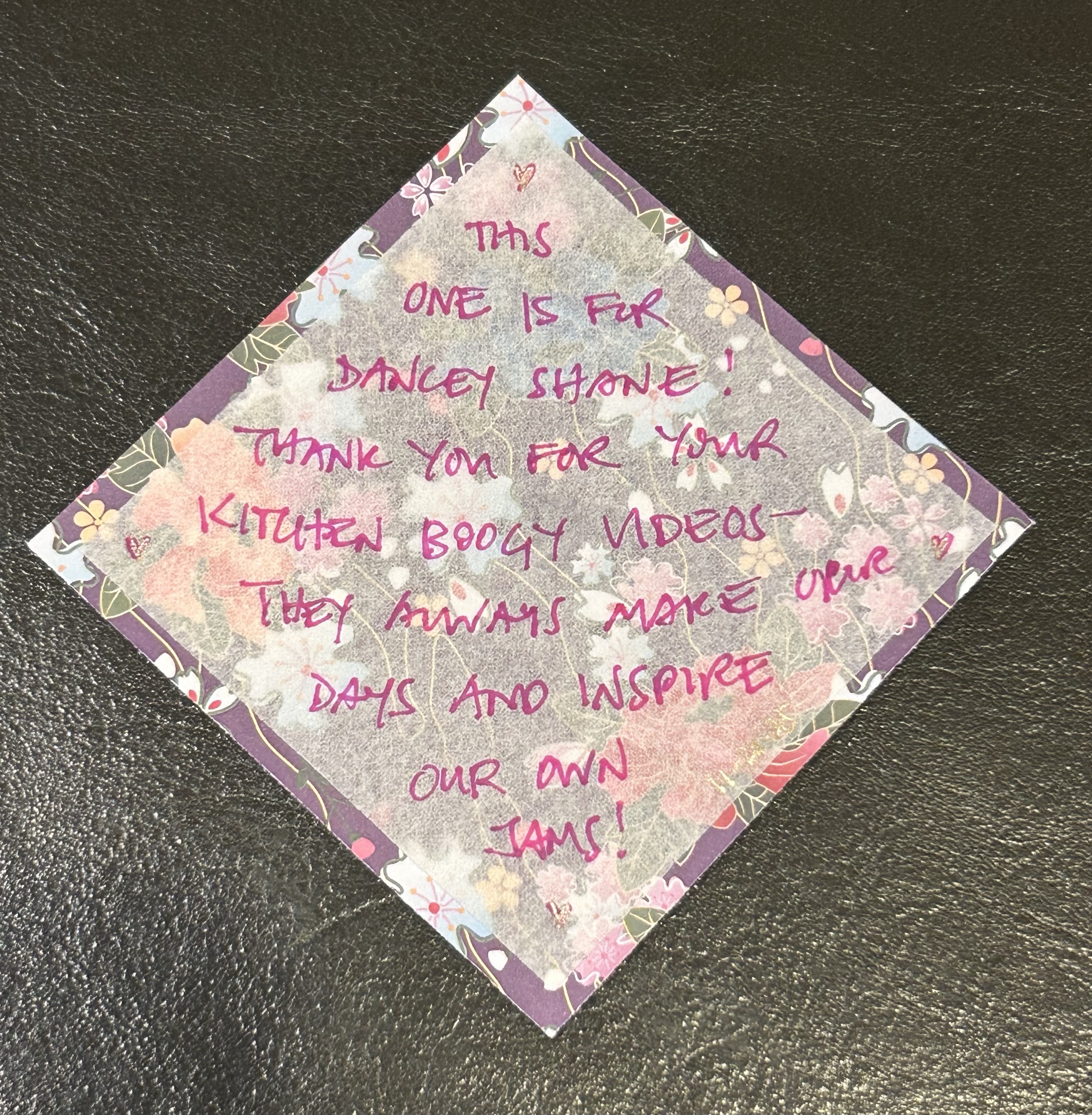
Readers of this blog know my deep admiration for romance narrator Shane East and his strong allyship of women. His second ever Quinn audio dropped two days ago and has already been played more than 3500 times. Asked, “What inspired the move to create on Quinn?” he answered, “[Quinn] came to me after hearing my work. After discussing things with them and checking things out on the site, seeing what I would like to put out there and gathering a script and audio crew to help me do that, I decided to go for it. I’m all for anything that enables women to own their sexuality without the judgment or shame that can be handed out by others. I’m here of course for everyone being free to own their sexuality and desires in a judgment free, safe and accepting way; however and with whomever they like. Speaking of women specifically though, historically they have been repressed by societal restraints and patriarchal ideology for so long that I think it’s wonderful to be part of something — be that romance books or something like Quinn— that utterly goes against that and gives women (in particular) ownership of what they want. I think it’s fantastic to have the[m] out there.”

*sigh*

This is all such a good thing, all of us embracing our whole, wonderful, beautiful, sexually awake and aware selves–every person of any gender, both individually and in community. Life is simply too short to repress such important and fundamental aspects of identity and connection. Fiction in general and romance in particular help us receive perspectives (as opposed to taking them, as David Brooks writes) other than and different from our own, and empathize with the full scope of human emotional and relational experience.

Inhibitions are not empirically harmful. Restraints can serve us sometimes. And when they outlive their usefulness, shedding them elevates us, frees our spirit, and allows our whole selves to emerge in full glory and actualization. I hope this evolution of collective openness continues. The more we can eliminate shame and empower everyone to own their sexuality, foster deep and meaningful connections fully in mind, body, and spirit, and simply embrace all that makes us our whole human selves, the better all of our lives will be.

Women Elevating Women

How is everybody this fine August evening?

How is it August already!? *sigh* I hope we have all savored the summer (here in the Northern Hemisphere) and all it has to offer. There is just something about the longer, brighter days–I know there are myriad researched psychophysiologic effects, but I’m too lazy to look them up. Happy to just revel in them! Energy, activity, growth, flourishing–we humans are part of nature… Life occurs in seasons, and the lushness of summer blooms, the bees’ bumble-busy-ness, watching kids play joyously outside–it all just activates me, makes me frankly elated.

So today I got particularly excited thinking about how women romance authors hold one another up. I have noticed it for a while, and it hit me anew this afternoon. Here’s the story:

Shane East has joined the Creator crew over on Quinn, ‘the app for audio erotica.’ [To read more about this relatively new medium and its social value, see this article from the New York Times and a brief interview with Quinn founder and CEO Caroline Spiegel.] He joins other well known romance narrators on the site such as John York and Zachary Webber. The short form stories are apparently extremely spicy, and people love them. Scripts for the audios vary in origin, written by the voice actors themselves (men, women, and nonbinary folks), established romance authors, and fans alike. Not every piece is explicitly credited.

Shane’s debut on Quinn has been widely anticipated and very well received: As of this writing, about 60 hours out, his first audio has garnered over 4100 plays and almost 800 subscribers. Amidst the deluge of praise, I happened to catch an Instagram story posted by romance author Elodie Hart, acknowledging her good friend Holly June Smith for writing Shane’s inaugural script. It struck me again how often this happens in the romance world.

I see authors regularly promote one another’s work in their weekly newsletters and social media accounts. These magnanimous women include Sara Madderson, Nana Malone (who also co-founded Audio in Color, a non-profit dedicated to increasing diversity and representation in the romance and audiobook industry), Marni Mann, Sierra Simone, Lauren Smith, and Lili Valente. They post about how they collaborate, commune, and just have fun creating together. How wonderful! How generous, loving, and mutually beneficial! Is there any other profession where this happens so commonly?

I think about athletes, thought leaders… It always makes me happy to see blended teams play together in Olympic and All-Star games. Simon Sinek directly addresses his rivalry with Adam Grant in his book The Infinite Game. He frames this competitive relationship positively, as it drives his own professional excellence. In academic research, where resources are limited and science moves quickly, the culture is the opposite of collaborative and mutually admiring–‘cut throat’ is often the prevailing attitude.

Is there no sense of competition in romance writing? I have no idea. I just notice the love of women holding up other women.

I have written before about allyship, especially men of women. Shane East consistently upholds and amplifies his female colleagues, and continues to do so on this new platform.
How would it be if we all amplified one another, in humility and generosity, regardless of gender? Is that realistic? There are still so many gender-based power and status dyamics in multiple (most? all?) domains of human relationship… And yet, we can’t know how social norms will change unless we challenge them, right? Romance and erotica still make a lot of folks very uncomfortable; hence the heavily guarded anonymity of some creators. I understand and respect this; I feel minimal urgency to change it, because I see the tide turning, accelerating toward mainstream cultural sex positivity every year. In my mind, this makes gender parity more likely in the far future. Every little step counts. I know this is just my own perspective, having immersed in the romance world only recently. Maybe that’s why I feel compelled to write about it often, to express my own solidarity and allyship with the progress of sexual and relational freedom for all.

Challenging the status quo does not have to be adversarial, or even direct. Romance novels don’t change social policy. I don’t imagine it’s many authors’ primary objective to activate readers and listeners to lobby Congress or protest in the streets. As throughout history, fiction illuminates humanity and speaks, however quietly yet forcefully, to our very souls. It moves us, sometimes ineffably and other times powerfully, to examine and act. Social change happens in drifts and then shifts, slow and then fast, with forward and backward steps, on a long, jagged arc toward acceptance and inclusion. Human relationships are more complex now than before, and also fundamentally unchanged: we are all here to love one another and help us all live our best lives.

I never would have guessed that my whimsical romance obsession would yield deep and divergent thought and personal evolution. The friendships, the discussions, the self-discovery and intricate connections to shared humanity—it has all been just such a gift, I get goose bumps.

As we enter this last stretch of summer sun and warmth, I sincerely wish for us all to notice humans treating other humans well. It’s okay to feel cynical about humanity, even most of the time. But let’s not allow this to close us off to opportunities for connection when they occur. In fact, I encourage us to actively seek those opportunities–I promise, they are everywhere.