
Unknown's avatar

About Catherine Cheng, MD

I am a general internist in Chicago, Illinois, mother of two, almost native Coloradan, and Northwestern alum. I want to leave the world better for my having lived, by cultivating the best possible relationships between all who know me, and all whom I influence. Join me on this crazy, idealistic, fascinating journey! Look for new posts on the 10th, 20th, and 30th of each month. Opinions posted here are entirely my own, and in no way reflect the opinions or policies of my employer.

Women Elevating Women

How is everybody this fine August evening?

How is it August already!? *sigh* I hope we have all savored the summer (here in the Northern Hemisphere) and all it has to offer. There is just something about the longer, brighter days–I know there are myriad researched psychophysiologic effects, but I’m too lazy to look them up. Happy to just revel in them! Energy, activity, growth, flourishing–we humans are part of nature… Life occurs in seasons, and the lushness of summer blooms, the bees’ bumble-busy-ness, watching kids play joyously outside–it all just activates me, makes me frankly elated.

So today I got particularly excited thinking about how women romance authors hold one another up. I have noticed it for a while, and it hit me anew this afternoon. Here’s the story:

Shane East has joined the Creator crew over on Quinn, ‘the app for audio erotica.’ [To read more about this relatively new medium and its social value, see this article from the New York Times and a brief interview with Quinn founder and CEO Caroline Spiegel.] He joins other well known romance narrators on the site such as John York and Zachary Webber. The short form stories are apparently extremely spicy, and people love them. Scripts for the audios vary in origin, written by the voice actors themselves (men, women, and nonbinary folks), established romance authors, and fans alike. Not every piece is explicitly credited.

Shane’s debut on Quinn has been widely anticipated and very well received: As of this writing, about 60 hours out, his first audio has garnered over 4100 plays and almost 800 subscribers. Amidst the deluge of praise, I happened to catch an Instagram story posted by romance author Elodie Hart, acknowledging her good friend Holly June Smith for writing Shane’s inaugural script. It struck me again how often this happens in the romance world.

I see authors regularly promote one another’s work in their weekly newsletters and social media accounts. These magnanimous women include Sara Madderson, Nana Malone (who also co-founded Audio in Color, a non-profit dedicated to increasing diversity and representation in the romance and audiobook industry), Marni Mann, Sierra Simone, Lauren Smith, and Lili Valente. They post about how they collaborate, commune, and just have fun creating together. How wonderful! How generous, loving, and mutually beneficial! Is there any other profession where this happens so commonly?

I think about athletes, thought leaders… It always makes me happy to see blended teams play together in Olympic and All-Star games. Simon Sinek directly addresses his rivalry with Adam Grant in his book The Infinite Game. He frames this competitive relationship positively, as it drives his own professional excellence. In academic research, where resources are limited and science moves quickly, the culture is the opposite of collaborative and mutually admiring–‘cut throat’ is often the prevailing attitude.

Is there no sense of competition in romance writing? I have no idea. I just notice the love of women holding up other women.

I have written before about allyship, especially men of women. Shane East consistently upholds and amplifies his female colleagues, and continues to do so on this new platform.
How would it be if we all amplified one another, in humility and generosity, regardless of gender? Is that realistic? There are still so many gender-based power and status dyamics in multiple (most? all?) domains of human relationship… And yet, we can’t know how social norms will change unless we challenge them, right? Romance and erotica still make a lot of folks very uncomfortable; hence the heavily guarded anonymity of some creators. I understand and respect this; I feel minimal urgency to change it, because I see the tide turning, accelerating toward mainstream cultural sex positivity every year. In my mind, this makes gender parity more likely in the far future. Every little step counts. I know this is just my own perspective, having immersed in the romance world only recently. Maybe that’s why I feel compelled to write about it often, to express my own solidarity and allyship with the progress of sexual and relational freedom for all.

Challenging the status quo does not have to be adversarial, or even direct. Romance novels don’t change social policy. I don’t imagine it’s many authors’ primary objective to activate readers and listeners to lobby Congress or protest in the streets. As throughout history, fiction illuminates humanity and speaks, however quietly yet forcefully, to our very souls. It moves us, sometimes ineffably and other times powerfully, to examine and act. Social change happens in drifts and then shifts, slow and then fast, with forward and backward steps, on a long, jagged arc toward acceptance and inclusion. Human relationships are more complex now than before, and also fundamentally unchanged: we are all here to love one another and help us all live our best lives.

I never would have guessed that my whimsical romance obsession would yield deep and divergent thought and personal evolution. The friendships, the discussions, the self-discovery and intricate connections to shared humanity—it has all been just such a gift, I get goose bumps.

As we enter this last stretch of summer sun and warmth, I sincerely wish for us all to notice humans treating other humans well. It’s okay to feel cynical about humanity, even most of the time. But let’s not allow this to close us off to opportunities for connection when they occur. In fact, I encourage us to actively seek those opportunities–I promise, they are everywhere.

Illuminator Aspirations

Well this feels cosmic.

After posting “Questions for Connection” last Sunday, I started listening to David Brooks’s How to Know a Person: The Art of Seeing Others Deeply and Being Deeply Seen on Tuesday–cramming for book club on Thursday, of course, having added it to our list months ago. Perfect timing! The whole book, as you may imagine, discusses the what, how, and why of human connection, and it speaks to my soul, omg! From developmental psychology to conflict resolution, education to culture, and told through his and others’ personal stories, Brooks distills decades and generations of objective and intuitive knowledge and wisdom into a fast, easy read/listen that points us all toward both the doing and being of presence and attunement to one another. There is an entire chapter on asking good questions, which I obviously appreciated.

Illumination was a novel idea to me, however, and I look forward to reading and marking up this chapter in the hardcover. Brooks describes illuminators as people whose presence–their posture, mannerisms, words, and ability to listen, absorb, reflect, and connect–lights others up. They are the ones who make us feel safe, who open us up and thicken our social ties. I have thought and written for years about the importance and impact of feeling seen, heard, understood, accepted, and loved; illuminators do this for and with us. This is how I wish to show up to everyone in my life–patients, family, friends, colleagues, online acquaintances, and strangers alike. The book provides skills and practices to do just this, and though I estimate my proficiency to be reasonably high already, Brooks presents pearls that inspire me to do better yet.

He also discusses Accompaniment, the attitude of escorting, even stewarding, one another on our respective life journeys. The concept evokes a sense of deep empathy, kindness, and reverence for our shared humanity that feels so lacking these days. Subsequent chapters discuss suffering, despair, empathy, hard conversations, and personality traits that affect our relationships to self, others, and society at large. “We are all walking each other home,” Ram Dass says. Hallelujah.

I finished HTKAP in plenty of time for book club, excited to explore and discuss with my friends. Our conversation was warm and connecting, and Mary shared yet another deck of questions meant to bring people (teens, in this case) closer. Sue even stayed the whole time, which was a big deal, and I think speaks to the successful intended effect of the book. How wonderful.

Screenshot

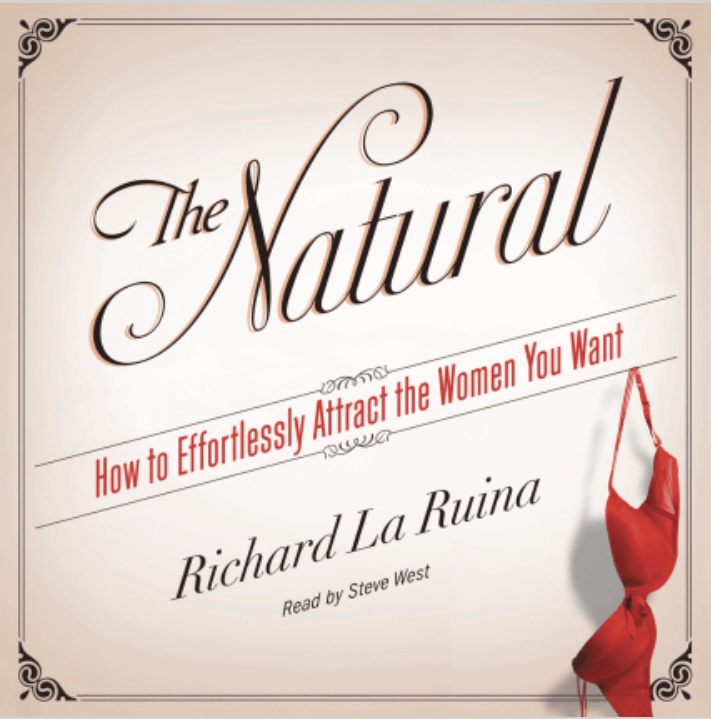
After that deep dive into human connection, I wanted something more lighthearted. I always enjoy a solo Shane East/Steve West narration, and The Natural: How to Effortlessly Attract the Women You Want by Richard La Ruina called to me this week–so intriguing! 24 hours after finishing, I can honestly say I am glad I listened to this book.

Published in 2014, eight years after founding his seduction and dating coaching business PUA (pick up artist) Training, some of the book has perhaps not aged well (eg the parts about touching, and use of the word ‘control’). The direct and sometimes blunt descriptions of ‘types’ of women and scenarios, and the granular scripts he presents as highly successful interactions made me cringe sometimes, as I imagined being the woman in the situation. But I found myself nodding as often as I squirmed. I make no judgments about pick up artists, their goals, and their methods, as long as everything that happens between them and the women they engage with is fully consensual, lucid, and mutually fulfilling.

Two things stand out to me about The Natural, especially in comparison and contrast to How to Know a Person.

First, La Ruina is remarkably open about his personal experiences throughout this book, similar to how Brooks is in his. He chronicles his journey “From Geek to Natural” in the first chapter. Son of a single mom in a rough neighborhood of London, bullied in school and having no strong male role models, he took the initiative to turn his nonexistent romantic life around and learn how to be more interpersonally effective with women. He devoured books on psychology and communication, and sought teachers. He practiced regularly, diligently leaving his comfot zone, trying different techniques, recording and analyzing successes and failures. He created an organized and consistent, though flexible and customizable method for approaching, engaging, and yes, seducing women, which he shares openly and transparently in detail in the book; we readers and listeners get to witness his transformative journey.

Throughout the book La Ruina’s honesty strikes me. I hear him (through Steve’s voice) as humbly confident, offering his personal perspective, learnings, and earned expertise to benefit others: men who feel like he used to feel around women–awkward and intimidated.
He makes appropriate asides to point out that women are not simply marks for conquest; that seduction is, in fact, a process of connecting with another person on a human level–albeit with a specific and often carnal objective. He admonishes readers/listeners to be respectful and honest, to attune to women’s nonverbal cues, to practice excellent self-awareness and self-regulation. He addresses consent, sexually transmitted infections, and expectation setting. He distinguishes between same night sex and a one night stand: sex on the first meeting does not necessarily have to be the only time, and seduction can lead to anything from casual sex to casual dating, to long term relationship. I find myself mildly disconcerted and oddly appreciative at the same time.

Second, when I get still and consider these two books, written by men from different generations and with apparently divergent goals, I can see them both as treatises on relationship and communication. Both enumerate a set of skills and practices for connecting with other humans through face to face interactions. These skills involve presence, active listening, real time energy attunement, and caring for our counterparts. Brooks discusses more esoteric and philosophical topics, as his goal is to get us to think both more deeply and globally about humanity’s current state of collective disconnection and how to remedy it. La Ruina simply wants to help men get laid, but in a way that makes them better versions of themselves in the process.

Both of these books remind me of Presence by Amy Cuddy, another book that I love. You may have seen her TED talk, “Your body language may shape who you are”, on how posture influences self-confidence, self-efficacy, and others’ perceptions of us. Ten years ago I started “power posing” before presentations–standing tall with feet wider than shoulder width, arms extended, palms open, chest out, calling forth my credentials and expertise to show up all me, all in, to my audience.

The skills, techniques, and practices for listening, asking questions, and attuning to others in both Brooks’s and La Ruina’s books parallel Cuddy’s suggestions for attending to posture and body language. At the end of her TED talk she says, “fake it ’til you become it”: In effect, act like you’re calm and confident. Imitate it, do it with your body until you can really feel it–wholly embody it–in your mind and spirit also. In all of these books, I hear the authors showing us how and what to do, on our way to being the person who does these things naturally–attuning to others, empathizing, understanding, attending to their needs, and connecting, which also feeds ourselves in turn.

Whether our goal is to inspire an audience, support our friend through their struggles, or take a woman (or man–it occurred to me multiple times that the techniques La Ruina recommends for seducing women could easily apply to men–because it’s all about making the other person feel seen and appreciated) willingly and happily to bed, both the being and the doing matter. Our expressions and actions reflect our attitudes and intentions. When all of these are aligned, we are authentic. We can sense when this is not the case, but we don’t necessarily require 100% alignment to engage willingly with someone–we often give one another the benefit of the doubt and leave room for improvement, as long as we feel safe enough.

Illuminators may vary in mission and goals, apparently. If our job in this lifetime is to walk with one another and make our respective journeys a little less painful, a little more joyful, and more lovingly meaningful in connection, then How to Know a Person, The Natural, and many other resources can help us. I never thought I would listen to, much less admire, a pick up artist’s practice manual, and here I am. There is learning to be had everywhere and anywhere, my friends! I’m excited to see where I find it next.

Questions for Connection

What excellent question have you asked or been asked lately? How did it affect your relationship with the person asked/asking?

Ever since I started working with my life coach in 2005, I have practiced asking more and better questions in any encounter, in all life domains. The returns on this investment of presence and curiosity–idea generation, heightened conversation, and deepening connection, among others–far outweigh the costs of occasional awkward pauses and uncomfortable deflection.

I wonder, however, if I give enough time or energy to answering the interesting quesitons I ask?

Why, for instance, do I behave so differently with people in and out of my family? I feel like the same person in both contexts, and everybody knows the same me; yet I know I show up not the same at home as outside. Fascinating.

Today was Day 190 of my morning pages practice. Looking back, much of the journaling consists of lists, plans, recollections, and reflections. The same questions arise recurrently, mostly centered around behavior and relationships, and I attempt to answer overtly about half the time. Also fascinating! I feel comfortable with this state of things, as the simple act of writing them down and letting them sit on and below my consciousness day to day allows me to consider them slowly. Persistent questions point me to my core values, purpose, and goals. I feel no rush to formally answer these existential, identity-related, philosophical inquiries. I tell the story that simply marking their re/o-ccurrence pins them to some level of awareness where I can return regularly, like periodically adding brushstrokes to paintings that live in various rooms of my mind, heart, and life, when I happen to walk by. These rooms are bright and airy, each equipped with a sturdy easel, thick canvas, rich color palette, and full set of implements to create and revise, ad lib. I feel calm and focused, reassured that whatever is happening on any given day, I have time and energy set aside to process and digest, coming to clarity organically and as needed, all in good time. My morning pages facilitate insights and understanding regularly, and I see this practice sticking for the foreseeable future.

What I really relish, however, is engaging in questions, exploration, and discussion with other people! I wonder if this is how I make friends, actually? It does not matter if I just met you or I’ve known you my whole life; if you’re willing to dive with me like humanities nerds in a submersible to plumb the depths of open and honest questions and wild ideas of possibility–about anything from language to muscle physiology, human nature to politics, phylogeny to music–I might soon profess my undying love for you and chase you for more of that energizing connection. It is most often with friends, in those small, relaxed, meandering, sometimes calorie-laden gatherings, where nascent and novel answers to delightful questions so beautifully emerge and bloom. I carry my journal everywhere, to capture these pearls when they drop, as though gifts from the gods of sentience and relationship.

People crave deeper connection desperately now, in our increasingly chaotic, impersonal, and globalized world. I see references to the 2015 New York Times article “36 Questions That Lead to Love” regularly (that’s probably the algorithm, right?). If you cannot access it, see the original research article by Arthur Aron et al, “The Experimental Generation of Interpersonal Closeness: A Procedure and Some Preliminary Findings” with the questions listed at the end. Organized into three sets of increasing intimacy, the exercise invites us to ask our conversation partners questions such as, “What would constitute a perfect day for you?” “What is your most treasured memory?” and, “Complete this sentence: ‘I wish I had someone with whom I could share …'” From NYT: “The idea is that mutual vulnerability fosters closeness. To quote the study’s authors, ‘One key pattern associated with the development of a close relationship among peers is sustained, escalating, reciprocal, personal self-disclosure.’ Allowing oneself to be vulnerable with another person can be exceedingly difficult, so this exercise forces the issue.” I have the article bookmarked on my phone, and have yet to invite anyone to answer with me–maybe I’ll set an intention to do so on my upcoming friend dates? Part of me thinks I’m doing fine connecting on my own, and you never know, this could be truly next level.

Renowned psychologist Esther Perel created a similar game in 2021, Where Should We Begin, now in its 2nd edition. This query is how she historically initiates therapy sessions with clients. Questions in the game include, “I can’t believe I got away with…” “My latest crush is…” and, “My favorite love story to tell…” The box includes questions that range from lighthearted to serious, to sexual and beyond, which positively tickles me–because it’s all just life. In this age of polarization and easy mutual disdain and disconnection, games like this can help us all recognize our shared humanity.

I have purchased yet a different box of questions for connection, How Deep Will You Go? Its creators describe it as “a game of deep conversation without worrying what to ask, to feel closer in a way you never felt before.” Three levels of questions are labeled Ice Breakers (“What motivates you in life?”), Confessions (“Why have you kept going?”), and Getting Deep (“What is something you don’t tell most people?”). Reading the cards, I imagine with whom I’d want to delve. It depends on the question(s), of course, and also context and mood. I can picture a small friend group setting for the playful ones, and core belief/value ones as actual ice breakers for purposeful group work, such as a Braver Angels workshop. For the more intimate questions, though, I picture a one on one meeting, with plenty of preface and mutual agreement to actively engage in deepening personal connection.

Of course, interpersonal closeness is an iterative process: Other than the most superficial queries, the willingness to ‘go deeper’ requires some level of established trust and safety. That can take a while, depending on a multitude of factors. But once that foundational rapport is achieved, subsequent connection facilitated by these questions, one by one, may unfurl like the slow and steady inflation of a hot air balloon from the ground, lifting us gently together to affinity and affection we could never achieve where we started.

Connection decks like Where Should We Begin and How Deep Will You Go? make me so optimistic. I have loved and tried to ask questions like this for years, and now I feel validated. What if we all opened up to one another just a little bit more, just a little more often? What if we held one another’s hopes, joys, struggles, regrets, dreams, and confidences with a little more respect and reverence? What if we approached one another, friends and strangers alike, with the assumption of caring and mutual well wishes, looking to hold one another up, rather than with suspicion and wariness? And what if we rewarded such unearned generosity of spirit with reciprocal kindness?

The practice of mindfully asking deeper, more personal, loving, and intimate questions could go a long way to bridging our seemingly insurmountable differences; we all need this right now. It’s not appropriate in every encounter, of course. We must attune to context and opportunity, and act (ask) with confidence and humility. And that’s also the point, isn’t it?

The more present we are to one another’s vibrations, our moods and energies, the more likely we are to connect in earnest, regardless of what questions we choose to ask or not.

Understanding, validation, belonging, closeness, intimacy–we humans thrive when we feel these often and deeply. I still have hope that we can do it better.