No Fear of Words, Part 2

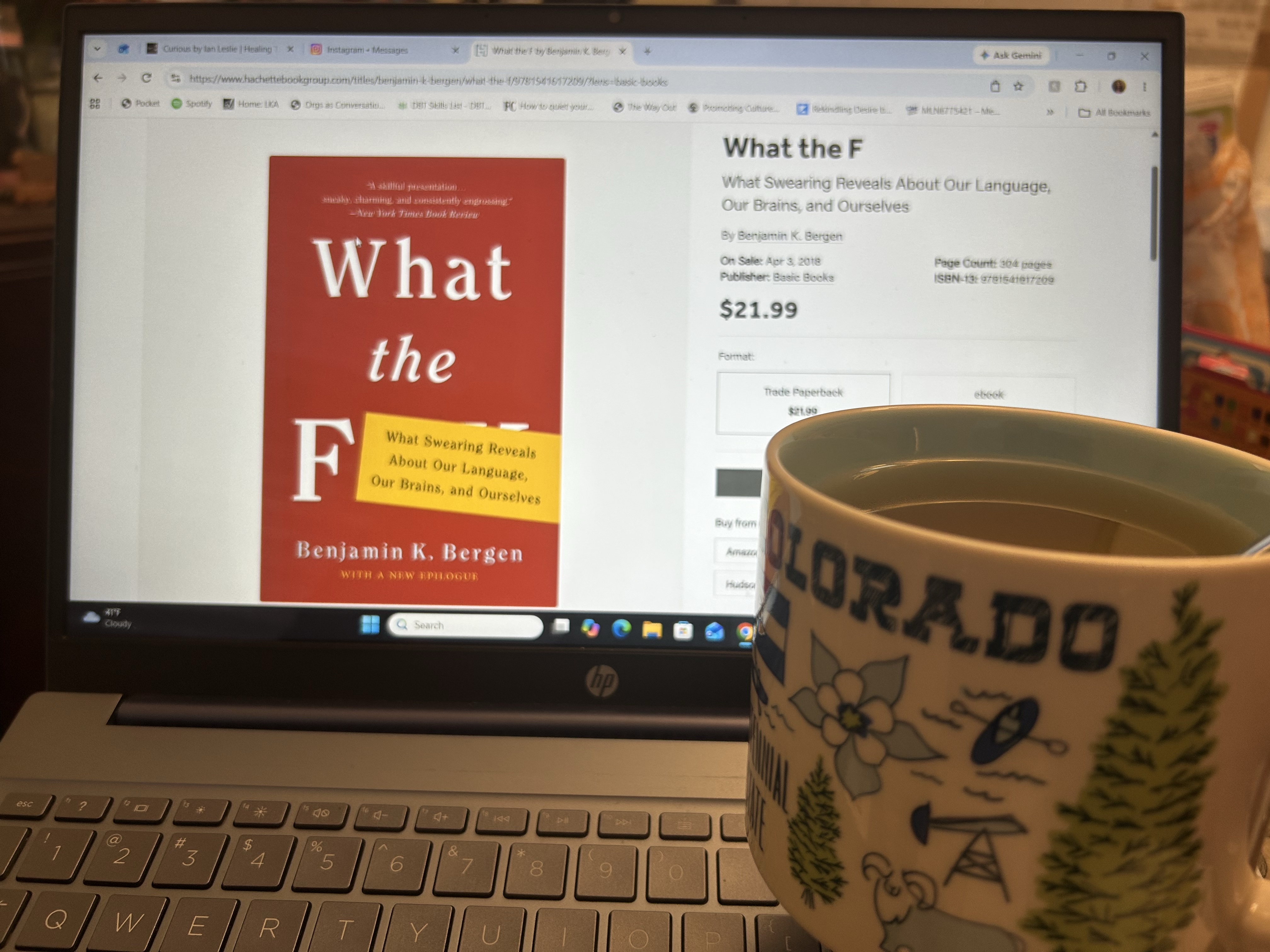
What the F, Benjamin K Bergen

VAGINA! No Fear of Words, Please. Hey, that post was about a book also!
April 29, 2016, just into my second year writing this blog:
“Sexuality can be hard to talk about. I think this is true for adults far more than for children. Children are naturally curious and nonjudgmental. They just want to know, what is that, what’s it for, why are yours different from mine, and why does he have one of those and I don’t? It’s we adults who squirm and dodge, deflect and bolt. From a very early age, children learn that it’s not okay to talk about certain things because it makes the grown-ups uncomfortable. I want to change that.”
I still like that one.
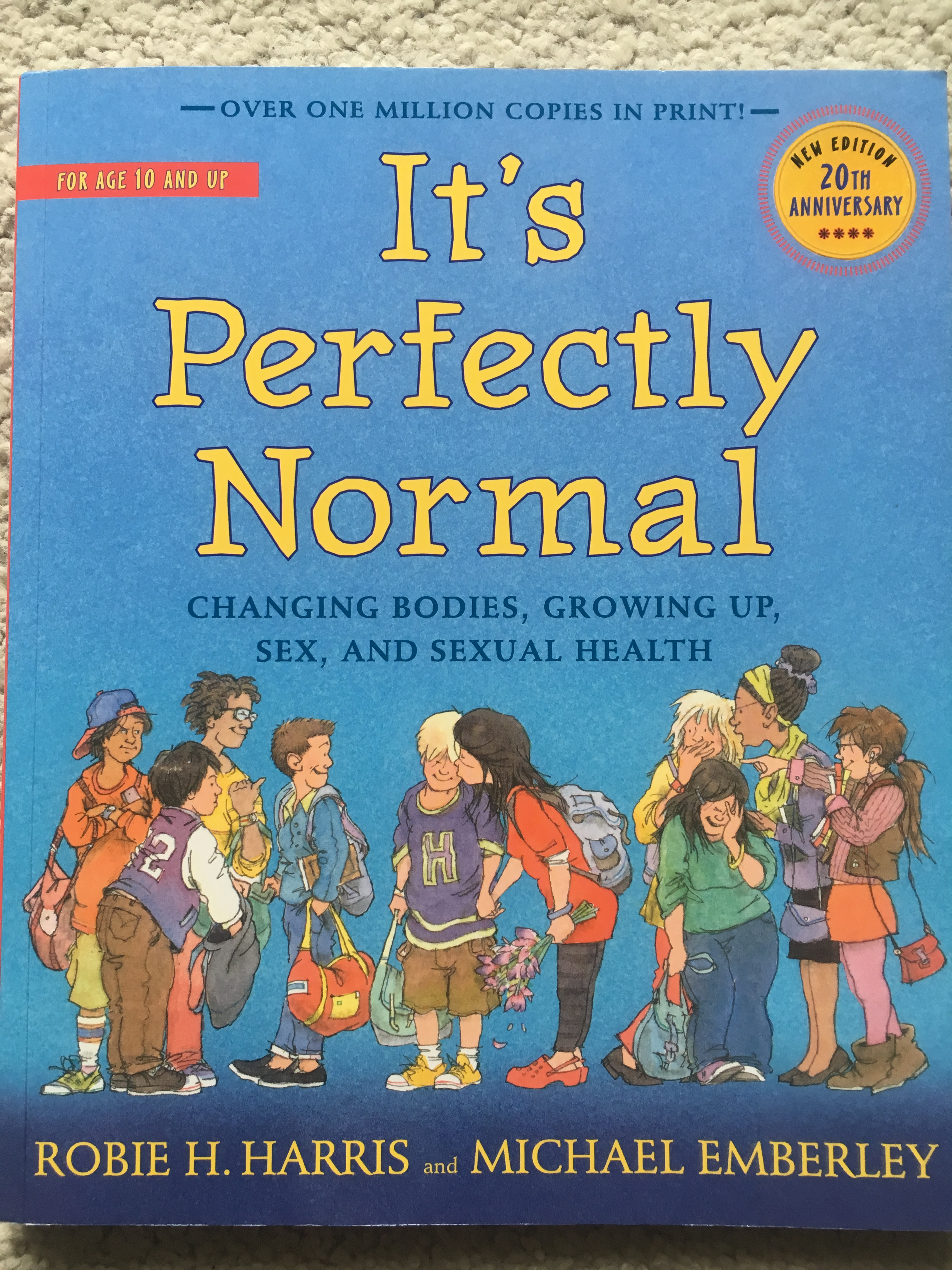
It’s Perfectly Normal, Harris & Emberley

The kids were 13 and 9 then. Holy cow, that was a lifetime ago. And here I am, still writing, trafficking in words every day and loving it even more, if that’s possible!

What role(s) do(es) word(s) play in your life?

Thank you for reading mine! I write them for myself, so it’s always a treat to have someone else interact with them.
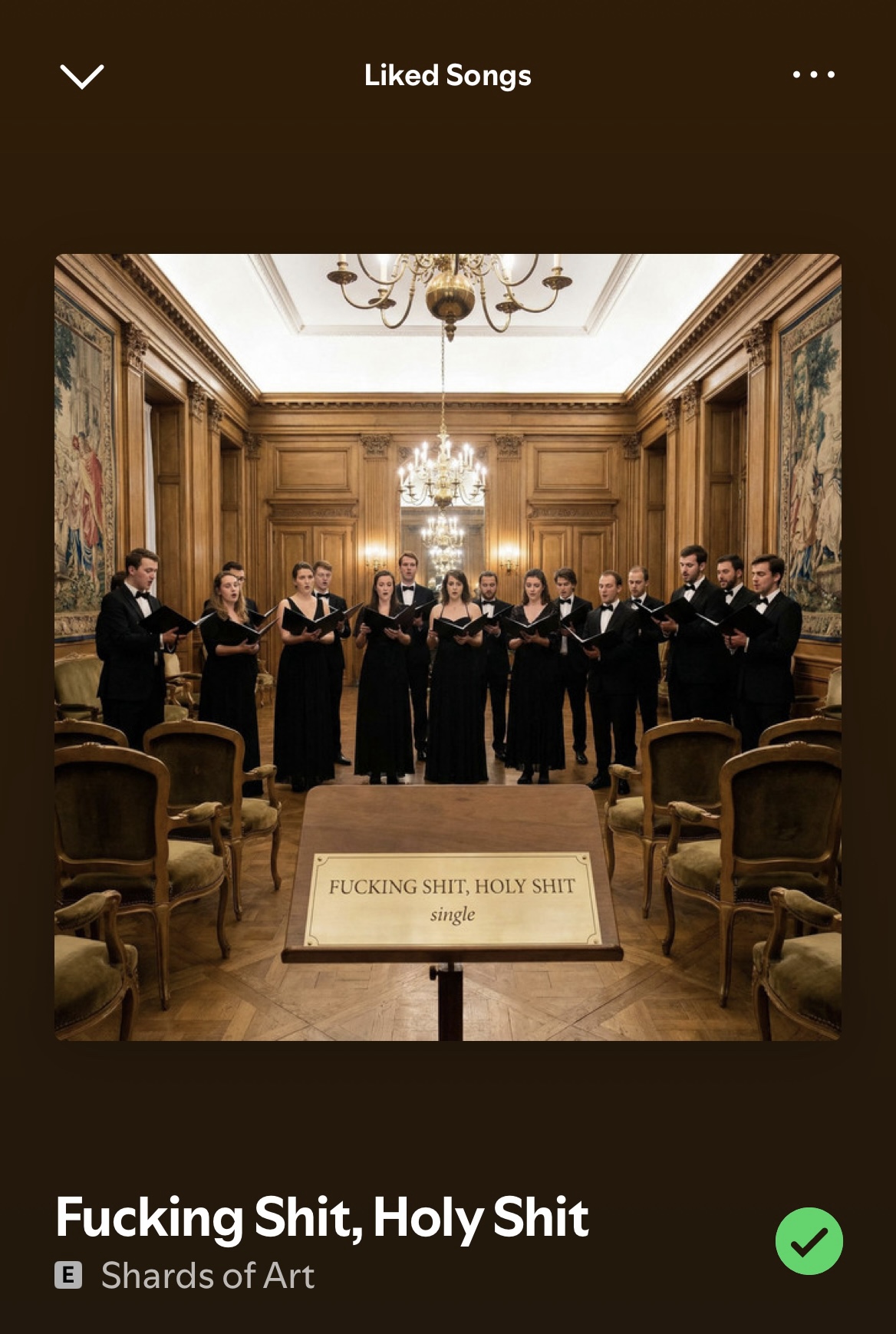
Fucking Shit, Holy Shit, Shards of Art

Today I have listened to yet another new song on loop: Fucking Shit, Holy Shit by Shards of Art. I have yet to listen to their other work; I have a feeling I may love it all. Profane choral soft rock, I’d call it. Fucking fantastic–or fanfuckingtastic? I shared it with a patient today who’s been through it lately, and turns out he’s also been playing it on loop for the past month already. Cosmic.
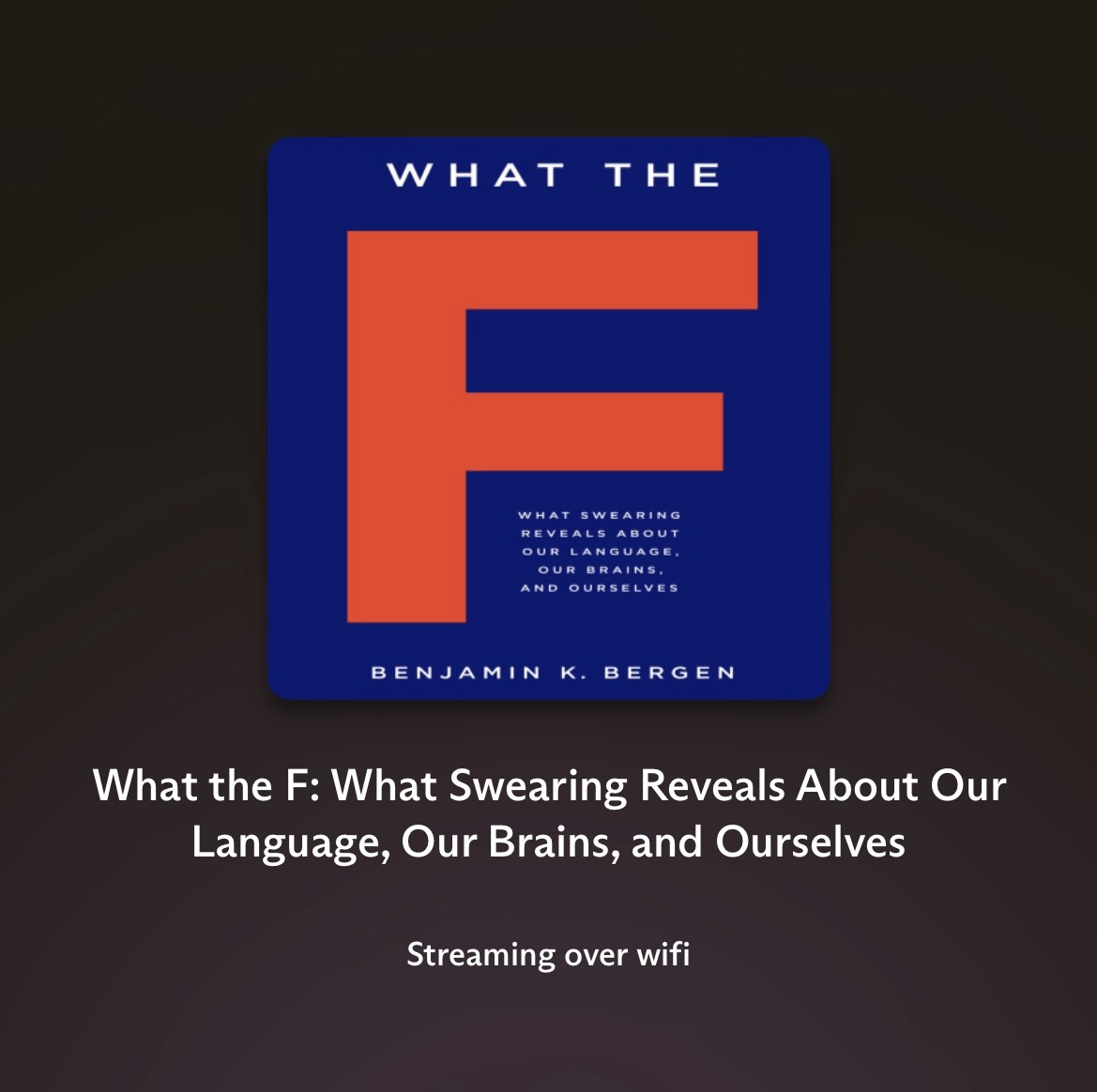
What the F by Benjamin K Bergen

It reminds me of a book I listened to this summer, What the F by Benjamin K Bergen, subtitled, What Swearing Reveals About Our Language, Our Brains, and Ourselves. My memory of this book will be forever associated with the pottery studio, listening while throwing, trimming, and generally loving life. If you’re interested in history, linguistics, and culture, it’s an easy and fascinating listen. I didn’t enter any bookmarks in the audiobook, likely because I was wrist-deep in clay, but I appreciated the distinctions he made in levels of profanity and how they relate to various social taboos and verbal development in children, among other things. Well worth an Everand unlock or Audible credit!
@vocabulary.daily.words on Instagram

So who else loves the @vocabulary.daily.words account on Instagram?
Petrichor.
I liked enough of their posts to check out the app and have now paid to practice my words daily for the past 30 days. Nerding out and proud of it, I say! Whodathunk I’d voluntarily subject myself at this age to the SAT vocab practice we all had to do in high school? I get on every day to see if I can maintain my 98% practice score. Repetition, my friends: It works.
Forelsket. Amatory.
Erstwhile! I never actually knew what it meant, or for that matter, philistine either. Did any of you ever follow The Erstwhile Philistine? I really enjoyed the posts there before they ended in 2015. I pulled out ‘erstwhile nemesis’ for the Worthy Rivals post the other night thanks to my new vocab practice–win! Not sure when I’ll ever use duteous or mammillaria in a sentence but whatever, I’m having fun.

How gratifying to know I have a whole boatload of words from which to tweezerpluck the perfect one I need to express exactly what I think or feel with laser accuracy! And that if I don’t know the word yet, it likely already exists, if not in English then in another language (the app also includes foreign language words, which I love). Awesome.

May you always find the words you need, my friends. May words always be your friends. And may you never fear hearing, speaking, or using your words to make the world better!
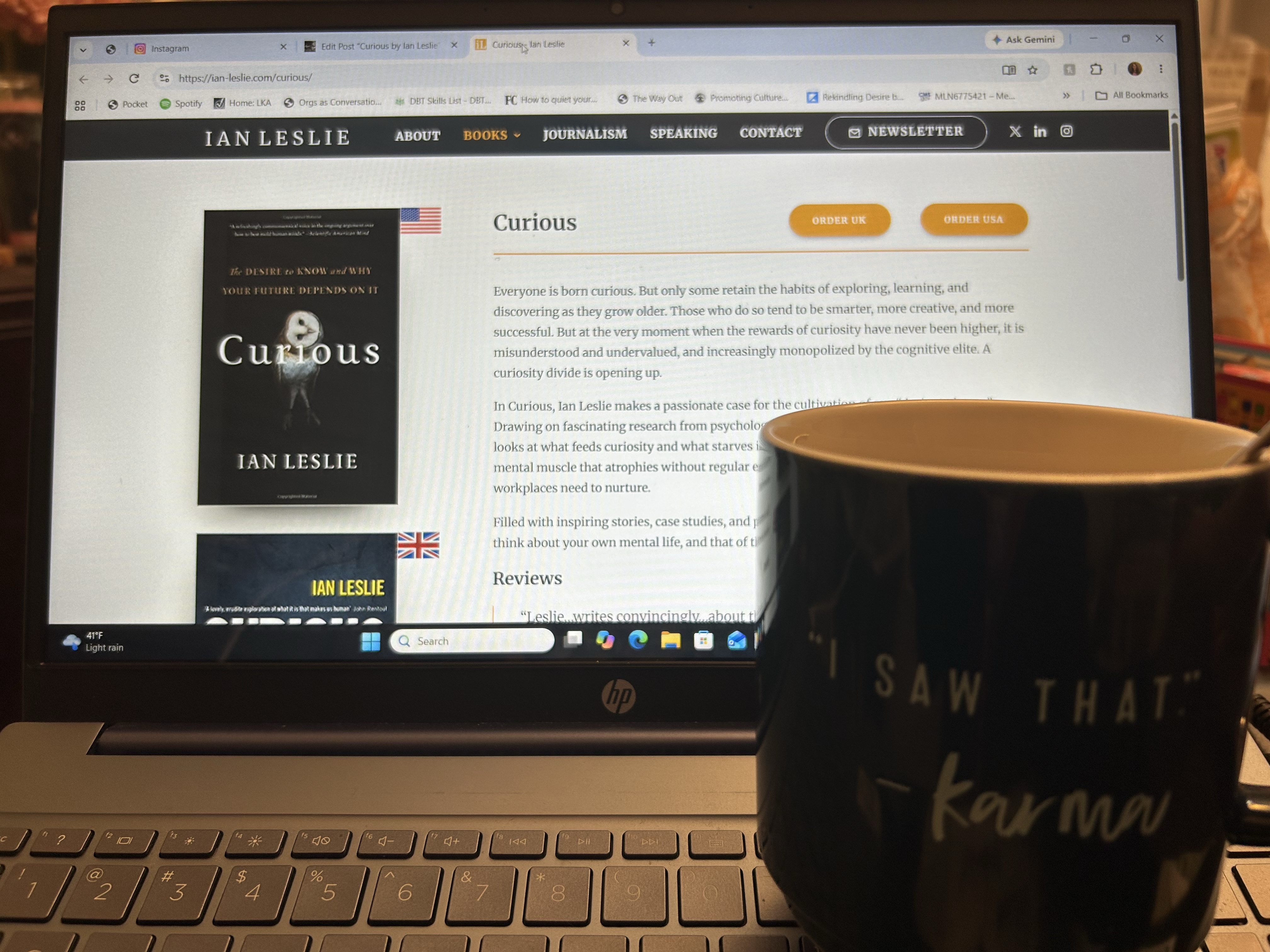
Curious by Ian Leslie

Could the antidote to burnout be curiosity?

I had the privilege this week of presenting a wellness talk to the first year physician assistant students at Northwestern. I have given some version of this presentation to medical students, physicians in multiple specialties, various organizations and businesses, and members of federal and state judiciaries over the past decade or so. It would get so boring if I weren’t continuously learning about wellness–what it means and how to approach it–in all domains of life. The best talks are the most interactive because the learning is mutual, thus in-person, small audiences are my favorite.

This time, the talk was about 20% lecture, 80% query and exchange. What do these students already know, and why not start from there? I asked everybody to sit at the front and forewent the microphone. How many had prior jobs and lives before starting PA school? Who has already experienced burnout and what did/does it feel like? How do they already understand the intersections and mutual influences of sleep, exercise, nutrition, stress management, and relationships? How do they already manage stress well, what are their body signs? How do they structure and maintain their support networks? The students already know the answers to prevention and management of burnout. My job as presenter is to help them recognize this existing knowledge and insight, then fuel and fan their self-efficacy and -empowerment, with some key tips and guideposts along the way, by helping them be more self-curious. I already know how this talk could be better next time, and I may get a chance to present soon to some colleagues in pediatrics.

Last night I wrote about engaging with friends in mutual curiosity and possibility. I love that every day I get to do this with patients, too. J has decided he can retire in the coming year. What will he do after that? No idea, he says, but it has to be something that helps other people, we agree without question. He can move forward with both confidence and conviction, even in utter uncertainty. P has achieved her goal weight on Zepbound and we imagine the possibility of tapering off of the medication in another year or so. What will she need to do it with the least possible anxiety? What supports can we place in her environment to maximize her chances of maintaining healthy eating habits thereafter? How can establishing and strengthening a robust exercise program now help with that transition? B used to love getting ready for Thanksgiving–the planning, crafting, cooking, and gathering. She’s a maker at heart, though life has crowded that part of her into a back room over time. How can she carve out some time and space to honor her inner creative? What could that look like?

All of these conversations beckon patients and me to imagine. Starting with and anchoring to what and how we know and understand our values, priorities, and goals, we can cast ourselves into the unknown in joyful fantasy, led by openness and possibility, nonjudgment and creativity, unfettered by convention or ‘shoulds’. Who knows what great new reality the most outlandish idea could lead to, if we only allow the thought experiment for a moment?

Curiosity is the mindset that saves us, that leads us to the actions, behaviors, and connections that change systems.

“If you want to change the world start with yourself.” We are the system.

Curiosity underlies creativity and collaboration, connection and change.

Is there any problem that does not benefit from a curious mindset? How much better could everything be if we put curiosity ahead of expertise, assumptions, standards, protocols, algorithms, and conventions?
How exciting!

Okay so the book: Curious by Ian Leslie. Highly recommend.
Blurb:
“Everyone is born curious. But only some retain the habits of exploring, learning, and discovering as they grow older. Those who do so tend to be smarter, more creative, and more successful. But at the very moment when the rewards of curiosity have never been higher, it is misunderstood and undervalued, and increasingly monopolized by the cognitive elite. A curiosity divide is opening up.
“In Curious, Ian Leslie makes a passionate case for the cultivation of our “desire to know.” Drawing on fascinating research from psychology, economics, education, and business, Leslie looks at what feeds curiosity and what starves it, and finds surprising answers. Curiosity is a mental muscle that atrophies without regular exercise and a habit that parents, schools, and workplaces need to nurture.
“Filled with inspiring stories, case studies, and practical advice, Curious will change the way you think about your own mental life, and that of those around you.”

Leslie describes three categories of curiosity: diversive (impulse for novelty), epistemic (hunger for knowledge), and empathic (drive to understand and connect with others). OH I just LOVE this! The book takes us from these distinct definitions into how they manifest over a lifespan in education, at work, and in relationships–with self and others. He suggests creative conceptual frameworks and concrete practices to cultivate a more curious, and thus a more interesting and connected, life.

What are you curious about? What will you do with that curiosity today?

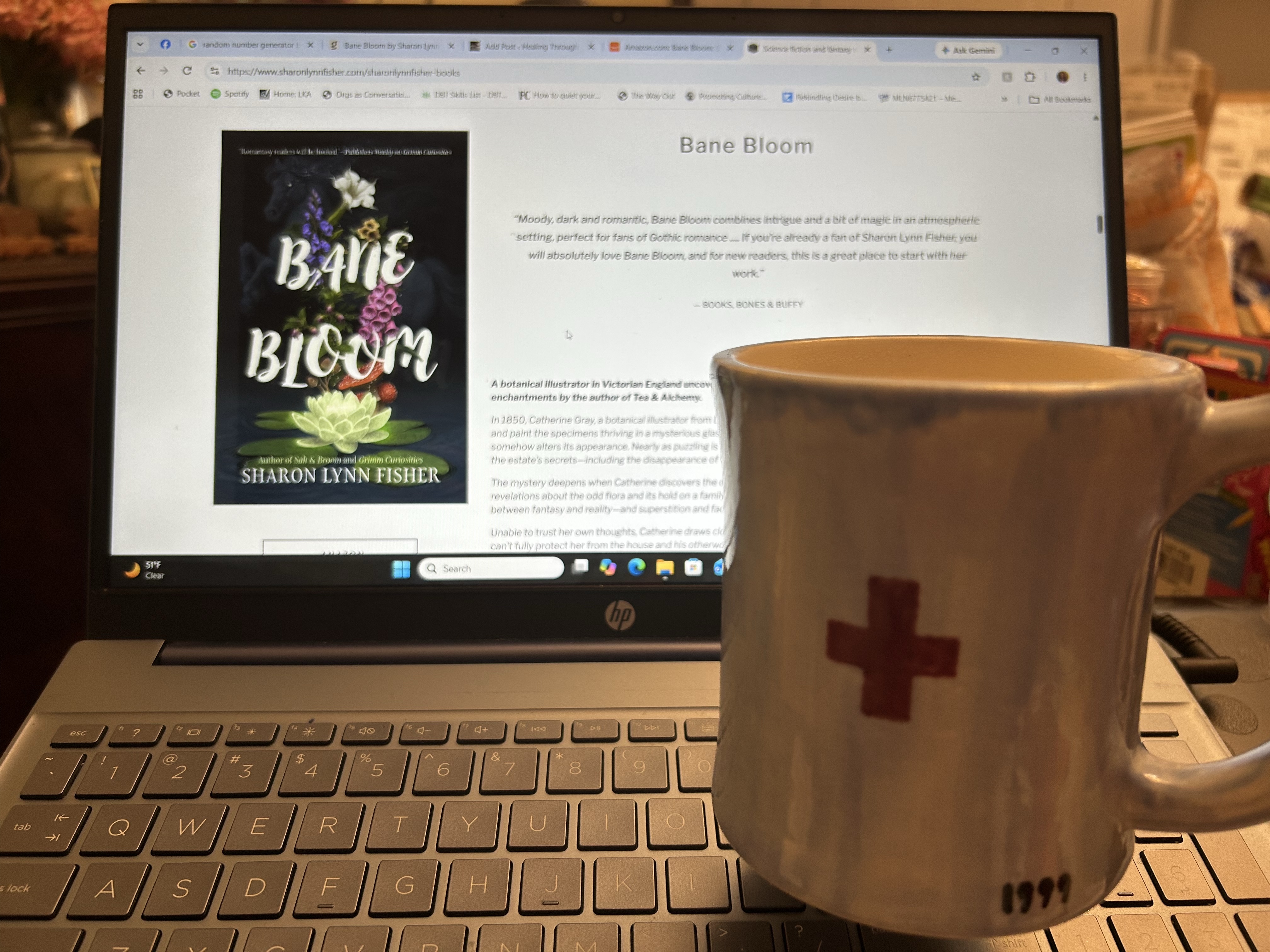
Bane Bloom by Sharon Lynn Fisher

Mug gifted from Sister when I graduated med school, 1999

Thanks to the Google random number generator, tonight you get reflections on Book #95 from the 2026 list: Bane Bloom by Sharon Lynn Fisher.

The blurb:

A botanical illustrator in Victorian England uncovers a country garden’s secrets in a fantastical novel of dark enchantments by the author of Tea & Alchemy.

In 1850, Catherine Gray, a botanical illustrator from London, travels to a remote estate in the Lake District to catalog and paint the specimens thriving in a mysterious glasshouse garden. The most bewildering find is a water lily that somehow alters its appearance. Nearly as puzzling is Thomas Bane, the brooding groundskeeper, who closely guards the estate’s secrets—including the disappearance of Catherine’s predecessor.

The mystery deepens when Catherine discovers the diary of Prudence Bane, Thomas’s late mother, which contains revelations about the odd flora and its hold on a family touched by madness. The more she uncovers, the more the line between fantasy and reality—and superstition and fact—begins to blur.

Unable to trust her own thoughts, Catherine draws closer to Thomas, her only anchor in this strange place. But even he can’t fully protect her from the house and his otherworldly family. Only Catherine can break the Bane family’s cycle of heartbreak…but first she’ll have to confront her own.

My review:

Review of advance copy received from Author
[FIVE STARS]

Typically excellent; highly recommend!
I have only known Sharon Lynn Fisher’s writing since January, when I listened to Tea & Alchemy, because Marisa Calin and Shane East perform it. Since then I have listened to Grimm Curiosities, Salt & Broom, and now Bane Bloom, thanks to an Advance Listener Copy from Sharon herself (thank you, ma’am!). I can now write with authority: Sharon writes the MOST satisfying and engaging slow burn, low spice romances! Catherine, like Sharon’s other heroines, exudes honest, humble smarts and spunk, and follows her intuition to connect with (super)nature. Thomas, not quite tormented but cranky with a heart of gold, could live alone forever, but that soft metal melts eventually, to all our collective delight. This story delivers mystery, intrigue, and real human emotion, with just enough angst to engage for binge without torturing us. Bronwen Price does a loving and beautiful job with the vast majority of the narration, and Will Watt’s deep, warm timbre gives Thomas’s voice something to look forward to. I will soom embark on the rest of Sharon’s backlist–can’t wait!

I have since finished The Absinthe Earl, and will continue with The Raven Lady, Books 1 and 2 of The Faery Rehistory Trilogy.

*Sigh* I might attribute my mild obsession with romantasy in 2026 to the Crowns Trilogy by Nicola Tyche, which I have listened to at least six times in its totality, and the last book alone, War Queen, at least nine, since this time last year. It’s possible that I just wanted to escape reality in this year that began with ICE murdering regular people on the street and sliding into various other atrocities and disgraces with almost no meaningful accountability at the highest levels of US government.

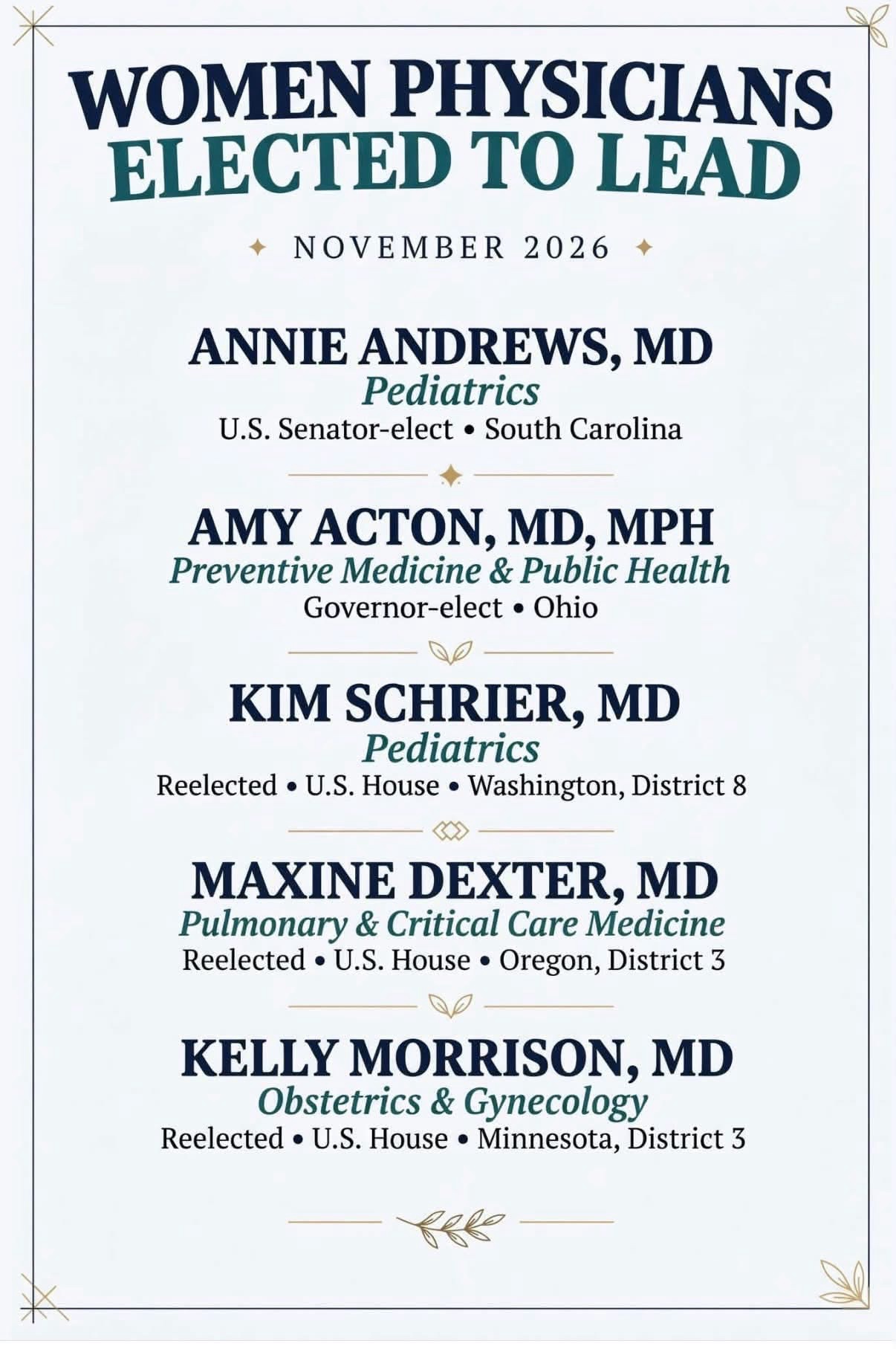
These books highlight the best in humanity (in contrast to the news), wherein characters face mortal threats from outside actors, and must find in both themselves and each other the courageous vulnerability and calm rationality to problem solve and save their communities. The romances bloom from emergent mutual admiration, each hero/ine of the other’s perceptiveness, knowledge, intelligence, and fortitude. They are complementary equals; the heroes respect their heroines above all. That’s true in Crowns also. Maybe that’s what really draws me to these stories, as the current US federal administration dominated by toxic white men all but denigrates women. All the more satisfying that so many women (and women physicians!) were just elected to Congress.

From Facebook, cannot remember source, sorry!
Also according to Google, there are currently 20 physicians serving in the 119th Congress, 4 senators and 16 representatives. They are almost all white, and there is one woman among them.

Last night I wrote about how romance can teach us self-love. Tonight I highlight romances that teach us mutual respect and value intellectual acumen in women and emotional attunement in men. Romance is the best selling book genre year over year, and yet we ignore its significance. Maybe if we paid more attention to these quintessentially human stories, we could treat ourselves and one another better and make the world better for it.