
Oh friends. So much is going on. How are you this week?
When I posted about white male allies last weekend, it was not just because of International Women’s Day. For the past couple of weeks, the romance audio community has roiled in allegations and discovery of unethical and predatory behavior by one individual, a male narrator and producer, against women–authors, narrators, and fans alike. My new friends and people I respect and admire have been triggered, shocked, saddened and enraged, as well as attacked and dismissed for their experiences. It’s all so discouraging, so human. The allegations are numerous and consistent. Some of the person’s defenders are aggressive and do not refrain from ad hominem attacks against those who have spoken out. Comments on all sides have escalated and people are suffering.
This post is not about parsing allegations or judging a perpetrator. It’s an exploration of the complexities of effective allyship. It’s a lot more complicated than my post last week makes out, though the central values and tenets are simple and fundamental.
Messaging with a friend a few days into the controversy, I asked, “Wondering how any male narrators would be willing/able to step up as more visible, direct allies? This is always such a big ask… I would never want them to put their own careers or personal lives in jeopardy from any backlash or get entangled in unproductive arguing… I guess it’s a question we can all ask ourselves—how we can make the most effective positive difference in our own way, given our own circumstances… how much we are willing to risk, etc…”
So, what are the questions to ask when we consider upstanding and allying?
How does this affect me directly? Indirectly?
How do I feel about it?
What do I think about it (because these are different)?
How does this affect people I care about, whom I respect and admire?
How does this affect all of our relationships, professional, personal, financial, and other?
What do I not know?
What do I need and not need to know, to act?
What can I do? What can I do? What can I do?
What am I willing to do?
What would I be trying to accomplish?
Do I have the bandwidth/reserve/resources?
What is my role here?
What will it cost me?
What will I be risking?
What is the worst-case scenario if I act or don’t, and how likely is it to occur?
What would that be like, could I handle it?
What are the consequences for others if I act or not; could I cause unintended harm?
What core values of mine, of the community, are violated here?
How can I best uphold and live into those values in this context?
What other questions do I need to ask?
Not all the questions above can be answered quickly or completely. Emotional overload can lead to knee-jerk reactions and do more harm than good, increasing the likelihood of regret and damaged relationships in an already fraught situation. The way forward is often unclear at first. So we must slow down, think things through. In the interim, silence may come across as indifference. Anything said or done, or not, may be criticized; no response is 100% ‘safe.’ Each of us handles stress and conflict differently. We must remember not to judge one another about how we engage–there are many ways to upstand, each partially ‘right’, and also likely incomplete.
Allyship carries cost. The first costs of thoughtful, intentional allyship are emotional and mental.
The next costs are relational, and then reputational, financial, professional–myriad. The more visible we are, the greater the potential risks of taking a stand, staking a position. If we hold a designated or implicit leadership role in the community (and I would argue that we all/each lead in some way, know it, like it, want it or not), our choices and their potential consequences are that much more complex. For someone whose livelihood depends on maintaining relationships despite conflict, costs can be high in multiple ways. Choosing between one’s ethics and paying the bills never feels good, and we never know when someone may be in that situation. We must all decide for ourselves, in real time, the risks and costs we can bear. Not everyone stands in a position to decline work or dissent safely. Conscience and context often conflict. We each make our own decisions, and in the end, we must live with ourselves—our choices, our relationships, our regrets. Judging others for doing differently from us serves no useful purpose.
Some have asked, “Do I have a right to speak here? Is it my place to say anything?” What if the problem doesn’t involve or affect me directly? What if I’m just butting in? I wonder if this is the question that distinguishes an upstander from a bystander?
The list of questions above, considered thoughtfully and with core values in front, can guide us to the words and actions that feel most honest, authentic, grounded, and appropriate. In my mind it all comes back to relationship. As an ally my job, my role, and my ultimate objective is to uplift and uphold my loved ones in distress. Allyship, to me, means showing up with openness, empathy, compassion, kindness, and respect. It means validating someone’s emotions and experience, regardless of my opinions about the situation. It does not mean prosecuting without evidence or attacking on someone’s behalf. In the short term, real allies breathe, hold space, and stand in solidarity. There is a closeness, an intimate proximity that includes eye contact, erect posture, and a deep, resonant presence. I’m here for you. I see you. I’m in this with you. Even if we are not physically together, true allyship can be felt this way across great distances. In the long term, allies work for systems changes that benefit us all. If we start here, tapping into our capacity for deep Agape love, then the words and actions are more likely to come from a place of real connection. As fellow humans, I think we do have this right, and it is our place. We are called to care for one another.
You are not alone.
I see you.
I stand with you.
We are stronger together.
Costs of allyship are real. When we bear them together, the more of us upstanding in concert, we each pay a little less. We all benefit. Allyship is leadership with presence, openness, groundedness, kindness, and love. It shows up as integrity, accountability, and respect.
Practice giving grace. We are all humans, here doing our best. We all fail. Forgiveness and accountability are not mutually exclusive.
I know this post is already long, so I appreciate that you’re still reading. There is more! I write to clarify and document my own thoughts and opinions, to record my own process, so I may look back and see what progress I might make. If any of it resonates with you, dear reader, then that gratifies me.
Compassionate Accountability
I believe the people who have spoken out. I believe they were manipulated, taken advantage of, and harmed. I do not believe, however, that the person they accuse is evil, or in any way deserves to be threatened, dehumanized, attacked, or harmed himself, in any way. He is human, just like the rest of us. One of my core assumptions about humanity is that we are all here doing our best. So how is it that some people’s best is so hurtful to others? How are humans so loving and so scary, so constructive and destructive at the same time? It’s too big a question to answer; we can only live it, as Rilke says.
As some have pointed out in the past week, ‘hurt people hurt people’. I believe this, as it often explains so much. As a fundamental perspective, this default stance in the face of harmful human behavior holds our minds open to empathy, compassion, and forgiveness, which are what heal us, perpetrators and victims alike. We are all the amalgamation of our past experiences and those of our families of origin, traumas included, over generations. We all have our triggers and reaction patterns, established early and evolved over a lifetime. Severely dysfunctional behavior patterns root deeply, and the inner work required to modify or moderate them is arduous. I can hardly imagine how anyone could do it alone—heal and overcome, learn to lead with love and vulnerability—this is not do-it-yourself stuff, my friends. And yet one of the first things we do to hurt people who hurt people is isolate them. We judge, shame, dehumanize, and ostracize them, among other things. How could that possibly help stop them from hurting more, both themselves and others?
This is not to say that aggressors should not be held accountable for their actions and harms. Accusations and evidence must be aggregated and assessed objectively, thoughtfully, and in context. “Innocent until proven guilty” is another useful premise from which to proceed. Easier said than done, though, no? How many allegations does it take for accusers to be believed, for any of us to act on their behalf, to upstand, defend, and advocate? And what actions do we take?
Once again, I go back to the list of questions above. I need to be still, sit quietly, and settle into my own inner knowing. After tending to the affected, how do we address the alleged perpetrator? Separation and protection of victims from additional potential harm comes to mind first. But here is where we must beware of that fundamentally high-risk divergence—encircling victims in love and compassion, and basically throwing away alleged offenders—ejecting them from the tribe, irrevocably, physically and socially. The latter, while immediately gratifying, is counterproductive in the long run. In the end, some felons forfeit their right to live freely among us. Even then, however, their right to be treated humanely and with dignity is still innate and should be held intact.
Imagine confronting the accused calmly, kindly, and compassionately, and also firmly, calling forth their better nature to own their actions and the consequences thereof. Picture having fortitude and magnanimity, enough inner peace ourselves, to stoically withstand their defensive backlash, however vehement, grounded in solidarity and allyship not only with their victims, but with the part of themselves that also hurts. When I think about this, about the magnitude and depth of pain on all sides, the immensity of it all feels almost intolerable. No wonder we short circuit to ad hominem and violence. The overwhelming distress and anguish of holding others’ pain as well as our own, of being with all the darkness, wading into the depths—this is a cave of emotional and mental stress that few of us are experienced or trained to navigate. And yet, I think it is where we must go, a journey we must take, to get past the oversimplified, binary, save the victim/punish the villain dichotomy. I know some who have the skills, who embody this ethos of messy shared humanity, and who can teach and lead us, by example more than anything.
Hurt people hurt people. How can we help one another hurt less?
What does true allyship really mean, and how can we each and all achieve it? For me it is both acute and chronic, simple and so complex: It is about universal love. In each new situation when people are hurting, I can take it slowly, ODOMOBaaT–one day, one moment, one breath at a time–to determine how my allyship manifests best, appropriate for context and aligned with my values.
This narrator/producer controversy feels like an earthquake in the romance community. Or maybe a typhoon? Some felt the tremors, saw the cloud formations long before anybody else. Now it has hit, everything is shaken, and lives are altered. Here in the immediate aftershocks, we must take care of the wounded. First responders have mobilized, and some can only yet self-protect. We all must take care of ourselves first. Next, we sift through the rubble. Everyone is affected, though differently; our losses are unique as well as shared: relationships, valued possessions, assumptions of safety, trust, and connection. Emotions spiral, opinions fly, conflict escalates. The more deeply we can breathe, the more slowly we can speak and act, the better we will all be in the long run. With time, clearer, less loaded assessments may occur. Systems, guidelines, recourse can be revised for better transparency, accountability, and equity. Here we risk overcorrection, a hyperreactive response, all well-intentioned, and also counterproductive. Crises will inevitably recur, and the cycles persist. Alas, that is how we humans do. How wildly imperfect and eternally exhausting.
How else can we go but slowly, one step at a time, and together?
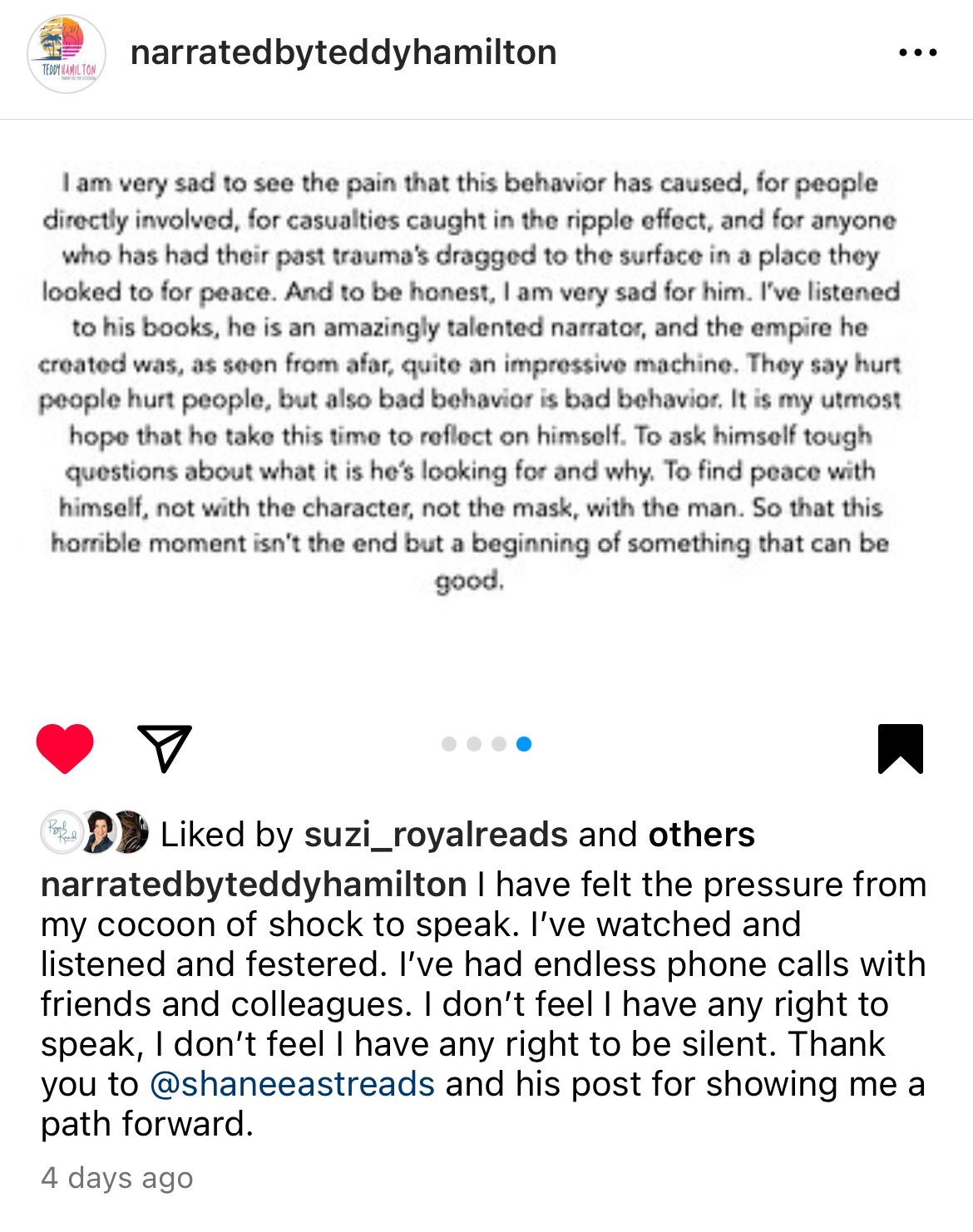
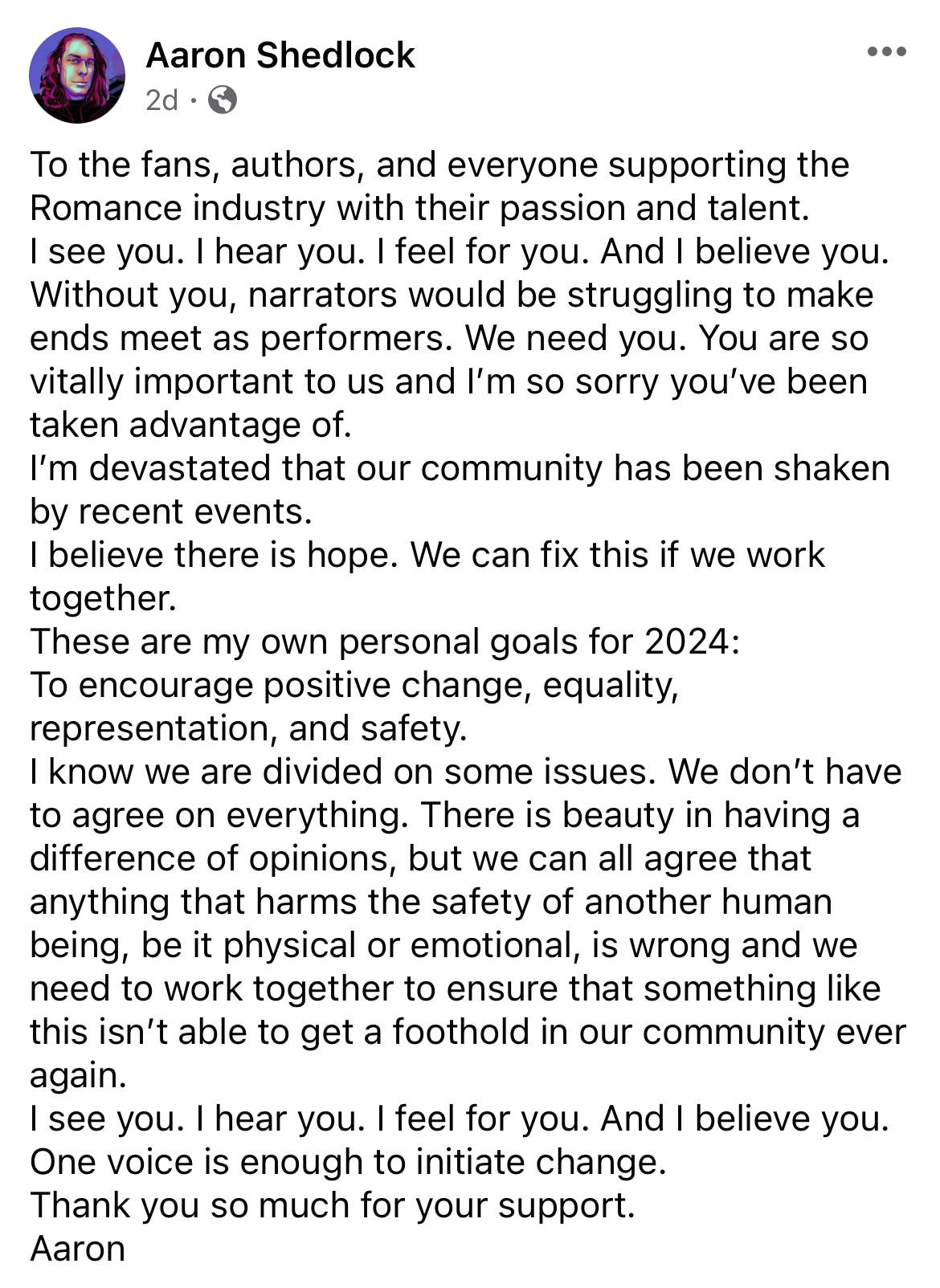
I have included below some ally statements that I admire. Please help me hold the romance audio community in peace and light. And wherever you are, whatever you’re doing, whomever you’re with, I wish you what you need to stand up on behalf of those you can help.
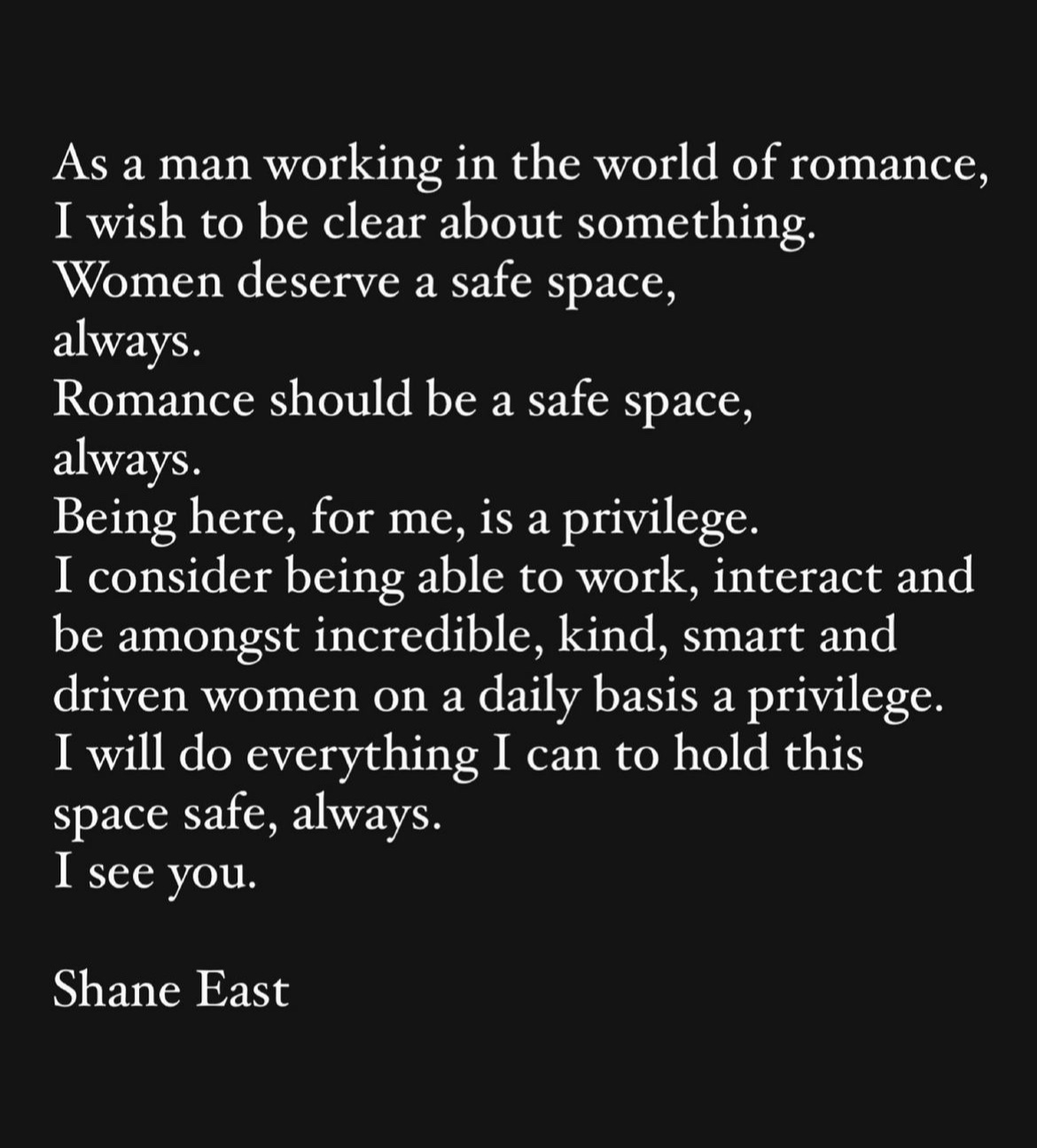

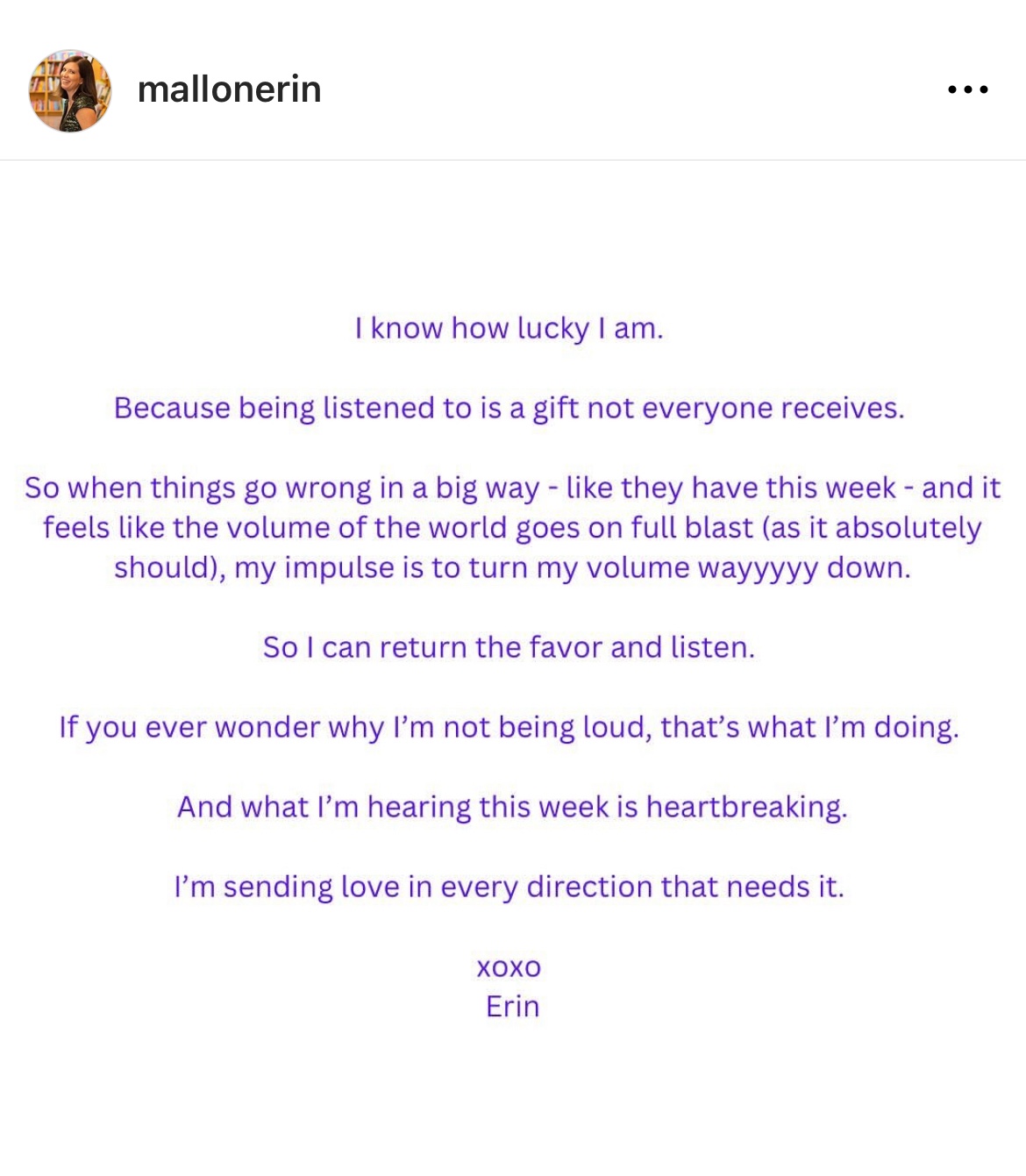

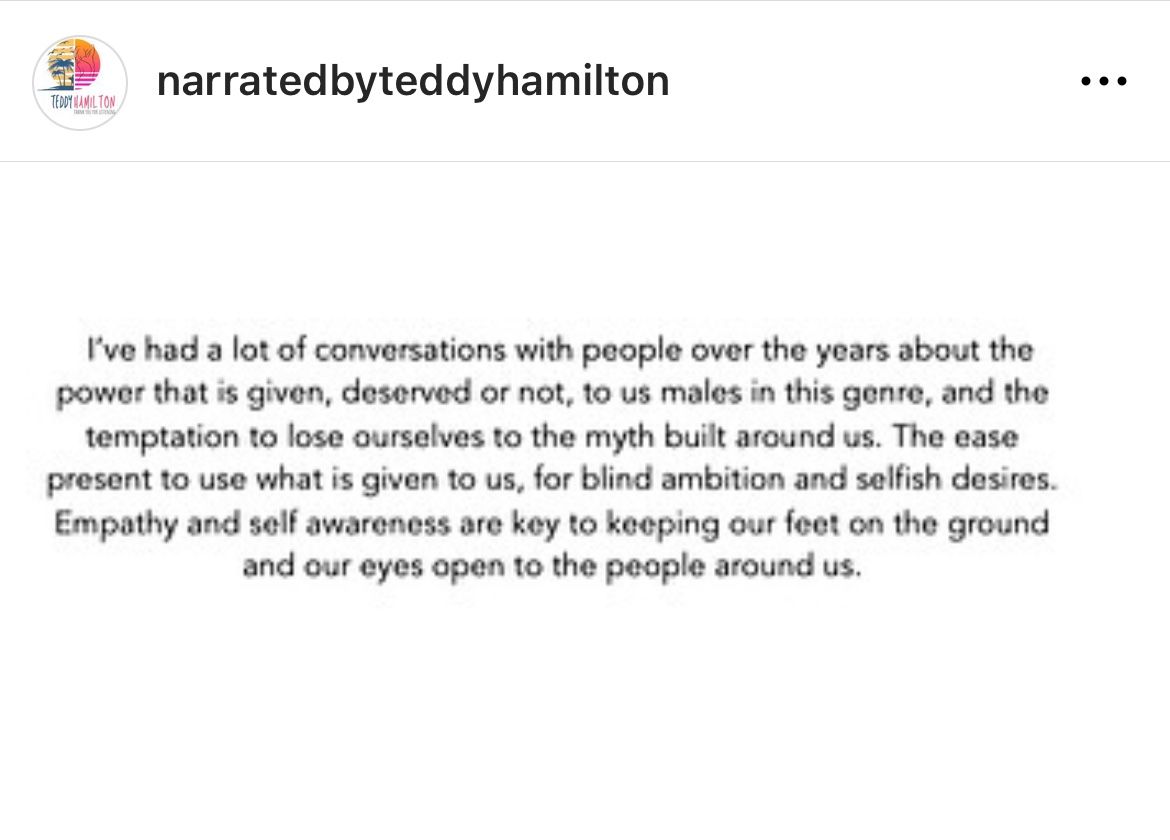



Watch Andi Arndt’s full video here; listen to her describe so adeptly the responsibility of artists who use psuedonyms.
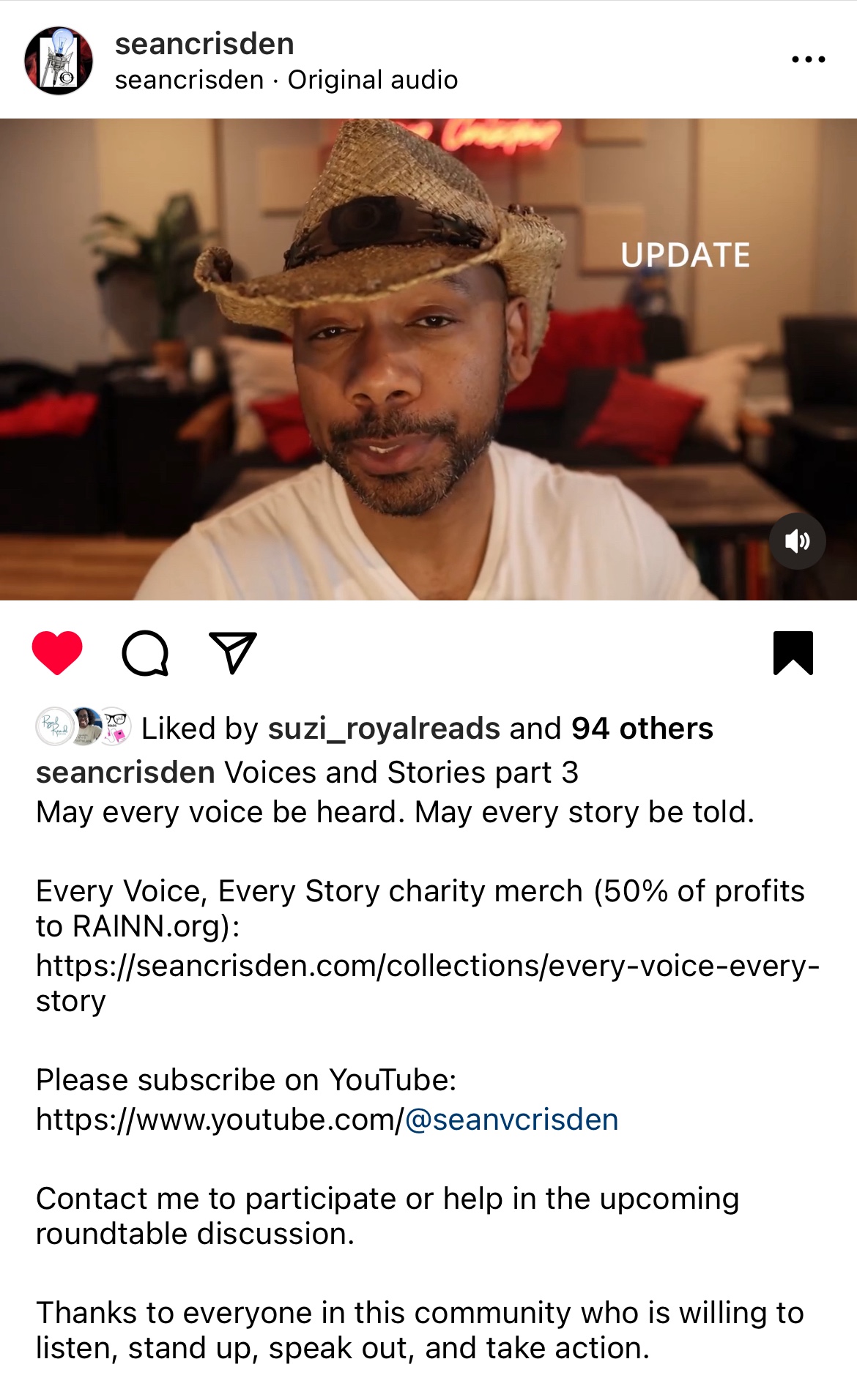
Watch Sean Crisden’s Instagram video here; subscribe to his YouTube channel here. He is preparing a round table discussion, which he specifically states is meant to include a divergence of perspectives. I will try to participate in that.

Watch this heartfelt video by author Cheri Champagne, describing how she is affected by the narrator/producer’s actions, as well as by the backlash against him and his company. The ripples reach far and wide. Thankfully, the community is rallying and hopefully all affected can come through with the least possible damage and trauma.


 Healing Through Connection