Friend and I recently bonded over the challenge of disconnecting from work when we go on vacation. It took going overseas for me to finally feel mostly (not totally) guilt-free deferring all urgent patient care, temporarily, to a colleague. Friend also went abroad for spring break, yet he still logged onto work email for 30 minutes every day (was it really only 30 minutes, I wonder?). As a high-level organizational leader, and thus a gatekeeping decision maker, “things stop for a week if I go away, and I hate that idea, that I’m the [rate limiting step of the org’s operations].”
I get that. Maybe it’s different from medicine. It’s more work to cover another doc, no question. We answer calls from patients we don’t know, often prompted to sift through a tangled morass of electronic medical records that now often includes documents from multiple facilities across the country. We don’t readily know the patient’s current health status, communication preferences, or personality quirks. But in the end, we can all take care of the patient. And in a week or two, we hand them back off to their primary care doc, hopefully with questions answered and problems resolved (‘tucked in’), or at least an appropriate care plan well underway. Because of this, many of us ‘cover ourselves’ when we go away, especially if it’s a short time, like a holiday weekend. So over a year, my patients maybe have to live without my immediate, personal assistance a total of three or four weeks. We docs trade off, and it feels fair and manageable. I asked my friend if no one could cover him similarly, be available in a pinch so he can relax with his family? Yes, he answered without hesitation, it’d be easy. What would it cost him and the workplace, I asked. “Nothing.” And yet he has never done it; not really even considered it, maybe? We were walking, and I stopped suddenly, stymied in surprise and empathy.
How fascinating.
In our thinking brains we know what to do and how to do it—to make it safe and seamless to get away. Logical calculations tell us that disconnecting from work for a little while is low risk for organizational operations. Our colleagues are more than capable of handling things in our absence; the place and its people will not actually grind to a screeching halt. And yet the social pressure of staying connected, of never putting down the yoke of work, even for a little while, looms heavy and thick. “The graveyards are full of indispensable men,” Charles de Gaulle said. And it’s not that we think ourselves truly indispensable—it’s not arrogance. It feels, at least in part, more like a fear of being seen as a slacker, a freeloader, not pulling our weight. Most concretely, it can cost precious time, attention, and connection with our loved ones. And it’s not just on vacation. Our 24/7 work lives invade our homes, stealing us from our children so insidiously that we don’t even notice. But because home is where we feel safe and un(less)conditionally loved, it’s much easier to withdraw from that account to pay work.
Beyond that, what are the myriad costs to those we lead, and thus to our organizations, and our society as a whole? When my direct reports see me sending emails at midnight on Saturday, what example and expectations do I set? Even if I write explicitly that I do not expect a response outside of business hours, the implicit message is the opposite. I lead by example, like it or not. “Do what I say, not what I do,” fails just as surely at work as it does at home. This is how the status quo of burnout and disengagement, even (especially?) among the most passionate and well-intentioned workers, perpetuates. What a vicious cycle, I say, all of us trying so hard to prove our worth every day, not trusting that our value is seen and appreciated just by virtue of our contributions and relationships.
And whose job is it to break the cycle, to reshape this flawed culture of relentless, imbalanced, and unhealthy self-sacrifice? I think it’s the leaders’, first and foremost. It’s so much easier said than done, and it cannot depend solely on one person in any given place. Culture is self-organizing and perpetuated through the mundane, momentary, miliary interactions between all of its members. So we all matter—we contribute—in the big picture. But I am convinced that no significant change occurs without direct influence from those at the hierarchical apex. Thus, I commit to doing my best to support, encourage, and advocate to leaders themselves and on their behalf, one person, one vacay, one interaction at a time. We will all be better for it, co-creating a world where we can all rest sometimes, taking turns pulling the cart. The immediate social costs of bucking the system can be borne more easily the more of us support one another in the effort. The current status quo already costs us productivity, morale, and lives, literally.
At the ends of our lives, will our work rewards have been worth all that we paid?
“I see you.” “This is what you mean to me.” “This is what I wish for you.”
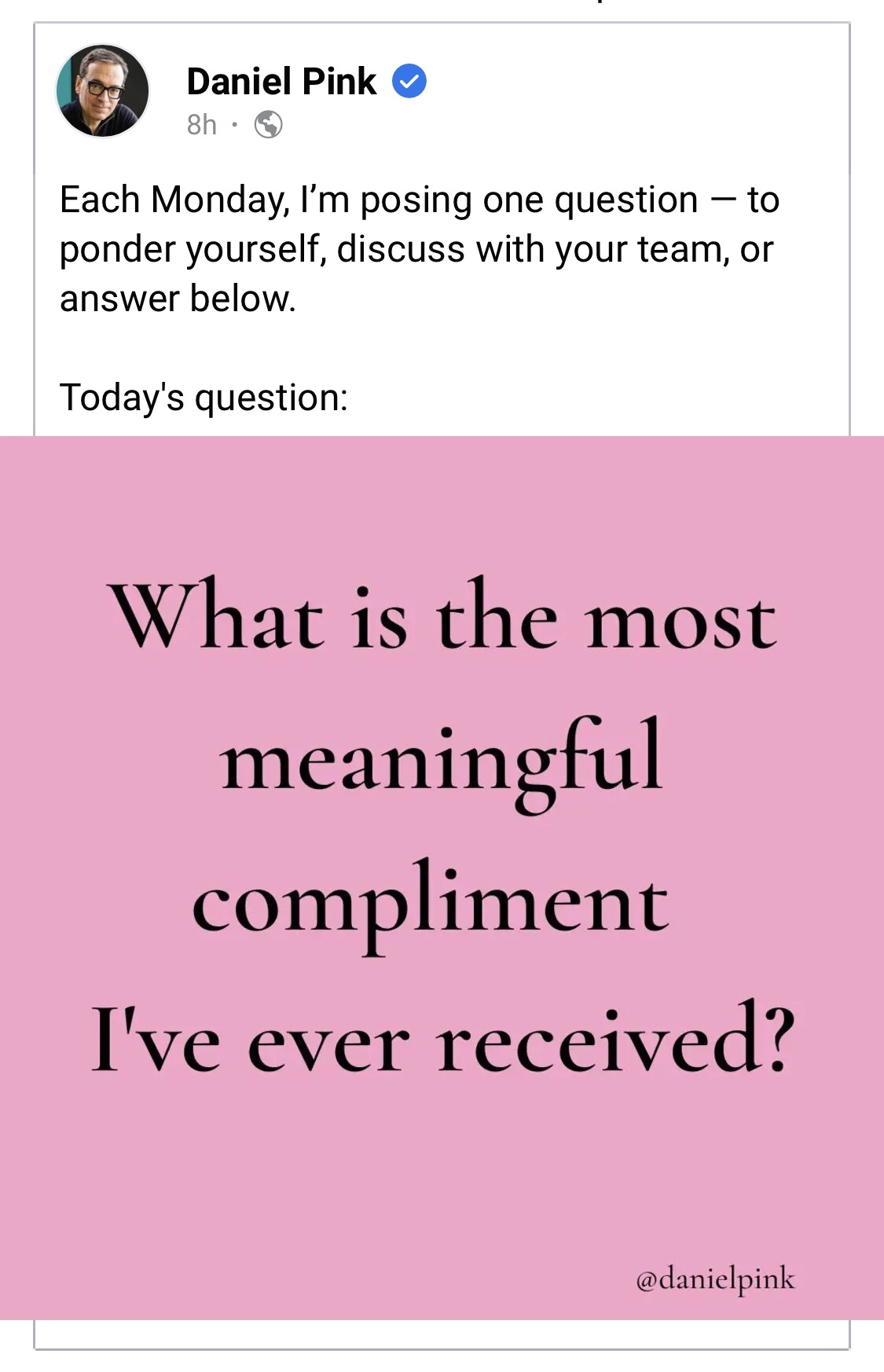
It started last week with this post on Facebook:
“I feel safe opening up to you… You’re like my therapist.” “You express my thoughts better than I can.” “100% hell yes! Thank you for picking up on that!” “That’s a really good question.” “You make me want to be a better person.”
I thought of the last one first, as that may be the most meaningful compliment I’ve ever received. Both the compliment and the person who gave it mean so much to me. I took a few minutes to think of other meaningful compliments, ones that stick with me through the years, that hold me up. From the examples above, a pattern emerged: They make me feel the most seen. My highest goal in any encounter, and certainly in all ongoing personal and professional relationships, is to connect–the more deeply, the better. When you express that you feel seen by me, then I have succeeded. I feel reciprocally seen by you and it nourishes me, tightens our bond, and keeps me engaged, continuing to honor this core value in all encounters and relationships, despite obstacles, setbacks, and cultural messages of relational futility. It is the ultimate virtuous cycle.
These expressions are not just compliments. They are feedback to be processed, integrated, and then manifested, evoking more cycles, all on my iterative and adventurous journey toward my best self.
Ozan Varol may be one of my favorite people. This is my 24th post that references him or his work. I respect and admire his growth mindset, humble confidence (which I think is slightly different from confident humility), and commitment to relationship. Even as his following grows ever larger and faster, he still replies to all of my emails (I try to keep them concise and relevant).
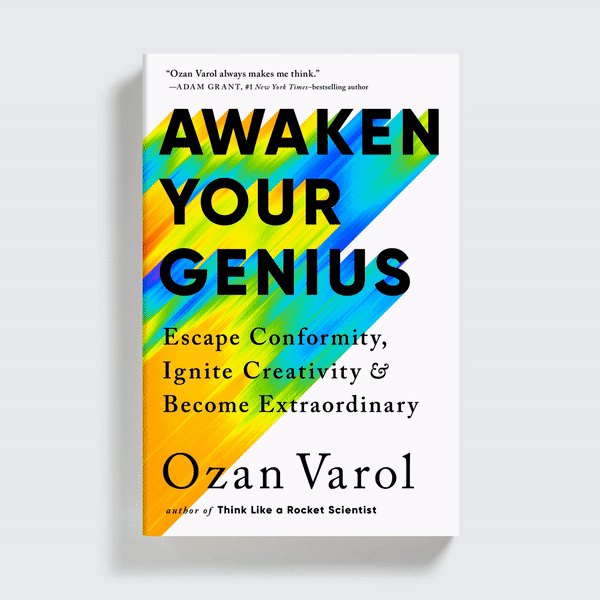
Ozan’s second book, Awaken Your Genius, is out today, wooo hoooooo! It was the first book I ever read on my phone, an advance copy, and I loved every ‘page’. What he offers: “You’ll learn how to discard what no longer serves you and discover your first principles—the qualities that make up your genius. You’ll be equipped to escape your intellectual prisons and generate original insights from your own depths. You’ll discover how to look where others don’t look and see what others don’t see. You’ll give birth to your genius—the universe-denter you were meant to be.” What I got, and will reread to get again and again as needed: Reassurance, validation, confidence, comfort, and moral support. I wrote him a long email listing what it all means to me, and what I especially appreciate about his work. In particular, “I hear you in my head as I read and it feels more informal, more fun and casual, and also no less credible and earnest than the Ozan I know. Did you feel like you were writing *even more as yourself* this time than last? It feels that way to me.” He replied, “100% hell yes!” (see above), that that is exactly what he has been telling people, and it was the best thing I read all day.
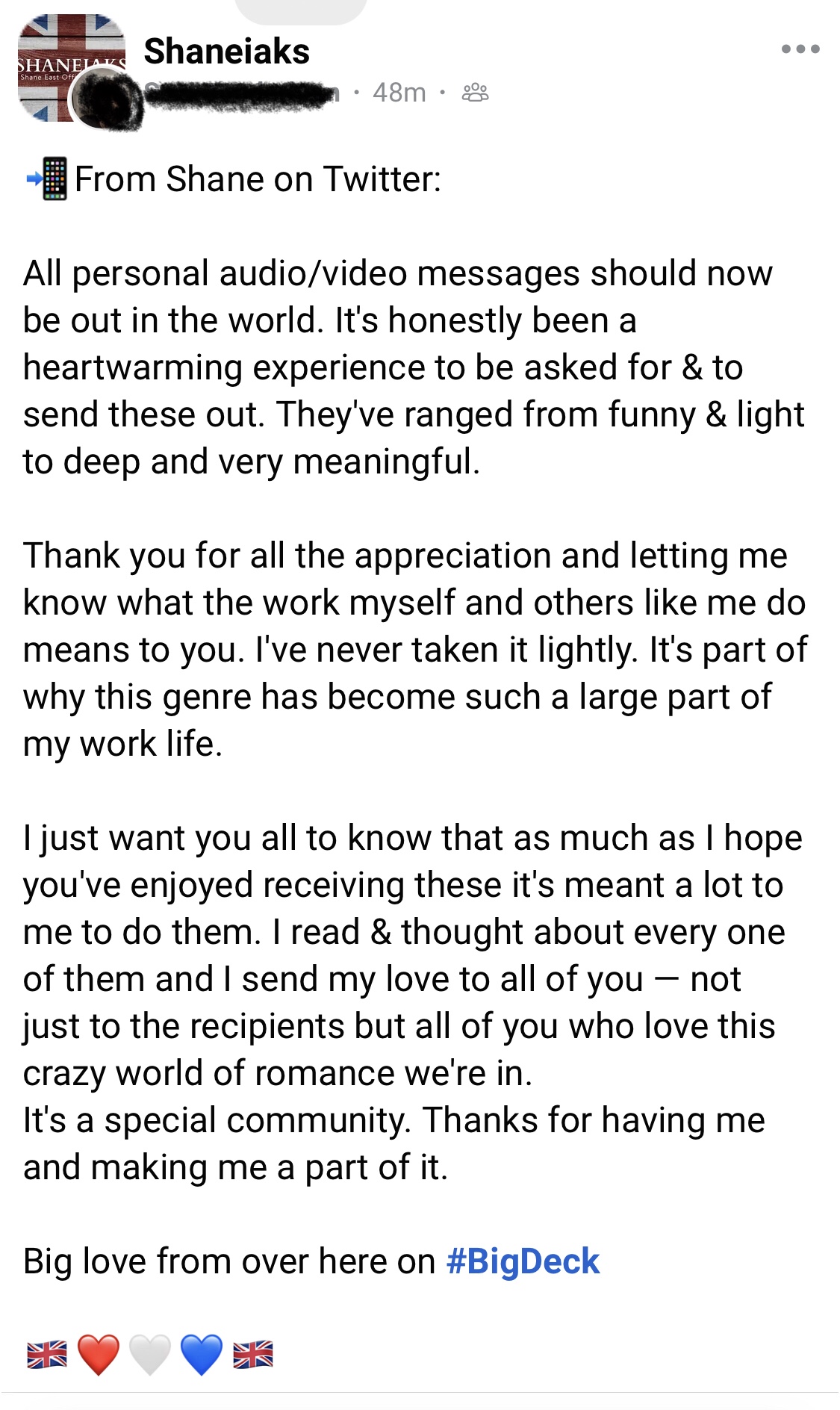
Friends, I am still binging romance audiobooks. Shane East is still my favorite narrator, and I found his fan group on Facebook, OMG! 😀 What a fun, open, and loving community! Last month Shane offered to send personalized audio and video messages to fans. I ordered one for Friend, to whom I introduced the genre and Shane’s work some months ago. She bought me his cafe mug when I would not splurge on it for myself, and I thought she’d like a little uplift recording from Our Gentleman, as we Shaneiaks call him. Then I decided to get myself a message for my 50th birthday. In my written request, I summarized what these books have meant to me as a middle aged, perimenopausal, physician mom of a college freshman and a high schooler, and a brand new consumer of romance novels.
I listed my favorite novels and the patterns I saw emerging among them: “–The heroes are protective of the heroines–I am the eldest of 3 girls and have always wished for a big brother, or someone to be protective of me… “–Many of the heroes have strong relationships with family, maternal figures in particular… I think there is something in there about core values, loyalty, and secure attachments that I find really comforting in these novels… And maybe I relate to the mom characters, too, since my only son just moved 1700 miles away? “–The romantic relationships are often unconventional. They validate my desire to question and challenge social norms that stifle the wide diversity of human relational needs, including sexual ones, and how they may evolve over a lifetime. These novels help me stay out of the ‘shoulds’ and recognize that health and happiness in any given relationship are defined by the people in it, much more than society’s gaze on them. “Finally, I really value how romance novels help me understand myself and my own relationships better, all while letting me escape and live vicariously…”
The descriptions flowed out of me spontaneously, and I felt relieved having articulated it all. I had to think at the end about what I wished for him to say in the recording, finally landing on this request: “Shane, maybe your message to me can just be a personal response to this? I would love to hear how you feel, knowing this about a (listener), knowing how your work resonates with someone so personally, knowing that your voice and your characters hold someone up through their own personal challenges and inner work? You are a celebrity, someone I am unlikely to ever know personally, and yet you occupy an important and unique place in my life experience. How does that feel for you? Thank you for what you do!”
Audio messages dropped this past weekend, and Friend and I were both floored at their utter realness, the easy and loving way he responded to my requests (I ended up purchasing a second one for myself, a reading of one of my favorite writings since high school, Desiderata by Max Ehrmann). He expressed what he wrote in his tweet, saying how meaningful his work is because of the feedback he gets regularly about its impact on his audience. He addressed my personal reflections with compassion, humor, and personal anecdotes of his own. Once again, I felt seen. On top of that, I actually felt loved–not in a romantic groupie-rock star way, but rather in the way I understand agape love–in shared humanity and a deep desire for us all to thrive, manifesting in our work and relationships. As I sat with the feeling, absorbing, soaking, basking in the warmth, all I wanted was for that sense to be visited back on Shane tenfold–for him to be happy and well, surrounded by love. So I wrote a message on his website telling him so. I bet his server is on the verge of collapse from all the feels via email.
The most meaningful feedback: I see you. This is what you mean to me. This is what I wish for you.
How many different ways can we gift this to one another today?
This is the 520th post on Healing Through Connection, which turns 8 years old this month. I dedicate this piece to Son and Daughter– 哥 Ge (“guh” older brother) and 妹 Mei (younger sister)–a long essay of love.
Since returning from spring break two weeks ago, I’m in super-sponge mode. I’ve consumed about 12 new books in 22 days, and listened again to 4 favorite romances. I now read ebooks on my phone, which is much more tolerable than I anticipated. I scour the internet for anything that piques my interest, personal and professional–did you know that plants ‘cry’ when they get dehydrated, and animals may be able to hear it? And though my mind bursts with important and meaningful (to me) blog ideas, something blocks me from writing anything coherent or worth posting… Until now.
520. If I die after hitting ‘Publish’ on this post, that’s 10 years of weekly posts that 哥 and 妹 will have to read, to keep me in their minds’ ears, however they want and need. I don’t plan to die anytime soon, and yet none of us can really control that, can we? I wonder why mortality occupies my consciousness lately? It’s not heavy or looming, just a friendly existential companion that sidled up recently, maybe organically, as I enter some pretty profound life transitions–menopause, 哥 going to college… Suddenly, with this blog milestone, all those nebulous writing ideas click into place and call to be compiled into one message–a consolidation, a marker. So, onward:
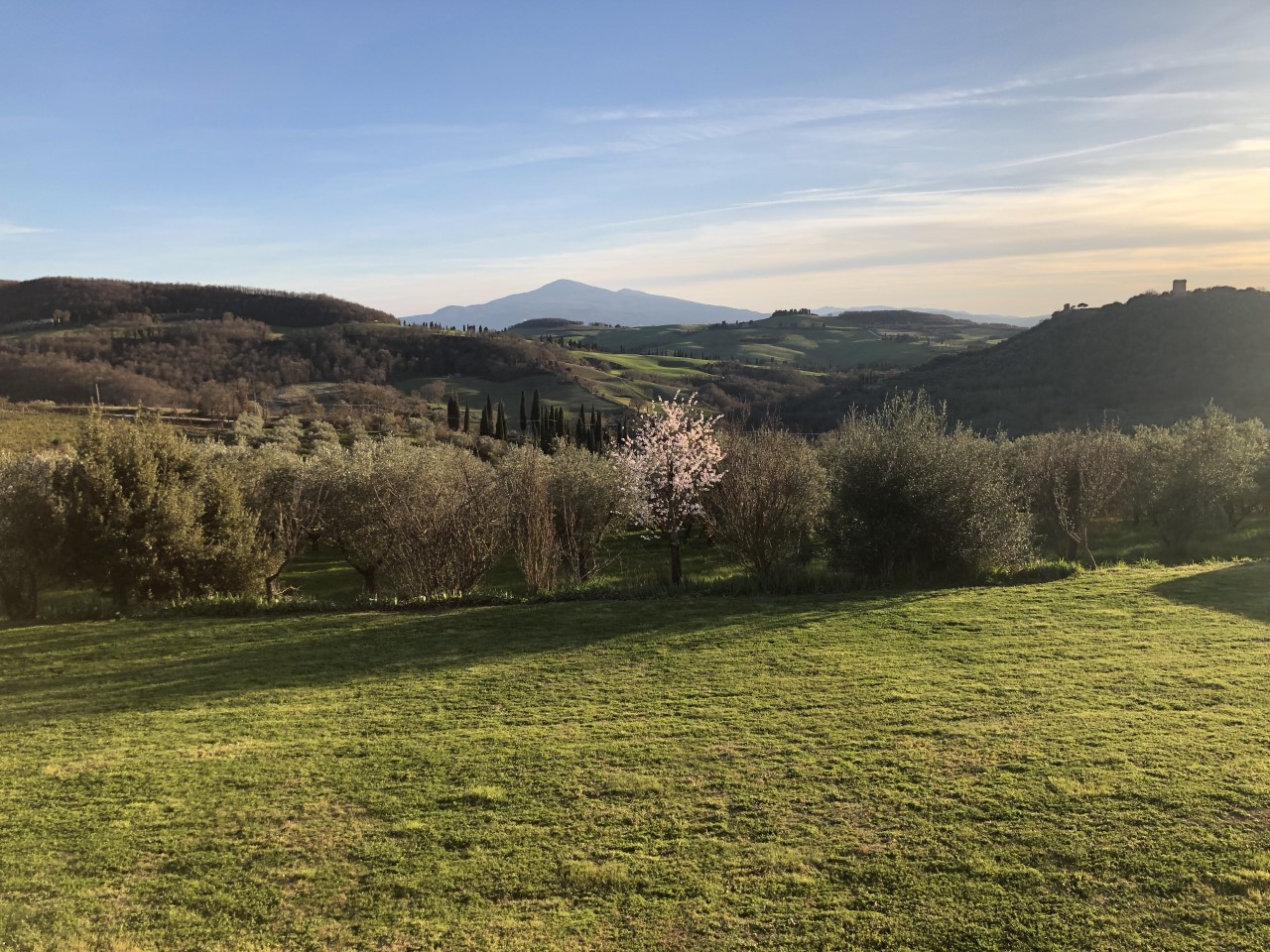
Terre di Nano, Montecchiello, Italy
Inclusion
We went to Italy for spring break and a family wedding. 妹 has anaphylactic food allergies, making it extremely high risk–potentially life threatening–to eat out. Suffice it to say our food world has narrowed over the years, trading much freedom for safety, and few families can fully grasp the repercussions. My anticipatory stress around international travel eating weighed heavily, to the point of new physical symptoms and insomnia. We were both traumatized by an allergic reaction on the morning of Day 1 in Rome, but managed to get through without any major incidents the remaining 8 days, finding grocery stores for packaged foods and fresh fruit, and McDonald’s (what a mindf*ck that that is the only place around the world where we know she can reliably eat safely?). Throughout the trip, I held a solidarity mindset. As much as possible we stuck together, fueling strategically and avoiding situations where food limitations attracted unwanted attention or hindered our movement. I was hypervigilant, balancing nutrition, safety, autonomy, and enjoyment as best I could.
Niece, the bride, understands. Her child also has allergies, and she made heroic efforts to make sure meals at the wedding venue in Tuscany would be safe for 妹. There are not enough words to express my gratitude. Even so, I was beside myself with anxiety at the welcome dinner. Even after I spoke to the amazingly patient chef, who told me he would make her pizza himself, and served it first, before any others were made, I could not relax until the meal ended without incident. The night of the wedding, I watched from another table as 妹 ate her special menu (without fanfare or glitch), talking animatedly with her cousins and truly enjoying herself. But it wasn’t until brunch the next day that it really hit me. Niece and I had not spoken about that meal, and 妹 and I thought she would simply eat the food we had brought. But Chef had prepared a special bowl of pasta–by now we knew we could trust him and his whole team. When I saw her drop our food and dig in, her posture and expression looking as if she had not eaten in days, I almost cried. In 9 days of travel, these three meals were the only times she could really be with everybody, doing what everybody else was doing, participating. On this, the third day at the wedding venue, where the kitchen team had made accommodations that we had never experienced anywhere else, she finally knew she could eat freely, sure that it was truly safe. This is what inclusion feels like, I thought. I now have a new depth of understanding and perspective: I felt viscerally that we were loved, that she mattered, even though she was just one of us, and that is the difference.
Empathy
Dear Friend and I caught up on the phone for the first time since before my trip. We had so much to share, as her legal morass evolves and I continue to process Italy. Looking back, I see and feel the long and rocky road she has travelled these many years, and now finally, she approaches the mouth of a dark and oppressive cave. “This is a big fucking deal,” I kept saying, recounting our past conversations, my observations and reflections of her trials all this time. I could hear her get tearful at feeling seen. After describing my trip, including the frantic search for an emergency room and figuring out how to get English speaking medical services in Rome (thankfully we needed neither), Friend could feel my anxiety and stress–for the first time, even though she has known about my kids’ allergies for years. I could hear her new and stark realization–it’s amazing what we can communicate just with our voices.
True empathy occurs in layers. We can understand some feelings and experiences intellectually, thinking through a hypothetical situation, without really empathizing. It’s not until we can relate to someone’s emotional experience, to fully imagine what it feels like to be them, that we can truly stand in solidarity with them. It hit me, took me by surprise, this time by watching, seeing 妹’s body language. But most often I think it comes from listening–deep, attentive, quiet, and selfless listening. Hearing someone’s story, drawing it out more fully with truly open, honest, and loving questions, withholding our own assumptions, judgments, and biases–this is how we connect most meaningfully and hold one another up.
Reading also helps. I read Dear Edward by Ann Napolitano on the flight home from Europe. Imagine being twelve years old, flying from New York to California with your parents and older brother, holding all of the tumultuous ambivalence of that age and the upheaval of moving from one coast to the other in the midst of typically keen family tensions. Then the plane crashes and you are the sole survivor. Unimaginable trauma and loss, no? And yet Napolitano narrates the grief and healing with such artful use of language–describing thought disortions, visceral body sensations, relational mutations and their complex metamorphoses in accessible and heartwarming prose. Third person omnicient perspective takes the reader lovingly into the tender minds and hearts of multiple passengers as well as Edward himself. By the end, the admonishment to be kind to everybody, because we just cannot possibly know anyone else’s challenges, resonates deeply. Once again, I thank my book club for helping me realize the value of fiction! Mark Manson is right: “And this is why it’s so important that we read fiction, because it exercises our empathic muscles—it teaches us to see the world as others do, to understand their views and perspectives, even if we don’t necessarily agree with or like them.”
As of 2020, roughly one in twelve American adults has had a major depressive episode. In 20 years of medical practice and witnessing multiple friends and family members affected, it wasn’t until I read Matt Haig‘s Reasons to Stay Alive this month, that I gained such a clearer understanding of what depression actually feels like. Now I think this book should be included in any mental healthcare education curriculum, and if you have a loved one affected by severe depression and suicidal ideation, I highly recommend a read. It is honest, heartfelt, humble, and stark. Slow down and soak in his descriptions of the myriad thought distortions, physical signs, symptoms and sensations of depression/anxiety, challenges for which he has received more sympathy than for his mental and emotional anguish, and how to be and not to be there for someone with these conditions. Unsurprisingly, the former involves nonjudgmental presence, deep listening, acceptance, validation, and love–all key ingredients of connection, which is what saves us all.
哥, I’m so proud of your strength and resilience.
Peace
Searching “peace” on this blog yields 103 posts, nearly 20% of the total content. Huh, must be kind of important to me? The post that stands out most to me is from March 30, 2020. Little did I know then what challenges lie ahead, globally and in my own house. That post may well mark an important inflection, when events inspired me to live into the concept of ‘forever is composed of nows‘ and ‘how we do anything is how we do everything’–to make my inward and outward selves align as much as possible.
In my newfound, middle aged liberation to speak more boldly and frankly with patients, we broach mortality more often than before. Taking this risk of conversational discomfort, the unexpected reward of deeper connection emerges. “At the ends of our lives, if we have 5 minutes to reflect, what will give us the peace to let go? What do we need to do, between now and then, to make this happen?” Not many questions lend perspective and prioritize my own life much better than these; perhaps the best outcome of the pandemic is the strong nudge it gives us to ask and answer. I still think the best way to die at peace is to live in peace, as much as possible, in each day, each moment, each breath. Easier said than done.
Richard Bach is quoted as saying, “You teach best what you most need to learn.” No wonder I perseverate on peace so much.
Self-Compassion
“You are extremely judgmental of (him).”
*sigh*
How ironic, the way I severely judge and criticize anyone who is, in my opinion, judgmental and closed minded. How fortunate that I have dear friend Donna, to point it out and hold me accountable to my own highest values and goals, even as I fail daily to meet them. She prefaced her feedback with, “I say this with so much love,” and I felt it in spades. She also sees the irony in my behavior–that I so value open mindedness and withholding judgment, all while wielding a severity of judgement that equals or exceeds that which I so readily and vehemently judge. And she accepts me anyway, honoring my aspiration ahead of execution, the person I strive to be, my best self. Her compassion leads me by example. I wish you all a Donna in life.
Once again, I am called–loudly–to confront my shadows and keep doing the inner work. Carl Jung said, “Everything that irritates us about others can lead us to an understanding of ourselves.” What I judge and criticize in others is often what I most dissociate about myself. The lifelong work of integrating my whole self–and thus inner peace–is founded on developing and practicing compassion for those parts of myself that I loathe the most, for whatever reason.
Looking back, I have come a long way. These days I allow my feelings rather than repress them. I query them with curiosity and don’t let them define me. Thus, I can move with and through them, rather than get hijacked by and then wallow in them. I can use my rational mind to moderate my emotions, using dialectical behavior therapy skills like Observe-Describe-Participate and Check the Facts. I can practice empathy and understanding by validating others’ emotions, even when they trigger my own.
In the last five minutes of my life, I may find peace if I can know that I lived according to my core values of openness, curiosity, and above all, connection. If I lived a life of self-awareness and self-regulation, leaving behind a community built on mutual respect and generous, loving kindness, then I can be satisfed at a life well lived, however long or short.
If you have not already, I highly recommend reading Enjoy Every Sandwich by Lee Lipsenthal, MD. Dr. L lived in peace, free from fear of death, while maintaining deep empathy and compassion for those who have not yet acquired the same serenity. So when he was diagnosed with stage 4 esophageal cancer at age 52, he was able to steward his loved ones through his own death, bringing them closer to acceptance than they may otherwise have gotten. The book resonates deeply with me personally, professionally, spiritually, and relationally. He shares his peace with us through his words, as I hope I may do, also.
520. I wonder what the next 8 and 10 years will bring, to and from the blog and in life? What a pleasure and privilege to share here. Thanks for reading along, my friends. Wishing you all peace, love, joy, and connection, today and all days.






 Healing Through Connection