Tribal Pride and Tribalism

DSC_0347

NaBloPoMo 2017: Field Notes from a Life in Medicine

What tribes do you belong to?  How do they serve you, and you them?  How not?

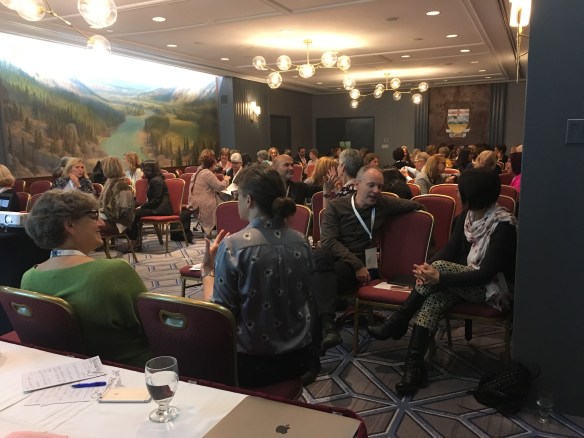
I think of this today as I have traveled out of state to speak to a Department of Surgery on physician well-being.  I wonder how often they have internists present at their Grand Rounds?  What a tremendous honor, I’m so excited to be here!  I hope my talk will be useful and memorable, as I represent my field and my institution, in addition to myself.  In the talk I describe the central tenets of Tribal Leadership and culture, and how to elevate ours in medicine.

So I’m thinking tonight about tribal pride and tribalism—the benefits and risks of belonging.

We all need our tribes.  Belonging is an essential human need. To fit in, feel understood and accepted, secure—these are necessary for whole person health.  And when our tribes have purpose beyond survival, provide meaning greater than simple self-preservation, our membership feels that much more valuable to us.  But what happens when tribes pit themselves against one another?  How are we all harmed when we veer from “We’re great!” toward “They suck”?

Of course I’m thinking now of intra-professional tribalism:  Surgery vs. Medicine vs. Anesthesia vs. OB/gyne vs. Psychiatry.  Each specialty has its culture and priorities, strengths and focus.  Ask any of us in public and we will extol each other’s virtues and profess how we are all needed and equally valuable.  Behind closed doors, though, internists will call orthopods dumb carpenters; surgeons describe internists’ stethoscopes as flea collars, and the list of pejoratives goes on.  Maybe I’m too cynical?  My interactions with colleagues in other fields are usually very professional and friendly—until they are not.  I have experienced condescension and outright hostility before.  But can I attribute it to tribalism—that general, abstracted “I’m better than you because of what I do” attitude—or to individual assholery?  Or maybe those docs are just burned out?  As with most things, it’s probably a combination.  Based on what my medical students tell me, negative energy between specialties definitely thrives in some corners of our profession.  Third year medical students are like foster children rotating between dysfunctional homes of the same extended family—hearing from each why all the others suck.

So what can we do about this?  Should we actively police people’s thoughts and words in their private moments?  I mean part of feeling “We’re Great!” kind of involves comparing ourselves with others and feeling better than, right?  Isn’t some level of competition good for driving innovation and excellence?  Should we even embrace this aspect of tribal pride?  It certainly does not appear to be diminishing, and I have a feeling it’s just human nature, so probably futile to fight it.

I wonder why we have this need to feel better than.  Is it fear?  A sense of scarcity?  As if there is not enough recognition to go around?  Like the pie of appreciation is finite, and if you get more I necessarily get less?  Intellectually we recognize that we are all needed, we all contribute.  But emotionally somehow we still feel this need to put down, have power over, stand in front.  And it’s not just in medicine.  I see it in men vs. women, doctors vs. nurses, liberals vs. conservatives, and between racial and ethnic groups.  It makes me tired.

But maybe we can manage it better.  Maybe we can be more open and honest about our tribal tensions, bring them into the light.  Yes, I think surgeons can be arrogant.  And that’s okay to a certain extent—it takes a certain level of egotism to cut into people, and when things start going wrong in the OR, I think that trait can help make surgeons decisive and appropriately commanding when necessary.  I imagine surgeons get impatient with all the talking we internists engage in.  So many words, so little action, they might think.  And yet they understand that words are how we communicate with patients, how we foster understanding and trust.  Maybe we can all do a better job of acknowledging one another’s strengths and contributions out loud and in front of our peers (and learners).  The more we say and hear such things, the more we internalize the ideals.

Tomorrow I get to spend a morning with surgical attendings and residents.  I hope to contribute to their learning during my hour long presentation, but I really look forward to my own learning, to expanding my understanding and exposure to parts of my profession that I don’t normally see.  I’m humbled at the opportunity, and I will look for more chances to bring together colleagues from divergent fields.  If we commit, we can connect our tribes and form a more cohesive profession.  That is my dream for future generations of doctors—to be freed from infighting and empowered to collaborate at the highest levels, for the benefit of us all.


Because This Is Who We Are

DSC_0508

Followers of this blog may know of my interest in and passion for physician health and well-being.  I was immersed in this world the last couple of months, with two amazing conferences and multiple conversations with fellow physicians at work.  As often happens, I was moved to articulate a vision/mission statement of sorts, mostly to solidify my own intentions and also to share with like-minded colleagues.

I love that I enter this arena from the world of executive health.  Corporate leaders, physician leaders, and physicians on the ground share so many attributes that everything I learn from patients translates seamlessly to my own professional development.  This is exactly the right space for me to inhabit today, and I am forever grateful for the integrative experience.  Physicians are care team leaders by default, and we miss opportunities to improve all of medicine when we forget or ignore this fact.  I’m interested to know your response to the words below—the more visceral the better (but please, if possible, refrain from spitting, vomiting, or defecating your own words here):

Why do we advocate for physician health and well-being? 

Because we believe we can only lead well when we are well ourselves.

Because leading can be lonely and leaders need support.

Because leaders need metrics of our own performance, both related to and independent of the performance of those whom we lead.

Because health and leadership intersect inevitably and who we are is how we lead; the more awareness and active, intentional self-management we practice, the more effective leaders we will be.

Because people follow our example, like it or not, so we owe it to ourselves and those we lead to model Whole Physician Health.

What Is Whole Physician Health?

Whole Physician Health is an approach to health and well-being which defines physician as both clinician and leader, both healer and vulnerable.  This approach focuses on the 5 Realms of Health: Nutrition, Exercise, Sleep, Stress, and Relationships.  We explore how these realms intersect and overlap, affecting the individual physician, those whom the physician cares for and leads, and the entire medical profession.  We apply principles from health and sports psychology, communication, leadership, mind-body medicine, and myriad other disciplines.  We value openness, curiosity, critical analysis, and collaboration.  Our mission is to create a resilient medical culture in which all members—physicians, patients, all caregivers and support personnel—thrive and flourish.

DSC_0555

The Whole Physician Health Advocate:

*Values self-awareness and self-exploration.

*Understands and accepts his/her position as role model and culture setter for the team.

*Wishes to broaden the skillset in cultivating positive relationships

  • With self
  • Between self and immediate colleagues
  • Between colleagues themselves
  • Between physicians and staff
  • Between teachers and learners
  • With extended family of colleagues and institutional entities
  • Between institution and the patients it serves

*Sees the physician health and well-being movement as an opportunity to learn, see from a different point of view, connect to fellow physicians, and form new tribal bonds that will hold us all up.

*Wants to contribute to the creation of a global professional vision and mission of the 4 WINS:

WIN 1–You

WIN 2–Those you lead

WIN 3–Your whole organization

WIN 4–All those whom your organization touches

Of note, one need not be a physician to advocate for Whole Physician Health.

Hopey, Changey Hero Making

IVY Litt 11-8-17

NaBloPoMo 2017: Field Notes from a Life in Medicine, Day 8

Funny how I just wrote last night about connecting new dots to old dots.  It just happened again tonight!  A couple of weeks ago I responded to an online ad for an IVY Ideas Night with David Litt, author of Thanks Obama: My Hopey, Changey White House Years, entitled, “How to Inspire, Persuade, and Entertain.”  Litt was a senior speechwriter for President Obama, so I thought I could learn new tips for presentations, and feel a little closer to the president whom I miss so much.

I’ve done public speaking since eighth grade, when our speech teacher first taught us abdominal breathing and I discovered the thrill of holding the attention of a room full of people with only my words.  I work at an academic medical center and I hold zero publications, but my CV documents over 10 years of professional presentations to various audiences.  I thought I was pretty good at this speaking thing.

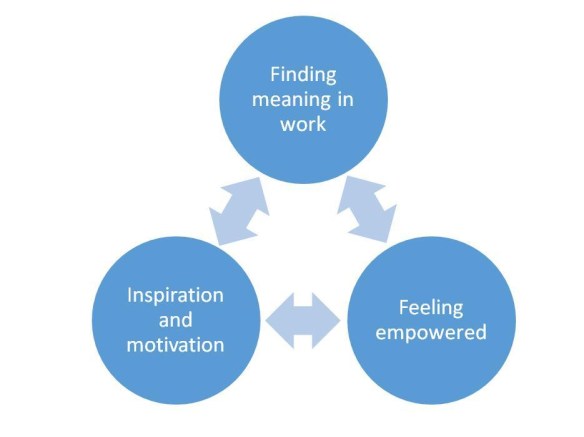
Three years ago I came across this TED talk by Nancy Duarte, whose ‘secret structure’ of great presentations I have used since I subsequently read her book, Resonate.  Essentially, she recommends that we invite audiences on adventure stories, create active tension between what is and what could be, and most importantly, make the audience the hero.  I have done this better and worse since then, but I always recognize the framework when I see it.  Those familiar with this blog know that I am also a fan of Simon Sinek, whose central message is that we perform at our best when we are crystal clear about our Why.  “People don’t buy what you do, they buy Why you do it,” he says.  Barack Obama employs both authors’ principles with eloquence and finesse, which I noticed reading We Are The Change We Seek, a collection of his speeches as president.  The best speeches delivered in this construction create audiences who are inspired, motivated, and empowered to hail a meaningful call to action.

Obama is could be core values

That’s basically what David Litt conveyed tonight.  When asked what advice he was given that served him best, he said, “Imagine someone in your audience will tell their friend tomorrow about your talk.  What is the one thing you want them to say about it?”  What is the Why of your talk?  Even though he no longer writes speeches for the most powerful person in the world, he expressed a desire to continue inspiring, empowering, and promoting personal agency in all whom his work touches. Make each and every audience member their own hero.

It turns out, however, that this approach applies to much more than public speaking.  On my 50 hour, 500 mile, aspen-pursuing weekend in Colorado last month, I described to my dear friend my favorite moments at work.  At the end of a patient’s day-long physical, after I have spent 90 minutes listening to their stories of weight gain and loss, work transitions and complex family dynamics, and reviewing their biometrics and blood test results, I meet with them for an additional 30 minutes to debrief.  This is when I present an integrated action plan compiled by the nutritionist, exercise physiologist, and myself.  It is a bulleted summary of our conversations throughout the day, centered on the patient’s core values and self-determined short and long term health goals, and crafted with their full participation.  I get to reflect back to my patients all that I see them doing well, and shine light on areas for potential improvement.  It’s an opportunity to explore the possible—to Aim High, Aim Higher, as the United States Air Force exhorts.  I often present the plan with phrases like, “Strong work!” “You’ got this,” and “Can’t wait to see what the coming year brings!”  My friend turned to me as we wound through autumn gold in the Rocky Mountains, a bit tearfully, and said, “You make them the hero of their own story.”  Yeah, I do, I thought, and I got a little teary, too.

Words are powerful.  They are our primary tool for relating to each other, for making another person feel seen, heard, understood, accepted, and loved.  You don’t have to be a public speaker or a presidential speechwriter to make a positive difference with your words.  At work, in your family, with your friends, with people on the street and in the elevator—what is the one thing you want someone to remember from their encounter with you?