Chengerisms and NaBloPoMo 2024

“Hey friend, favor?
“When you think of me, what things do you hear me say all the time that signify to you who I am and what I’m about? 🤔
“…Collecting ‘Chengerisms’”

The compulsion overtook me Thursday evening, when I should have been finishing clinic notes and packing for LA. I texted a slew of people in a flurry with the question above, intending to assemble their answers into backbone for National Blog Posting Month in November. For those who don’t know, NaBloPoMo challenges bloggers to publish 30 posts in 30 days, all written in real time. It coincides with NaNoWriMo, National Novel Writing Month, a sprint to write a 50K word manuscript in the same time.

This will be my tenth consecutive NaBloPoMo challenge–BRING IT, I say!

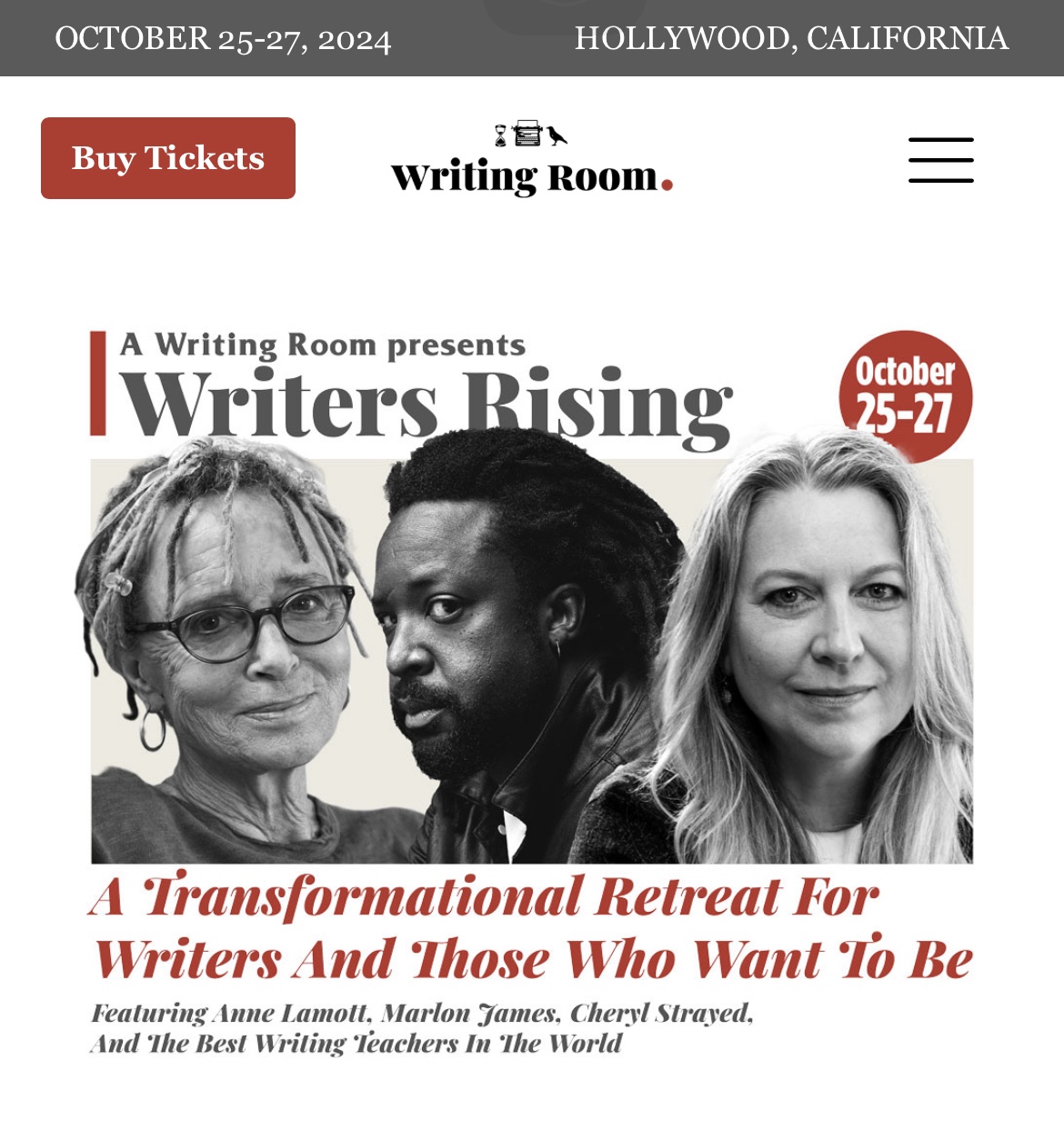
My “Chengerisms” query, I see now, was actually me gathering validation and support for showing up all me, all in, BOOBS OUT at the Writers Rising retreat this weekend. My subconscious intuition knows what I need; I sense, trust, and follow better with age. Replies rolled in with speed, earnestness, and so much love it positively bowled me over. Highly recommend!

The strongest messages I perceived throughout the conference reinforced all of my highest writing and living values:
Let loose your curiosity
Take risks
Tell the truth
Honor your Central Self
Own Your Shit
You are enough
Assemble your pit crew
Connect, connect, connect!

How tightly these correlated with the Chengerisms my friends mirrored to me:
What is that about?
How fascinating!
Tell me more…
Hey friend
How did that feel?
Love you love you
Yaaaay!
One breath
Walk the talk
BOOBS OUT (apparently catching on in my small circles–yaaaayy!)
Tribe
Sooo human.

This spontaneous, subconscious-driven exercise shows me the profound importance of good, loving feedback and the absolute value of meaningful relationship. My response to almost every reply was a sincere and heartfelt, “I feel seen!”

While I continually noodle on content and structure of Book (I’m getting closer, really!), I feel a limbic and visceral certainty about how I want readers to feel throughout and especially at the end–seen, validated, inspired, empowered, and convicted. This NaBloPoMo, I aim to color in and sharpen that vision, saturate my thinking and writing brain with it.

At the end of an executive physical, I want my patient to feel thoroughly understood. I show that I know them, even if I only see them once a year, by reflecting their stories back to them, interpolating and extrapolating what’s not said, checking in, and providing what I know patients need from their doctors: personal connection in service of self-efficacy for health. So this year for NaBloPoMo, I commit to the theme:

What I Wish For You

Thirty things I want patients, readers, or anyone, really, to experience after encountering me in person or in print. Chengerisms in action. I will resist wallowing in guilt and shame when I notice how often I fall short of these aspirations. When I see perfectionist self-loathing approach I will divert it to the nearest off-ramp. All part of the process.

This could be both fun and enlightening! Let’s see what happens, eh? Ready, set, let’s go.


Love Out Loud

Hey Love!
Good Morning Darling.
Hello Dear One.

More and more, this is how messages from me begin.
OH how wonderful if feels to effuse love every day! I have observed and written for a couple years how I feel liberated and even irreverent about it now, well into middle age–BOOBS OUT. “Tell (people) you love them. Tell them a lot. Make it weird.” Because the more we do it the less weird it is, and the more joyous and connected we all get to be.

I love easily, I think most who know me would agree. Some may wonder if it’s superficial, blind, or even fake. But it feels like none of these to me, and I’m confident not to those I love. I attribute this unreserved tendency to adore to my matrilineal inheritance of optimism and penchant for connection. Ma, her sisters, and my maternal grandmother, 婆婆, all set the example of seeing the best in people first, of loving first, with great openness and, some would say, vulnerability. This does not mean we throw ourselves headlong into random or toxic relationships. We simply, by default, assume the best of everyone we meet and go from there. Most of the time people respond fantastically, and if not, we know how to (lovingly) distance and protect ourselves, if necessary. So the older I get, the more I let loose my inner Agape lover on anyone I meet, and the rewards multiply. I shake my head in wonder almost daily, and it just keeps getting better.

Wonder is exactly the right word for it. I actually wonder how it could be this easy, this rewarding, this uplifting and reciprocal? I’m not sure I really need to answer this question, to look for some subconscious, potentially abnormal driver of this somewhat outlying behavior. I can just revel in the wonder, in the awe, that it simply is.

Interestingly, the louder I love in many ways and with more people, the more I notice the contrast when I don’t. How fascinating! It’s pretty uncomfortable, if I’m honest, because the difference can be quite stark. It feels inhibited, constrained, not like myself. It’s cautious, hesitant based on prior experience, protective. So all my talk about openness and vulnerability still stands; I just think I’m intuitive about risks and costs of engagement, and clear about what I’m willing to expend. If there is any potential for deep and meaningful connection, I’m pretty damn willing. And when I’m not, I can honor that, too. Because I know it’s not from an inherently negative place; I can trust my gut when it tells me to be wary. I also get to regulate consciously, to stay open to noticing when things shift and the possibility and potential of (re)new(ed) connection emerges.

Relationships evolve. Life paths converge and diverge, we flow together and apart over the long, complicated journey. We never know what’s coming, and our perspectives on what’s passed can morph and transform with the broadening perspective of time elapsed.

In the end, how satisfied will we be with how we loved ourselves and one another?

Loving out loud, often, and with abandon can be risky. In my experience, however, reward far outweighs risk and cost. The more I love, the more love grows within, between, and among myself and others. There is simply more love moving about in the world, and that is always a net good thing.

Beliefs as Obstacles

How are we held back by our beliefs in ways we don’t know?

Lately I see the need and benefit of revising my narratives in multiple life domains.  I have told the same stories about certain people and situations for many years, unwavering tales of personality, action, inaction, motivation, and interaction that have largely defined many of my relationships. 
I will be necessarily cryptic here for privacy, and I think my point will still come across.

In the beginning of anything—life, dating, parenting, work—we have formative encounters and experiences that shape our views and behaviors in that realm.  The longer we live, the more our beliefs in each domain intermingle and influence those in others.  We make meaning from our perceptions in real time, integrating current context and past experiences, consciously and sub/unconsciously.  Our worldviews about risk/reward, cost/benefit, justice/mercy, love, responsibility, accountability, and myriad other ideas form early, implicitly at least as much as explicitly.  What’s more, we rationalize everything, justifying opinions and positions with apparently sound and reasoned logic, often not recognizing the irrational, emotional, relational, and sometimes delusional origins of our beliefs.  The most confident, articulate, and clever of us convey our rationalizations so convincingly we persuade not just ourselves, but many of those around us how right we are. 

“I’m not good enough.”
“He’s a narcissist.”
“She always plays the victim.”
“Everything I love gets taken away eventually.”
“All men hurt women.”
“No one can have it all; we must choose between family and work.”
“Anyone who votes for xxx is crazy and a danger to society.”

How true are the beliefs expressed in these statements?
For each one that you may not believe, how many do, wholeheartedly and unquestioningly, even if unconsciously?  How does this impact our interactions with the people and contexts around us?

What statements and stories do you profess consistently?  How true are they, if you are honest?  How have they served you?  How do they not?  What would happen if you revised or refuted any of them? 

This all came up for me this weekend after a two-day workshop on character development and backstory by Emily Golden and Rachel May of Tenacious Writing and Goldenmay editing and coaching.  Focusing on backstory, the workshop demonstrated the relationship between a character’s ‘internal goal’ (the thing they most want in life) and their ‘internal obstacle belief’ (the thing they think will get them to their goal but is actually the barrier they must overcome).  It reminded me of how Nancy Duarte describes the most effective presentations as mirrors of the Hero’s Journey: We are called to adventure and initially refuse.  We are comfortable where we are, why move?  Events then ensue that force us to stand up and engage.  Yet we are still reluctant.  We are shown what could be.  We believe for a moment, then revert to what is—that which we know and have lived—no matter how dysfunctional or destructive.  It takes repeated encounters with what could be, support and challenge from those we trust (or not), to make us see that we must change our mindset, outlook and behavior.  It takes time, effort, disruption of the status quo, and often no small amount of pain.

The value of fiction is that it mirrors humanity in ways that allow us to see myriad human foibles with empathy and compassion.  It’s the protagonists who must overcome their own internal obstacles—we root for them and rejoice in their triumphs at the happy endings.  We want them to succeed, to discard delusion and open their eyes to truth and reconciliation. 

How often do we allow ourselves to acknowledge and have grace for our own flaws?  How can we get more comfortable with self-honesty and -exploration?  How can we better embrace and exercise the vulnerability and courage to recognize how our stories about ourselves and others no longer serve us, and embark on, commit to, the journey of work to revise them for the better? 

The ultimate reward, the worthy triumph of this work is connection, as always.  The better our stories, the more understanding, mutual respect, harmony, and collaboration we can achieve, the better all our lives could be.