Them and Us

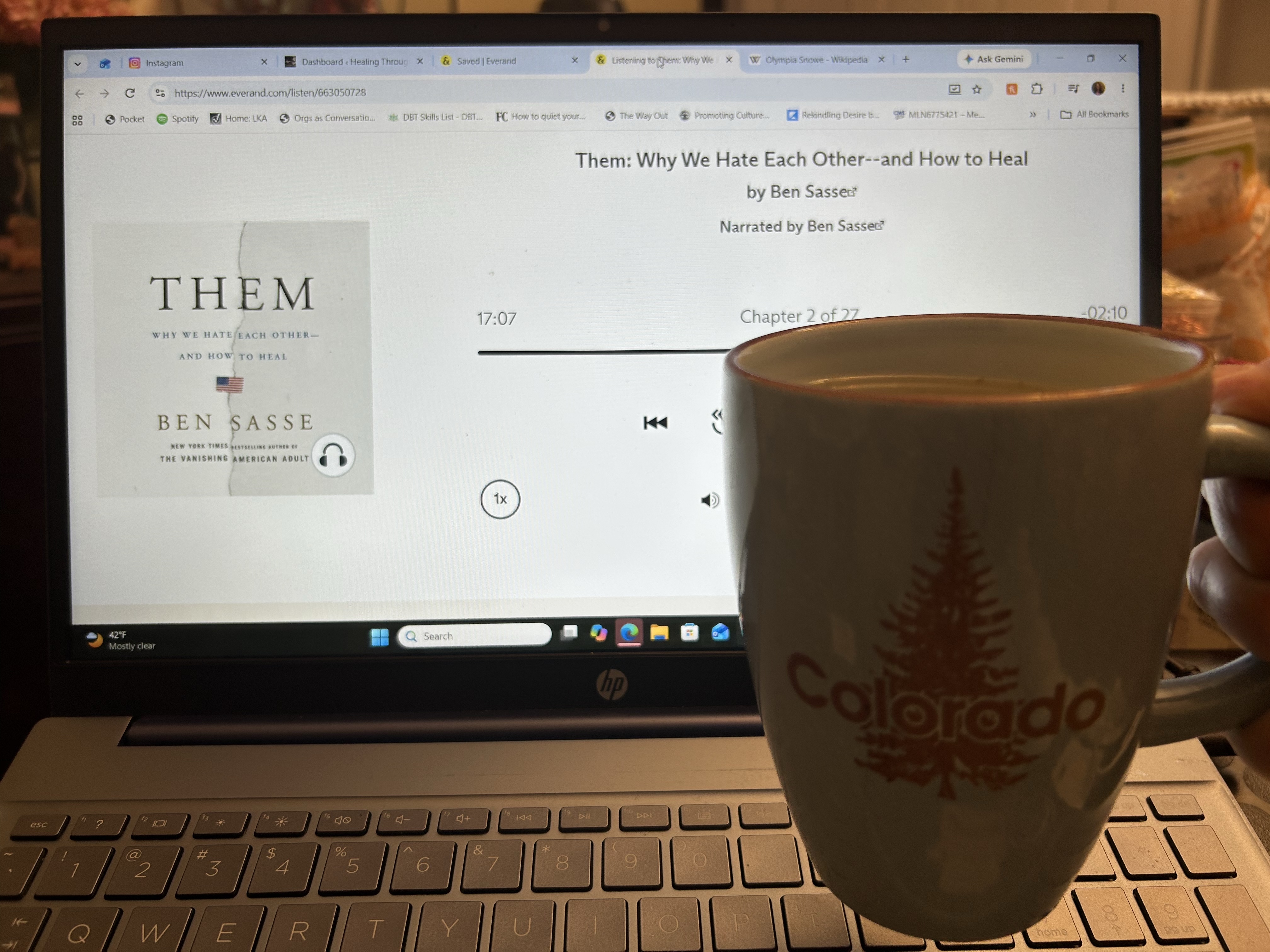
Them, Ben Sasse

Former Nebraska senator Ben Sasse and his wife lived just up the road from Hubs and me in Evanston, Illinois in the summer of 1995. It was the deadliest heat wave in US history. Apparently they did the same as we that July–sat in front of the window AC unit as temperatures sat in the mid 100s for days on end. We were just engaged and they had just been married a year. I like that I feel connected in this way, as I admired him while he was in office. I have just started listening to his 2018 book, Them: Why We Hate Each Other–And How to Heal.

I spent this evening with dear friends (and thus not writing) and I really want to go to bed now, so I will just leave you with the descriptions of this book and another one with the same thesis, that loneliness is tearing us apart and killing us: Together: The Healing Power of Human Connection in a Sometimes Lonely World by Vivek Murthy.
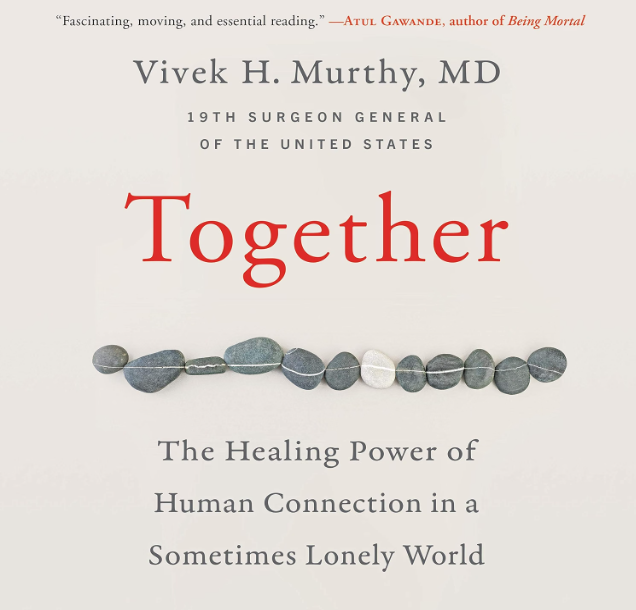
Together, Vivek Murthy

I appreciate so much how these two people from either side of the political aisle and each with their own perspective and style of writing, recognize the same central problem in our current culture. Sasse even quotes Murthy in Chapter 3. I have listened to Together and am tempted to obtain print copies of both books to compare annotations. I imagine Sasse’s focus and conclusions will differ from Murthy’s, and I may well disagree with some of the them. But I respect him as a historian, educator, and former legislator. I could fairly think of these two works as companion books, ‘Them and Us’, worthy of shared space on the bookshelf.

I think of Sasse, Jeff Flake, and Olympia Snowe as conservative senators whom I respected and who left when Capitol Hill got too toxic. Who would their progressive counterparts be? How can we attract and elect more moderates to Congress, or at least people who have the wherewithal to engage with opponents civilly and professionally?

The best part of posting daily is that I can relax and continue today’s ideas tomorrow, if needed. Good night and back again soon!


Them by Ben Sasse

Something is wrong. We all know it.

American life expectancy is declining for a third straight year. Birth rates are dropping. Nearly half of us think the other political party isn’t just wrong; they’re evil. We’re the richest country in history, but we’ve never been more pessimistic.

What’s causing the despair?

In Them, bestselling author and U.S. senator Ben Sasse argues that, contrary to conventional wisdom, our crisis isn’t really about politics. It’s that we’re so lonely we can’t see straight—and it bubbles out as anger.

Local communities are collapsing. Across the nation, little leagues are disappearing, Rotary clubs are dwindling, and in all likelihood, we don’t know the neighbor two doors down. Work isn’t what we’d hoped: less certainty, few lifelong coworkers, shallow purpose. Stable families and enduring friendships—life’s fundamental pillars—are in statistical freefall.

As traditional tribes of place evaporate, we rally against common enemies so we can feel part of a team. No institutions command widespread public trust, enabling foreign intelligence agencies to use technology to pick the scabs on our toxic divisions. We’re in danger of half of us believing different facts than the other half, and the digital revolution throws gas on the fire.

There’s a path forward—but reversing our decline requires something radical: a rediscovery of real places and human-to-human relationships. Even as technology nudges us to become rootless, Sasse shows how only a recovery of rootedness can heal our lonely souls.

America wants you to be happy, but more urgently, America needs you to love your neighbor and connect with your community. Fixing what’s wrong with the country depends on it.


Together by Vivek Murthy

Humans are social creatures: In this simple and obvious fact lies both the problem and the solution to the current crisis of loneliness. In his groundbreaking book, the 19th surgeon general of the United States Dr. Vivek Murthy makes a case for loneliness as a public health concern: a root cause and contributor to many of the epidemics sweeping the world today from alcohol and drug addiction to violence to depression and anxiety. Loneliness, he argues, is affecting not only our health, but also how our children experience school, how we perform in the workplace, and the sense of division and polarization in our society.

But, at the center of our loneliness is our innate desire to connect. We have evolved to participate in community, to forge lasting bonds with others, to help one another, and to share life experiences. We are, simply, better together.

The lessons in Together have immediate relevance and application. These four key strategies will help us not only to weather this crisis, but also to heal our social world far into the future.

  1. Spend time each day with those you love. Devote at least 15 minutes each day to connecting with those you most care about.
  2. Focus on each other. Forget about multitasking and give the other person the gift of your full attention, making eye contact, if possible, and genuinely listening.
  3. Embrace solitude. The first step toward building stronger connections with others is to build a stronger connection with oneself. Meditation, prayer, art, music, and time spent outdoors can all be sources of solitary comfort and joy.
  4. Help and be helped. Service is a form of human connection that reminds us of our value and purpose in life. Checking on a neighbor, seeking advice, even just offering a smile to a stranger six feet away, all can make us stronger.

During Murthy’s tenure as Surgeon General and during the research for Together, he found that there were few issues that elicited as much enthusiastic interest from both very conservative and very liberal members of Congress, from young and old people, or from urban and rural residents alike. Loneliness was something so many people have known themselves or have seen in the people around them. In the book, Murthy also shares his own deeply personal experiences with the subject–from struggling with loneliness in school, to the devastating loss of his uncle who succumbed to his own loneliness, as well as the important example of community and connection that his parents modeled. Simply, it’s a universal condition that affects all of us directly or through the people we love—now more than ever.

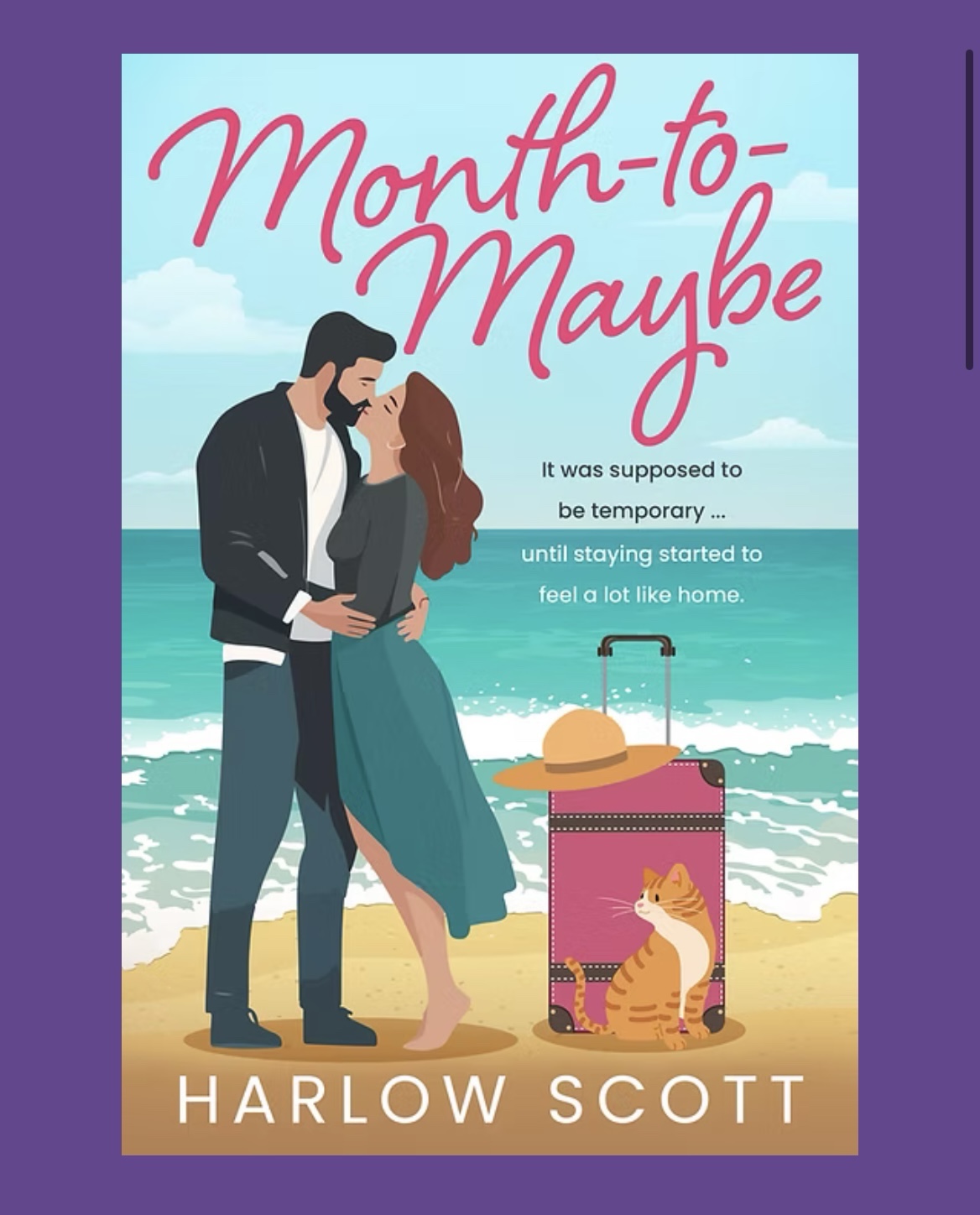
Introducing My Friend Harlow Scott!

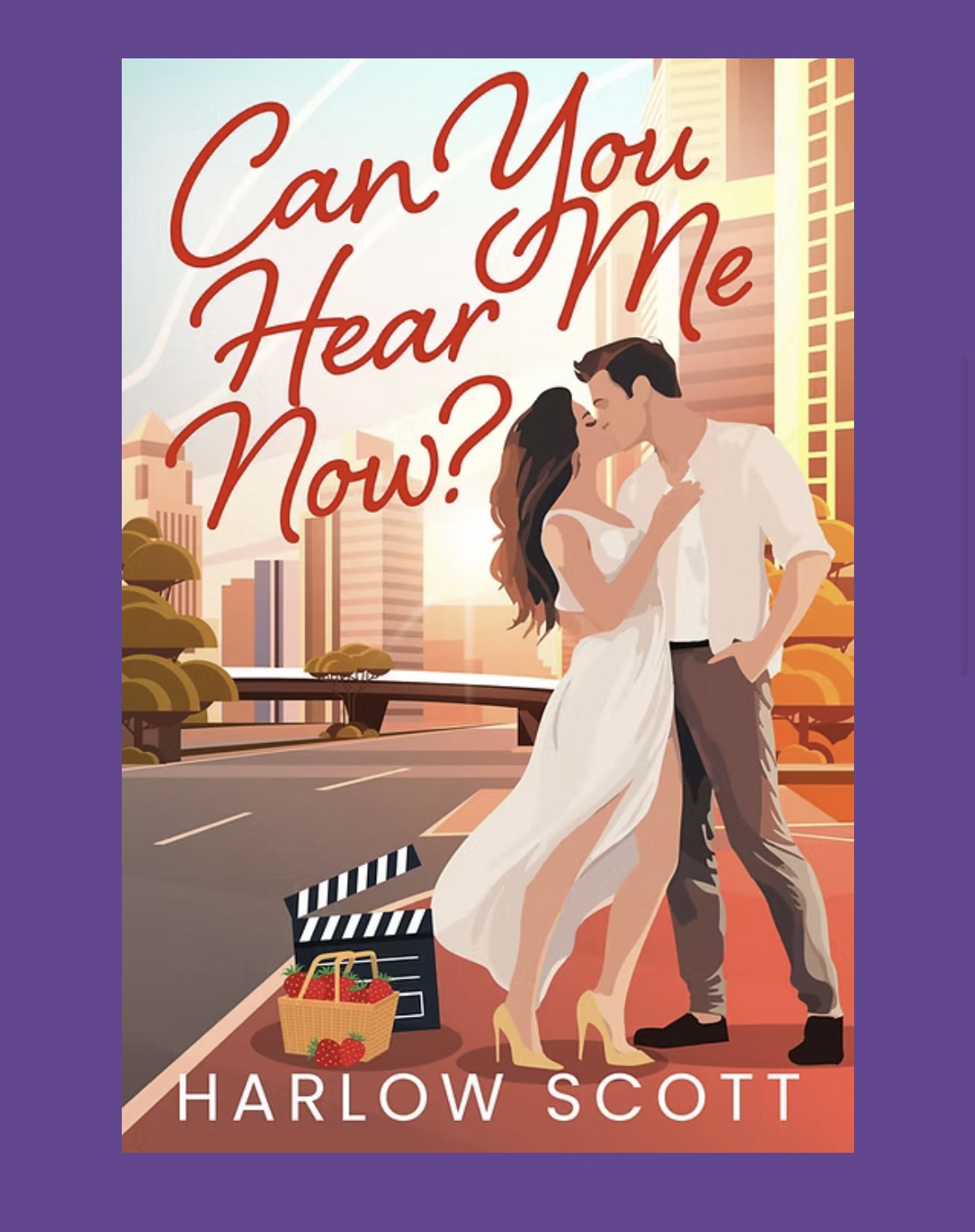
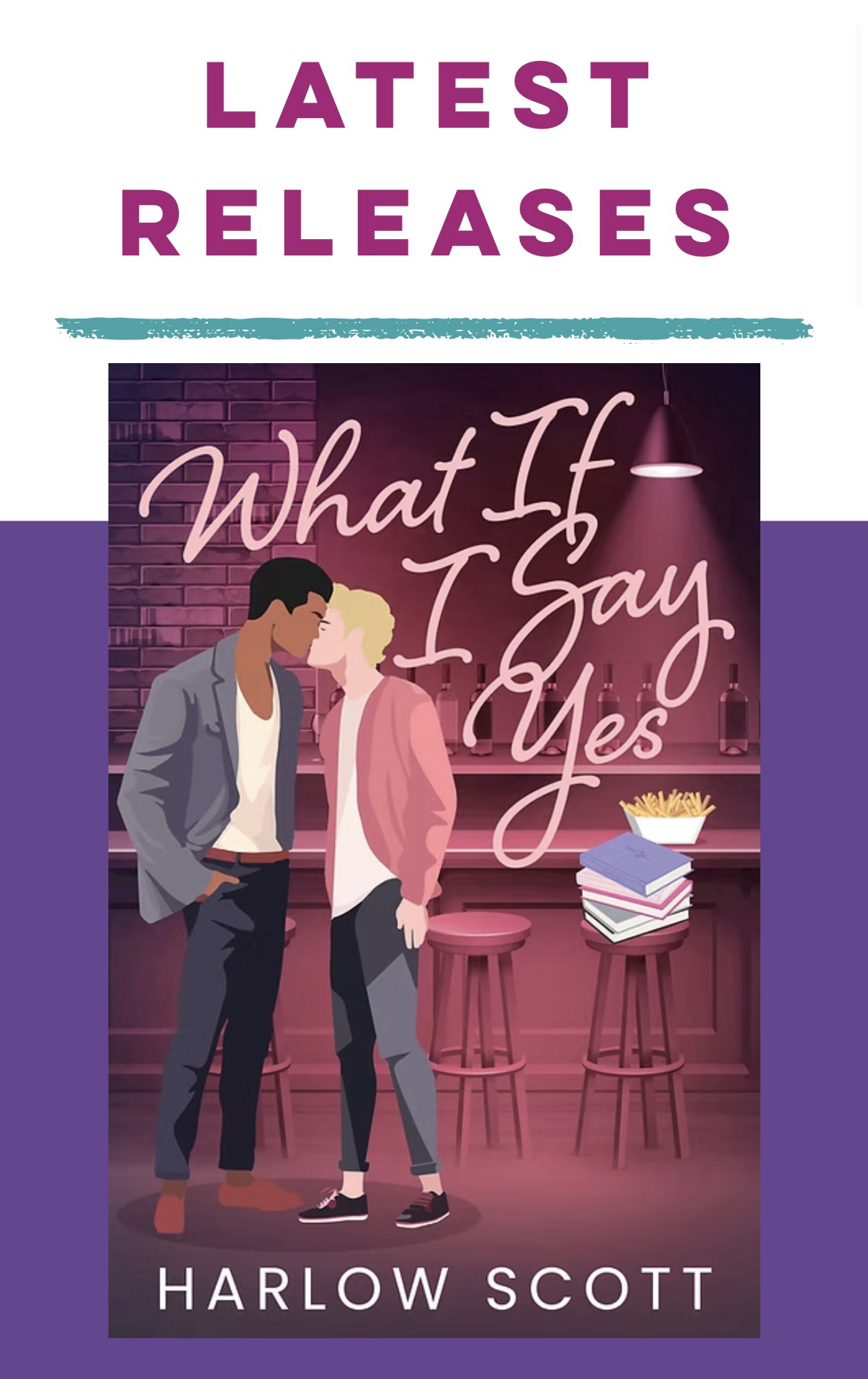
Harlow Scott Books!

Friends, romance novels are a very. Good.Thing. Even better when your friend publishes three in one year, holy cow! And I got to read them all first!

Harlow Scott (nom de plume) and I met in the now defunct Shaneiaks Facebook group, an enthusiastic (and occasionally feral) fan group for Shane East (aka Steve West), my favorite naughty voice actor. We gushed about books, heroes, and Our Gentleman’s crazy amazing talent. I know The Never King by Nikki St. Crowe reigns close to the top of her list of favorite works, but she also loves vampires and various other delectable tropes and subgenres in romance. I recall her posting a lot about burning dinner while listening to smut, and melting into a gooey mass on the kitchen floor. I think I won her over when I offered to come over anytime with a loving tile scraper. At the time she lived in Denver so I was at least half serious–any excuse to visit home! We did meet in person on my next trip and subsequently, I have hung out with her in the Pacific Northwest where she now lives, and we even road tripped to St. Louis last year for the Mate Games convention.

Harlow’s writing history starts long before mine, having penned stories and even an entire novel (yet to be published) decades ago. She has published at least two professional books, offering her unique expertise to the world at the intersection of history and accessibility in public spaces. In 2023 (or was it 2024?) we agreed to support each other in our respective NaMo’s: Her in National Novel Writing Month (NaNoWriMo) and me in National Blog Posting Month (NaBloPoMo). We committed to writing every day and holding each other up in the process. A great friendship was born!

Since then I have had the privilege and pleasure of witnessing and supporting HS on her prolific writing journey, watching the genius emerge and flourish, imagining her fingers fly at her laptop, giving form and phrase to ideas that just cannot get out fast enough. Her first two novels, Month to Maybe and Can You Hear Me Now?, were almost written in tandem–fun, easy, lighthearted reads that remind me so much of works by contemporary powerhouse authors Lauren Blakely and Louise Bay. The third, recently released, What If I Say Yes, required quite a bit more labor, if not more love. I am so proud of this particular release, her first male-male, bi-awakening love story. It called to her as soon as the the Pacific Hearts series took shape, and she incubated and cultivated it with unending dedication and care. She invested time, energy, and resources to make it the best it could be, and it has paid off. From the first draft that I read to the final edits, Eli and Marcus’s journey evolved deeply and readers have positively gushed at the outcome.

I always marvel at brains that can invent stories this engaging, let alone write them so articulately. And the spicy scenes, well… The woman’s got talent, I say! Good romance shows us our softest, most vulnerable humanity, our deepest desires both emotional and carnal. It helps us explore our most tender insides, reminds us how essentially we need deep connection, acceptance, understanding, and love. When these stories also represent those of us who feel marginalized, telling our love stories with compassion and fervor, validating our experiences and aspirations, the world is simply much better for it.

My friend does exactly this. From her bio:
“She chooses to write about love because she believes in its power to comfort, heal, and offer a place to escape.”
“Telling stories of love, laughter, and happily-ever-afters, one word at a time, where hearts ache, sparks fly, and love wins.”

Harlow Scott’s books can be found in ebook and paperback on Amazon, and you can get signed paperbacks on her website.

I know the stories in the pipeline, friends, and I can’t wait to share those with you all when they release. Meanwhile, check out Pacific Hearts. Love wins and it feels so good.

Words and Actions

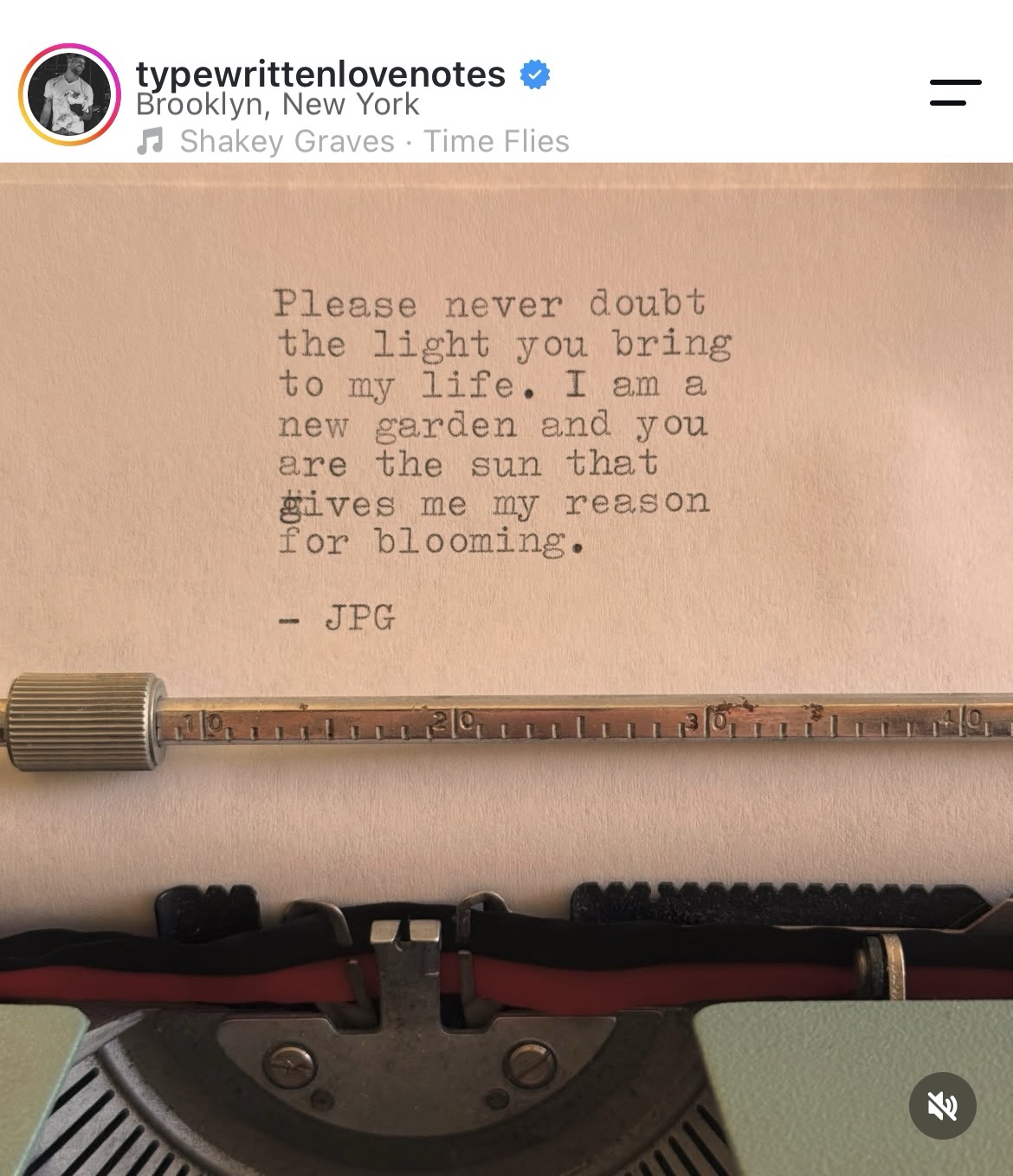
“Please never doubt the light you bring to my life. I am a new garden and you
are the sun that gives me my reason for blooming.” –JPG
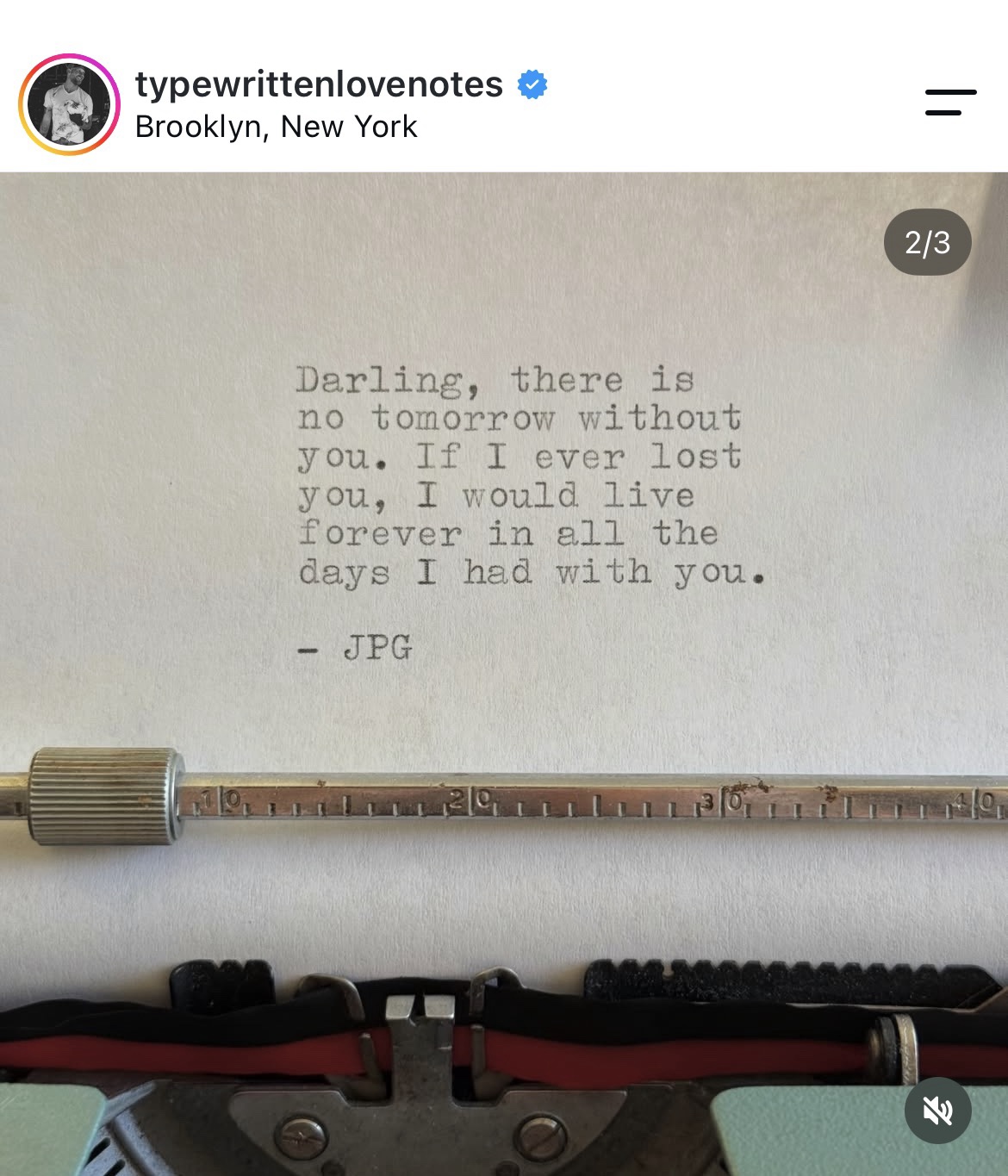
“Darling, there is no tomorrow without you. If I ever lost you,
I would live forever in all the days I had with you.” –JPG
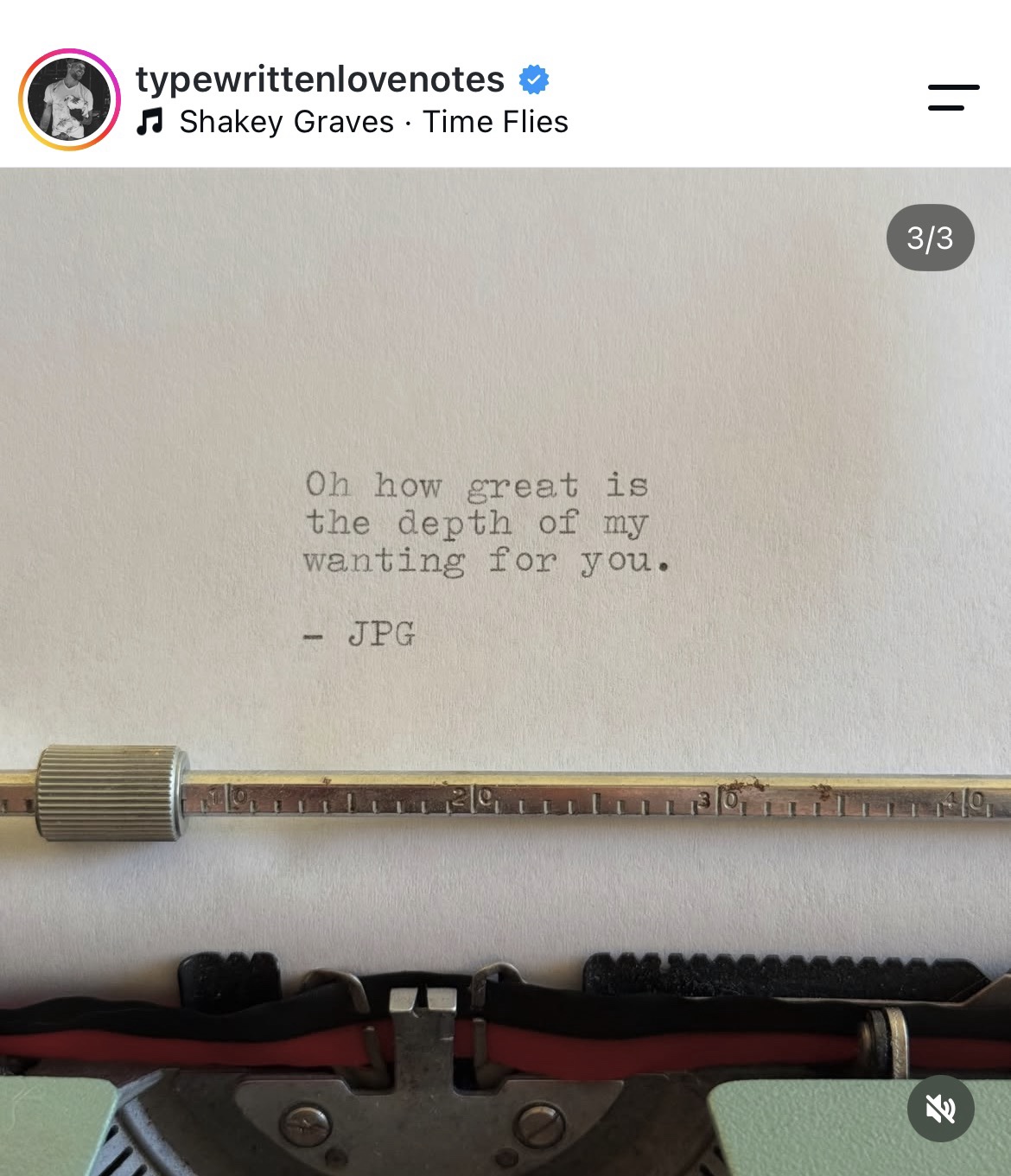
“Oh how great is the depth of my wanting for you.” –JPG

What do the words in these images do for you, friends? What do they bring forth?

If you are not already acquainted, I highly recommend finding and following Josh Greene, @typewrittenlovenotes on Instagram and on his Substack. His writing is thoughtful and evocative, keenly astute to all things human. He engages his audience with the most admirable integration of openness, earnestness, and appropriate boundaries.

I read the three expressions of his post above and commented, “Wondering… what are the day to day actions that go along with these words? It’s lovely to imagine.” Two avenues of reflection emerged from the question:

How do I walk the talk?
If I tell you how much I love you, care about you, and value you, how do I show you in our everyday interactions? What does it mean to live these words? How do I treat you such that you believe me when I say them? It makes me wonder which people in my life feel a gap between what I profess and how I behave. How do I delude myself, believing my words and actions are fully aligned when they are not? What needs to happen for those who feel the gap to tell me so I may correct, either the words or the actions?
It’s so easy (for some of us) to say the flowery words. They make everybody feel good with instant gratification. When things are harmonious it’s easy to act lovingly. How do I show up when it’s hard? Do I live up to my own standards of integrity, compassion, and self-regulation? Perfection is not possible. But how much is good enough? How do I keep myself accountable?

What words/stories drive my actions off track?
I make generous assumptions about most people most of the time; I place myself pretty far on the right side of the curve compared to the general population here. And yet, there are those for whom I hold only sparse generosity. I justify my attitude and seek validation for it. Thankfully, I have dear friends who will provide that emotional validation, remind me of my own standards of conduct, and challenge me to reconcile my actions accordingly.
I come back to the words. How do I label these people and thus prime myself for disconnection rather than connection, the exact opposite of what I always say I want most in life and relationships? It’s an uncomfortable and humbling irony, and one that I am grateful occurs only occasionally. So I am determined to suck all possible learning from each occurrence, in hopes of prevention in future. Disconnect will always happen of course, but my high dream is to look back and see that I did my best to present my best self whenever possible. What do I need for that to happen more reliably?

These questions feel important, but not necessarily urgent. I’m reminded of Rilke’s admonishment to ‘live the questions‘, to simply be alive to them, let the answers reveal themselves over time. I have trained my observation and reflection muscles well; they are tone and strong. So I don’t fear the heavy self-awareness lifts when they cross my path. I can slow down, take a breath, and assess. I get to decide whether and how to approach, detour, confront, or take other action. I’ll know when I need to know, and I am well supported with excellent counsel.

So let’s live some good questions, shall we? The world needs us all to speak and act more thoughtfully and reflectively, and be much better self-regulated.