November 7:  Feedback Makes Me Better

IMG_0150

NaBloPoMo 2019

This post is about power.

Two friends provided important feedback on last night’s post, and I am, gratefully, much better for it.

* * * * *

“You are a woman of color?”

My college friend commented on Facebook.  “Are you being serious?”  I asked him.  Yes, he replied.  He went on to point out that he sees the term being used more broadly, and that he thinks it’s been co-opted.  He made me think, which always makes me better.

In the original post, I described myself as a “petite, young, woman of color doctor,” standing up to an older white man. My friend wrote, “I think disadvantage is baked into the term, why else use it?”  Looking back, I admit I was exaggerating.  I had power on my mind, and I was trying to think of all the ways I should not have power in the situation, and yet I absolutely did, and I recognized it.  But labeling myself a person of color, I realize now, was at least somewhat inappropriate.  I have changed the text to “petite, young, Chinese woman doctor.”  I sincerely apologize if I insulted or offended anyone.

In medicine, East Asians are not considered a disadvantaged minority in the conventional sense (although while we are over-represented compared to the general population, we hold proportionally few leadership roles).  In general, however, I would argue that any non-white person in the US may still experience myriad disadvantages, in any field or situation, even if subtle.  At any point in an encounter, even with ‘MD’ and years of training and expertise behind my name, a white man can always hurl some racist, sexist remark to make me feel small.  He could just as easily attack a fellow white man on the basis of weight, sexual orientation, stature, or some other peculiar distinction, but somehow it feels like my white male colleagues just don’t have to think about this possibility as much as I do.  I feel self-conscious about my gender and race every day at work.  That is why this past spring, when I attended a negotiation skills presentation at the American College of Physicians (ACP) national meeting, I felt particularly gratified that the presenters were two East Asian women and one white man.

* * * * *

“You may want to include physicians as victims in your blog.”

A colleague responded to my post by sharing her story of being verbally attacked by a patient.  She was alone, no witnesses, and he treated staff politely, unlike in my story.  She was ‘dumbstruck and said nothing.’  She wrote, “I think as physicians, we are targets for verbal abuse because we have a privileged profession and would look foolish or weak in defending ourselves.”  In other words, since doctors hold such high societal status (power), people think we should just accept being taken down a notch or two?  That if we express an expectation of respect we are lording our status over others and thus even more justifiably open to insult and ridicule?  I see now how this can make a physician feel like a victim of societal stereotypes and expectations.

That said, I think it doesn’t matter what we do for a living; every person has an absolute right to expect respect from anyone else.  Years ago, another older white male patient made a series of passive aggressive remarks in the space of several minutes at the end of a visit.  I felt they were unfair and uncalled for, as I had spent the entire visit doing my best to connect with and care for him.  After a moment of consideration, knowing it was a risk, I was respectfully direct with him.  I repeated his words and told him that they felt like digs.  He admitted that they were and apologized, and congratulated my courage to call him out.  He never came back to see me.  I feel good about how I handled it; was it a power struggle?  I would have been open to cultivating a mutually respectful and honest relationship, had he returned.

Feedback definitely makes me better.  I will never grow if I only attend to my own point of view.  I don’t have to abandon my own perspective when facing an opposing one, and I am not obligated to incorporate anyone else’s point of view.  But if I expect anyone to take my writing and message seriously, I am required to listen to and try to understand any feedback that is offered in good faith.

Thank you, my friends, for keeping me honest and grounded.
November 5:  Peer Coaches Make Me Better

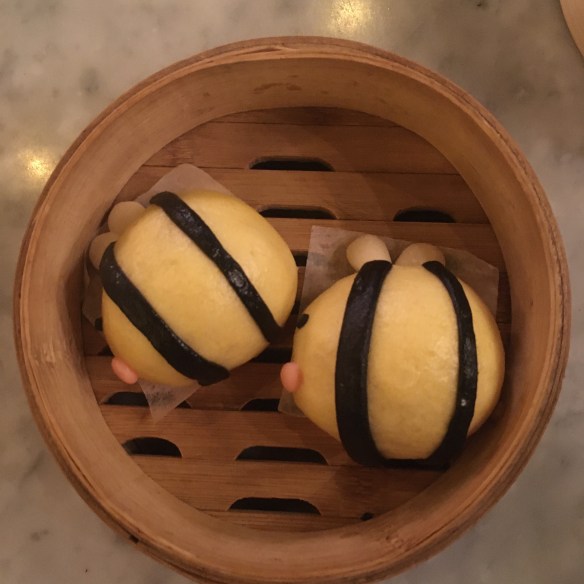
bee bao

NaBloPoMo 2019

When you’re working through a challenge, who helps you?  What is it about them, how are they most helpful?  How not?

Through the years I have learned what I can get from certain people.  I know to call this person when I need validation, that person when I need a devil’s advocate.  I also know which people to avoid altogether—those who cannot be trusted with my vulnerability or confidence.

But when I need to hold space and tension with an issue, to patiently look at it from different angles and process the perspectives, I look to my peer coaches.  I feel gratitude and gladness for these friends today, after my LOH group had our monthly peer coaching call.  As we progress through our 10 month leadership training, we take tenets and skills home from each retreat to practice.  Monthly Zoom calls have no agenda, other than to reconvene, share, and mutually support.  Every time I come away appreciating just a little more how nothing in life—work, personal things, social context—can really be separated from anything else.

These friends are not my first or only coaches, however.  In 2005 I started working with Christine, my life coach.  Every session, 14 years later, is still transformative.  How is this possible?  Curiosity.  Christine coaches every call squarely and unwaveringly from this perspective.  It was not long before I realized how powerfully this method could alter my own encounters with patients.

10-22-19-2

The best coaches have no preformed or decisive answers.  They have the uncanny ability to ask the best questions–Open, Honest Questions (OHQs)–which then lead clients to their own best answers.  They help frame and reframe problems.  They point us to alternate perspectives and help us open our minds to narratives other than the ones we too often grip so desperately.  It was my second year in practice when I started asking coaching questions to patients, and I have never since feared any symptom, syndrome, or answer.  When there is no clear diagnosis or answer for someone’s distress, I can just keep asking until something helpful emerges.  Most often it’s not a single piece of information that gives clarity; rather, it’s the story that materializes.  Coaching skills help me help my patients find and tell their stories of health and wellness, illness and pain, agency and action.

Here are the tenets of true Open, Honest Questions, from the LOH syllabus:

  • The best single mark of an honest, open question is that the questioner does not know the answer and is not leading toward a particular answer.
  • Ask questions aimed at helping the other person come to a deeper understanding (help them access their own inner teacher).
  • Ask questions that are brief and to the point without adding background considerations and rationale—which make a question into a speech.
  • Ask questions that go to the person as well as the problem or story—for example, questions about feelings as well as about facts.
  • Trust your intuition in asking questions. Inviting metaphors or images can open feelings, new lines of thinking, and unexpected possibilities.
  • Try to avoid questions with yes-no, right-wrong answers.
  • Avoid advice disguised as questions.

My best friends are my peer coaches.  And now I have my LOH cohort-mates.  We make no judgments about one another’s circumstances, feelings, or experiences.  We make the most generous assumptions about our motives.  Our role in each other’s lives is almost never to give advice; rather it is to hold space, listen reflectively, offer moral support, hold up core values, and help one another query thoughtfully and honestly.

IMG_1918

Questions asked and reflective statements made on the call today:

  • If you left work tomorrow with enough money to be unemployed for 6 months, what would you do?
  • How does it feel to speak (your issue) out loud?
  • When you think about current state compared to past, how does it feel physically in your body?
  • Sounds like you’re working on a core tension.
  • What do I/you want now?
  • What’s roiling around in you?
  • Who around you can get creative with you?

We each bring diverse questions and challenges to each call.  But somehow we always relate deeply, and listening/querying helps us each learn from every other.  Today I saw central themes emerge around identity, contribution, voice, and meaning.

In the end, I think there are few things more important in life than meaning and connection.  These are the gifts from my peer coaches, and they always make me better, no question.

IMG_2645


November 4:  Setting Limits Makes Me Better

IMG_0052_preview

NaBloPoMo 2019

How many of you are the chubby one of the family?  That’s me.  My two sisters have been positively svelte their whole lives, with apparently very little effort, as far as I can tell.  Yes, I envy them.  But whatever, ya work with what ya got, right?

I have never been a dieter, as I hate feeling restricted.  But I have had some success with setting limits sometimes.  The best experience was after I stopped nursing my daughter.  I was finished having children, no more human to hippopotamus transformations, hallelujah!  I thought, I can get my body back, woohoooo!  But how?  I had two little kids.  I worked.  I had neither time nor motivation to exercise, and even less energy to police my own food choices.  I’ll just eat half, I thought one day.  It was so simple and easy.  So for the next year I simply ate half of what I would normally eat.  This was not too difficult, as my portions were clearly just too big.  But for some reason it was the perfect method for me in that moment.  I don’t remember feeling hungry, and more importantly, I did not fear the hunger.  It was almost unbelievable, even as I lived it, how easily I could adhere to this plan.  I lost 25 pounds in nine months, and I felt well.  I managed to keep most of the weight off for several years.

bunny bao

Now, in my mid-forties, the story has evolved.  Kids are older, work has advanced, and I’ve acquired a boatload of fun and interesting extracurricular activities.  I achieved the sisterly figure ever so briefly, and now, tee-hee, not so much.  Eating half definitely does not work today!  Fascinating.  So I have to find new, more effective limits to set.  I have to say, I’ve managed to blow through most of my recent attempts: sweets only on weekends, no eating after 7pm, lights out at 11:00pm, and screen time?  What?…  I did manage to get all social media off of my phone a year ago, though.  That was a big deal, and I’m much better for it.  When I remember to bring my own takeout container to restaurants, and move half of my entrée into it at the beginning of the meal, I don’t overeat.  And if I agree with my friends at the outset to forgo dessert, voila, calories averted.  So I’ll keep working on the health habit limits… Maybe take my own advice…

The best thing about setting limits and then violating them is learning.  It makes me pay attention, ask more questions.  I am forced to practice curiosity and non-judgment, lest I wallow in that deep hole of failure and self-flagellation.

This month I commit again to daily blogging.  My family still needs me, I still need to work out, and I want to read real books more than I did this time last year.  I also need to just get more efficient with writing in general.  So I set myself a limit of 60 minutes, start to publish, for each post—perhaps it shows in the quality of writing?  Well, that will be a learning, too!  My first attempt lasted about 70 minutes, but I can’t say I kept good track.  Last night I actually set my timer, and it was a total disaster, I think 2+ hours beginning to end.  It was so enlightening, though, watching my distracted self throughout the process.  The TV was on (my desk is in the family room—the double edged sword of being near the family but not totally with them), our shows playing from the DVR. It’s a wonder I don’t get whiplash, turning to crane my neck toward the TV from my non-swiveling chair.  People were talking to me, even though I had my earbuds in.  I kept opening my email, Facebook, text, email again.  OH my gosh it was a total circus, and I felt the chaos in my whole being.

IMG_1869

Tonight, however, is a different story. I’m alone here at the desk, Shawn Mendes and Dierks Bentley playing softly while I type.  No TV, no earbuds.  I feel calmer; the house and I are both much quieter.  The ideas and words flow forth with ease and joy.  Fascinating!  You might say, Um, Cathy, DUH.  Of course you’ll write better when your environment is more conducive, everybody knows that!  Yes, of course, we know it.  But to experience the glaring contrast here on two consecutive nights really brings it home—the doing makes it real.

So maybe I’ll make a deal with the family the next 26 days.  I get 60 minutes of peace and quiet each day; time of day/night negotiable.  They are banished or gagged in that time, no audible devices allowed, and it’s my job to make the most of it.  Write, edit, select photos, categorize, tag, and publish.

I have 12:25 left.

IMG_1842