November 17:  Elasticity Makes Me Better

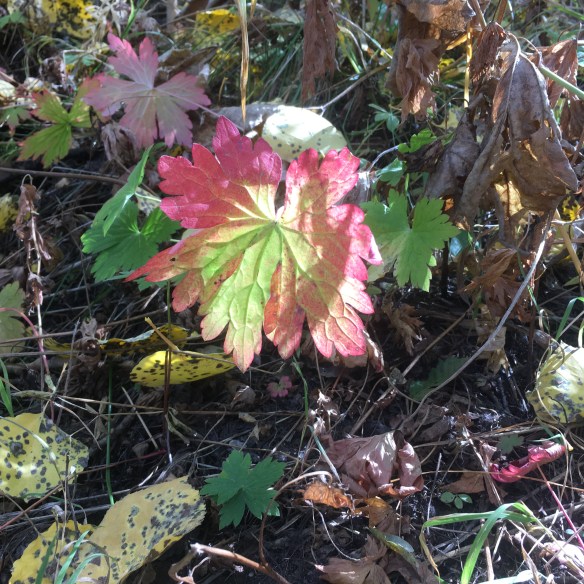
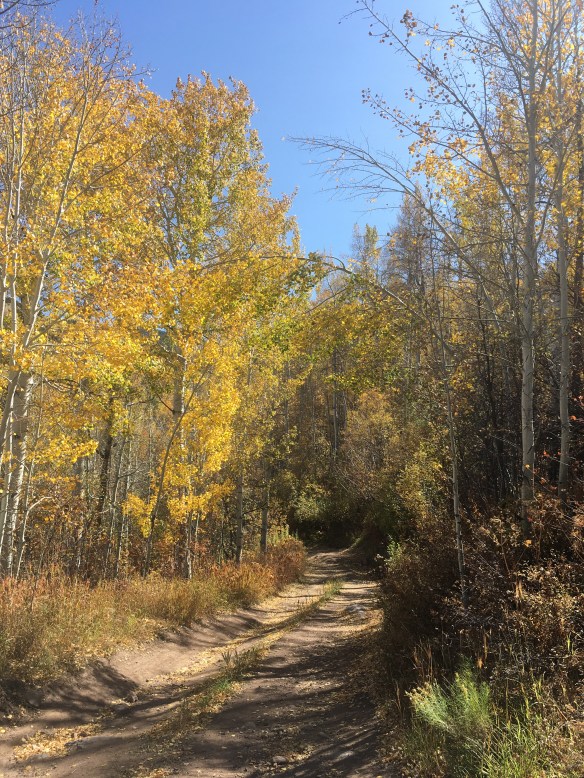
IMG_2649

NaBloPoMo 2019

What was school like for you growing up?  Were you bored?  Confused?  Frustrated?  I had a pretty easy time, but many of my classmates did not, even the ‘smart’ ones.

In high school I was on the speech team.  One of my events was persuasive speaking.  I chose one year to advocate for teachers to broaden their teaching styles to match a wider variety of learning styles.  I used the Gregorc Mindstyle Delineator as an example of how styles can vary (mine is Abstract Random, go figure).  It was an interesting thesis and I sincerely believed what I wrote and presented in those 8 minutes each weekend.

Thirty years later, I wonder how much I walk this talk of meeting people where they need me.  Simply asking the question, raising my awareness, makes me better.

Parenting.  It doesn’t matter how many parenting books you read or how well you think your parents raised you.  General principles apply, of course.  But every kid is unique, and we parents do better when we realize that the methods we use for anything on kid #1 won’t necessarily work with kid #2, #3, an onward.  Flexibility is key to a happy and functional household, for getting out the door every morning without yelling.

Marriage:  According to the Dr. John Gottman, about two-thirds of marital problems are perpetual, meaning they will never actually resolve.  So how do couples stay together successfully?  Among other things, they learn to accept one another and work around the hard stuff.  At least partially, we have to soften our rigidities, learn to bend and sway, embrace the supple, intimate dance of commitment.

Teaching:  Not all students learn best by watching.  Not all learn best by doing.  Or by hearing, mimicking, or competing.  Luckily, medical education gives trainees multiple platforms on which to acquire the necessary knowledge and skills to care for patients.  For all its flaws, our profession actually does well here.  I’m happy that I realized this in my own experience.  When I precept students in clinic, they shadow, scribe, see patients alone or lead a joint encounter, so they can experience the work from different perspectives.  I think this mutual versatility and adaptability makes us all better.

Patient Care:  Over the years I have accumulated myriad articles and books to share with patients.  But not everybody’s a reader like me.  Not everybody wants to meditate or journal.  Some people do better with a personal trainer, others in spin class.  It’s my job to assess how each patient is most likely to succeed in health habit optimization, and present the most appropriate resources for consideration.  Primary care definitely does not work with a one size fits all approach.  So now I include audiobooks, podcasts, phone apps, and YouTube videos in my repertoire of medical information sharing.  I am blunt when it’s needed, and also gentle and diplomatic.  I can speak from the head and the heart, often both at the same time.

Speaking Engagements:  Here is where my elasticity has grown the most in recent years.  For the first decade of my career, I still used the expository presentation style I learned in high school.  Thankfully in 2014, I watched Nancy Duarte’s TED talk on transformative oral presentations, and then read her book, Resonate, in 2015.  Make the audience the hero, she says.  Tell a story, contrast what is with what could be, paint the vision of the blissful future clearly.  Engage people’s emotions and aspirations.

This is not easily done with Power Point decks full of words.  But words are my medium!  I had to add color, diagrams, cartoons, photographs.  I started making my presentations more interactive, between myself and the audience, and between audience members themselves.  Now I have people stand up and move their bodies.  I may bring raisins to my next talk and do a mindful eating exercise.  I need to learn how to embed music and videos into my slides.

What is the objective in all of these relationships?  It’s connection.  How do we best connect?  We reach out.  We extend ourselves to others—make ourselves relaxed, flexible, spring-like.  That is how we gather people closer.  It’s not formless or weak.  A strong elastic maintains its integrity even under high tension.  But it must be stretched often, or it becomes stiff, brittle, and ultimately ineffectual.


November 10:  Experimental Questions Make Me Better

IMG_2654

NaBloPoMo 2019

What’s the most interesting question your doctor asks?  What effect does it have on you?

I get to ask some really fun and interesting questions of my patients.  They often come about spontaneously, then I realize how helpful they are, and I integrate them into my routine interview.

It was almost ten years ago now that I was seeing a pleasant young woman for the third time.  She had recurrent, nonspecific physical symptoms, and felt down.  She was having a really hard time at work, and it was having a significant impact on her overall health and well-being.  Around the same time I saw another patient, a young man.  He felt well overall, but was also not happy in his job.  I remember casting around in my mind, looking for a quick and easy way to quantify the negative effect of these patients’ negative work experiences on their health.  I can’t remember which visit sparked the 0-10 stress and meaning scale questions, but it was one of them, and then I repeated the questions on the other soon after.  These were my first two, unsuspecting, experimental question subjects.  On a scale of 0 to 10, how high do you rate the overall stress of your work?  That was easy, but I also had to figure out whether there was some benefit that was worth the cost of the stress.  So: On the same scale, how high do you rate the overall meaning of your work to you?  The bottom line is that we can tolerate very high levels of stress if the work is meaningful—for sustainable work, the meaning-to-stress ratio needs to be 1 or greater, and overall meaning is best at 7 or higher.  That year I realized I could create deeper, more helpful, more insight-revealing questions in my patient encounters.

My own work meaning rating rose by at least a couple integers almost immediately.

IMG_2628

Since then I have consistently asked about body signs of stress, resilience practices, the proportions of threat vs. challenge stress at work or home.  Since I last wrote about these questions in 2016, I have continued the experiments.

By 2016 I was also using the elite athlete analogy with my patients, asking every year about habits in the 5 reciprocal domains of health (after talking about stress and meaning at work): Sleep, Exercise, Nutrition, Stress Management, and Relationships.  But after asking the same questions for a couple years in a row, both my patients and I get a little bored.  So in 2017 I went a little deeper in the relationships category.  After confirming marital status, ages and health of children, I started asking, “Tell me about your emotional support network,” because the more I am reminded of the critical importance of emotional support in our health, the less it makes sense to not ask about it directly.

With each additional set of questions, I learn more about my patients. I learn how people understand the questions—sometimes it’s totally different from my own understanding, and the conversation about the meaning and objective of my asking gives me wonderful insights into people.  Patients are remarkably open and honest in their answers, which always reminds me of the honor and privilege of my role as physician.  The answers to these questions are what allow me to imagine my patients in their natural habitats, engaging with their work and the people in their lives.  The answers provide context and texture to the other patterns we uncover in health habits, and we often come together to a better understanding of both the origins and consequences thereof.  I can’t speak for my patients, but I always come away feeling just a little more connected.  I get goosebumps just thinking about it.

This year I’m excited to introduce 4 new questions.  It started out as three.  The third one wasn’t landing quite right initially.  I wasn’t asking what I meant, and I couldn’t quite articulate what I was after.  So I experimented with the wording until I got to the current state:

  1. In the coming year, what do you see as the biggest threat to your health?
  2. What is the biggest asset?
  3. Having answered these, how does this affect your decision making going forward? …And other iterations I can’t remember anymore
  4. One year from now, when we meet again, what do you want to look back and see/say about your health, relationships, and whatever else is important to you?
  5. (then the corollary question that occurred organically once and I then incorporated–) In order to make this vision a reality, what support do you already have or need to recruit?

I have asked these questions since July.  I always think to myself how I would answer for my patients, based on what I know about their circumstances, habits, and biometrics.  About two thirds of the time, our answers are the same.  Patients seem to receive them well, too.  One asked me to email them to him, so now I offer to email them to everybody.

IMG_2664

You might imagine that I think these questions make me a better physician.  That may or may not be true.  All of these questions make me better—a better, more self-aware person—because I also ask them of myself.  What is my meaning:stress ratio today?  This week?  This year?  I assess the threat/challenge ratio of my own life stressors, especially the acute ones.  I have had the same body signs of stress for many years, but in 2019 I may have developed a couple new ones, darn.  What’s the biggest threat to my health?  My hedonist impulses, no question.  The biggest asset?  My Counsel—those best friends and confidants.  What is my vision for my health a year from now?  I only answered that for myself a week ago (and I’ll keep it to myself, thank you).  And what support do I have/need?  I’m still working on that one!  That I don’t already know the answer to this one surprises me—I assumed I knew, but when I sat down to think about it formally, I realize that this may be the missing piece that holds me back from achieving some of my personal health goals.  HUH, how fascinating!  Did I not just write about how I question some of my patients’ ‘Lone Ranger’ method of self-care?  Well hello kettle, I’m pot!

Now, off to ponder some more, yay!


November 8:  My Students Make Me Better

IMG_1928

NaBloPoMo 2019

Oh how I love my medical students!

Every other year I meet a new group of about 10 third year students, at the dawn of their clinical careers.  What a privilege!  I lead a monthly small group for a class called Personal Transition to the Profession.  I have written about this honor before, describing how

  1. My only job in this class is to love these students into the amazing doctors they are meant to be
  2. They help me see physician burnout from different perspectives
  3. Their experience of medical culture resonates with my own

Monthly group meetings are just enough to start to know any one person after two years, and then they disperse and I grieve the loss, just until my new group starts.  After ten years of stimulating conversations on professionalism and the humanity of medicine, I still feel anxious about my impact on these bright, insightful learners.  Did I do a good job?  Did I make a difference?  Did their time with me matter at all, or was it a monthly waste of time?

This June, I finally faced these questions head-on during a coaching call with Christine.  What are my strengths, what value do I bring?  How can I distill the central learning objective each month?  How can I connect more effectively?  We settled on some ideas for setting expectations and being more direct about goals and touchstones.  I instituted check-ins at the beginning of each meeting, something I should have started years ago.

This month’s topic was open; students were invited to write and discuss whatever was on their minds.  Blog posts and check-in comments resonated around words like exhaustion, sleep, and longing for connection.  So rather than delve into the content of their writing, I simply asked how I could help.  One student, ever honest and forthright, said, “let us go home and get to bed.”  The air felt heavy, almost forlorn… but not hopeless.  I found myself monologuing a few minutes about appreciative inquiry, and finally asked them, a little desperately, “What is the most loving thing someone has said to you this week?” and then, “or how have you felt loved this week?”

Slowly, small vignettes of connection, meaning, and hope emerged.  The student who wanted to get home to bed had received an email from a former preceptor, whose patient finally started and stayed on much needed antidepressant medication, which the doctor attributed to our student’s contact with the patient during his primary care rotation.  Another’s parents had driven into the city early in the morning to lend her their laptop after she had spilled water on hers.  Other students had connected with family members and friends, who expressed pride and encouragement.  Once again I was overcome with love for these young colleagues, and I could not help but tell them:  I have one job here, and that is to make sure you know you’re loved in your training.  I am not here to evaluate you.  You will all finish, you will all succeed.  In the time I have with you, my only objective is to hold you up in the process.  I made sure they all have my cell phone number.  I encouraged them to call me if they ever need anything.

Two students (and one’s wife) came to my house for dinner tonight.  It was supposed to be everybody, but I neglected to send a confirmation email so people weren’t quite sure if I meant my invitation last month (probably because I had planned for them to come over last month and then cancelled on them that week).  We ordered pizza and salad, I fried some potstickers, and we sat around the kitchen island with my kids, just talking.  We are all nerds.  We love to read, to learn.  S’s wife is a resident at my former hospital, and knows my friends there.  They have a book club there now, and this year’s theme is wellness.  She asked for suggestions, so I lent her my copy of My Grandfather’s Blessings.  She and S also borrowed our season one DVDs of The Big Bang Theory.

Our group will meet at a local restaurant after next month’s class.  We will plan (better) another evening meal at my house in the spring.  In the meantime, I will extend an invitation to each of them to come down if they ever need a break from school, a change of scenery, or just to feel a little extra love.  I have been where they are, and I remember how much I appreciated the empathy and compassion of my elders in the profession.  I still do.

How does this all make me better?  In medicine we talk all the time about the calling to care for patients.  But caring for one another, our colleagues and trainees, is equally important.  It keeps us and our souls whole, feeds us so we can keep doing the work.  My students recharge me, inspire me, and keep me young.  What an absolute honor to know them.