
Dr. Jerkface In Context—Healing the Patient-Physician Relationship

DSC_0507

Excuse me, I took an unintended break for Thanksgiving!  Hope you all had a wonderful holiday!

NaBloPoMo 2017: Field Notes from a Life in Medicine

For the past year or so, maybe more, I have increasingly tried to engage my friends in discussion around allied advocacy for physician health and well-being.  Inevitably, however, I’m met with anecdotes from my friends about asshole doctors.  It is a strikingly common experience, I’m sad to report.  And it makes sense:  If a patient has a bad experience with a doctor, ie the doctor behaves badly or the patient feels dismissed, ignored, disrespected, or mistreated, the normal response is to blame the doctor and assume that s/he is an asshole.  In each of these interviews with friends, it took a while for them to come around to the idea that the doctor him/herself may be suffering and therefore not behaving/performing their best.

But the next question is this: Do patients care about doctors’ suffering?  If they knew how the system harms physicians, would they have compassion for us?  What about if they knew how physician burnout and dissatisfaction directly affects their quality of care, all of it negatively?  What would move patients to stand up with and for doctors?  This is my goal for the indefinite future: to help us, patients and physicians, the end users of our medical system, stand up with and for one another, for positive systems change.

Right now I see it as a very personal, grassroots endeavor.  Outside of a one-on-one patient-physician relationship, ‘patients’ and ‘physicians’ in general are abstract groups to us all, and it’s hard to feel compassion for and connection with an abstraction.  “Patients are too demanding, entitled, and ignorant.”  “Doctors are arrogant, dismissive, and profit-driven.”  We carry these overgeneralized internal narratives and others into our encounters, often unknowingly and unintentionally.  Even when we think we see and know the person right in front of us, these underlying assumptions still color our experiences with them.  So whatever conversations we may undertake will take many repetitions to finally reach true mutual understanding.

I have been a member of my church since 1991.  Many others in the community have been there much longer than that.  There are other physicians, and we are all patients, ranging in age from infants to octogenarians.  I have proposed to host a focus group to discuss patient-physician relationship, especially as it relates to the effects of physician burnout on patient care.  The plan is to do it once, with whomever is interested, and see what happens after that.  I picture 10-20 people, patients and physicians alike, seated in a circle.

The objectives will be stated:

  1. Hold an open discussion about people’s experiences in the patient-physician encounter, and explore the context of forces that influence those experiences. Such forces include visit duration, documentation requirements, workflow inefficiencies, patient expectations, insurance status, and clinical setting (hospital, outpatient clinic, etc.).
  2. Participants leave with improved mutual understanding of one another’s experiences in the medical system and more likely to feel empathy and compassion toward their counterparts in the next encounter.

In the long term, I wish for patients and physicians to form a unified platform from which to advocate for policy change.  We, patients and physicians, are the end-users of the healthcare system, the largest combined demographic in the system, and I believe we are the ones who benefit the least from the system.  Health outcomes for American patients are dismal compared other developed countries, despite our exorbitant expernditures.  Physicians kill ourselves at more than twice the rate of the general population.
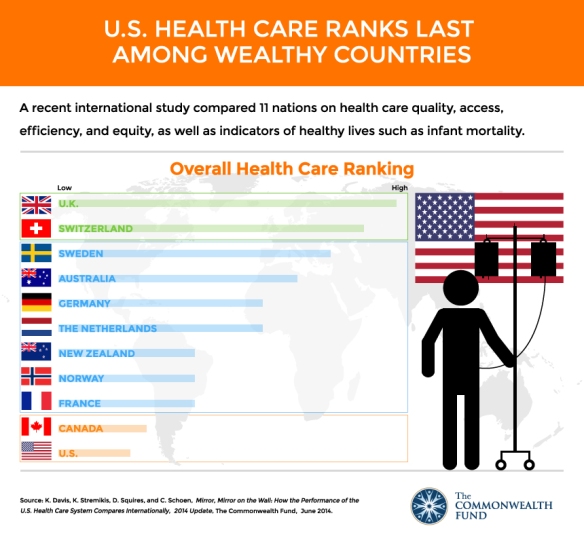
It’s not enough for medical professional societies to write co-authored, open letters to Congress.  It’s not enough for individual patient constituents to stand up at town halls and berate their representatives.  We must orient ourselves as resistors in series, rather than in parallel.  I think the movement will grow most effectively out of existing connections and relationships, through which we can find shared interests, common goals, and a strong, unified voice for change.

I seek your feedback:

  1. How do you picture this meeting going?
  2. How interested are you in learning about physician burnout and how it affects patients?
  3. If you were invited to such a meeting, what would you think and feel about it?
  4. What would make you more likely to participate?
  5. Would you want to host such a meeting in your community? How would you do it?

Thank you for considering, and see you tomorrow!

Incomplete Thoughts on Suicide

DSC_0029

Not selfish

Not thoughtless

Simply belief beyond shadow that no one will mourn you, people will be better off without you

Unimaginable for those who have not lived it

Most who try once don’t try again

So better to keep guns away

——————–

One of my high school classmates killed himself when we were seniors.  He shot himself in the head at home.  He was the vice president of our Students Against Driving Drunk chapter (I was president).  He was a member of the National Honor Society.  He was well-liked, always friendly, generous, smiling, encouraging.  He was a nerd, and so was I, so I thought nothing of it.  I did not know him well, and I never asked him about his life, that I recall.  I have no idea whether he was bullied or what drove him to take his own life.

The morning we found out, our calculus teacher had to sit down in the middle of the lesson. She was overcome.  One of my other classmates got up and hugged her.  She had more presence of mind than I.  I can’t remember if it was that moment or later, or if it was our teacher or someone else altogether, who said something like suicide is ultimately a selfish act.  That it was inconsistent with our classmate’s character to cause so many people so much pain.  That if he had known how much he would hurt people by this act, he never would have done it.  I can’t say I had thought anything about suicide before then, and I have probably not thought enough about it since, but her words stuck with me.  I’m not sure I would have ever come to this conclusion.

The way I understand (think I understand) it today, suicidality is such dark state, a place so far removed from where we connect with our true selves and others, including (especially?) loved ones, that people really do believe that everybody else will be better off without them, that there is nothing worth living for.  I cannot fathom that kind of disconnection and loneliness.  It feels almost too scary to even contemplate.  I feel totally incompetent to address this kind of pain and suffering.

I saw this video recently and it moved me.  A young man jumped off the Golden Gate Bridge and survived; he tells his story of instant regret for the attempt, and gratitude to be alive.

I pray tonight that if anyone in my circle is feeling suicidal, I may say or do something to help them know they are loved, wanted, and connected, and to keep them with us long enough to get help.


I’m the Doctor, You’re the Doctor

DSC_0401

NaBloPoMo 2017: Field Notes from a Life in Medicine

“I’m the doctor, just do what I say.”  I don’t think doctors actually say this anymore, but I wonder how many of us think it?  It’s probably not even a conscious thought, but rather an attitude—paternalistic and directive, a relic from the old days when patients had no power or voice in the relationship because the doctor held all the information and all the expertise.  Today patients are empowered by culture and the internet to participate in shared decision making , and it’s a good thing.

The problem with the “I’m the doctor” attitude is that it inhibits the patient from owning their own healthcare choices.  Then if and when the care plan goes badly, they feel rightly justified blaming the doctor, because they were just following orders.  Sometimes it’s necessary, like in the case of trauma or serious surgery, where the doctor is truly in charge and must make life or death decisions according to their expertise and judgment.  Thankfully this is not my work.

In primary care, if I take this attitude, I miss an opportunity to forge a collaborative and rewarding relationship with my patients.  If I simply issue orders, people don’t feel seen or heard, and they may withhold important information that would help me make a better, more relevant diagnostic and treatment plan.  And if they defy my advice (edict), as they are more likely to do when our relationship is transactional and cookbook, and things go well, then I lose credibility and they are even less likely to follow my advice in the future.

“You’re the doctor,” on the other hand, is something I hear often.  It usually comes up when patients (and I) are faced with decisions involving competing interests or vague risks and benefits.  An example is prostate cancer screening.  Guidelines over the years have ranged from screening every man, every year, starting at age 50, for life, to don’t screen anyone ever.  Most physicians and professional societies agree currently that the best approach is to discuss risks of screening (over-diagnosis, harm from testing in patients without disease) and not screening (missing early cancer, delayed diagnosis, possibly leading to preventable negative outcome), and make decisions based on patients’ individual values and goals.

When a patient in this or a similar situation says to me, “You’re the doctor, just tell me what to do” alarms ring my mind.  What I intend to be a shared decision suddenly falls to me to make unilaterally.  In this scenario, the patient essentially cedes responsibility for the treatment plan, and if it goes badly then it’s my fault “because you told me to.”  Or the patient may choose to ignore my directive and also blame me because “you told me to but I disagreed.”  Either way a patient may then feel justified to blame me for any negative outcome, even though I gave them what they said they wanted.  I understand that this is not how the scenario necessarily plays out, but somehow I’m wary of it.

I had my teeth cleaned today.  The dentist recommends x-rays every year; I politely decline most of the time.  I just don’t understand (or accept?) the rationale and benefits of annual radiation to my face, and I’m cynical about the fee-for-service structure in which providers make more money for ordering more tests (which is a legitimate concern in medicine, also).  Without explaining why it’s recommended for me particularly (it was explained later), I heard, “Well, it’s okay if you don’t do it today, but you have to do it next time.”  [Expletive, not stated out loud.] I am emotionally triggered when people try to tell me what to do without asking me what I think about it first (see my post from 2 days ago).  So I bristle when I witness colleagues doing it, or when my patients demand it from me.

I don’t see my job as telling people what to do—I am not a surrogate.  Rather, I think of myself as consultant and guide, expert, counsel.  It’s my job to discuss, explore, explain, review, consider, negotiate, compare, assess, debate, explain and discuss again, and then make a shared decision.  This includes follow-up and contingency planning, setting expectations, and reassurance about my commitment to the person, regardless of the problem.  I’m the doctor, you’re the patient, we are a team.  We are in this together.