Reconciliation

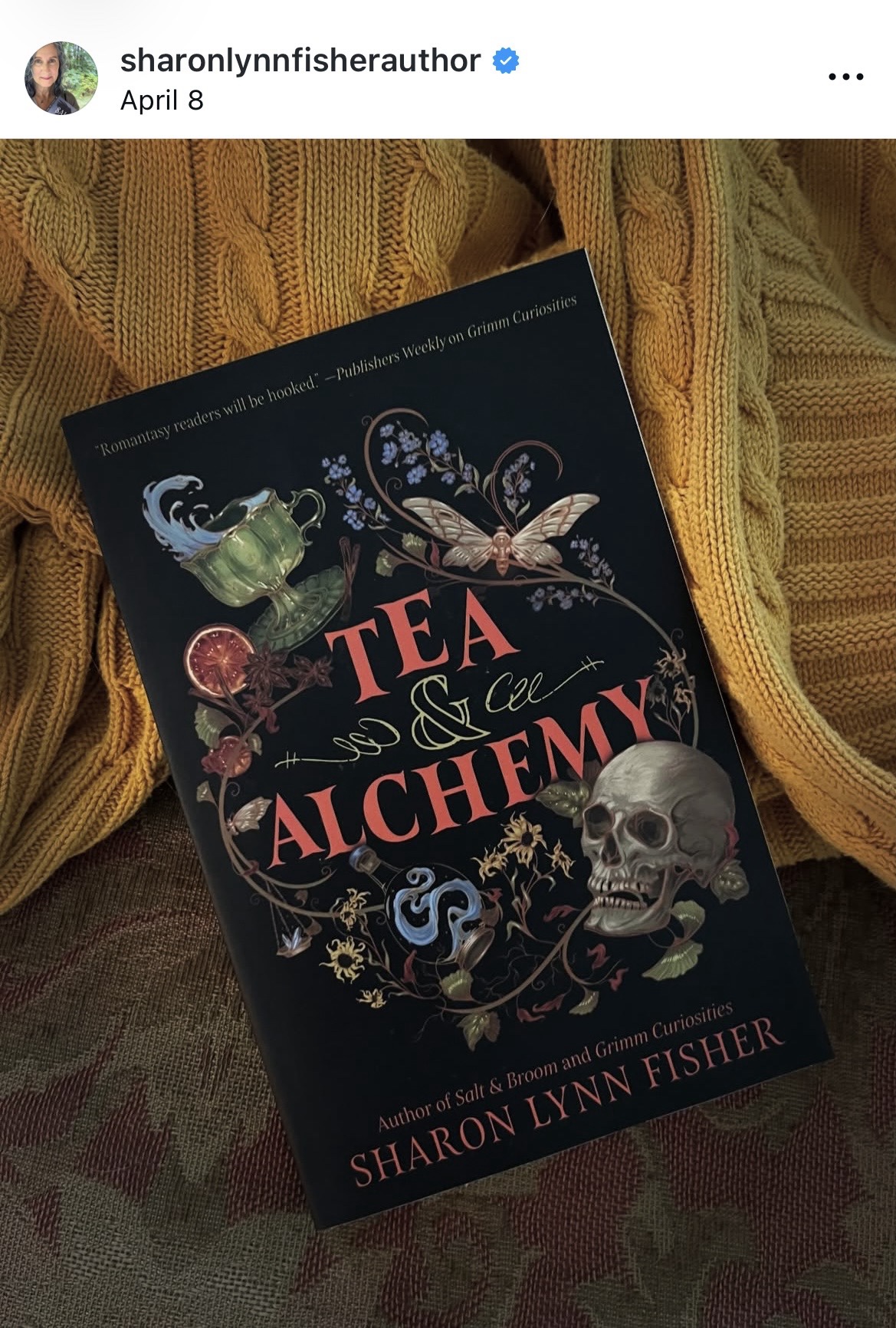
“There’s no getting around anything,” Tyler says… “There’s only getting through things… I had to shine a light into very dark corners and just look, just see. See myself, and all the ways fear and guilt had trapped me. And I came to understand something while I was going through it. To be fully human is to be fully sexual. And while that doesn’t mean having sex, or even sexual desire, it does mean being fully in your body. It means recognizing that there is nothing any less holy about your body than there is about your soul. That as long as your body is treated with consent and respect and affection, and that you treat the bodies of others in the same way, there’s nothing inherently sinful about your flesh, about its desires or lack of desires, about what it does or does not do. You do not have the ability to tarnish her or yourself. That right isn’t given to any mortal person. She’ll be no more or less holy for sex. The same goes for the lack of it… Abstinence is asked of everyone at some point in their lives. Maybe a partner is not emotionally ready for sex. Or maybe they temporarily aren’t able… And for some people celibacy is not a struggle, just like fasting isn’t the same struggle for everyone, or giving up money or giving up spare time, or giving up sleeping in late, or, or, or… A life consecrated to God is a life where you give up personal desires to serve God instead. And there’s nothing more or less special about celibacy than there is about poverty, or seclusion, or sleep. And… it’s not always easy to discern God’s desires for us, because he or she wants us to be fully human and love each other as fully human, and that takes as many different forms as can be imagined… No way is any holier than another. Because our bodies are holy no matter what, and our lives are holy no matter what. Monasticism and lay life are just different ways of loving the same god and showing his love to the world.”
–Tyler Bell, Sinner by Sierra Simone

How wonderful when a passage from one book so validates and reinforces the themes and threads of another? And how fascinating to find myself so lost for words to express the profound effect a book has had on me?

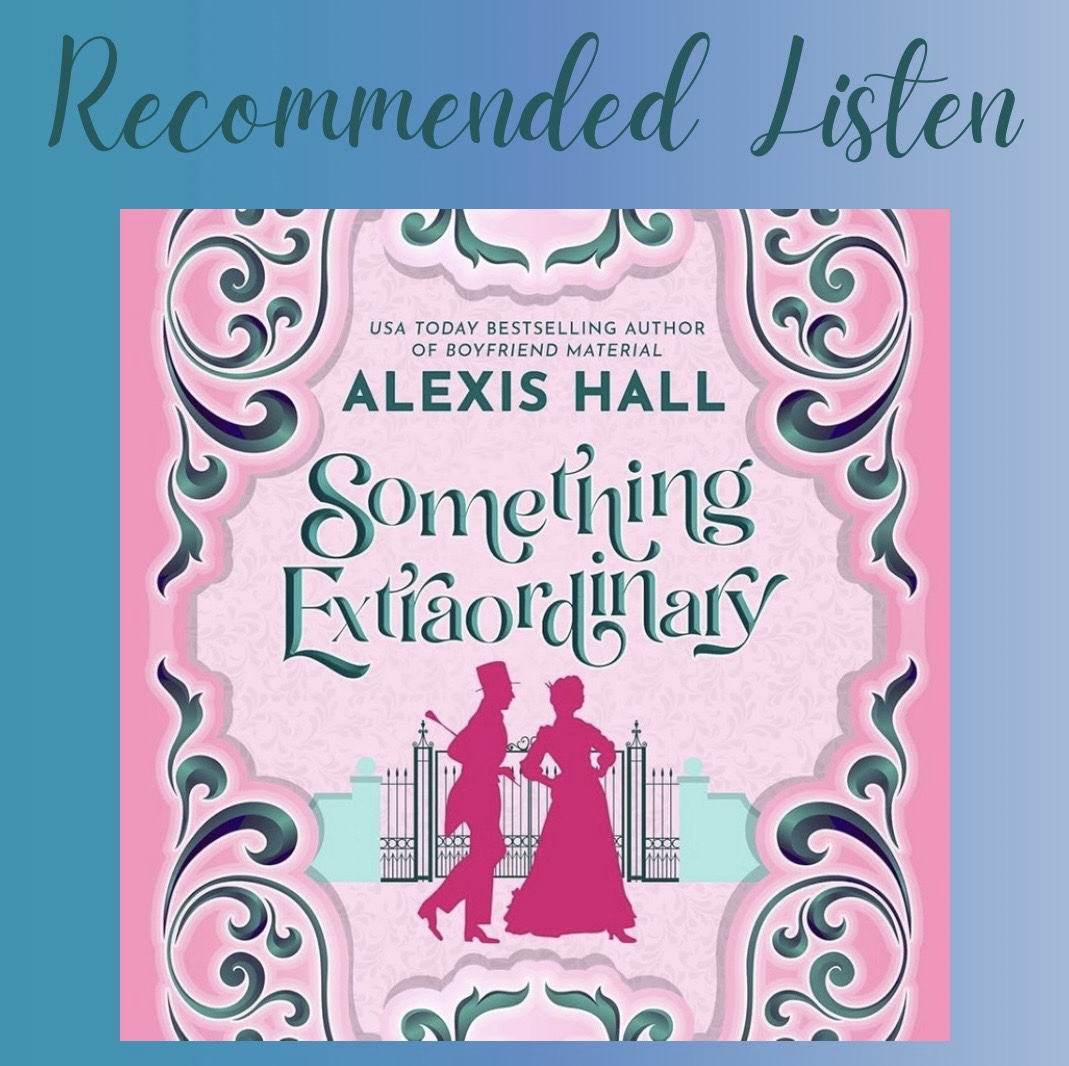
Never After by Alexis Hall

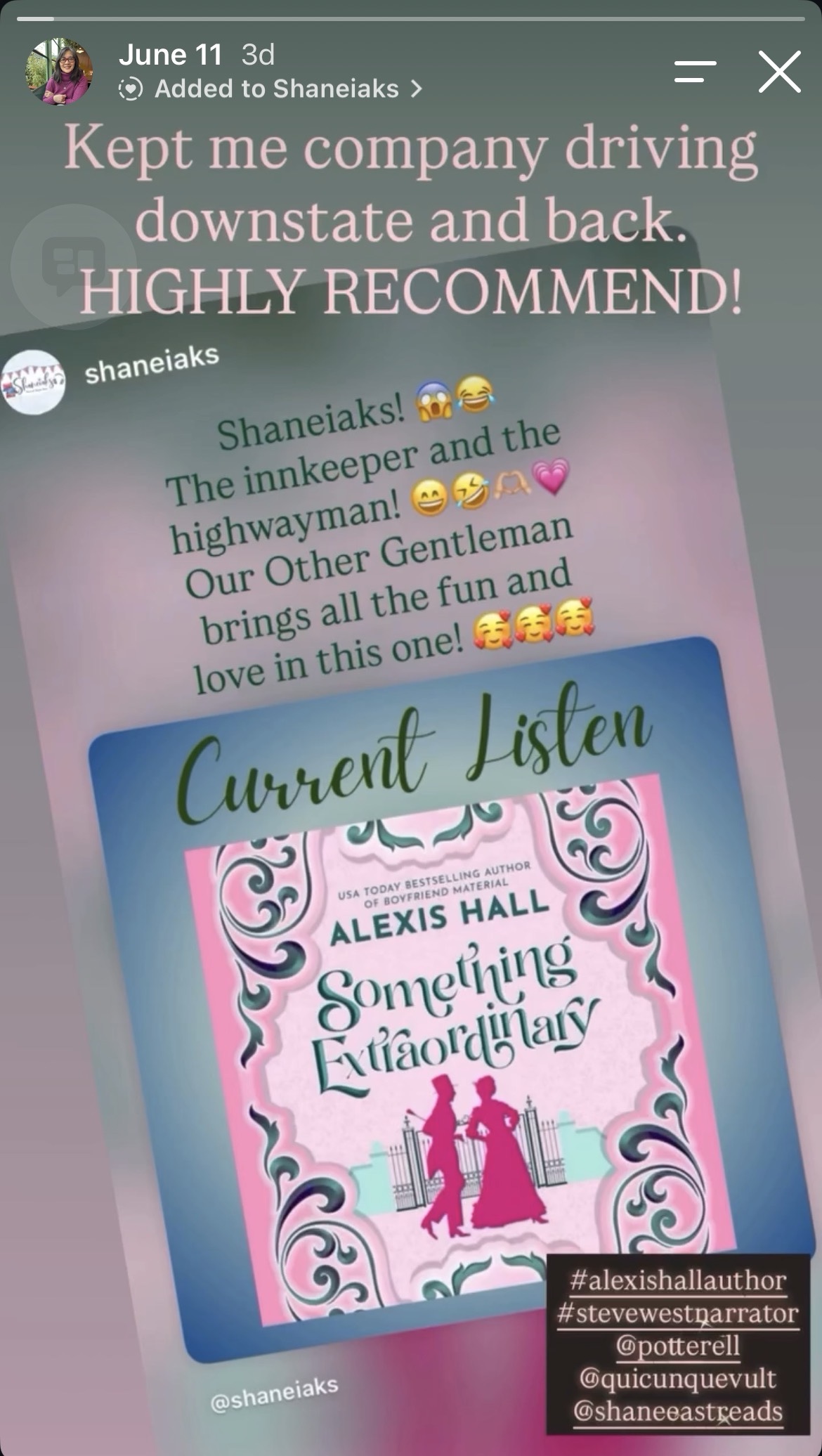
I came to this book, of course, through Shane East/Steve West. As soon as he said it’s one of his favorite emotional reads of the year to date, I knew I was in for something special. I listened, purchased a print copy halfway through, then listened again in tandem with reading, toggling back and forth. I have never marked up a novel like this before, and rarely used this many book darts for one volume. It’s my first novel by Alexis Hall, and will not be the last. The way he engages with readers, her openness and directness in their expressions about the world and us humans, and how s/he writes this story–I feel I have found yet another of my people in the love of all of humanity.

This story of male-male romantic love is so tender, so devoted, so tragically loving, so human. The caring and compassion Hall brings to these characters reminds me so much of Sierra Simone‘s reverence for both the deep faith one can have in the divine and all of love’s manifestations in humanity, even as supposed representatives and rhetoric of said divine in organized religion mortally condemn exactly some of these universally human expressions, in works like Sanguine and the Priest Collection.

Such thoughtful and poignant ethical and moral reconciliation through literature, the journey of empathy and compassion, understanding and reverence of and fidelity to our core humanity, is always what moves me most in any story. Looking back, it is exactly this thread that runs through the books I recommend most:
Beastly Beauty by Jennifer Donnelly
Never the Roses by Jennifer K Lambert
The Crowns Trilogy by Nicola Tyche
To Bless the Space Between Us by John O’Donohue

These books give me hope for bridging our ideological and political differences around sexual orientation, gender, and all other divergent and/or conflicted arguments about expressions of self and how we each/all choose to present in the world. It is our shared humanity, our capacity for curiosity and openness to the ‘other’, that will save us from causing one another the gravest harm, the deepest trauma, from destroying ourselves collectively. Literature like this humanizes us from the backs of our brains, where our deepest and most meaningful connections to one another live, if we allow ourselves to embrace the characters and empathize with their stories, because they could be any of us.

This historical love story between two complicated men, Thomas an Anglican priest and Micha an opium-addicted prostitute, accompanied by their friend Sheba, a former prostitute and single mother, “is tragically compelling from the start, paced such that we feel every nuance of emotion and plot with wrenching saturation,” I wrote on a Shaneiaks Instagram post.
“Such lyrical and poignant writing, a wrenching and real, unvarnished and eloquent portrayal of the best and worst of us,” I commented on Shane’s Insta.
“Lyrically written with emotional depth that captures one’s heart from the outset, breaking and bandaging, transforming us repeatedly alongside the characters. I listened, then listened again while reading, each pass a deeper and more moving journey. Every page is marked up. Steve West’s incredible care and devotion to the story and his craft shine through yet again, bringing all the characters, including the supporting cast, to life such that we cannot help but love them, in all their broken and imperfect humanity. Keep the tissues close.” –My review on Aubible. So I guess I mustered some words here and there.

Below the next graphic, I list the topics and concepts that stand out in this story. Below that, I have copied the most outstanding exerpts from the book to me–the ones I reread because they lift me in hope and connection. Read at your own risk–they may turn out to be spoilers.

My highest dream for this post is to bring readers and listeners to this story who might have otherwise rejected it. I wish to gently nudge a door open that someone may have thought permanently locked, to invite them (you?) to consider a perspective (or multiple) previously assumed to lie beyond understanding. This story is worthy of our time, our openness, and our reverent, thoughtful contemplation. Thank heavens for authors like Alexis Hall, Sierra Simone, and others, and for performers like Shane/Steve, who bring these stories to life in our ears and hearts, so we may connect on multiple, overlapping levels of consciousness.

May we all tread a little more lightly on one another’s souls, my friends. We are all healing from something.

Homosexuality
Prostitution
Addiction
Religion
Social norms and expectations
Duty
Suicide
War trauma
Community
Self-acceptance
Devotion
Commitment
Sacrifice
Reconciliation
Peace
Innocence
Honesty
Earnestness
Vulnerability
Courage

“Have I looked thus upon other men before? Not to my recollection but perhaps I deceive myself?… There are many who would hold the thinking, itself a sin–ill thought, the brother of ill deed, whether it is carnality or doubt that preoccupies the wayward, imperfect heart. But I cannot believe that. I believe it is freedom of thought and deed that lends validity to moral choice and action… But if we felt no struggle, if we resisted no temptation, of what worth would be our capitulation to moral law, To God’s love? For what benefit free will, if we have not the mind to exercise it?” –Thomas Mandeville

“…But these thoughts, these thoughts that many would call iniquity, come from some part of me that, though only freshly discovered, seems inviolable. How can I repent that which I know to be wrong, yet does not feel wrong? If I am made in God’s image, then surely he make this also?…But mine must necessarily be a limited understanding. Is there not some plan, as I have often claimed to others? Some deeper meaning? But oh, what is it? What is it? I can find no sense in this. And I cannot see the harm.” — Thomas

“...the time will come that he may want to leave–I dread it and anticipate it, with almost equal fervour. When he is gone, I will be free. I will no longer fear myself and my sins…But it does not feel like liberty. It feels like loss.” — Thomas

“If this was strange, Thomas had no way of to judge its strangeness. There was already too much for him to feel and think. Knowledge that he had always known to be forbidden, revealed to him, in all its beauty, like a vision of heaven itself. To be like this, with another man, crowned in falling leaves and sunlight, seemd a blessing beyond any earthly reckoning. His heart over-spilled on the loveliness of it, and happiness–pure and clear as water–ran through all his veins, as riotous as spring after the longest of winters.”

“‘Micha, you must believe me when I tell you I have not guilt for this. No shame. I cannot. I can only thank you, with all my heart and soul.’
“‘I have always tried to live in accordance with my profession. Until I met you, I did not even reailse I was made this way… And it has been quite the loneliest discovery I have ever made.’
“‘I felt so set apart. So lost. Knowing there was a part of me, an unchangeable part of me, that would make others hate me… But today you showed me it need not be so… I can’t begin to tell you how it feels to know you are as I am. And that you like me too.’
“‘How remarkable… that in the vastness of the world, we should find each other. Some benevolence must have guided us together.'” — Thomas

“‘ …I just feel so very blessed…’
“‘You. Being with you. Knowing I am not utterly alone. And feeling, for perhaps the first time in my life, truly myself.’
“‘… I’ve never felt so confident in the beauty and benevolence of the world, and its creator, but I suppose I must be very far from grace indeed, to be who I am, and do what I have done… I presume an answer will come to me in time…’
“‘Oh,… if only we could be married…’
“‘How could love ever be sinful, whatever form it took? So really our only wickedness is fornication. And that is only because we are denied an alternative.'” — Thomas

“‘Well,’ [Micha] returned softly, ‘now we’re both damned.’
“Thomas did not flinch, did not stop touching him. ‘No, my love, that was a sacrament, not a sin…’
“‘We are fashioned in His image, Micha. To love each other is the most intimate communion with Him…’
“‘It’s all connected. There is no shame in love.'” –Thomas

“‘You know,… the strange thing is that I feel closer to God than I ever have, in ways I would never have understood before we met. But I can’t remain a priest…’
“‘It wouldn’t feel right, attempting to guide others to the grace of God, when I would be seen as excluded from it.'” –Thomas

“‘I’m scared. It’s frightening, to be who we are, and want what we want. Even though it’s no fucking different to what they take for granted.'” –Michael (Micha) Dashford

“‘And yet,… if you have never known love, the love of your father, the love–as a parent–you will feel for your child, or even the love for a sweetheart or a spouse, how can you even begin to understand the love of God? A love that’s as gentle as it is strong, as tender and as intimate as a lover’s embrace, as warming and wonderful as that first sip of tea. It seems impossible to comprehend, but it’s the nature of love to be all these things, all these things and more, both in heaven and in earthly counterpoint… And that is what I wish to think about today. The miracle of love, in all its multiplicity.’
“‘The more I live, the more I love, the more I know that this is what I want. It’s what I pray for, above all else. Simply that I may grow in love… That loving Him, and loving the world, is mediated through the ways we love the people around us, as partners and parents and lovers and friends. All love flows together, from Him and to Him. The multiplicity of love keeps multiplying.'” –Thomas

“‘Nobody gets everything they want in life. We all pay prices, make choices, accumulate regrets. There will always be paths we didn’t, or couldn’t, take. But I fell in love with you. I wouldn’t change that, even if I could. Even for every other dream in my heart.’
“‘And your God?…’
“‘ My God made me. He’ll work it out.'” –Thomas

What Anger Makes Us

Trail near The Lodge at Whitefish Lake, Whitefish, Montana

Dear Readers,
I wish you all the curious, thoughtful, open, and loving friends like I have!
The same person I mentioned in “What Does Love Make Us?”, Sean, helped inspire this post tonight, coaxing insights to emerge just by being his curious, thoughtful, open, and loving self. Earlier I wrote a brief list of what I think love makes us:
Vulnerable. Courageous. Powerful. Forgive. Willing. Selfless. Grow. Better.

So what does anger make us? A dichotomy emerged in conversation today:

Adversaries
We see it everywhere: Rage poured forth, one person onto another, groups against each other. It’s us against them, no question, no nuance, no reflection, ‘no quarter.’ Yikes.

It’s understandable, of course, and sometimes even justified, this adversarial mindset and approach to the opposition, ‘the enemy’. Longstanding experiences of socially accepted marginalization, dismissal, and oppression fester and seethe, then spew forth like pus under pressure. As with any abscess, lancing that pent up wrath relieves pain, even as the initial incision stings momentarily.

Then we ‘go to war,’ as some might say. We ‘fight’. We take both an offensive and defensive stance, we weaponize our words, and we make all the worst assumptions of those we pre-judge as against us. We close our minds to alternative perspectives, plow forward with agendas that we believe can only be achieved by vanquishing all who resist. Even if our mindset is not this extreme, we risk sliding down that slippery slope. Abstraction and dehumanization of anyone ‘on the other side’ happens all too easily, my friends, and the louder the adversarial voices around us, the more pressure we feel to follow suit.

Where and what does this get us?

Looking back on my own life, on policy and human history, I can think of few tangible examples where the adversarial approach has benefited us, individuals and the collective alike, in the long run. And when it does, the costs are extraordinarily high, often borne by those with the least power or choice. Death, destruction, trauma, and lives irrevocably shattered–the adversarial route of anger scorches the earth.

Advocates
I have a friend who exudes rage and has suffered relationship and reputation damage from it. It makes me cringe because I understand the origin of their anger as protectiveness, righteous outrage on behalf of others, and a belly full of fire to do good.

I have also witnessed them advocate for their causes with diplomatic, almost loving assertiveness toward total strangers. They are bold but respectful, strong and friendly, a force of nature, like a stiff wind that envelopes and nudges you firmly but not forcefully from behind, getting you to where you might have been going just a little faster and with more urgency. People receive their words and advocacy with openness, curiosity, and a willingness to consider action; how often do you see interactions like this?

In January I wrote “Tested and Called“, feeling angry and a little hopeless after Alex Pretti’s murder by border patrol agents. It was my first documented “DIY pep talk“, I see now. I wrote about anger and courage, ‘hope’s two daughters.’ I reminded myself that in the face of all that makes me angry, I can and must continue to show up and ‘fight’ for things and people I care about. Better writers than I have made the distinction between fighting for and fighting against. It’s a subtle attitude shift that matters.

Fighting against–being adversarial–too easily devolves into ad hominem and caustic division: name calling, shaming, othering, dismissing, dehumanizing, and even violence. The external focus and negative energy depletes us, and when we see little to no progress we burn out. Fighting for, or advocacy, on the other hand, carries a light from within, an intrinsic motivation of renewable energy, fostered and amplified when any progress is made. Advocacy attracts allies, grows a movement, and creates sustained and sustainable change agency.

The language of advocacy centers the cause, not the opposition. It informs, educates, inspires, and empowers. Advocacy demands accountability of the systems it seeks to change, as well as its own advocates themselves. The strongest and most effective advocates strive always to walk the talk.

I have written this blog for eleven years. Surely there are posts that I would not write, or write differently, today compared to when they were published. Information evolves, and I along with it. My attitudes and opinions change with age and experience. But I can stand with confidence by the intent of every post here as non-adversarial advocacy of some kind–even when the execution misses the mark. I look for others with a similar ethos, especially in medicine and science.

Whom do you admire for their non-adversarial advocacy?
What good do you see them doing in the world?
How can we amplify them?

Below are Instagram accounts that I follow for their strong advocacy in the face of threats to the integrity of our scientific and medical institutions. Some of their posts verge on adversarial, but for the most part I perceive an earnest, professional, and evidence-based mission to protect public safety. And of course I think of Braver Angels and Builders for their work to bridge division and move us away from adversarial political engagement.

Lastly, apologies for this second delayed post–life! Quality time with Son and Daughter, both home from college, took precedence over sitting at the laptop. Worth it! May we all have such meaningful and fulfilling choices to make!

Fired But Fighting

Illinois Department of Public Health

Stand Up For Science!

American College of Obstetricians and Gynecologists (ACOG)

DogGlauc: Will Flanary, MD

DIY Pep Talk

“Wait, I have mantras for this!”

How are you affected by anxiety, rumination, or otherwise tenacious yet counterproductive thoughts and feelings in life? Many of us lose sleep. We lie awake, before falling asleep or having awoken at night, or both. I talk with patients about this regularly, a common problem that manifests for each of us in our own unique way.

Recently a patient mentioned it to me during a routine visit. After decades of stress-induced insomnia of various causes, there was a sense of placid acceptance in his tone and posture, and also hope that he may still find a way to overcome. He listed some prior life stressors, none of which had turned out nearly as badly as he had ‘unncessarily worried.’ He said when he remembers this, he is able to de-escalate in general, but it doesn’t necessarily help him at night. Since meeting me he had also been practicing box breathing to relax and calm his nervous system, which sometimes helps him sleep. So we agreed he could try to combine the two when insomnia hits: Breathe intentionally and rhythmically while repeating a reassuring, de-escalating mantra of his choosing. I’m excited to hear how this goes for him.

For some months I had been ruminating on and off about friction in a longstanding relationship. I journaled, spoke to multiple friends, and also lost sleep, which happens to me rarely. I entertained exiting the relationship altogether, but that was neither justified nor productive. I saw it as a personal challenge to walk my talk of showing up, sticking with it, and being my best relational self, despite feeling unappreciated and disrespected. What other story could I tell about this person and our relationship? The day before an upcoming encounter I felt almost squirelly from anticipation and ambivalence about how to approach the meeting. Then it hit me: I have mantras for this.

  1. I’d rather regret being too kind than not kind enough.
  2. Strong back, soft front.
  3. Do no harm, take no shit.

And just like that my conscience cleared, fight or flight turned off, and dread transformed into optimistic anticipation. I marvel still at how I recite my mantras everywhere to patients, on this blog, in social media posts and comments–I have even made stickers of them–and yet they escaped me when I needed them in a period of distress. I am all about relationships and yet this one flummoxed me–significantly. The mantras saved me–better late than never, and even better just in the nick of time!

I can neither prove nor disprove, but I tell the story that because I presented with honest equanimity and humbly confident professionalism, the encounter went smoothly. The relationship might even have improved? …I can’t say. I think I generally show up this way by nature and practice, but this time I had to talk myself into it. So I wonder, in all these years of friction (at least on my side) in this relationship, how much was actually mine to own, or in my imagination? This dynamic is definitely an outlier, so I don’t want to fixate on it; yet sometimes the exceptions point to areas of deeper potential insight and learning, no? Regardless, I’m grateful for how this episode has illuminated a new awareness for me and sharpened my attention to my own default attitudes and assumptions.

So what are your DIY pep talk methods? How did you come across them and why do they work so well? What mantras hold you up?

Happy Sunday, friends. Have a great week!