“I feel more liberated lately to say what I think, freed to be totally honest, boobs out (figuratively), suddenly and significantly more than before… “What am I saying/telling more? Usually it’s observations and assessments, syntheses of conversations, how I know people, how I see them in their contexts, and of course my relationships with them. When I see (feel) power, love, vulnerability, strength, connection, growth, evolution, light—anything that grabs my attention and moves me—I name it. I don’t let it pass by without catching and holding it a while, showing it, shining it. Do you see how great you are? Do you feel your worth? Here, let me show you, help you stand in it, own it. I have done this for years with my close friends. Maybe I’m just more generous with it now?”
So it’s been over two years of elevated effusion (more on this tomorrow)–amplification of an innate desire and affinity for deep, meaningful connection. I am who I am, and apparently ever more so with age.
Today I was almost tearful at realization of the reward. Speaking and acting love and appreciation BOOBS OUT, no reservations, has yielded more than I could have imagined or anticipated. Love begets love; tightening of connection brings closeness. I see you. I tell you, show you; you feel seenheardunderstoodacceptedandloved, we connect, and we are both exponentially better for it. Our conversations get deeper. We know each other better, feel each other’s experiences, empathize, relate, and settle peacefully into each other’s ethereal, transcendent embrace. I am surrounded by this energy nowadays, and the elation simply defies expression.
I do not effuse love to get it back; this is not quid pro quo. The origin of this kind of connection may be the furthest from transactional that I can imagine. I’m driven by the intuitive certainty that any expression of love simply amplifies it, strengthens it, puts that much more of it into the world for us all to revel in. Love, in all forms, saves us. Writing Smile Jar love notes lifts my spirit long before anyone else sees them. And yet, when the spark that I initiate lands, completes that arc of love energy emitted and received, it charges both our batteries and powers us all.
Effusing love can be risky. It’s vulnerable. Sometimes I get strange looks; outright rejection is always a possibility. The intrinsic and extrinsic benefits, though–oh my friends–so very worth the effort.
Wishing you all to feel this kind of deep reciprocity of love, my friends. “Agape on,” I want to say. The world needs y/our love so desperately. See if you can withhold a little less–consider it? What would that take? What could be your reward? I will hold that whatever you emit returns to you in spades, uplifts and encourages you to continue, as it has for me. Peace, friends. xo
How is it August already!? *sigh* I hope we have all savored the summer (here in the Northern Hemisphere) and all it has to offer. There is just something about the longer, brighter days–I know there are myriad researched psychophysiologic effects, but I’m too lazy to look them up. Happy to just revel in them! Energy, activity, growth, flourishing–we humans are part of nature… Life occurs in seasons, and the lushness of summer blooms, the bees’ bumble-busy-ness, watching kids play joyously outside–it all just activates me, makes me frankly elated.
So today I got particularly excited thinking about how women romance authors hold one another up. I have noticed it for a while, and it hit me anew this afternoon. Here’s the story:
Shane’s debut on Quinn has been widely anticipated and very well received: As of this writing, about 60 hours out, his first audio has garnered over 4100 plays and almost 800 subscribers. Amidst the deluge of praise, I happened to catch an Instagram story posted by romance author Elodie Hart, acknowledging her good friend Holly June Smith for writing Shane’s inaugural script. It struck me again how often this happens in the romance world.
I see authors regularly promote one another’s work in their weekly newsletters and social media accounts. These magnanimous women include Sara Madderson, Nana Malone (who also co-founded Audio in Color, a non-profit dedicated to increasing diversity and representation in the romance and audiobook industry), Marni Mann, Sierra Simone, Lauren Smith, and Lili Valente. They post about how they collaborate, commune, and just have fun creating together. How wonderful! How generous, loving, and mutually beneficial! Is there any other profession where this happens so commonly?
I think about athletes, thought leaders… It always makes me happy to see blended teams play together in Olympic and All-Star games. Simon Sinek directly addresses his rivalry with Adam Grant in his book The Infinite Game. He frames this competitive relationship positively, as it drives his own professional excellence. In academic research, where resources are limited and science moves quickly, the culture is the opposite of collaborative and mutually admiring–‘cut throat’ is often the prevailing attitude.
Is there no sense of competition in romance writing? I have no idea. I just notice the love of women holding up other women.
I have written before about allyship, especially men of women. Shane East consistently upholds and amplifies his female colleagues, and continues to do so on this new platform. How would it be if we all amplified one another, in humility and generosity, regardless of gender? Is that realistic? There are still so many gender-based power and status dyamics in multiple (most? all?) domains of human relationship… And yet, we can’t know how social norms will change unless we challenge them, right? Romance and erotica still make a lot of folks very uncomfortable; hence the heavily guarded anonymity of some creators. I understand and respect this; I feel minimal urgency to change it, because I see the tide turning, accelerating toward mainstream cultural sex positivity every year. In my mind, this makes gender parity more likely in the far future. Every little step counts. I know this is just my own perspective, having immersed in the romance world only recently. Maybe that’s why I feel compelled to write about it often, to express my own solidarity and allyship with the progress of sexual and relational freedom for all.
Challenging the status quo does not have to be adversarial, or even direct. Romance novels don’t change social policy. I don’t imagine it’s many authors’ primary objective to activate readers and listeners to lobby Congress or protest in the streets. As throughout history, fiction illuminates humanity and speaks, however quietly yet forcefully, to our very souls. It moves us, sometimes ineffably and other times powerfully, to examine and act. Social change happens in drifts and then shifts, slow and then fast, with forward and backward steps, on a long, jagged arc toward acceptance and inclusion. Human relationships are more complex now than before, and also fundamentally unchanged: we are all here to love one another and help us all live our best lives.
I never would have guessed that my whimsical romance obsession would yield deep and divergent thought and personal evolution. The friendships, the discussions, the self-discovery and intricate connections to shared humanity—it has all been just such a gift, I get goose bumps.
As we enter this last stretch of summer sun and warmth, I sincerely wish for us all to notice humans treating other humans well. It’s okay to feel cynical about humanity, even most of the time. But let’s not allow this to close us off to opportunities for connection when they occur. In fact, I encourage us to actively seek those opportunities–I promise, they are everywhere.
After posting “Questions for Connection” last Sunday, I started listening to David Brooks’s How to Know a Person: The Art of Seeing Others Deeply and Being Deeply Seen on Tuesday–cramming for book club on Thursday, of course, having added it to our list months ago. Perfect timing! The whole book, as you may imagine, discusses the what, how, and why of human connection, and it speaks to my soul, omg! From developmental psychology to conflict resolution, education to culture, and told through his and others’ personal stories, Brooks distills decades and generations of objective and intuitive knowledge and wisdom into a fast, easy read/listen that points us all toward both the doing and being of presence and attunement to one another. There is an entire chapter on asking good questions, which I obviously appreciated.
Illumination was a novel idea to me, however, and I look forward to reading and marking up this chapter in the hardcover. Brooks describes illuminators as people whose presence–their posture, mannerisms, words, and ability to listen, absorb, reflect, and connect–lights others up. They are the ones who make us feel safe, who open us up and thicken our social ties. I have thought and written for years about the importance and impact of feeling seen, heard, understood, accepted, and loved; illuminators do this for and with us. This is how I wish to show up to everyone in my life–patients, family, friends, colleagues, online acquaintances, and strangers alike. The book provides skills and practices to do just this, and though I estimate my proficiency to be reasonably high already, Brooks presents pearls that inspire me to do better yet.
He also discusses Accompaniment, the attitude of escorting, even stewarding, one another on our respective life journeys. The concept evokes a sense of deep empathy, kindness, and reverence for our shared humanity that feels so lacking these days. Subsequent chapters discuss suffering, despair, empathy, hard conversations, and personality traits that affect our relationships to self, others, and society at large. “We are all walking each other home,” Ram Dass says. Hallelujah.
I finished HTKAP in plenty of time for book club, excited to explore and discuss with my friends. Our conversation was warm and connecting, and Mary shared yet another deck of questions meant to bring people (teens, in this case) closer. Sue even stayed the whole time, which was a big deal, and I think speaks to the successful intended effect of the book. How wonderful.
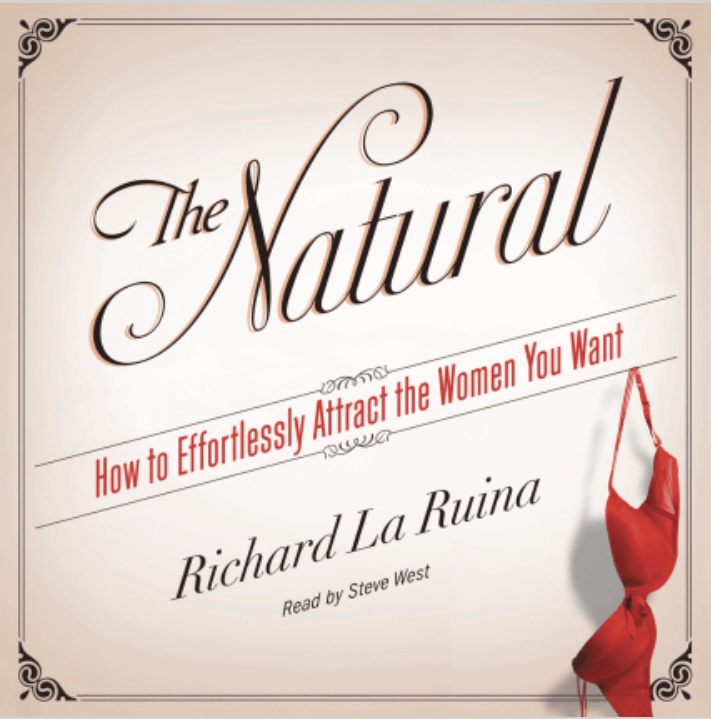
Published in 2014, eight years after founding his seduction and dating coaching business PUA (pick up artist) Training, some of the book has perhaps not aged well (eg the parts about touching, and use of the word ‘control’). The direct and sometimes blunt descriptions of ‘types’ of women and scenarios, and the granular scripts he presents as highly successful interactions made me cringe sometimes, as I imagined being the woman in the situation. But I found myself nodding as often as I squirmed. I make no judgments about pick up artists, their goals, and their methods, as long as everything that happens between them and the women they engage with is fully consensual, lucid, and mutually fulfilling.
Two things stand out to me about The Natural, especially in comparison and contrast to How to Know a Person.
First, La Ruina is remarkably open about his personal experiences throughout this book, similar to how Brooks is in his. He chronicles his journey “From Geek to Natural” in the first chapter. Son of a single mom in a rough neighborhood of London, bullied in school and having no strong male role models, he took the initiative to turn his nonexistent romantic life around and learn how to be more interpersonally effective with women. He devoured books on psychology and communication, and sought teachers. He practiced regularly, diligently leaving his comfot zone, trying different techniques, recording and analyzing successes and failures. He created an organized and consistent, though flexible and customizable method for approaching, engaging, and yes, seducing women, which he shares openly and transparently in detail in the book; we readers and listeners get to witness his transformative journey.
Throughout the book La Ruina’s honesty strikes me. I hear him (through Steve’s voice) as humbly confident, offering his personal perspective, learnings, and earned expertise to benefit others: men who feel like he used to feel around women–awkward and intimidated. He makes appropriate asides to point out that women are not simply marks for conquest; that seduction is, in fact, a process of connecting with another person on a human level–albeit with a specific and often carnal objective. He admonishes readers/listeners to be respectful and honest, to attune to women’s nonverbal cues, to practice excellent self-awareness and self-regulation. He addresses consent, sexually transmitted infections, and expectation setting. He distinguishes between same night sex and a one night stand: sex on the first meeting does not necessarily have to be the only time, and seduction can lead to anything from casual sex to casual dating, to long term relationship. I find myself mildly disconcerted and oddly appreciative at the same time.
Second, when I get still and consider these two books, written by men from different generations and with apparently divergent goals, I can see them both as treatises on relationship and communication. Both enumerate a set of skills and practices for connecting with other humans through face to face interactions. These skills involve presence, active listening, real time energy attunement, and caring for our counterparts. Brooks discusses more esoteric and philosophical topics, as his goal is to get us to think both more deeply and globally about humanity’s current state of collective disconnection and how to remedy it. La Ruina simply wants to help men get laid, but in a way that makes them better versions of themselves in the process.
Both of these books remind me of Presence by Amy Cuddy, another book that I love. You may have seen her TED talk, “Your body language may shape who you are”, on how posture influences self-confidence, self-efficacy, and others’ perceptions of us. Ten years ago I started “power posing” before presentations–standing tall with feet wider than shoulder width, arms extended, palms open, chest out, calling forth my credentials and expertise to show up all me, all in, to my audience.
The skills, techniques, and practices for listening, asking questions, and attuning to others in both Brooks’s and La Ruina’s books parallel Cuddy’s suggestions for attending to posture and body language. At the end of her TED talk she says, “fake it ’til you become it”: In effect, act like you’re calm and confident. Imitate it, do it with your body until you can really feel it–wholly embody it–in your mind and spirit also. In all of these books, I hear the authors showing us how and what to do, on our way to being the person who does these things naturally–attuning to others, empathizing, understanding, attending to their needs, and connecting, which also feeds ourselves in turn.
Whether our goal is to inspire an audience, support our friend through their struggles, or take a woman (or man–it occurred to me multiple times that the techniques La Ruina recommends for seducing women could easily apply to men–because it’s all about making the other person feel seen and appreciated) willingly and happily to bed, both the being and the doing matter. Our expressions and actions reflect our attitudes and intentions. When all of these are aligned, we are authentic. We can sense when this is not the case, but we don’t necessarily require 100% alignment to engage willingly with someone–we often give one another the benefit of the doubt and leave room for improvement, as long as we feel safe enough.
Illuminators may vary in mission and goals, apparently. If our job in this lifetime is to walk with one another and make our respective journeys a little less painful, a little more joyful, and more lovingly meaningful in connection, then How to Know a Person, The Natural, and many other resources can help us. I never thought I would listen to, much less admire, a pick up artist’s practice manual, and here I am. There is learning to be had everywhere and anywhere, my friends! I’m excited to see where I find it next.



 Healing Through Connection