
Holding Regret

What are your best and worst regrets? What is the difference?

If we pay attention, regret is inevitable. Living life with ‘no regrets’ is unrealistic at best, oblivious at worst. I’ve thought and written about this a lot, as evidenced by my birthday post in 2022 and the 12 (now 13) times I have tagged it subsequently.
How does regret feel? In my body it feels tight at the neck, shallow in breath. My head hangs, my lips purse. I avoid eye contact–don’t want to be seen–that’s shame, right?

“I would rather regret being too kind than not kind enough.”

I have said this for some years and now, in this moment of writing, I know why. As I realized and wrote in 2022, my worst regrets are relational–times when I have caused a rupture, especially when repair was incomplete or impossible. I could easily substitute honest, empathetic, compassionate, generous, humble, and forthright for ‘kind’. These memories still sting, and I will carry them forever. Thankfully, I pack them better now. They occupy a smaller, more condensed compartment of my life baggage, less damaging when they leak.

Holding regret well, I have learned, requires both accountability and self-compassion. Accountability makes me reflect, learn, and commit to doing better in the future. Self-compassion helps me step out of shame (I’m such a bad mom/friend/doctor/person), and stand instead in guilt (I did a bad thing). The difference: Shame seizes; guilt activates.

Brené Brown wrote yesterday on Instagram:

My research and my life have taught me that regret is one of our most powerful emotional reminders that reflection, change, and growth are necessary. In our research, regret emerged as a function of empathy. And, when used constructively, it’s a call to courage and a path toward wisdom.

The idea that regret is a fair but tough teacher can really piss people off. “No regrets” has become synonymous with daring and adventure, but I disagree. The idea of “no regrets” doesn’t mean living with courage, it means living without reflection. To live without regret is to believe we have nothing to learn, no amends to make, and no opportunity to be braver with our lives.

In our work, we find that what we regret most are our failures of courage, whether it’s the courage to be kinder, to show up, to say how we feel, to set boundaries, to be good to ourselves, to say yes to something scary. Regret has taught me that living outside my values is not tenable for me.

Regrets about not taking chances have made me braver. Regrets about shaming or blaming people I care about have made me more thoughtful.

Sometimes the most uncomfortable learning is the most powerful.

Discomfort: What actions do we take to avoid it? When does this lead to regret down the road, and which of these discomforts would we choose, if we had it to do over? Vulnerability is extremely uncomfortable–a risk of variable magnitude, depending on context. The reward, however, can be transformative. I regret causing others discomfort with my vulnerability; I’m better at attuning to that risk as I age. I regret when my vulnerability is met with dismissal, invalidation, or minimization. Still, deep human connection cannot occur without real vulnerability, risks and all. Since I live for connection, I have a very high tolerance for the discomfort of vulnerability. Expressed alongside kindness, honesty, and humility, likelihood of connection rises and regret declines. How lovely.

What regrets would you rather carry forever?

I Hold Regret for Us that shows us our core values, that keeps us honest and accountable. I also hold love, compassion, and deep connection that lightens regret’s perpetual load on us all. We walk on, my friends, all on the path, all doing our best.
Holding Wholeness

When was the last time you judged a whole person, dismissed them, or put them on a high pedestal, knowing only one thing about them? They’re a Chinese-American doctor. They’re a black man in jail. They’re a white male CEO. Their body shape is at least as thick as it is wide. They think exactly the way you do about something really important to you. They think the opposite, and loudly.

“Mamala and the Senator”

Most of us probably know Kamala Harris more as the senator, the attorney general, and the district attorney than the maternal figure to her stepchildren, the avid home chef, and the joyful, laughing woman among friends. How do we reconcile these divergent aspects of her humanity? What does this bring up for each of us? What biases does her wholeness as a person trigger?

Some of us want to see women mainly as maternal, domestic figures. We value the feminine as nurturer and caregiver, the personal glue that holds individual family units together. Others of us also cheered when we watched Senator Harris in action, interrogating hearing witnesses with firey eye contact and direct language, not letting them deflect, obfuscate, or gaslight. Some of us cannot reconcile these divergent sides of a woman, cannot imagine their synergistic integration embodied and applied in leadership, especially at the highest level. That’s too bad, because any leader–man, woman, or otherwise–must own all parts of themselves to lead to their full potential. The strong and the soft, the masculine and the feminine, the committed and the flexible, the differentiated and the attuned–these polar and balancing aspects of our nature make us whole humans. People who live in their wholeness lead by example, by inspiration, by resonance with the wholeness of those they lead. They are leaders because we are moved to follow them; we feel their integrity and want it, aspire to it for ourselves.

Democrat, Republican, Libertarian, Independent. Name a professsion. Name a state, a generation, an eye color, and all of its associations in your mind. It’s okay to think of stereotypes. The brain operates on pattern recognition and shortcut heuristics; we could not live effectively without these automatic systems in place. We just need to guard against leaning on them so heavily that we oversimplify and overgeneralize our fellow humans.

What a narrow, uninteresting, and unfulfilling life when we only see people as categories. Red, Blue, old, young, rich, poor, male, female. What happens to our heuristics when we encounter contradictions? Maybe gay people should not be conservative? Asians should not be loud and demanding? How do we react to the unexpected, the new, the unknown? Too often we fear it. It’s perceived as a threat–to our own expectations, identities, and emotional security. Fear can then sublimate to denial, anger, blame, exclusion, and violence.

What happens when we hold space for one another’s incongruous, confounding, enigmatic, vibrant, and distinctive wholeness, ourselves included? Maybe then we can say, “I don’t fully understand us, and I choose to see us–all of us–anyway, and be with the parts I don’t yet get, because the longer I’m with us, either it will get clearer or I’ll just accept what I cannot know and figure out how to live in civility, if not harmony, with the whole of us.”

None of us is defined by only one aspect of our identity. And yet we so easily identify others this way. What a disservice to one another’s full humanity. Even when it’s positive–“You’re a doctor, wow, you must be the smartest person!”–it’s still reductive. And when it’s negative–“All Trump supporters hate women and people of color”–it is destructive, no question, even when we think we protect and defend the good.

Holding wholeness means getting and staying curious. It means being honest with ourselves and holding ourselves accountable to our biases and how they manifest in thought, perception, words, action, and relationship. It means practicing self-compassion for all of this, and extending empathy and compassion to others struggling with their own self-honesty and -delusion.

May we endeavor to see one another’s full humanity in every encounter. May we withhold judgment, even for a moment, a breath. May we move through the world with an attitude of ‘together’, all of me with all of you, inextricable, interdependent, ad infinitum.

I Hold Wholeness for Us.

Chengerisms and NaBloPoMo 2024

“Hey friend, favor?
“When you think of me, what things do you hear me say all the time that signify to you who I am and what I’m about? 🤔
“…Collecting ‘Chengerisms’”

The compulsion overtook me Thursday evening, when I should have been finishing clinic notes and packing for LA. I texted a slew of people in a flurry with the question above, intending to assemble their answers into backbone for National Blog Posting Month in November. For those who don’t know, NaBloPoMo challenges bloggers to publish 30 posts in 30 days, all written in real time. It coincides with NaNoWriMo, National Novel Writing Month, a sprint to write a 50K word manuscript in the same time.

This will be my tenth consecutive NaBloPoMo challenge–BRING IT, I say!

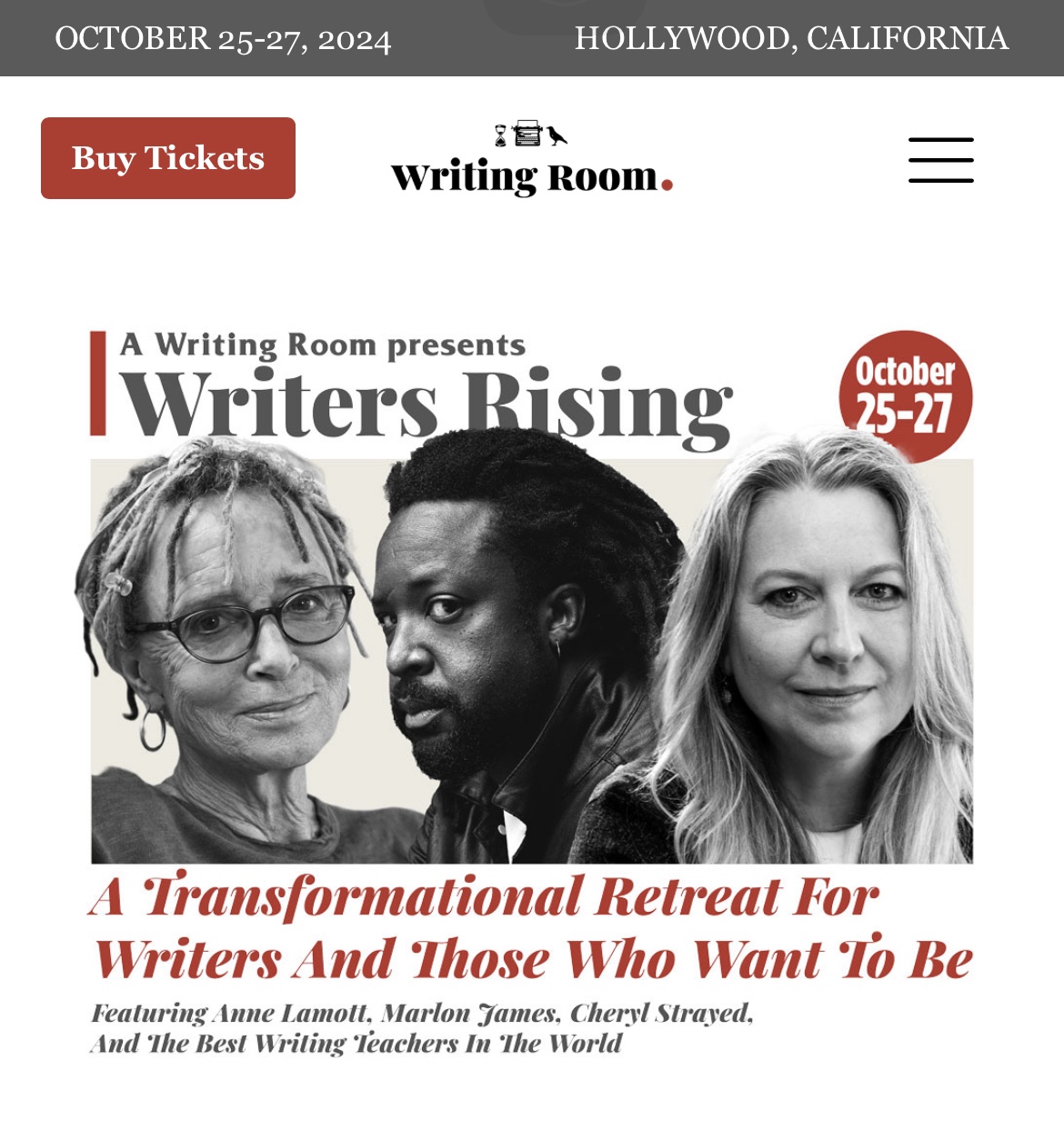
My “Chengerisms” query, I see now, was actually me gathering validation and support for showing up all me, all in, BOOBS OUT at the Writers Rising retreat this weekend. My subconscious intuition knows what I need; I sense, trust, and follow better with age. Replies rolled in with speed, earnestness, and so much love it positively bowled me over. Highly recommend!

The strongest messages I perceived throughout the conference reinforced all of my highest writing and living values:
Let loose your curiosity
Take risks
Tell the truth
Honor your Central Self
Own Your Shit
You are enough
Assemble your pit crew
Connect, connect, connect!

How tightly these correlated with the Chengerisms my friends mirrored to me:
What is that about?
How fascinating!
Tell me more…
Hey friend
How did that feel?
Love you love you
Yaaaay!
One breath
Walk the talk
BOOBS OUT (apparently catching on in my small circles–yaaaayy!)
Tribe
Sooo human.

This spontaneous, subconscious-driven exercise shows me the profound importance of good, loving feedback and the absolute value of meaningful relationship. My response to almost every reply was a sincere and heartfelt, “I feel seen!”

While I continually noodle on content and structure of Book (I’m getting closer, really!), I feel a limbic and visceral certainty about how I want readers to feel throughout and especially at the end–seen, validated, inspired, empowered, and convicted. This NaBloPoMo, I aim to color in and sharpen that vision, saturate my thinking and writing brain with it.

At the end of an executive physical, I want my patient to feel thoroughly understood. I show that I know them, even if I only see them once a year, by reflecting their stories back to them, interpolating and extrapolating what’s not said, checking in, and providing what I know patients need from their doctors: personal connection in service of self-efficacy for health. So this year for NaBloPoMo, I commit to the theme:

What I Wish For You

Thirty things I want patients, readers, or anyone, really, to experience after encountering me in person or in print. Chengerisms in action. I will resist wallowing in guilt and shame when I notice how often I fall short of these aspirations. When I see perfectionist self-loathing approach I will divert it to the nearest off-ramp. All part of the process.

This could be both fun and enlightening! Let’s see what happens, eh? Ready, set, let’s go.