What I Wish For Us

What a privilege to do what I do. Every day I get to meet new people, learn new things, apply my own well-developed knowledge and expertise in fun and interesting new ways. My skills are continually sharpened by each novel interaction, and both confidence and humility are strengthened as well.

Before each full day physical, I ask patients about their highest goals for the day. Their answers can usually be paraphrased thusly:

“I’m looking for a comprehensive assessment of my current state of health, including risks. Let’s identify where habits are healthy, so I can protect/strengthen them. Then discover areas of vulnerability and potential improvement, and co-create a relevant, actionable plan to optimize patterns in the five reciprocal domains of health (Sleep, Exercise, Nutrition, Stress management, and Relationships).”

People get excited (maybe that’s too strong–intrigued, perhaps) to understand the complex interrelationships among patterns and fluctuations within and between the domains, both conscious and unconscious, including extrinsic/environmental/circumstancial factors and their insidious influences. They often start the encounter focused on the biometrics: cholesterol, body fat, etc. And if I do my job well, they leave also attending to the salient behaviors and all of their adjuvant drivers. My reward is when someone leaves the day feeling they were seen and known as a whole person, in their current context. Even better if I can also help them see and know themselves this way more easily.

I recently read Kate Murphy’s You’re Not Listening, which helps me do my job that much better. I was gratified to see that I was familiar and facile with many of the concepts and skills she discusses in the book. It’s not just about making eye contact, repeating people’s words back to them, and voicing sounds that may indicate listening, like ‘uh-huh,’, ‘right.’ It’s about being truly present, listening as a way of being before doing, putting aside our own prejudices, assumptions, judgments, and expectations as much as possible, attuning to the person in front of us–true listening is a practice in deep presence. Easier said than done! And always worth the effort for deeper connection. This connection makes the medical encounter a profound win-win.

Don’t all people deserve this kind of physician-patient relationship? Isn’t the primary care doctor’s job to inform, educate, explore, and conference with people, to help them enact their own health intentions ever more easily and confidently? As your doctor, I wish to help you recruit all the support you need for healthy decision making, to moderate overt and heavy effort–make the healthy path the path of least resistance. It takes a village! Humanities researchers have known for generations now that our behaviors and decisions are heavily dependent on our circumstances, environmental cues, and real time mental state (the more fatigued and stressed [and who is not severely fatigued and stressed right now??], the exponentially harder it is to resist the most immediately gratifying, comforting, and self-soothing behaviors). So it all just makes me wonder, at times with severe agitation: Why do we, as a society, make it so hard for us all to live healthily? Why do we make healthy food, childcare, and mental healthcare so inaccessible and expensive? Why do we make people work 3/5 of their waking hours at jobs that confine them to chairs and screens? Why do we shame and punish people for taking time for medical appointments and care? Why do we blame individuals, telling them both explicitly and implicitly how they are not aware enough, not doing enough, not good enough, when everybody is just doing their best in chaotic, inefficient, and inhumane systems of everything? ACK.

My corporate executive patient population is microscopic compared to the general population, and privileged to the extreme. Current state in American healthcare means that only the uber wealthy, highest status workers can access the care that I so luxuriously provide. I say every day how I have the sweetest gig in all of primary care. I understand and appreciate this deeply, and wonder honestly about its sustainability.

I wish for my patients to leave every annual physical feeling empowered to exercise your agency where the energy will be most efficient and effective, so that by one year from now you can come back and report how much healthier you feel, and why, owning your own actions and appreciating the help you got along the way. And if you’re not feeling healthier, we can talk it through, trouble shoot, and make a new plan. To this end, we doctors need the time, space, and resources to really know you, our patients, to understand the barriers to and facilitators of your best health habits and how it all intersects and evolves over time. Time is really the key here–there is no substitute for the time it takes to be fully present and to listen to the stories–to hear what is said and not said, attune to the subtle nonverbal cues, process it all and consider the best next open, honest, loving question. And then to hold temporal and personal space for thoughtful engagement. How and what we clinicians ask, and the energy we bring to each query, influence deeply (if not straight up determine) the answers we get, and thus the accuracy of our understanding, and the effectiveness and impact of our whole plan of care. Maybe I understood this early on, and that’s why I used to run 45 minutes late in a regular primary care clinic.

So how can we rebalance? As medical knowledge expands exponentially in volume and complexity, and our systems widen and dehumanize the distance between patients and their doctors (even more than when I wrote my ‘About’ page on this blog 8 years ago), how can we restore the close, personal, and healing energetic exhcange between us all?

I have no answers! Alas, our deeply broken and counterproductive healthcare system may be the quintessential complex-adaptive challenge. It requires leaders who can hold tension without anxiety, paradox and polarity without animosity, and patience and courage for experimental, iterative change.

Meanwhile, we workers and consumers of the system must find ways to connect and hold ourselves up, to get through the morass together. What I wish is that we all give ourselves and one another, including the folks who ‘run’ our broken systems, a little grace. I truly believe we are all doing our best. AND we can do better. Maybe it starts by simply listening a little better.

Relationship Revolution


“In my lifetime I want to see the culture of medicine driven more by relationship than by revenue.”

–me


Nice to be back, friends!

This post is a bit different from my usual format and style.  It’s maybe more raw and blunt.

Please bear with me and keep an open mind?

I know posting this may be risky.  It started out as just jotting down ideas for a longer, more detailed future post.  I had to get the ideas and thoughts out so I could focus on work.  And then the ‘jotting’ somehow evolved into what I imagine a poetry slam might look like.  So I decided to post as is.

My long term objective is to stimulate generous thought and respectful discussion between patients and physicians.  I wish to prod us out of our default complaint modes and reorient all of us to the idea that we are all on the same team, but our connections are under siege by outside forces.  The system harms and oppresses us, physicians and patients, the end users, and the ones with the real power.  Together, we are the sleeping (sedated?) giant that must rise up and reclaim the system for ourselves.  This post is an attempt to spark the flame that draws us together, by pointing directly to the spikes that drive us apart.

Disclaimer: What follows is my own expression and does not represent or reflect the opinion or position of any colleague, institution, or professional society with whom I associate or to which I belong.

ice castle spider legs

I hear my colleagues say: Get rid of the patient portal!

It’s too much!

Limiting characters does not work, they just send multiple messages

Charging for messages just makes more work

“They abuse the system”

“We give an inch, they take a mile”

Keep them away!

Us vs. Them mentality.

Antithetical to mission of medicine: To meet patients where they need us, and help them.

WHY?

Because we are too busy.

DOING WHAT?

Every. F*ing. Thing.

Rx prior authorizations

Endless documentation, infinite clicks

Rx refills with no information on follow up or patient status

Filling slots to meet RVU goals

Prescribing more meds to meet “quality” goals

Keeping up with the latest evidence for every disease, test, treatment, guideline, diet fad

Rushing to the next patient so that the patient we’re with does not have time to even think of their questions, must less ask them

Patients walk away from visits with their true needs unmet.

So they use the resources available to them to ask for what they need.

And this ‘adds’ to our work

And we feel busier and more frustrated, exhausted, frayed, irritable

We feel Overwhelmed.


Patients also feel it

They feel unseen, unheard, dismissed, discarded

And they don’t understand or relate to where it comes from

They get angry

So they send more messages: to us, about us; criticizing us, lashing out

Making us feel bad about ourselves

Which manifests as defensiveness first, then even more frustration, exhaustion, irritability

But we don’t disengage.

We remember our calling.

We forge on in smoldering resentment, pride, bitterness, duty, guilt, shame, and occasional fulfillment


And then abstractions to reconcile the cognitive dissonance


Patients suck

All they do is take take take

They don’t understand that I’m Doing My Best to help them

Why don’t they appreciate me

They are so entitled these days

They want everything now now now

They think I’m at their beck and call

Like I’m not working every minute of every day

Like I don’t have a family and a life also

Like I live only to serve them

Patients are the enemy

Really?


Oh and it happens on both sides


Doctors suck

All they do is type away at that blasted computer

They don’t even look up, see me, or hear me

They don’t understand what I need

They just want to see more patients

Make more money

I’m just a number to them

A cog on a conveyor belt

They’re all in the pockets of Big Pharma and Insurance

They withhold the help I need

They hoard it

They don’t care about me

They Don’t Care About Patients

All they care about is making the next buck

Doctors are the enemy

Really?

ice castle doorway

There is no substitute for the Time and Energy

Required to cultivate Healthy, mutually Respectful, mutually Fulfilling, mutually Beneficial relationships

It is always a two-way street

Our relationships kill us or save us.  Always.

snake river keystone

Doctors and patients must find ways to reconnect

Find one another through the thick morass

And Hold Tight

In Solidarity

Learn, Train and Practice Together

Our Communication, Empathy, Compassion, and Collaboration skills

Defend against the forces that drive us apart

Advocate for one another and for our Sacred Contract

So we may once again

Heal Through Connection


Dr. Jerkface In Context—Healing the Patient-Physician Relationship

DSC_0507

Excuse me, I took an unintended break for Thanksgiving!  Hope you all had a wonderful holiday!

NaBloPoMo 2017: Field Notes from a Life in Medicine

For the past year or so, maybe more, I have increasingly tried to engage my friends in discussion around allied advocacy for physician health and well-being.  Inevitably, however, I’m met with anecdotes from my friends about asshole doctors.  It is a strikingly common experience, I’m sad to report.  And it makes sense:  If a patient has a bad experience with a doctor, ie the doctor behaves badly or the patient feels dismissed, ignored, disrespected, or mistreated, the normal response is to blame the doctor and assume that s/he is an asshole.  In each of these interviews with friends, it took a while for them to come around to the idea that the doctor him/herself may be suffering and therefore not behaving/performing their best.

But the next question is this: Do patients care about doctors’ suffering?  If they knew how the system harms physicians, would they have compassion for us?  What about if they knew how physician burnout and dissatisfaction directly affects their quality of care, all of it negatively?  What would move patients to stand up with and for doctors?  This is my goal for the indefinite future: to help us, patients and physicians, the end users of our medical system, stand up with and for one another, for positive systems change.

Right now I see it as a very personal, grassroots endeavor.  Outside of a one-on-one patient-physician relationship, ‘patients’ and ‘physicians’ in general are abstract groups to us all, and it’s hard to feel compassion for and connection with an abstraction.  “Patients are too demanding, entitled, and ignorant.”  “Doctors are arrogant, dismissive, and profit-driven.”  We carry these overgeneralized internal narratives and others into our encounters, often unknowingly and unintentionally.  Even when we think we see and know the person right in front of us, these underlying assumptions still color our experiences with them.  So whatever conversations we may undertake will take many repetitions to finally reach true mutual understanding.

I have been a member of my church since 1991.  Many others in the community have been there much longer than that.  There are other physicians, and we are all patients, ranging in age from infants to octogenarians.  I have proposed to host a focus group to discuss patient-physician relationship, especially as it relates to the effects of physician burnout on patient care.  The plan is to do it once, with whomever is interested, and see what happens after that.  I picture 10-20 people, patients and physicians alike, seated in a circle.

The objectives will be stated:

  1. Hold an open discussion about people’s experiences in the patient-physician encounter, and explore the context of forces that influence those experiences. Such forces include visit duration, documentation requirements, workflow inefficiencies, patient expectations, insurance status, and clinical setting (hospital, outpatient clinic, etc.).
  2. Participants leave with improved mutual understanding of one another’s experiences in the medical system and more likely to feel empathy and compassion toward their counterparts in the next encounter.

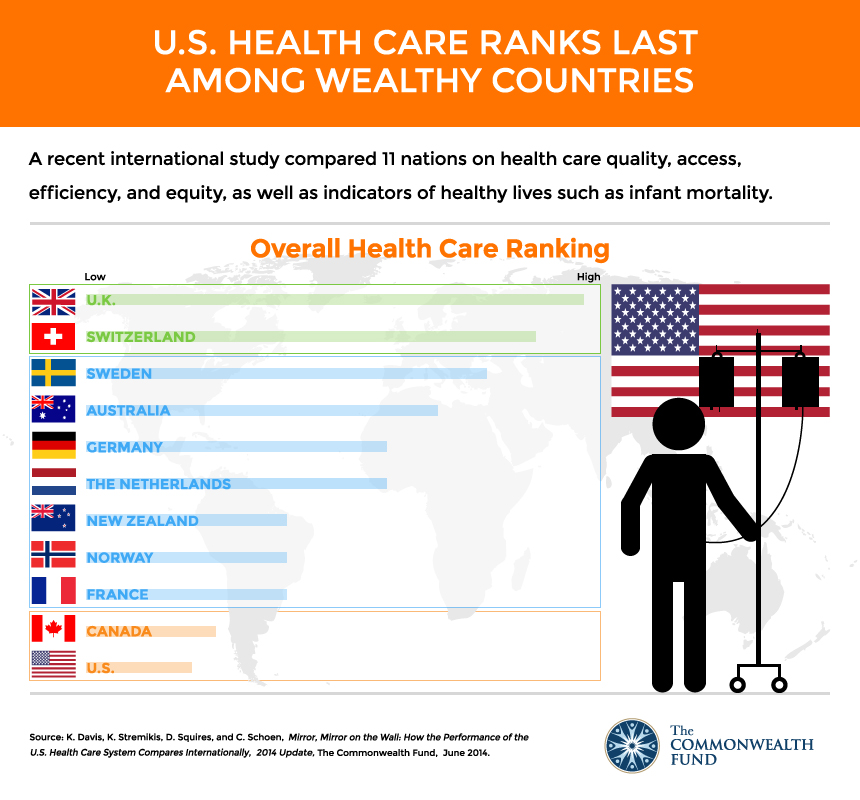
In the long term, I wish for patients and physicians to form a unified platform from which to advocate for policy change.  We, patients and physicians, are the end-users of the healthcare system, the largest combined demographic in the system, and I believe we are the ones who benefit the least from the system.  Health outcomes for American patients are dismal compared other developed countries, despite our exorbitant expernditures.  Physicians kill ourselves at more than twice the rate of the general population.

It’s not enough for medical professional societies to write co-authored, open letters to Congress.  It’s not enough for individual patient constituents to stand up at town halls and berate their representatives.  We must orient ourselves as resistors in series, rather than in parallel.  I think the movement will grow most effectively out of existing connections and relationships, through which we can find shared interests, common goals, and a strong, unified voice for change.

I seek your feedback:

  1. How do you picture this meeting going?
  2. How interested are you in learning about physician burnout and how it affects patients?
  3. If you were invited to such a meeting, what would you think and feel about it?
  4. What would make you more likely to participate?
  5. Would you want to host such a meeting in your community? How would you do it?

Thank you for considering, and see you tomorrow!