Practicing the Art of Possibility Since 2009

It’s been 15 years since I attended the second ever Harvard Coaching Conference, where I met Ben Zander and The Art of Possibility changed my life. I reference the book’s concepts and practices regularly on this blog, and have given four copies to friends in the last five months–a spate that catches my attention. With the most recent gift, I was moved to listen again, prepared for yet a deeper, more incisive experience, even after having read and listened countless times already. HA!–this just occurs to me–It may be the very practices from the book that underlie this latest re-exploration. Openness, humility, honesty, creativity, authenticity, and connection–I valued these highly even before 2009, and AofP has reinforced them all repeatedly.

Describing the book to a new friend recently, I focused on the authors’ distinction between our Calculating Self, the one engaged in social norms of measurement, competition, and conventional success, and our Central Self, the honest, inner, relational soul that understands and seeks connection and collaboration that brings deep meaning, joy, and peace. I remember flipping through my print copy sometime last year and thinking wow, I have really internalized these teachings! I pull on the catch phrases often–Give the A, Be a Contribution, Rule #6, The Way Things Are, Be the Board–and the practices they point to guide me daily through circumstances and interactions that would have perturbed me much more a decade ago than they do today. The more I thought about it and spoke to Friend, however, the more I wondered what new and more I’d get out of yet another listen–ready for advanced, deeper practice–because though the slope of the curve may have shallowed, I am definitely still learning; I have Possibility yet to harness!

I feel proud of the work I’ve done to lead with my Central Self. It started before the Harvard conference when I connected with Christine, my life coach, in 2005. At that time coaching was seen as froo-froo fringe activity, as evidenced by the groan and eye roll from my colleague when I mentioned it. So I continued silently after that, learning techniques of open, honest questioning, mind-body query, and honoring peoples’ stories, the unique meaning we each make out of any situation, regardless of how or whether it makes sense to anyone else. I have honed high self-awareness and -regulation of my own stories, appreciating both their partial validity and heavy biases, ready (almost) always to have them challenged, corrected, and nuanced. Showing up from my Central Self, recognizing and lovingly inviting forth others’ Central Selves, has yielded such color, texture, meaning, learning, and connection in my life, that it increasingly defies verbal description. Meeting Lessa Lamb at Readers Take Denver last weekend and feeling this instant resonance, I tried articulating it anyway, and it came out as, “Exponentially Synergistic Cosmic ROCKET FUEL,” which is pretty close!

Now halfway through The Art of Possibility again, the humbling has struck. I am indeed proficient at these skills in multiple domains. I have incorporated the principles seamlessly into patient action plans and public presentations for at least the past ten years, each year more organically and easily. Still, in my most complex and difficult relationships, I have far yet to go. Old narratives and deeply grooved relational patterns stemming from childhood–oh how they persist wih force! Thankfully, I also follow Tara Brach and Kristin Neff, and as my self-compassion grows, so too does my capacity for deeper honesty, acceptance, and advanced inner Possibility work. I vibrate at a high relational frequency, and The Art of Possibility has resonated deeply from the moment I heard the authors speak. The teachings amplify my innate signals of deep human connection, and help me show up increasingly All In, All Me, with courage and conviction, including to the work of the slaying and dissecting my own demons.

–*sigh*–

Part of me regrets not being further along on this self-development journey. I’m already 50 years old, worked with Christine since age 32, and others before her. Even with the turbo boost from The Zanders at age 36 and Simon Sinek, Brene Brown, Adam Grant, and others since, I still swirl at times in patterns of fixation, reactivity, and agitation. The episodes are definitely less frequent, intense, damaging, and prolonged, though, so that’s a win, and I feel my inner peace proficiency accelerating lately.

So, to the practices I return:

The Way Things Are: Be with it all, whatever it is, including how I feel about it. I am competent, maybe even expert, and not yet a master. Learn, practice, train, ad infinitum. Mastery may or may not come; the nature of the work is to persist. I can be at peace with this, with all of it, the way it is, while I work to make it all better.

Give the A: As I do for others, I can give myself grace and compassion for showing up every day to do my best. I see my potential and that of others. I help myself by getting help from others, so that I can help others, all of us together on the journey.

Being a Contribution: Every day, with any and every interaction, I can bring my best self, show up to lift up. It doesn’t have to be big or flashy. Presence, eye contact, listening, reflecting, connecting. People can feel well when they meet me. I can help, and lead by example in this way.

Telling the We Story: This one makes me shiver with Possibility. It’s about seeing us all, every single one of us, as inextricably connected–we all matter to one another and to everything in nature–a complex, adaptive system of systems, the butterfly effect in motion and action. When I remember the We story, rather than feeling overwhelmed, I feel calm, empowered, and purposeful, because just by being a better me, I make the world better.

I hope my friends get as much out of this book as I have, over the last 15 years and for many years to come. The wisdom and application are infinite, as we humans muddle and struggle through our own counterproductive behaviors and conventions. The practices in The Art of Possibility give me the validation, confidence, hope, and conviction to keep sharing, speaking, and loving, every chance I get, even (especially) when it’s hard.

Wishing us all a present, open, kind, and loving week. May we connect meaningfully with our fellow humans, and may that connection both anchor and uplift us all.

Self-Compassion

“I have found in my research that the biggest reason people aren’t more self-compassionate is that they are afraid they’ll become self-indulgent. They believe self-criticism is what keeps them in line. Most peole have gotten it wrong because our culture says being hard on yourself is the way to be.” —Kristin Neff

“Talk to yourself as you would someone you love.” —Brene Brown

I’m tired tonight, y’all. And this is a big topic. So I give myself permission to stay in the shallows for this post–no deep explorations and hours spent searching citations. Just some honest reflections and aspirations. To learn more about self-compassion and evidence for its benefits, visit Kristin Neff’s website and check out her book, Self-Compassion: The Proven Power of Being Kind to Yourself. From her website page on the definition of self-compassion:

“Self-compassion involves acting the same way towards yourself when you are having a difficult time, fail, or notice something you don’t like about yourself. Instead of just ignoring your pain with a “stiff upper lip” mentality, you stop to tell yourself “this is really difficult right now,” how can I comfort and care for myself in this moment?”

What’s already good in my self-compassion practice?
–I no longer call myself names. I own that I sometimes say and do thoughtless, inconsiderate, obtuse, and bitchy things. But I don’t label myself with these adjectives. I no longer say things like “I’m being a bitch,” or, “Oh my god, I’m so stupid.” I make clear on my social media accounts that ad hominem is unwelcome. There is also no place for it in my own head.
–I avoid self-indulgence by maintaining compassionate accountability to myself. This overlaps with (encompasses, maybe?) practices in honesty, mindfulness, integrity, forgiveness, judgment, and commitment, all topics to be addressed this month–everything is connected.
–Upholding my own self-compassion helps me maintain my growth mindset. While I allow myself to identify with fixed traits such as ‘smart,’ ‘creative,’ or ‘badass,’ I can hold these labels loosely and also allow for wild imperfection and failure–for myself to be human in all of my smart, creative, and badass endeavors. I am freed to be both wholly all of these things and more, and also a perpetual work in progress.

How could my self-compassion practice be better?
–Explore more the paradoxical polarity of enough and not enough–I am enough as is, and I am also always improving–so what do enough and not enough actually mean? “You are perfect, …and you have a lot work to do,” I read years ago. Love it. Makes to total intuitive sense, and I want to live into it more deeply.
–Look for the still insidious ways self-criticism appears, and hold it with kindness. I know there’s a lot there in my body image, especially as aging accelerates. And when I find self-loathing and -judgment, I can practice my compassion on that, rather than meta-judgment of the judgment, which doesn’t help anyone. I bet I could query arenas where I feel like an imposter; that’s probably pretty good fodder.

How does our society do self-compassion well already?

Awareness. Authors like Kristin Neff, Brene Brown, Tara Brach, Richard Rohr, and the Dalai Lama bring self-compassion concepts from esoteric academic and spiritual theory to practical life skills. Their books, articles, podcasts, interviews, and websites offer the lay public copious access to all things self-care, connection, and inner peace. Communities of folks seeking comfort and connection form, mindful presence ensues, and good things happen all around. Like mindfulness, self-compassion is making its way into mainstream consciousness as something to develop rather than to shun and dismiss.

How could we do it better?

Normalize it. The distinction between self-compassion and self-indulgence still needs reinforcement. Being kind to onself in a moment or period of hardship does not mean shirking responsibility, is not a character flaw, and does not lead to a future of fruitless debauchery. Allowing health habits to loosen a little in the midst of life chaos does not warrant harsh self-recrimination. The practice of imagining a friend going through the same challenges and what we would say to them, then saying that to ourselves, really helps here. Oh and we should say those things to our friends out loud, too.

Strengthen Accountability. Even if we succeed in distinguishing the above, I think people still need reassurance that we won’t all become listless moochers just looking for excuses and free rides for everything. As an aside, what is with that cultural fear of ours, anyway? By accountability I don’t mean punishment or shame. I mean owning our mistakes and the impact we have on others, standing convicted not in public opinion but in our core values. Accountability and self-compassion together help us present ‘strong back, soft front’ to ourselves, developing both intrinsic strength and courage as well as openness and vulnerability. Ultimately, the best outcome is that we then present this way to others, offering kindness and also holding them humanely accountable, and our connections and communities tighten in love.

Amplify the Benefits. When we see someone we care about lambasting themselves, we can help. As we show more loving kindness to ourselves, we are more willing and likely to do the same for others. Mercy, grace, empathy, tenderness–can we look individually and collectively inward and see the rewards of offering these to ourselves, and then to one another? It doesn’t take much to imagine, does it? We can start one on one, with people we care most about, whom we truly love. Then we can extend it to strangers, then to members of out-groups whom we may initially and automatically judge harshly by way of stereotype and prejudice. Strong self-compassion practice can translate to recognition of every person’s innate humanity, reframing even our most destructive behaviors in humane rather than dehumanizing light. “The smart, creative, wildly imperfect badass in me sees the smart, creative, wildly imperfect badass in you.” It all starts with healthy relationship to self.

So was this even coherent? Good night, all, I’m going to bed. Back tomorrow on polarity management, woohooooooo, that’ll be fun.

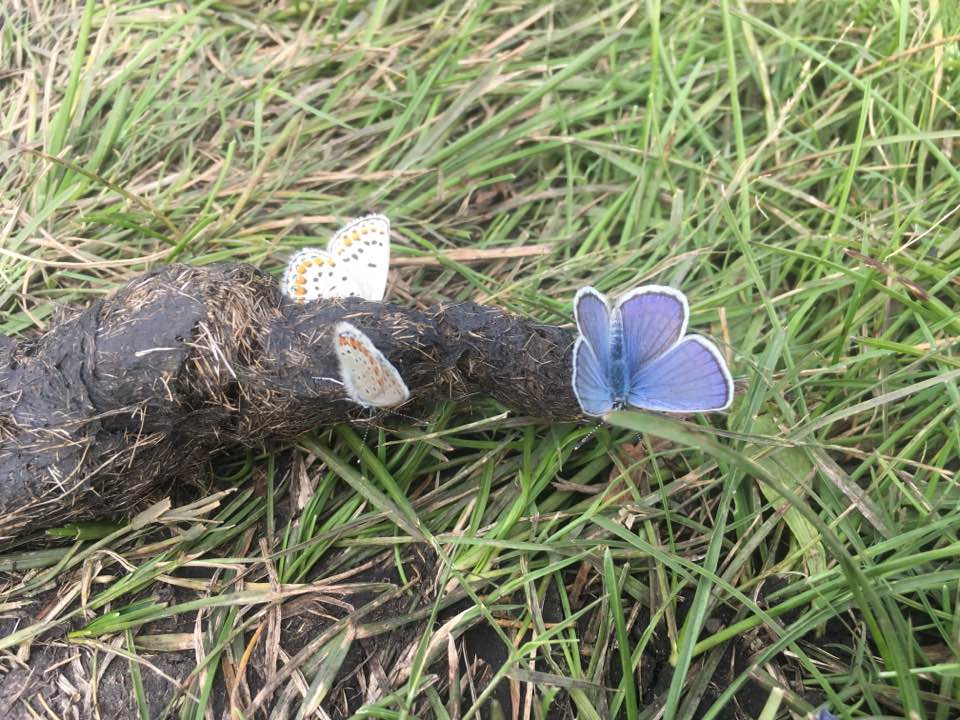
Shoots in the Poop

hike flower

It’s December 4th… Time to look back?  Honestly, I’d rather just get this year over with and move on,  because I have already been looking back all this time.  Since January I have counted—weeks and months since the knee injury, months since starting the new job, since surgery, since a spring crisis, since the last this or the first that.  What was it all for?  I think I was just reminding myself that there’s been a lot going on, reassuring myself that I’m not just whining, not being weak for letting my personal health habits slip.

I’ve felt like a relative slug for the last 6 months, despite my best efforts.  I think I must have eaten a pint of ice cream every two days for most of the spring and early summer.  Looking back on the calendar, I stopped using smiley stickers to mark workouts around July—their intensity was only worth hand-drawn smileys.  By and since August they aren’t worth smileys at all—I just jot down what I did in shorthand.  Some weeks it was barely anything.   I judge myself every day—perhaps less harshly than I might have a few years ago, and also less compassionately than I might a few more years from now.  I still struggle with the fear of self-indulgence if I allow myself too much self-compassion.  I am still learning self-compassion.  I know it takes time to rewire our limbic brain patterns with knew learnings from our cognitive brains.  So I will keep trying, because I know it’s helping.  And I’m modeling for the kids.  We can do our best and still fail.  The key is to keep moving.  We can practice admitting we need help, seek it from the appropriate sources, lean on it heavily, and stand back up eventually.  And then we remember those who helped us, and prepare to be helpful in return.

I have leaned on so many this year, I feel almost speechless at the outpouring of support and love.  The only way I don’t collapse from this weight of gratitude is by storing it like a battery—ready to be discharged, full power, when someone needs to plug into me.  This may be my favorite thing about humanity—that we are wired to connect so tightly, to help one another in webs of mutual love and kindness that can extend ad infinitum.

moths on poop

So I’ll look back a little.  This week I feel a turning.  Did I say this already recently?  Oh yes, it was November 12.  I was making more room for books, trying to stay off of my phone, off of Facebook.  Being on the laptop every night to post to the blog stymied that last part, but it also bought awareness of how I find loopholes in the best plans for self-discipline.  And the daily writing practice also contributed loads to this internal revolution.  This was my fourth year doing NaBloPoMo.  It was by far the most fun, the smoothest, and the most rewarding attempt yet (I think I also said this last year?), and now I miss writing every day (definitely have not said this before).  Maybe it was the daily dopamine hit of views and likes.  But I think it’s more than that.  Through the daily discipline, I had a chance to process and synthesize so many ideas and connections that had been marinating for months, maybe even years.  I practiced prioritizing, selecting, and distilling those ideas into about 1000 words each day, more for my own benefit than anyone else’s.  That people read and related to them was definitely a happy bonus.

Besides NBPM, I attribute this turnaround to two books that Donna recommended to me earlier this fall:  Leadership and Self-Deception and The Anatomy of Peace, both by The Arbinger Institute.  I have wanted to write about them for the last several weeks, but I haven’t yet figured out how to prioritize, select, and distill the lessons coherently.  The foundational ideas are not necessarily new, but they are profound.  The books are written as modern allegories, and there is just something about the metaphors and analogies that has unlocked and integrated everything I have learned about inner work, communication, relationships, and leadership to date.  And that is saying a lot.  Because of these books, the daily writing, and all the conversations I’m having (with myself and with others) as a result of both, the two most challenging relationships in my life right now have fundamentally improved—mostly because I have been able to shift my own attitude.  As with all things, this new ‘way of being’ will take practice.  I need to keep the training wheels on for a while yet.  But now that I have made this turn, the path looks straight, and I see light.

The manure has piled on all year.  So much fertilizer, oh my gosh.  It’s done its job, though, because I have definitely grown.  I feel strong, healthy shoots of green popping out through the thick, dark carpet of poop.