
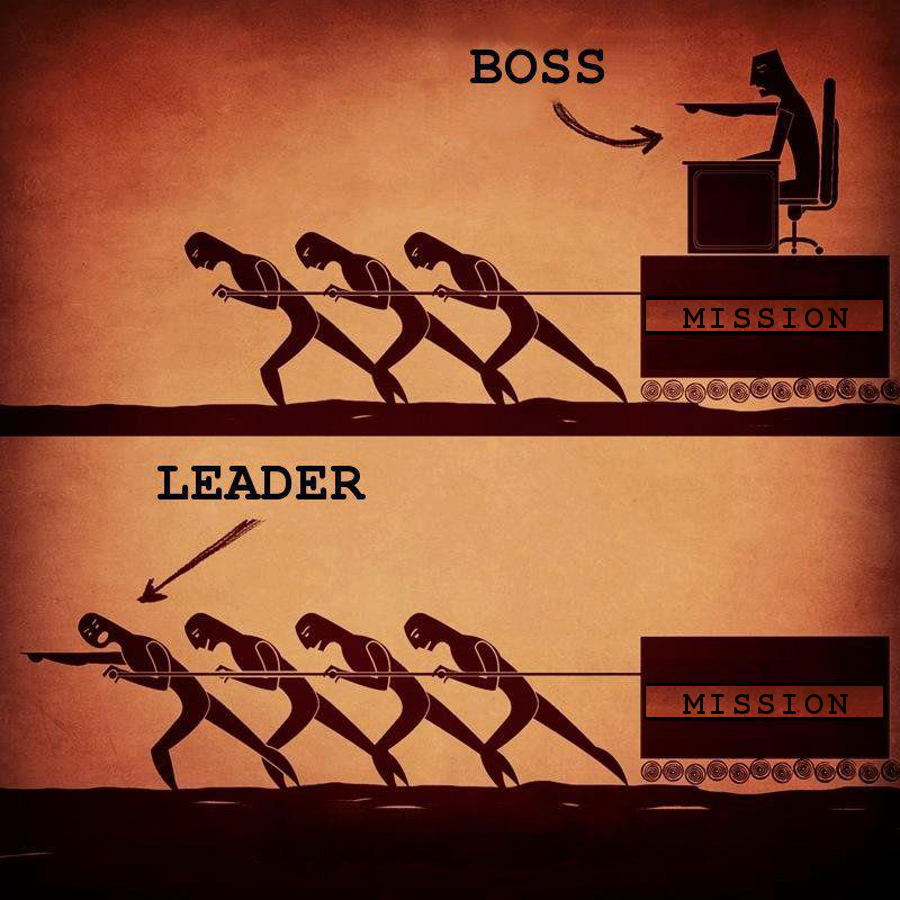
Lever Arms, Body Mass, Power, and Leadership

First seen on a social media post by Simon Sinek; please let me know whom to credit!

What makes you an asset to the team? How do you know? How does your leader know?
Does your leader know?

Friend Mark came with me to Ethos last weekend for the last conditioning workout of the block. We pulled the skiers and rowers side by side for 200-300m or 90 seconds, whichever came first, among other movements. No matter how fast I pulled, he still finished at least twenty to thirty seconds before me. Pushing the 215# sleds down and back on the turf, you’d think his weighed almost nothing the way he zipped along, compared to my Sisyphian effort. But I didn’t feel too bad about myself. I’m 5’2″ and 145#; he’s got at least a foot and 60# on me, I’m sure. I marveled briefly at our juxtaposition and just reveled in the fun of having my friend with me in one of my favorite places.

Today, back on the skier and rower, I thought again about our physical differential while pulling, varying my method between leading with legs, back, and arms. I wondered if I’d be an asset or a liability on a rowing team? Is it generally advantageous for rowers to be tall, so they get more distance per pull from their longer lever arms and leg extensions? Could I ever find a rowing method that could compensate for my much shorter limbs? Does my lower body mass give the team any advantage, and if so would it make up for the limb length deficit? How could I maximize my power to contribute? What are the ideal physics of a heterogeneous crew habitus? How could this team win consistently?

It all got me thinking about leadership, naturally.

How do we all contribute from our strengths? How do our leaders identify our strengths and amplify them, then place us in positions of complement and synergy for the good of all?

This requires more attention, thought, intent, creativity, and work than most leaders consider to be their jobs, no? It requires relationship. I must know you to find your true strengths; I must know the whole team to see how we all fit together, where we grind and where we glide. When I do this, you are much more likely to feel seen and valued. I can enlist each person to identify not just their own strengths but one another’s. Proactively synergizing our respective gifts can bond the team in mutual respect and collaboration. My effort, then, is worth the rewards in loyalty and willingness to sacrifice, because we all feel in it together.

Leaders who are willing to do this cultivate cohesive teams who can withstand adversity with confidence and grit. We can call on one another’s superpowers with humility and collegiality, knowing we shine brightest when we all shine together, rather than always trying to outshine one another.

Honesty and transparency stand out as core values here. If I really wanted to row and understood why that would not serve my team, if I were told kindly how I could contribute meaningfully in other ways that also align with my strengths, I’d be much more willing to pivot and still participate fully. That would require my team leader to take time and energy to communicate clearly and completely. I think this is not too much to ask. We should expect it, train it, and hold leaders accountable for it with specific, relevant, and regular feedback.

If the default assumption is that everyone has a worthwhile contribution to make regardless of limb length, body mass or other attribute, and leaders actively help team members identify and amplify their strengths, then that contribution will manifest from each and all of us fully and for the greatest good.
What a wonderful exercise on possibility, no?

Women Elevating Women

How is everybody this fine August evening?

How is it August already!? *sigh* I hope we have all savored the summer (here in the Northern Hemisphere) and all it has to offer. There is just something about the longer, brighter days–I know there are myriad researched psychophysiologic effects, but I’m too lazy to look them up. Happy to just revel in them! Energy, activity, growth, flourishing–we humans are part of nature… Life occurs in seasons, and the lushness of summer blooms, the bees’ bumble-busy-ness, watching kids play joyously outside–it all just activates me, makes me frankly elated.

So today I got particularly excited thinking about how women romance authors hold one another up. I have noticed it for a while, and it hit me anew this afternoon. Here’s the story:

Shane East has joined the Creator crew over on Quinn, ‘the app for audio erotica.’ [To read more about this relatively new medium and its social value, see this article from the New York Times and a brief interview with Quinn founder and CEO Caroline Spiegel.] He joins other well known romance narrators on the site such as John York and Zachary Webber. The short form stories are apparently extremely spicy, and people love them. Scripts for the audios vary in origin, written by the voice actors themselves (men, women, and nonbinary folks), established romance authors, and fans alike. Not every piece is explicitly credited.

Shane’s debut on Quinn has been widely anticipated and very well received: As of this writing, about 60 hours out, his first audio has garnered over 4100 plays and almost 800 subscribers. Amidst the deluge of praise, I happened to catch an Instagram story posted by romance author Elodie Hart, acknowledging her good friend Holly June Smith for writing Shane’s inaugural script. It struck me again how often this happens in the romance world.

I see authors regularly promote one another’s work in their weekly newsletters and social media accounts. These magnanimous women include Sara Madderson, Nana Malone (who also co-founded Audio in Color, a non-profit dedicated to increasing diversity and representation in the romance and audiobook industry), Marni Mann, Sierra Simone, Lauren Smith, and Lili Valente. They post about how they collaborate, commune, and just have fun creating together. How wonderful! How generous, loving, and mutually beneficial! Is there any other profession where this happens so commonly?

I think about athletes, thought leaders… It always makes me happy to see blended teams play together in Olympic and All-Star games. Simon Sinek directly addresses his rivalry with Adam Grant in his book The Infinite Game. He frames this competitive relationship positively, as it drives his own professional excellence. In academic research, where resources are limited and science moves quickly, the culture is the opposite of collaborative and mutually admiring–‘cut throat’ is often the prevailing attitude.

Is there no sense of competition in romance writing? I have no idea. I just notice the love of women holding up other women.

I have written before about allyship, especially men of women. Shane East consistently upholds and amplifies his female colleagues, and continues to do so on this new platform.
How would it be if we all amplified one another, in humility and generosity, regardless of gender? Is that realistic? There are still so many gender-based power and status dyamics in multiple (most? all?) domains of human relationship… And yet, we can’t know how social norms will change unless we challenge them, right? Romance and erotica still make a lot of folks very uncomfortable; hence the heavily guarded anonymity of some creators. I understand and respect this; I feel minimal urgency to change it, because I see the tide turning, accelerating toward mainstream cultural sex positivity every year. In my mind, this makes gender parity more likely in the far future. Every little step counts. I know this is just my own perspective, having immersed in the romance world only recently. Maybe that’s why I feel compelled to write about it often, to express my own solidarity and allyship with the progress of sexual and relational freedom for all.

Challenging the status quo does not have to be adversarial, or even direct. Romance novels don’t change social policy. I don’t imagine it’s many authors’ primary objective to activate readers and listeners to lobby Congress or protest in the streets. As throughout history, fiction illuminates humanity and speaks, however quietly yet forcefully, to our very souls. It moves us, sometimes ineffably and other times powerfully, to examine and act. Social change happens in drifts and then shifts, slow and then fast, with forward and backward steps, on a long, jagged arc toward acceptance and inclusion. Human relationships are more complex now than before, and also fundamentally unchanged: we are all here to love one another and help us all live our best lives.

I never would have guessed that my whimsical romance obsession would yield deep and divergent thought and personal evolution. The friendships, the discussions, the self-discovery and intricate connections to shared humanity—it has all been just such a gift, I get goose bumps.

As we enter this last stretch of summer sun and warmth, I sincerely wish for us all to notice humans treating other humans well. It’s okay to feel cynical about humanity, even most of the time. But let’s not allow this to close us off to opportunities for connection when they occur. In fact, I encourage us to actively seek those opportunities–I promise, they are everywhere.

What Does It Cost?

What does your work cost you, in terms of your health?  In your relationships?

There is always a cost for the money we make.” says Simon Sinek.  There is always a cost (for the reward) of any choice we make, no?

Friend and I recently bonded over the challenge of disconnecting from work when we go on vacation.  It took going overseas for me to finally feel mostly (not totally) guilt-free deferring all urgent patient care, temporarily, to a colleague.  Friend also went abroad for spring break, yet he still logged onto work email for 30 minutes every day (was it really only 30 minutes, I wonder?).  As a high-level organizational leader, and thus a gatekeeping decision maker, “things stop for a week if I go away, and I hate that idea, that I’m the [rate limiting step of the org’s operations].” 

I get that. Maybe it’s different from medicine. It’s more work to cover another doc, no question. We answer calls from patients we don’t know, often prompted to sift through a tangled morass of electronic medical records that now often includes documents from multiple facilities across the country. We don’t readily know the patient’s current health status, communication preferences, or personality quirks. But in the end, we can all take care of the patient. And in a week or two, we hand them back off to their primary care doc, hopefully with questions answered and problems resolved (‘tucked in’), or at least an appropriate care plan well underway. Because of this, many of us ‘cover ourselves’ when we go away, especially if it’s a short time, like a holiday weekend. So over a year, my patients maybe have to live without my immediate, personal assistance a total of three or four weeks. We docs trade off, and it feels fair and manageable. I asked my friend if no one could cover him similarly, be available in a pinch so he can relax with his family? Yes, he answered without hesitation, it’d be easy. What would it cost him and the workplace, I asked. “Nothing.” And yet he has never done it; not really even considered it, maybe? We were walking, and I stopped suddenly, stymied in surprise and empathy.

How fascinating. 

In our thinking brains we know what to do and how to do it—to make it safe and seamless to get away. Logical calculations tell us that disconnecting from work for a little while is low risk for organizational operations. Our colleagues are more than capable of handling things in our absence; the place and its people will not actually grind to a screeching halt. And yet the social pressure of staying connected, of never putting down the yoke of work, even for a little while, looms heavy and thick. “The graveyards are full of indispensable men,” Charles de Gaulle said. And it’s not that we think ourselves truly indispensable—it’s not arrogance. It feels, at least in part, more like a fear of being seen as a slacker, a freeloader, not pulling our weight. Most concretely, it can cost precious time, attention, and connection with our loved ones. And it’s not just on vacation. Our 24/7 work lives invade our homes, stealing us from our children so insidiously that we don’t even notice. But because home is where we feel safe and un(less)conditionally loved, it’s much easier to withdraw from that account to pay work.

Beyond that, what are the myriad costs to those we lead, and thus to our organizations, and our society as a whole?  When my direct reports see me sending emails at midnight on Saturday, what example and expectations do I set?  Even if I write explicitly that I do not expect a response outside of business hours, the implicit message is the opposite.  I lead by example, like it or not.  “Do what I say, not what I do,” fails just as surely at work as it does at home.  This is how the status quo of burnout and disengagement, even (especially?) among the most passionate and well-intentioned workers, perpetuates.  What a vicious cycle, I say, all of us trying so hard to prove our worth every day, not trusting that our value is seen and appreciated just by virtue of our contributions and relationships. 

And whose job is it to break the cycle, to reshape this flawed culture of relentless, imbalanced, and unhealthy self-sacrifice? I think it’s the leaders’, first and foremost. It’s so much easier said than done, and it cannot depend solely on one person in any given place. Culture is self-organizing and perpetuated through the mundane, momentary, miliary interactions between all of its members. So we all matter—we contribute—in the big picture. But I am convinced that no significant change occurs without direct influence from those at the hierarchical apex. Thus, I commit to doing my best to support, encourage, and advocate to leaders themselves and on their behalf, one person, one vacay, one interaction at a time. We will all be better for it, co-creating a world where we can all rest sometimes, taking turns pulling the cart. The immediate social costs of bucking the system can be borne more easily the more of us support one another in the effort. The current status quo already costs us productivity, morale, and lives, literally.

At the ends of our lives, will our work rewards have been worth all that we paid?