It’s a Lovefest, OMG

“My gift from the universe is all the amazing people I meet.  My way of paying forward is to connect you all to one another.” –text from me to Tim Cohen

How does one person get so lucky?  For years now I am convinced, knowing this many smart, creative, loving, generous, and committed people cannot be for no reason. I am a magnet for my tribe from all over: readers, learners, helpers, leaders. Why would this be, if not for them all to know one another through me? What a win-win!

I met Tim at Ethos Training Systems before the pandemic. ‘Ethos’ is the perfect name for the business, and I felt immediately connected–we share a holistic approach to whole person health. Tim knows his clients as whole people, not just members of his gym. He studies how sleep, nutrition, and stress impact exercise performance, and takes an integrative approach to helping people–I consider that he and his team conduct a practice more than a business. I took a class in January 2020, led by Coach Ryan, and loved it. I was surrounded by people more fit and versed in the movements than I, and yet I felt welcomed and included. COVID shut down operations not long thereafter, and Tim invited me to an Instagram Live session to help clients understand, anticipate, and prepare for what was coming. I kept in touch and helped them prepare for reopening safely, and the place and its people have thrived since. Tim and I recently reconnected, and he invited me back to classes. Ryan still coaches, and this time I also met Coach Jacob. What sets this team apart is, indeed, their ethos (and it’s one of my favorite words). Everybody I have met exemplifies a growth mindset, always seeking new knowledge, integrating new learnings with existing expertise–faster, higher, stronger! They read widely and deeply, sharing enthusiastically with one another and me. Their collective vibe is palpable–we all matter, our potential is boundless, and we are all here to help one another. They attend to class participants with full engagement, watching for subtle breaks in position and stability. They approach with humility and caring, correcting while explaining the rationale and application in functional movement. I have only experienced such a holistic and loving training encounter with one other person.

I started training with Melissa Orth-Fray in January 2014, at age 40. In August of 2015, I wrote this homage (I’m so glad I have documented this journey!), concluding thusly:

“Melissa helps me stay on course in training with knowledge, application, openness and compassion. I can do the same for my patients and their health. When I withhold judgment about patients’ physical and motivational limitations, I make it safe for them to bring their fears and aspirations to every visit. I can meet them where they are each time, and hold space for the inevitable roadblocks: medication side effects, obstacles to behavior change, complications of treatment. We can then find a way through together, because we both know we’re in it for the long haul. Physicians and trainers may have more in common than we think.”

Melissa’s expertise has broadened, deepened, and integrated remarkably in the last few years. I don’t understand most of what she does (neuromuscular and reflex integration; somatic education-??). I just know it helps people and her work needs to be amplified and accessible to more people, no question. She has relocated to California, and developed a practice that works over video, as evidenced by multiple patients whom I have referred and who benefit from her help. When she told me she was coming back to town this month, I scheduled a session right away and invited the Ethos team to come and observe. We are all fluent in the mind-body, it’s-all-connected language; Melissa and I knew the ‘boys’ would appreciate the introduction. During our hours together, we invited their questions and feedback. I described my experience in words as they witnessed first hand the changes in my movements, my body and energy responses to treatment.

The whole time, all I felt was love and connection. I was under the care of my friend and trainer again. I was sharing her and all of her expertise with my new friends, whom I have adopted as brothers in the helping professions. What I most wanted to demonstrate, I only realized later, was the profound depth of relationship and trust between Melissa and me, and how foundational that is to the success of any therapeutic encounter. I think we all felt it; I left with a deep sense of mutual reverence and respect.

I have lived long enough to know that relationship and connection cannot be forced. I expressed to all parties in advance that nobody should feel obligation, pressure, or expectation for friendship and collaboration. Such bonding occurs organically, and often only over time. I simply wanted to facilitate the initial proximity, in service of possibility and potential. Now we go home, stay open, and allow complex adaptive emergence to occur as it will. SO exciting, and I hold it loosely.

My friends, this is what I wish for you: That you may find connection and mutual uplift from anyone you might meet, and that these connections help us all live more meaningful, loving, and fulfilling lives.

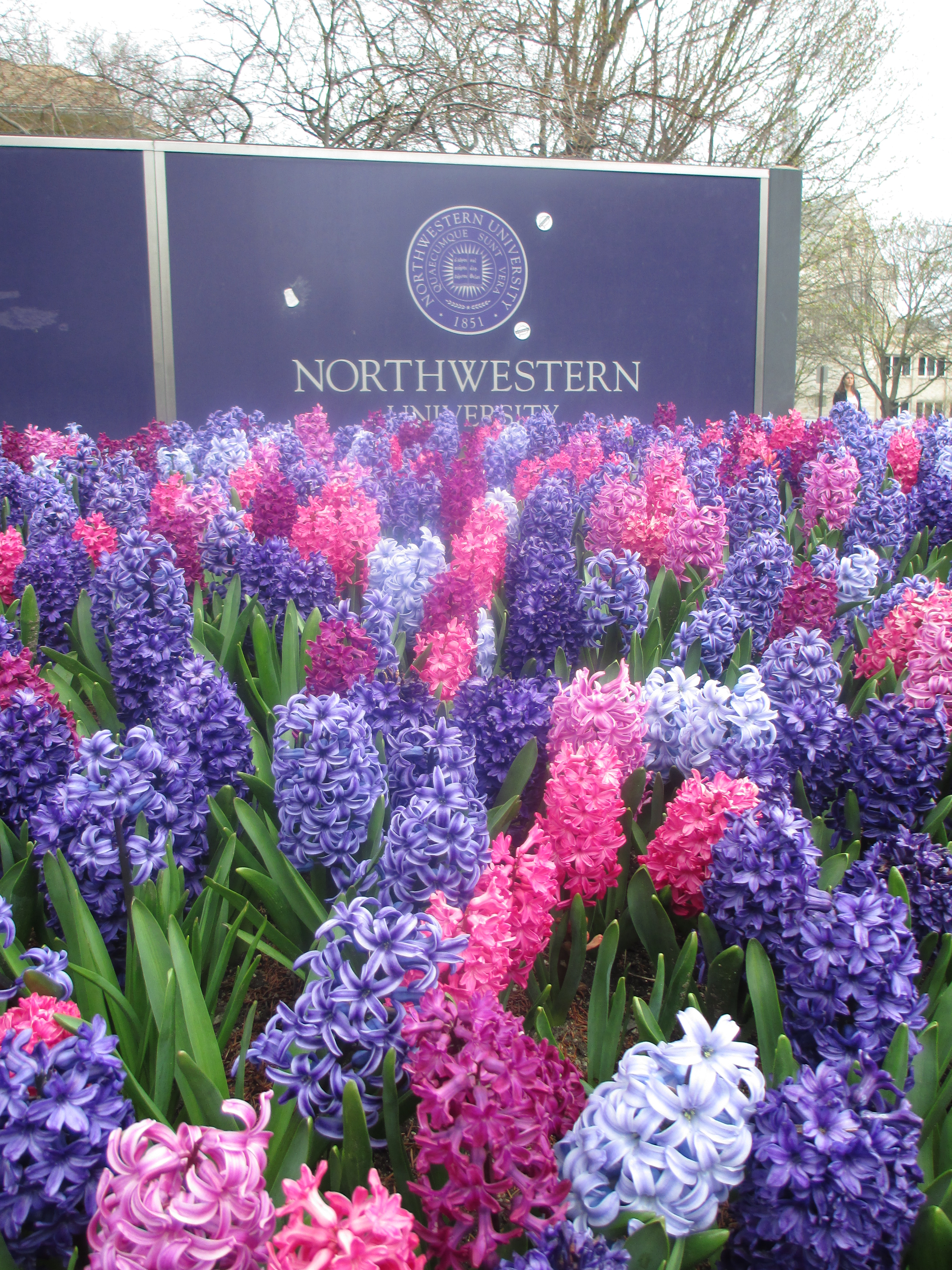
Ryan, Cathy, Melissa, Tim, Jacob

Unity Across Difference

NaBloPoMo 2020 – Today’s Lesson

Tonight we pray for the injured Northwestern Wildcat football player.

What place has prayer in sports?  I don’t take a position here; I’m wondering. 

NU played Michigan State today.  Two players collided head on.  The Wildcat went down and did not get up.  The medical team attended immediately and Hubs saw the C-collar come out, never a good sign.  After several more minutes, it appeared the whole team gathered on the field in a still, vigilant scrum.  Heads bowed, hands grasped shoulders.  They’re praying, I realized. 

For better or worse, my first reaction was to wonder if that was okay with everybody on the team.   Do you think it was for better, or for worse?  Why?  Why do I even wonder about the distinction?  I assign it as neither (or both)—I choose simply to observe it, hold it with curiosity and not judgment.  I may entertain various stories about it, perhaps accepting all somewhat and none fully.

A second later I felt reassured, even inspired.  I don’t know anything about NU Football team culture.  I choose the story, however, that it’s the kind in which anyone asked to gather and express solidarity with a fallen teammate does so without hesitation.  “I will pray for your healing,” and, “Please pray for me,” said earnestly by a faithful player to an atheist one, can be received as an expression of caring and a request for support, respectively, rather than impositions of one’s beliefs on the other.  We bow our heads and grasp each other’s shoulders to show reverence and cohesion.  When one of us is hurt, traumatized, or otherwise suffering, it shouldn’t matter what religion we practice or not. 

We help however we know how.  Because we are a team.

November 10:  Experimental Questions Make Me Better

IMG_2654

NaBloPoMo 2019

What’s the most interesting question your doctor asks?  What effect does it have on you?

I get to ask some really fun and interesting questions of my patients.  They often come about spontaneously, then I realize how helpful they are, and I integrate them into my routine interview.

It was almost ten years ago now that I was seeing a pleasant young woman for the third time.  She had recurrent, nonspecific physical symptoms, and felt down.  She was having a really hard time at work, and it was having a significant impact on her overall health and well-being.  Around the same time I saw another patient, a young man.  He felt well overall, but was also not happy in his job.  I remember casting around in my mind, looking for a quick and easy way to quantify the negative effect of these patients’ negative work experiences on their health.  I can’t remember which visit sparked the 0-10 stress and meaning scale questions, but it was one of them, and then I repeated the questions on the other soon after.  These were my first two, unsuspecting, experimental question subjects.  On a scale of 0 to 10, how high do you rate the overall stress of your work?  That was easy, but I also had to figure out whether there was some benefit that was worth the cost of the stress.  So: On the same scale, how high do you rate the overall meaning of your work to you?  The bottom line is that we can tolerate very high levels of stress if the work is meaningful—for sustainable work, the meaning-to-stress ratio needs to be 1 or greater, and overall meaning is best at 7 or higher.  That year I realized I could create deeper, more helpful, more insight-revealing questions in my patient encounters.

My own work meaning rating rose by at least a couple integers almost immediately.

IMG_2628

Since then I have consistently asked about body signs of stress, resilience practices, the proportions of threat vs. challenge stress at work or home.  Since I last wrote about these questions in 2016, I have continued the experiments.

By 2016 I was also using the elite athlete analogy with my patients, asking every year about habits in the 5 reciprocal domains of health (after talking about stress and meaning at work): Sleep, Exercise, Nutrition, Stress Management, and Relationships.  But after asking the same questions for a couple years in a row, both my patients and I get a little bored.  So in 2017 I went a little deeper in the relationships category.  After confirming marital status, ages and health of children, I started asking, “Tell me about your emotional support network,” because the more I am reminded of the critical importance of emotional support in our health, the less it makes sense to not ask about it directly.

With each additional set of questions, I learn more about my patients. I learn how people understand the questions—sometimes it’s totally different from my own understanding, and the conversation about the meaning and objective of my asking gives me wonderful insights into people.  Patients are remarkably open and honest in their answers, which always reminds me of the honor and privilege of my role as physician.  The answers to these questions are what allow me to imagine my patients in their natural habitats, engaging with their work and the people in their lives.  The answers provide context and texture to the other patterns we uncover in health habits, and we often come together to a better understanding of both the origins and consequences thereof.  I can’t speak for my patients, but I always come away feeling just a little more connected.  I get goosebumps just thinking about it.

This year I’m excited to introduce 4 new questions.  It started out as three.  The third one wasn’t landing quite right initially.  I wasn’t asking what I meant, and I couldn’t quite articulate what I was after.  So I experimented with the wording until I got to the current state:

  1. In the coming year, what do you see as the biggest threat to your health?
  2. What is the biggest asset?
  3. Having answered these, how does this affect your decision making going forward? …And other iterations I can’t remember anymore
  4. One year from now, when we meet again, what do you want to look back and see/say about your health, relationships, and whatever else is important to you?
  5. (then the corollary question that occurred organically once and I then incorporated–) In order to make this vision a reality, what support do you already have or need to recruit?

I have asked these questions since July.  I always think to myself how I would answer for my patients, based on what I know about their circumstances, habits, and biometrics.  About two thirds of the time, our answers are the same.  Patients seem to receive them well, too.  One asked me to email them to him, so now I offer to email them to everybody.

IMG_2664

You might imagine that I think these questions make me a better physician.  That may or may not be true.  All of these questions make me better—a better, more self-aware person—because I also ask them of myself.  What is my meaning:stress ratio today?  This week?  This year?  I assess the threat/challenge ratio of my own life stressors, especially the acute ones.  I have had the same body signs of stress for many years, but in 2019 I may have developed a couple new ones, darn.  What’s the biggest threat to my health?  My hedonist impulses, no question.  The biggest asset?  My Counsel—those best friends and confidants.  What is my vision for my health a year from now?  I only answered that for myself a week ago (and I’ll keep it to myself, thank you).  And what support do I have/need?  I’m still working on that one!  That I don’t already know the answer to this one surprises me—I assumed I knew, but when I sat down to think about it formally, I realize that this may be the missing piece that holds me back from achieving some of my personal health goals.  HUH, how fascinating!  Did I not just write about how I question some of my patients’ ‘Lone Ranger’ method of self-care?  Well hello kettle, I’m pot!

Now, off to ponder some more, yay!