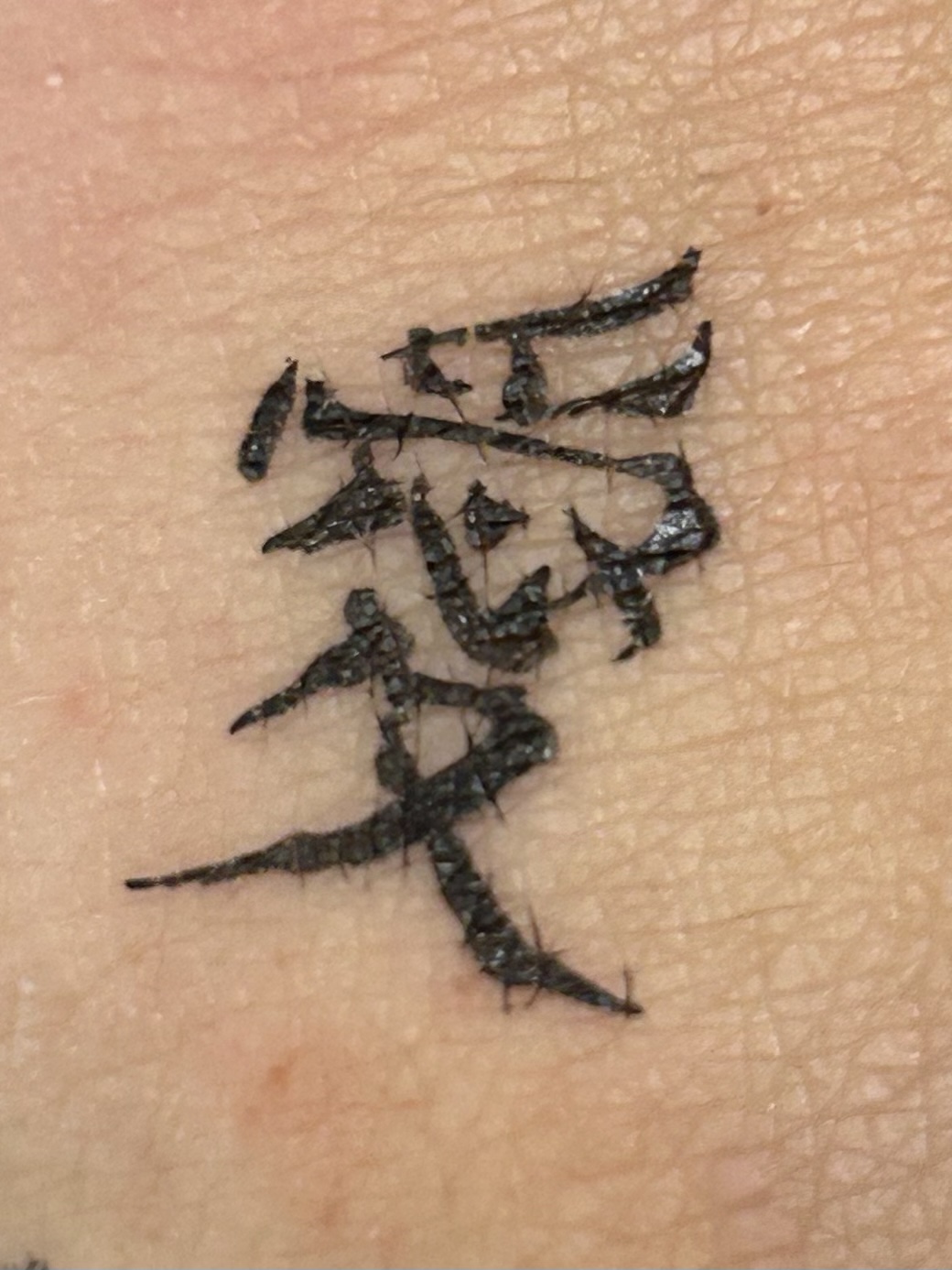
愛 Love, written by me in eyeliner brush pen on Daughter’s hand
“…the medial aspect of my proximal left anterior forearm…” –Me, describing where I would place the tattoo of my matrilineal surnames to Daughter.
What languages do you speak?
I speak American English and Mandarin with a Taiwan 外省人 accent. I am fluent in both but only literate to an early primary school level in the latter. In a previous medical practice I had so many Spanish speaking patients who were willing to teach me, that by the time I left if the patient knew a little English and the problem was not too complicated, I could get through an entire clinic visit without an interpreter. I had a long chain of Post-It notes in my office of words and phrases they had taught me.
Son and Daughter grew up with internist and orthopaedic surgeon parents so they speak a little medicine. Daughter spent five weeks learning archeology and osteology this summer, so her fluency in anatomy has improved–hence my description above. It’s just the most efficient and accurate way to describe the body part. Quick tutorial: –Closer to central mass of body is proximal, farther is distal. –Orienting left/right, closer to center is medial, farther away is lateral. For the hands, anatomical position assumes palms facing forward (anterior), so pinky side is medial, thumb side is lateral. –Front of body is anterior, back is posterior. –Closer to the head is superior; closer to the feet is inferior. –Ventral is belly side, dorsal is back side (so back of the hand is dorsal but weirdly, top of the foot is also dorsal–which those fluent in anatomy already know!). –Rostral is toward the head, caudal is toward the sacrum (tail).
How fun to talk shop with my kid!
It got me thinking again how bonding it is to share jargon. Consider any profession. We can go anywhere in the world and assume we can work with anyone in our field simply because we all speak the language of our discipline. It’s a built-in connection that precedes our acquaintance, that bridges other language and culture barriers. How cool is that!?
It all made me wonder what other languages I speak. Here is a partial list, in rough order of verbal fluency: Medicine (especially internal medicine and orthopaedics) Biology Chemistry (organic more than others) Exercise/fitness Nutrition Volleyball Mahjong Pens Paper/stationery Writing Psychology Romance Bread/sourdough Audiobooks Pottery
I also speak Relationship. I am highly fluent and literate verbally. But this language calls for and forth our greatest capacity for nonverbal communication, no? Huh. I love that.
Wanna know what languages I do not speak? This was fun to list too: Sports other than volleyball (though I did learn once how to spot a moving pick in basketball) Makeup Skincare Music (though I appreciate it greatly) Pop culture Fashion (though Daughter has taught me much about classic designers) Money/finance
Aside from a lighthearted and fun reflection on Sunday afternoon while procrastinating housecleaning, the intersecting concepts of language, communication, and connection just make me shake my head in awe and wonder. How many more languages could I learn in this lifetime? I am convinced this is how people stay young and live longer: lifelong stimulation and learning, connection with and integration of the novel and interesting that brings us closer to our fellow humans. It could be anything!
The Lodge at Whitefish Lake, Whitefish, MT September 2025
It’s been a dense few weeks, friends! Or a dense year, maybe, as these blog posts appear late more often now than in a while. Life! I’m okay with it; eleven years is a long time to maintain a project that was only meant to last one. I’m just happy to be here! Family came in last weekend, and I’m about to fly myself tonight, so this post will serve for two weeks. Hope everybody is well and happy!
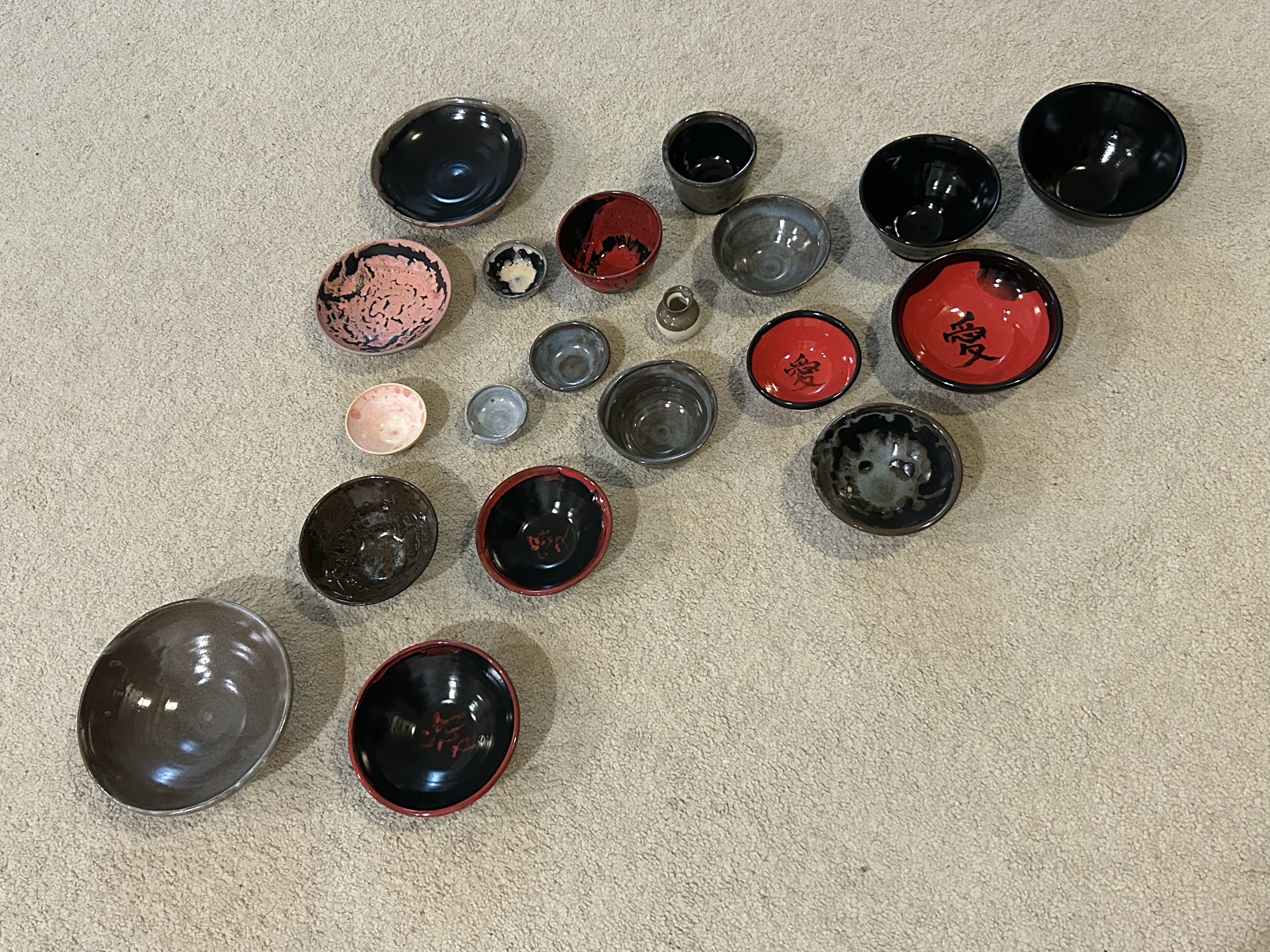
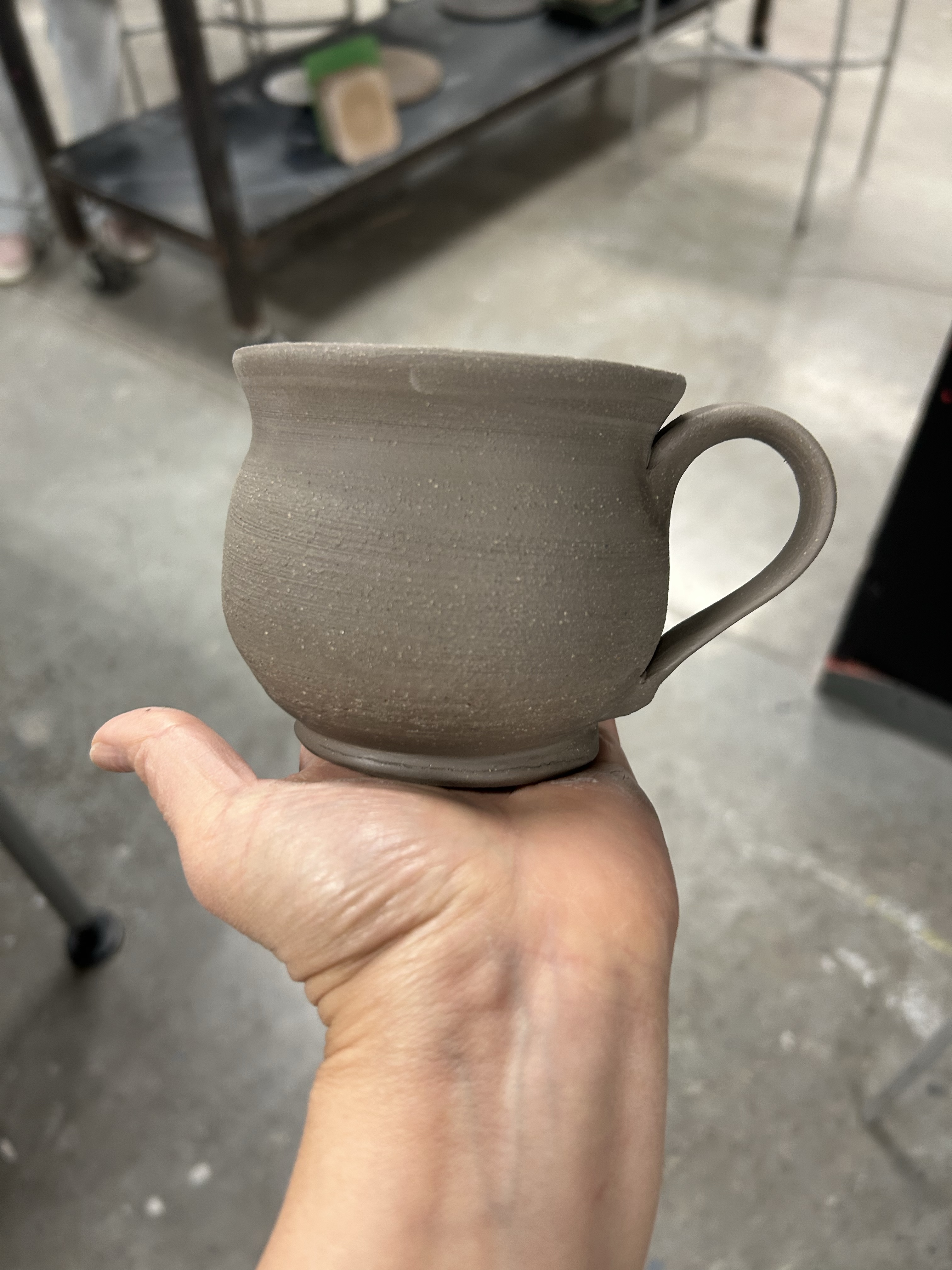
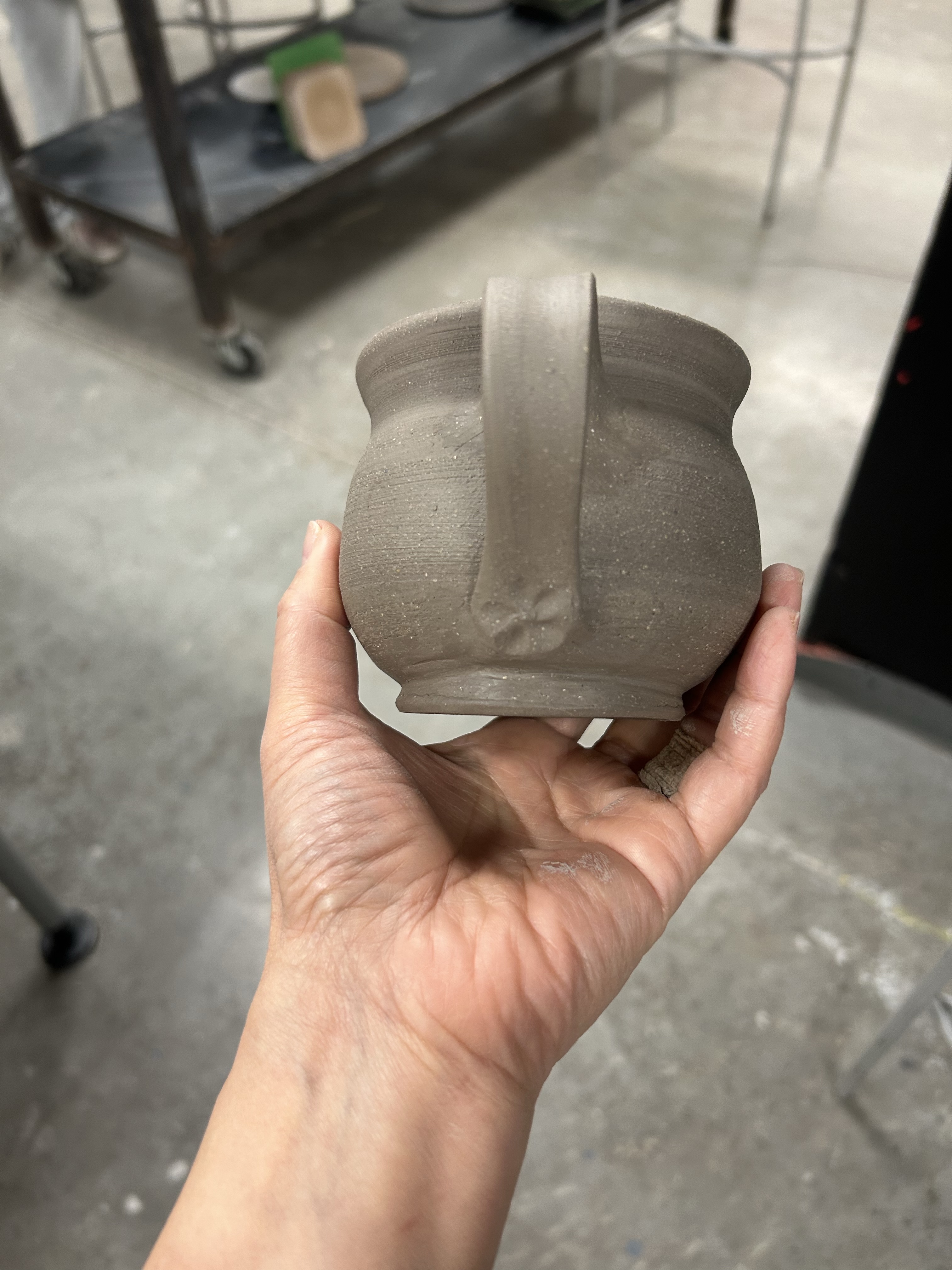
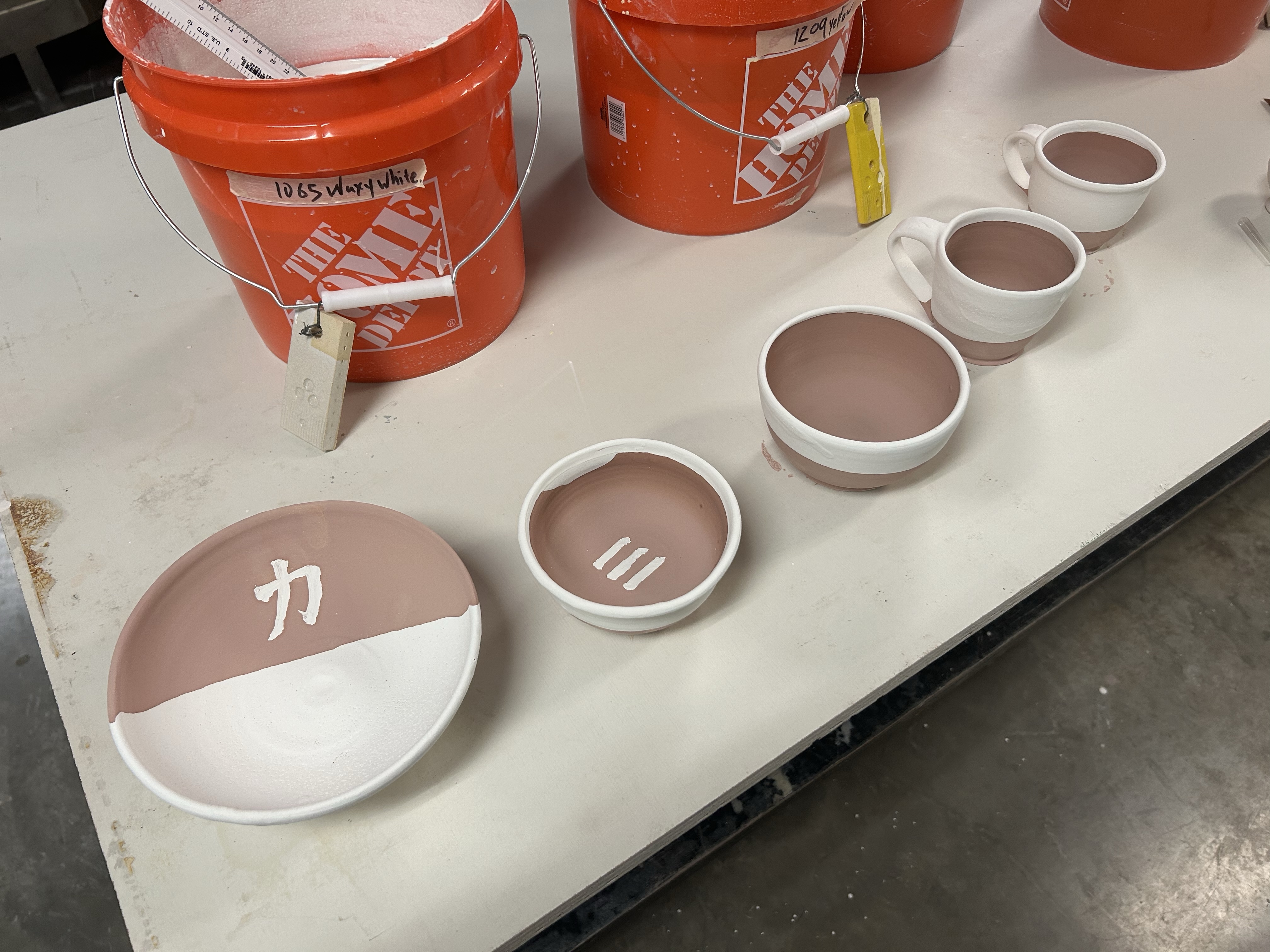
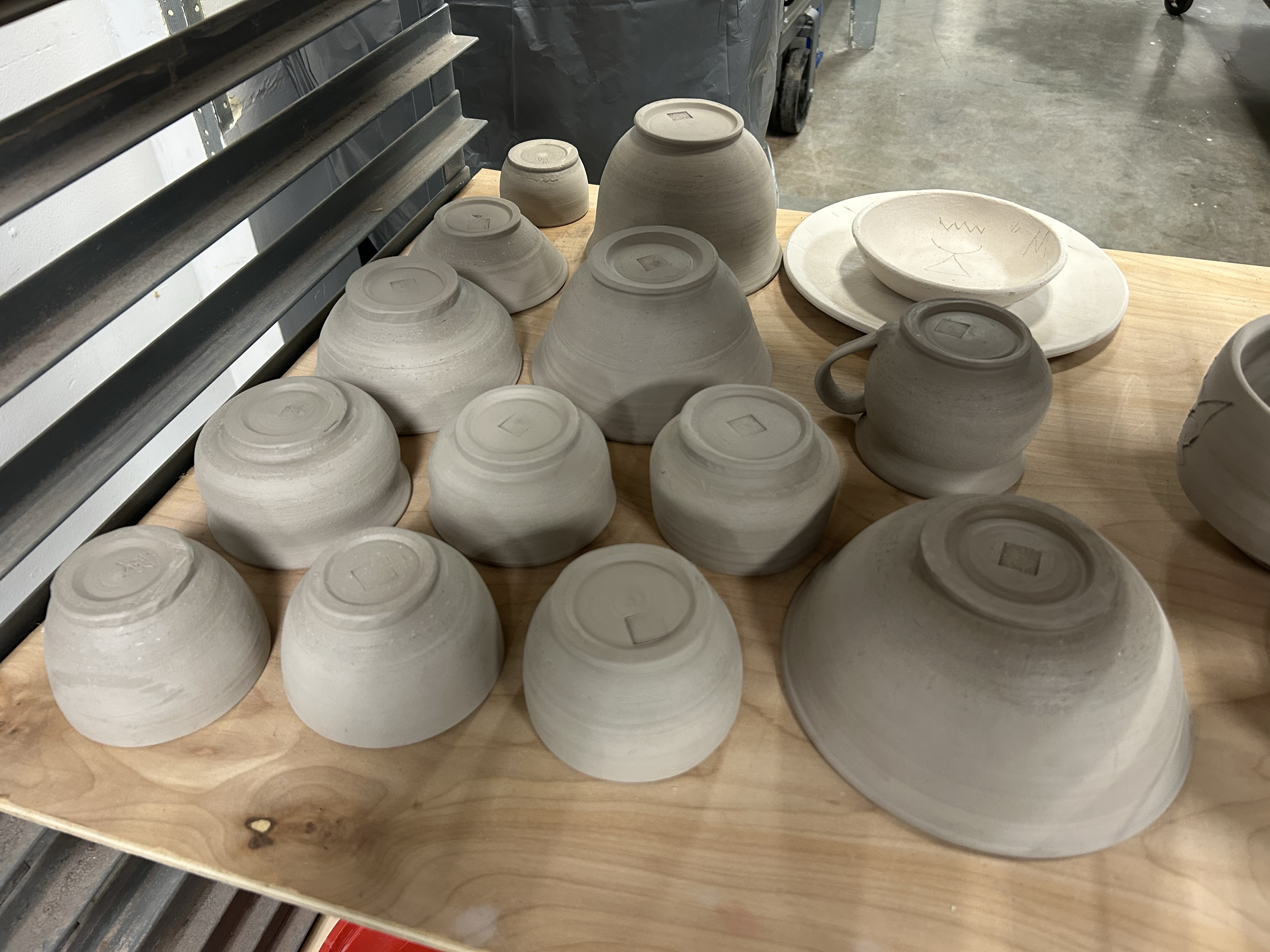
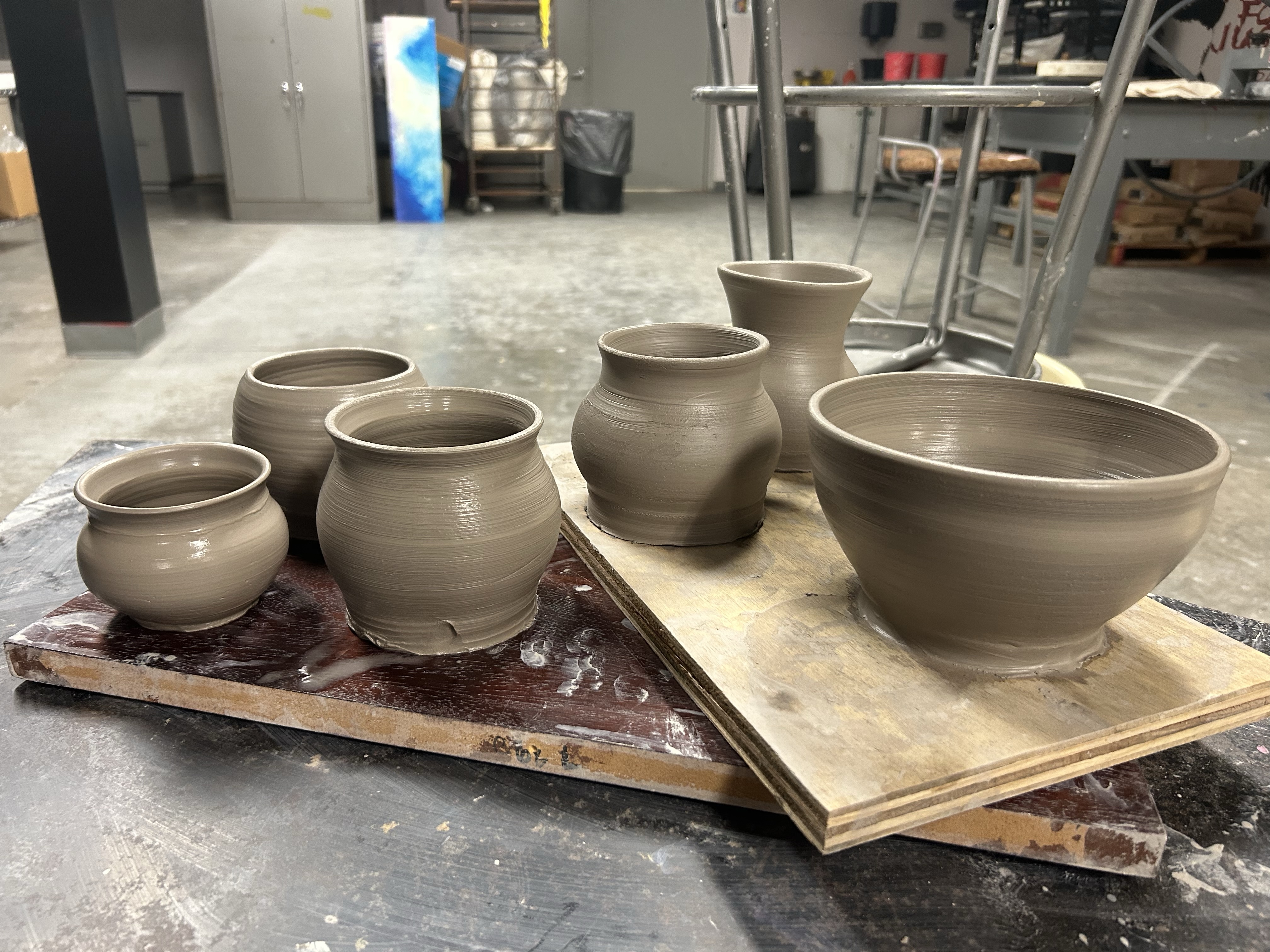
Daughter and I signed up for a pottery class back in June, 12 weeks ago, I realize today. It took a food twelve hours to call forth the muscle memory from 26 years ago when I made over 400 pots, and now I’m making progress again. The first batch yielded 27 pieces, teaching me how the glazes behave when layered. By the end, barring catastrophe, I will have over 50 creations to use and share this time. See below for photos!
I recently saw a patient who will retire in the coming year. Their annual exams brought us both warm connection over the years, and we agreed that they are as healthy as they could be on the threshold of this life transition. At the end of the day they asked me to include some parting advice for the next five years, a new request for me. How fun! Now I wonder what I’d write for any patient when I see them (potentially) for the last time. What would I write for myself? For the kids? My parents?
What advice would you write to yourself and your loved ones for the next some years? For your leaders? For our legislators and judiciary? How do you already think and communicate in these terms?
I listened to Simon Sinek’s The Infinite Gameagain yesterday and today. He writes in terms of business and professional leadership, but his premise of an infinite mindset applies to how any of us may choose to live. Inspiring. One of the reasons I get behind on the blog is that I’m writing Love Letters to Patients (LLTP) every week. Every time I think I will address their medical concerns, I end up writing about their life, their relationships, and their impact on me… and my aspirations for them–for us all. I intend to edit and organize after one full year; that will be Book. Can’t wait to share it with you all. Meanwhile, I think this extemporaneous ‘five year plan’ may give you a taste of what that bigger project may feel like. What think you? 🙂
OK so in case I don’t see you next year (or ever again! 😦 ), you asked for my advice for the next five years. AWESOME, this will be my first time writing something like this, let’s see what emerges ! 😀
Continue to prioritize the most important things to you–the people and activities that give your life meaning. I think you are already very good at this, and after retirement you will have time, energy, and resources to engage and invest even more, no? How fulfilling!
Physical fitness will be important. I love John’s advice of using gym time to fill in the small gaps in lower body strength that you may not get from your usual activities. We discussed the ways you can tell if you’re still fit–getting up and down from the floor or low chairs/stools, feeling confident that you can embark on any new physical activity without limitation (hiking, skating, playing a new sport), etc. Functional movements in the gym are key for this: forward lunges approximate going down the stairs. Squats are getting up from a low chair. Deadlifts are bending over and picking up something from the floor. It’s the eccentric movement–the controlled deceleration–that is key for fall prevention: Think walking downhill quickly without hyperextending, torquing, or losing balance in your ankles and knees.
Stay open to learning anything. Hang out with curious people who know different things from you and are generous with sharing. Say yes to trying new things. Spend time with folks from all generations. I really think this keeps us young–openness, curiosity, exposure to and engagement with novelty, and just growing our neural networks in any possible way–visual, auditory, tactile, intellectual, emotional, and in movement!
Assemble your medical pit crew, if needed. You have a primary care doctor, and you have us at Exec Health for exercise and nutrition advice once a year. Events may lead you to need medical specialists in the future, eg physical therapy, personal training, talk therapy–who knows? But finding *your people* in each of these domains, and connecting them whenever possible so they may compare notes and coordinate care, will give you all more connection and improve outcomes, in my opinion.
Vet medical and health information in the public domain with a very critical mind. Sadly right now, that includes information coming from the federal government. Avoid influencers and even medical professionals who are selling products or services for very high prices. Look at financial relationships between public figures and the products they recommend. The number of non-evidence based, fear-mongering, capitalist health and wellness businesses increases every year, and I have yet to vet one that I recommend. Review things with your doctor before you pay for anything she did not recommend herself.
I think that’s pretty good general advice–not just for you but for us all… Thank you for stimulating the thoughts! Please tell me what you think and if you want me to add/address anything else.
First pottery haul in 26 years. Not all beautiful; every one gratifying.My best vessel and handle yet!Accidental finger dents turned into a cute flower, which may be my signature hereafterWaxy white over blue; two intended for the Ethos kitchenThe upside down ones are mine. Can’t wait to glaze them all!Practicing for more mugs–learning how much clay and how to make a good cylinder first. Also hoping to get at least a few ramen bowls out of the lot.
So much going on for us all right now, friends. My head spins with the sheer volume and intensity of oversimplified, overgeneralized medical (sometimes I can barely call it that) information that comes across my and my patients’ media feeds. I have time in my practice to study and answer myriad questions, to learn in depth together with my patients. Most primary care physicians do not have this luxury, and the current rampant (mis)information environment makes it exponentially harder on them. The extra time, energy and resources required to combat misinformation and convince patients to accept and participate in evidence-based care may likely worsen physican burnout and degrade overall quality of care if we don’t reverse the trend.
For now, let me share resources that I believe we all need urgently, especially since the government recently announced military service members will now be indiscriminately tested for testosterone levels (I cannot emphasize enough how anti-evidence-based, wasteful, and alarming this is). Please find reliable information on this from the American Urological Association, the Mayo Clinic, and the American Academy of Family Physicians. I also looked up the peptides that I mentioned in the last post, but Dr. Karl Nadolsky as already covered this in his podcast, see below.
Ask these questions (among others) whenever you come across medical or health information online, from a friend, or anywhere:
What/who is the source and what are their credentials?
What is the evidence?
What is the quality of the evidence and how/does it apply to me?
What is being sold and/or who is making money or otherwise benefiting from spreading this information?
What biases of my own could make me susceptible to misinformation in this domain?
My goal is not to tell people what to think, but rather how to think, how to assess validity and authenticity of information they consume. It’s a mindset of critial openness, informed and educated assessment, and a commitment to intellectual humility.
Thankfully, I have wonderful colleagues who exemplify these qualities. They share clear, professional, evidence-based health information. I share their social media accounts below so we may all be better informed and thoughtful about our medical information consumption.
It’s late, my friends. The doctors are not just angry; we are tired. But we are here for you, doing our best to stay up to date. We apply the latest and strongest evidence to you, our patients, in the most personalized, objective, and compassionate way we know how. We are not keeping secrets, in cahoots with Big Pharma, or otherwise trying to hinder your best health. We do our best work when we can cultivate a mutually respectful and open relationship with you, our patients. Our culture and social systems thwart us at almost every turn–it’s why I started this blog over eleven years ago, and it’s only gotten worse since then. I could not have imagined it, and yet here we are.
Please do not lose hope. Students enter medicine for the same reason now as we have done for centuries–to help people. We are taught and trained to apply rigorous scientific methods, to adhere to evidence, and to practice with humility and integrity. You can still find us through the noise and risks of the wellness grifting machine.
Here are some of us whose internet presence is strong and valuable. I hope you may take some time to get to know them, follow them, and amplify their voices.
@matchthedoc, Dr. Cindy. Board certified pediatrician and gifted social media creator. Her posts are validating, informative, educational, and thought provoking.
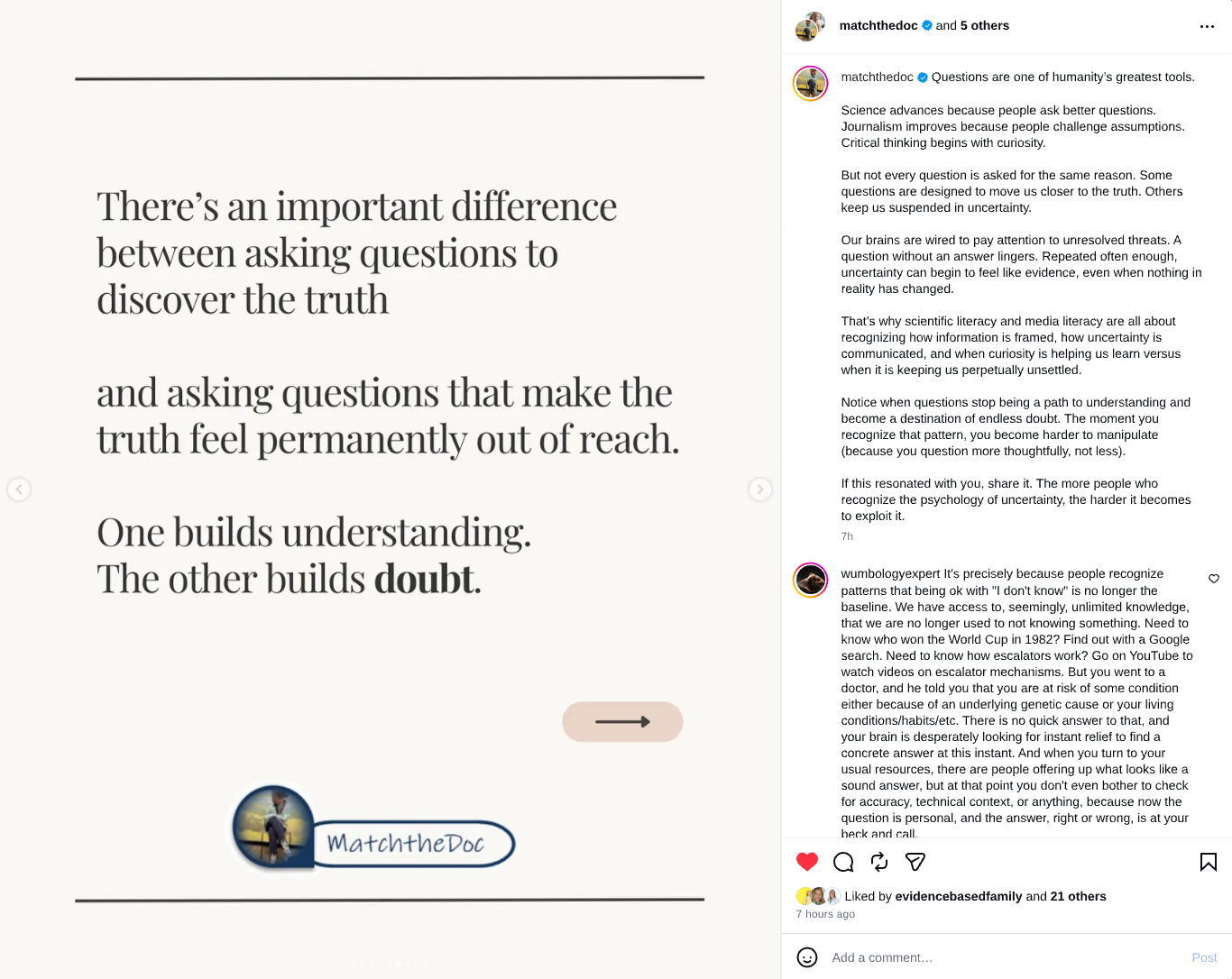
Caption to the image above: “Questions are one of humanity’s greatest tools.
“Science advances because people ask better questions. Journalism improves because people challenge assumptions. Critical thinking begins with curiosity.
“But not every question is asked for the same reason. Some questions are designed to move us closer to the truth. Others keep us suspended in uncertainty.
“Our brains are wired to pay attention to unresolved threats. A question without an answer lingers. Repeated often enough, uncertainty can begin to feel like evidence, even when nothing in reality has changed.
“That’s why scientific literacy and media literacy are all about recognizing how information is framed, how uncertainty is communicated, and when curiosity is helping us learn versus when it is keeping us perpetually unsettled.
“Notice when questions stop being a path to understanding and become a destination of endless doubt. The moment you recognize that pattern, you become harder to manipulate (because you question more thoughtfully, not less).
“If this resonated with you, share it. The more people who recognize the psychology of uncertainty, the harder it becomes to exploit it.”
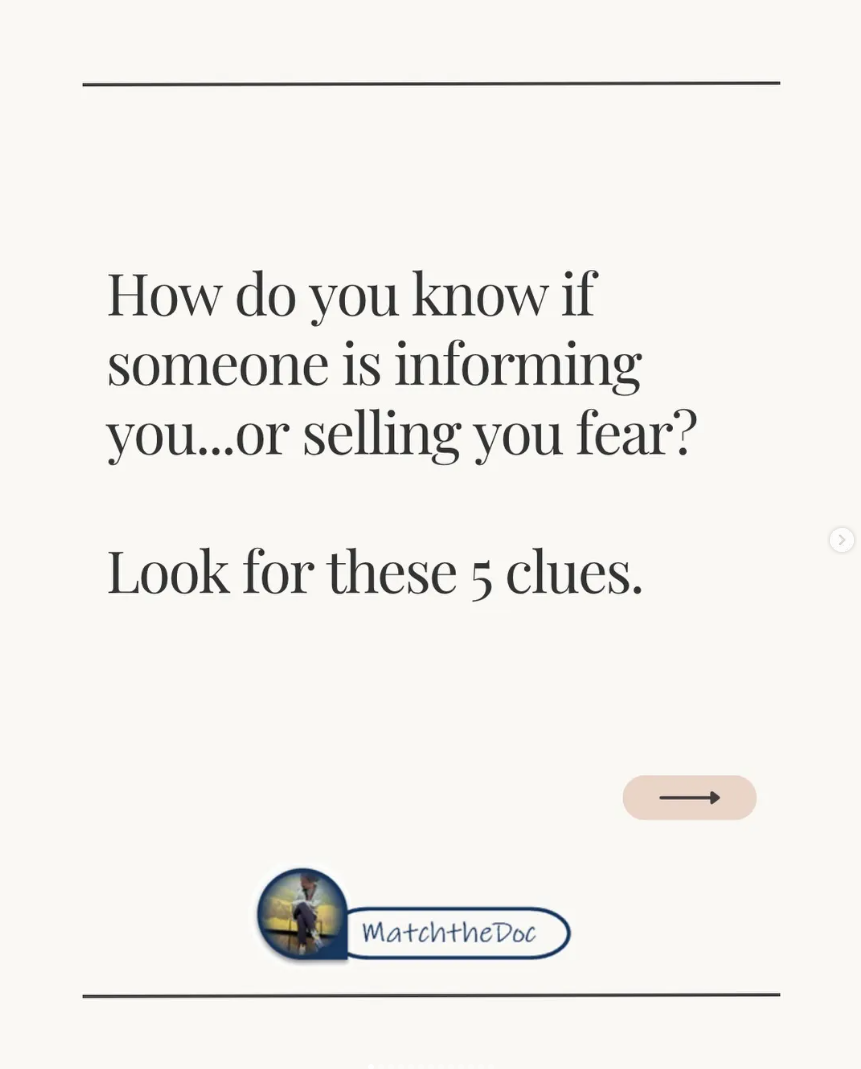
If you follow no social media accounts for medical information, follow Dr. Cindy, @matchthedoc on Instagram. She exemplifies a healthy information vetting mindset, and teaches us how to practice. She does not attack or judge others, nor does she incite alarm or catastrophize about the current state of science and medicine. She simply points out the pitfalls we are all susceptible to when consuming media, the human patterns of perception and behavior that make us easy targets for mis- and dis-information. Her posts, like those of Brad Stulberg, are thoughtful, well-articulated, and aim to help us think and act better, to de-escalate alarm and fear, and help us claim self-efficacy and agency.
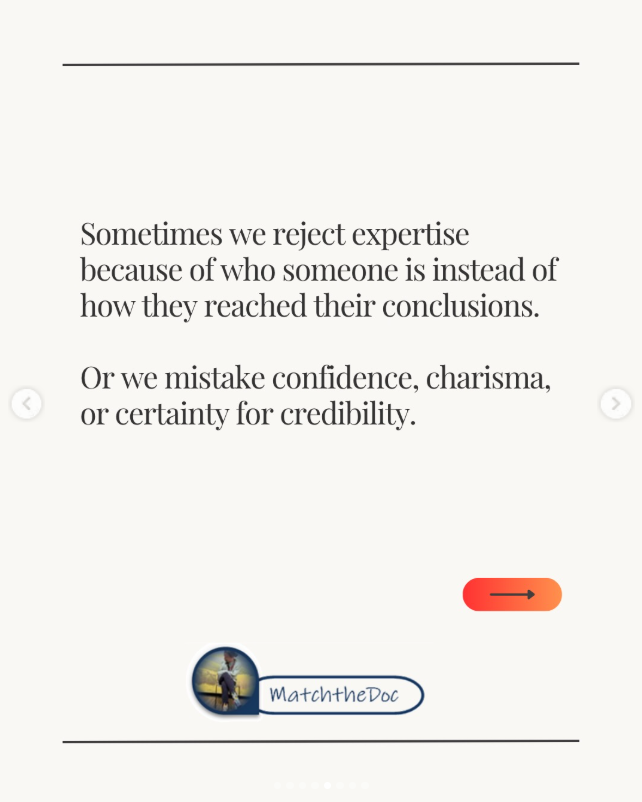
Caption for the post exerpts above: “A common message these days is, “Don’t trust the experts.” But if we stop there, we miss something important.
“None of us can personally verify everything we know. Most of us haven’t personally analyzed climate data, designed airplanes, or run clinical trials. We rely on knowledge built by other people every single day.
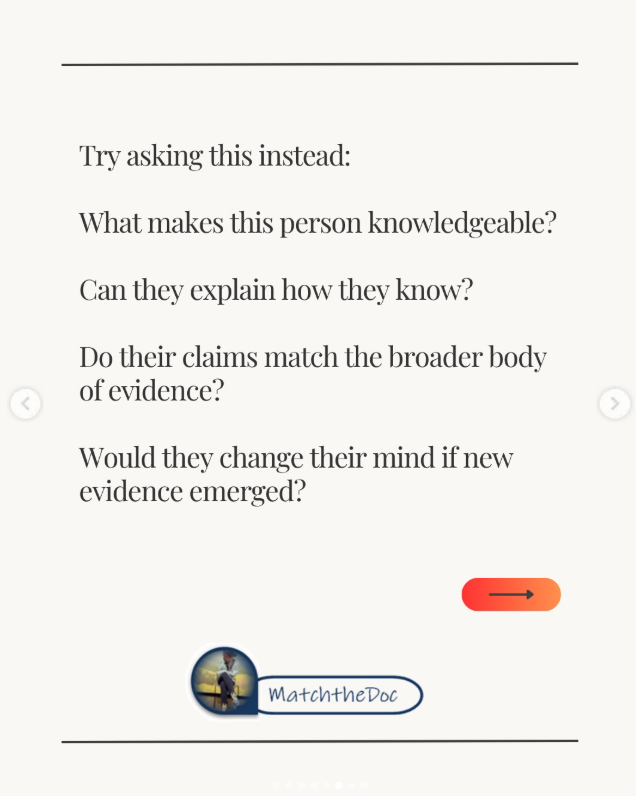
“Move beyond asking whether experts should be trusted, and start asking how trust is earned. Healthy skepticism asks thoughtful questions about expertise rather than rejecting it outright.
“What training or experience does this person have? How do they know what they know? Are their claims supported by multiple lines of evidence? Are they transparent about uncertainty? If new evidence emerged, would they be willing to change their mind?
“These questions can be asked of a physician, a scientist, a journalist, a podcast host, a wellness influencer, or anyone making health claims.
“Expertise is not about being perfect. Science is not a collection of people who never make mistakes. It’s a process designed to find mistakes, correct them, and improve our understanding over time.
“The goal is informed trust. Good critical thinking strengthens our ability to recognise trustworthy expertise.
“When you decide whether to trust someone’s health advice, what qualities matter most to you?”
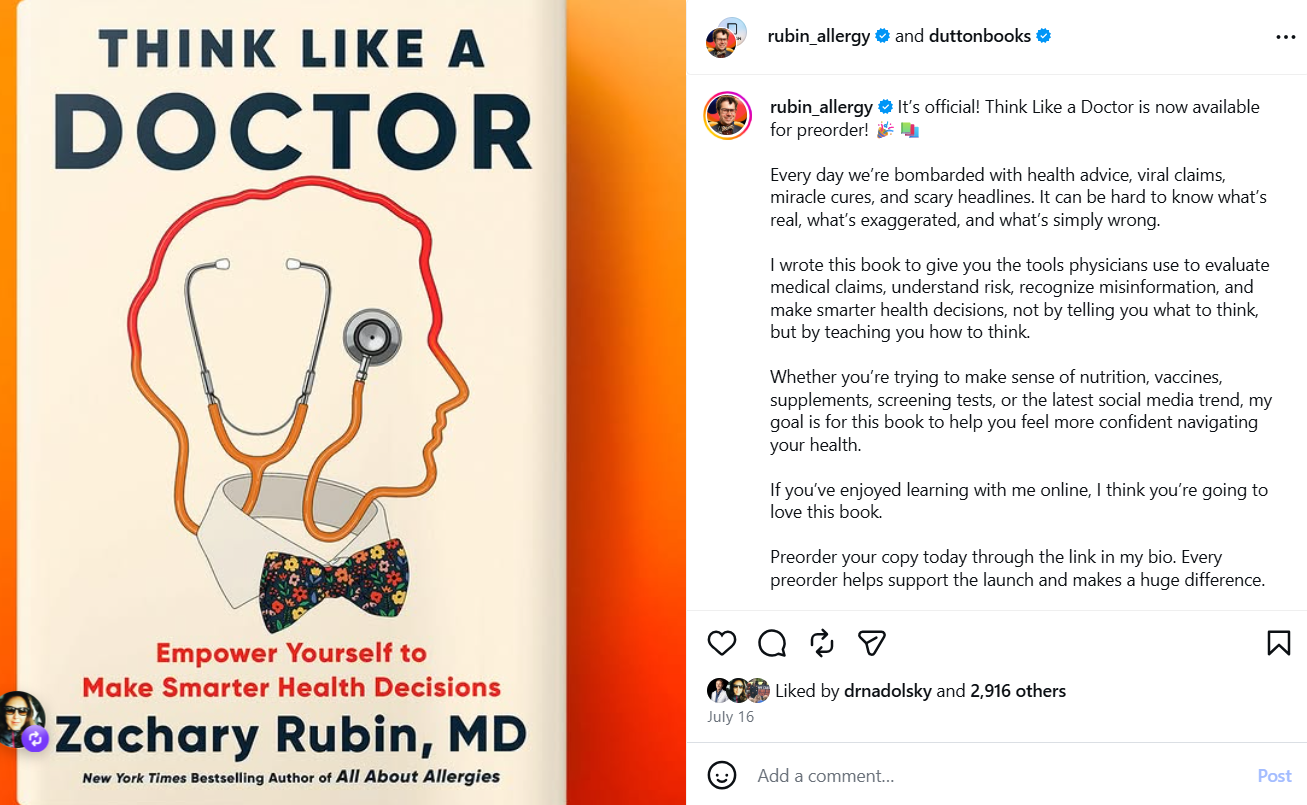
2. @rubin_allergy, Dr. Zachary Rubin. Pediatric allergist/immunologist, New York Times bestselling author of All About Allergies and the upcoming Think Like a Doctor, and fellow Illinois physician. Dr. Rubin posts answers to medical questions posed on the internet, explaining medicine in terms any patient can understand. He addresses current events in health and medicine, such as the ongoing US cyclospora outbreak and the alarmingly revisionist claims by the current secretary of Health and Human Services that ICU’s were ’empty’ during the COVID-19 pandemic. His posts, delivered by video speaking directly to viewers, are calm, clear, and nonadversarial, though he does call out lies and falsehoods committed by others. He addresses the consequences of sudden and drastic changes in funding and regulation on research, clinical practice, and health outcomes for the population.
Caption for image above: “Every day we’re bombarded with health advice, viral claims, miracle cures, and scary headlines. It can be hard to know what’s real, what’s exaggerated, and what’s simply wrong.
“I wrote this book to give you the tools physicians use to evaluate medical claims, understand risk, recognize misinformation, and make smarter health decisions, not by telling you what to think, but by teaching you how to think.
“Whether you’re trying to make sense of nutrition, vaccines, supplements, screening tests, or the latest social media trend, my goal is for this book to help you feel more confident navigating your health.
“If you’ve enjoyed learning with me online, I think you’re going to love this book.
“Preorder your copy today through the link in my bio. Every preorder helps support the launch and makes a huge difference.”
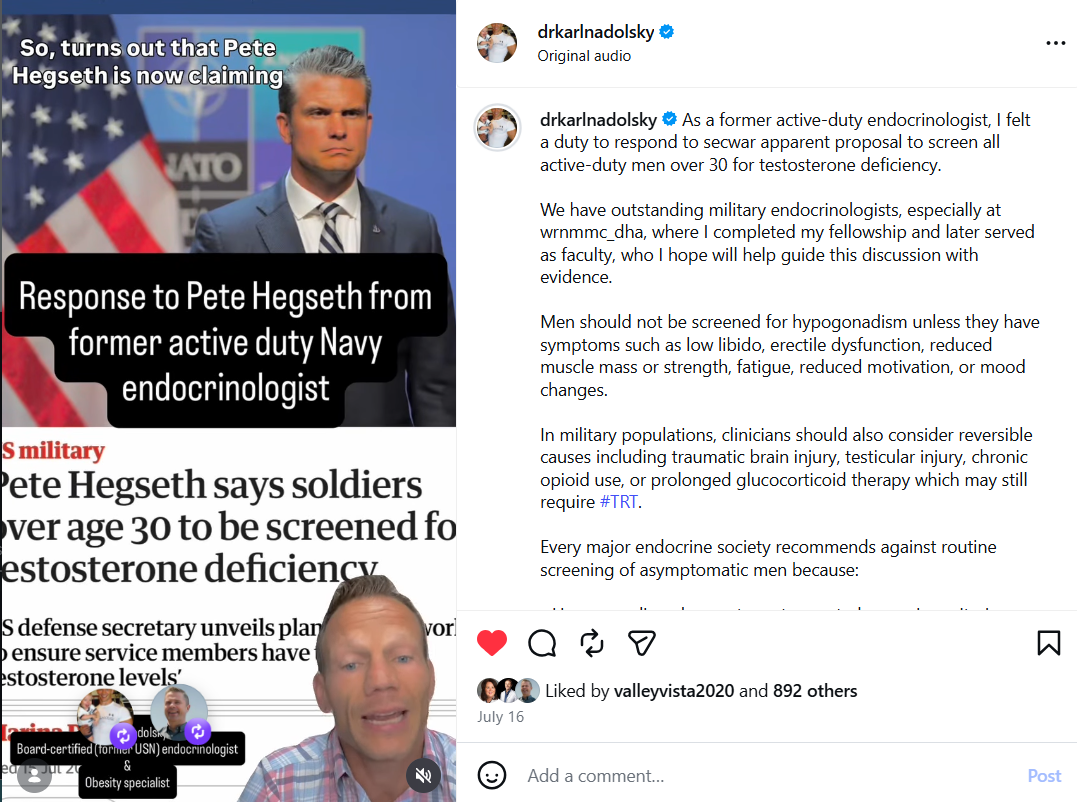
3. @drkarlnaldolsky, Dr. Karl Nadolsky. Board certified endocrinologist, US Navy veteran, cohost of the DocsWhoLift podcast. I found him through my friend Dr. Keith Roach (see below), and I am so grateful. See here his response to the idea of blanket testosterone screening in the military. Dr. Nadolsky’s specialty is metabolism and obesity medicine and his posts are informative and evidence-based. He also shares excellent content by other well-credentialed medical professionals.
Caption for image above: “As a former active-duty endocrinologist, I felt a duty to respond to secwar apparent proposal to screen all active-duty men over 30 for testosterone deficiency.
“We have outstanding military endocrinologists, especially at wrnmmc_dha, where I completed my fellowship and later served as faculty, who I hope will help guide this discussion with evidence.
“Men should not be screened for hypogonadism unless they have symptoms such as low libido, erectile dysfunction, reduced muscle mass or strength, fatigue, reduced motivation, or mood changes.
“In military populations, clinicians should also consider reversible causes including traumatic brain injury, testicular injury, chronic opioid use, or prolonged glucocorticoid therapy which may still require #TRT.
“Every major endocrine society recommends against routine screening of asymptomatic men because:
• Hypogonadism does not meet accepted screening criteria. • True pathologic hypogonadism is uncommon. • The most common cause of low testosterone is obesity, where weight loss (not testosterone) is first-line treatment of the root issue. • Active-duty men are generally healthier than the general population, making screening even lower yield. • Testosterone levels fluctuate, so universal screening would generate many false positives, unnecessary testing, referrals, anxiety, and overtreatment.
“Testosterone replacement should be reserved for men with confirmed, clinically significant irreversible hypogonadism after an appropriate evaluation and treatment of underlying causes; not because of an abnormal screening test alone.”
Here is the summary of the podcast episode, “Are Peptides the New Snake Oil? What the Actual Science Says with Barbell Medicine“: “Dr. Spencer Nadolsky and Karl bring on Dr. Austin Baraki and Dr. Jordan Feigenbaum from the Barbell Medicine crew for a conversation that cuts through one of the most hyped and least understood topics in the health and fitness space right now: the research peptides that millions of people are injecting into themselves based on anecdotes, social media marketing, and the logic that short chain amino acids are natural so they must be fine.
“In this episode they cover what peptides actually are from a basic biochemistry standpoint and why calling something a short chain amino acids does not make it a food or a supplement it makes it a drug with all the same questions around safety efficacy dosing and long-term effects that any other drug requires, why the explosion of GLP-1 popularity essentially normalized both injectable medications and the idea that if semaglutide works this well what else is out there leading directly to the current peptide boom, why BPC-157 has no randomized controlled trial data in humans and the three human trials that were started were all terminated early with results never published which is a red flag that would make people furious if it were a vaccine but barely registers in the peptide space, why TB-500 has wound healing data when applied topically but nothing when injected despite being universally marketed as a muscle and tendon healer, why MOTS-C has never been tested in humans at all and yet enormous numbers of people are currently injecting it, why the argument that big pharma would sell these if they worked is actually the correct argument and why most of these compounds were abandoned precisely because they failed in trials or showed harm signals, why biological plausibility is a dangerous standard to rely on given that suppressing arrhythmias seemed biologically obvious until the CAST trial showed it killed people and beta blockers for heart failure seemed obviously wrong until trials showed they were life saving, what a randomized controlled trial actually does what anecdote cannot and why thousands of positive experiences are not equivalent to controlled data, why a JAMA study on SARMs sold as research chemicals found that only 18 of 44 products actually contained what was on the label meaning people may not even be getting the compound they think they are getting, why the doctors on this podcast could have made millions of dollars branding and selling their own peptide lines and have specifically chosen not to, and what standard of evidence they believe should be the minimum before recommending any compound to another human being.
“The Docs Who Lift podcast distills and simplifies the complexities of exercise, medicine, and weight loss.”
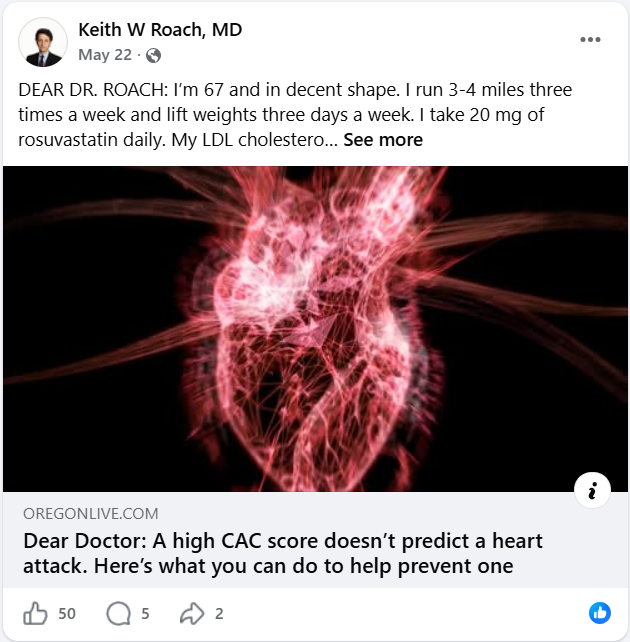
4. Keith W Roach, MD, my friend and former teacher at the University of Chicago. He writes the To Your Good Health column, where you can submit medical questions via email to toyourgoodhealth@med.cornell.edu. Dr. Roach was my first clinic preceptor during residency, back in 1999. He is one of the most objective, evidence-based, and rational physicians I have the honor to call colleague. He was the first to make sure I clarified what I meant by ‘peptides’ in my last post. We are all lucky to have the benefit of his expertise and caring on the internet.
Caption for image above: “DEAR “DR. ROACH: I’m 67 and in decent shape. I run 3-4 miles three times a week and lift weights three days a week. I take 20 mg of rosuvastatin daily. My LDL cholesterol is 85 mg/dL, and my HDL is over 80 mg/dL. I have controlled blood pressure at 125-130/80 mmHg with an angiotensin II receptor blocker (ARB).
“Seven years ago, my provider asked me to do a coronary artery calcium (CAC) scan because it could be performed at no cost to me. I did, and my score was 530. The recommendations were to get on a statin, which I was already on (rosuvastatin), as well as low-dose aspirin.
“Recently, a new primary care physician asked me to repeat the test, and my score was 1,200. The higher progressive score alarmed me as the report said that my chances of a cardiac event were extremely high over the next few years. My physician then referred me to a cardiologist.
“The cardiologist eased my concerns somewhat, as he said that although this is a high score, it doesn’t mean anything other than lots of calcium in my artery plaque. He did schedule me for a stress test. Can you please provide your take on the interpretation of my calcium score and the potential benefit in getting the test? — R.S.
“ANSWER: A CAC scan is an easy way to get additional information about a person’s risk of having a heart attack. I don’t recommend these scans for my low-risk patients, nor do I recommend them for my patients who are already on treatment.
“I find them most useful in people where it’s not clear whether they should be on treatment such as a statin (like the rosuvastatin you are on). Sometimes I have a patient who is equivocal about being on a statin (which I understand), and sometimes I’d like to get more information before giving a recommendation to a patient.
“The ideal CAC score is zero. However, a high CAC score doesn’t guarantee a heart attack. I use the MESA score (tinyurl.com/MESARisk) in combination with your clinical factors, and the tool estimates your risk of having a cardiac event (heart attack, cardiac arrest, death due to a heart attack or stroke, or confirmed blockages that lead to surgery or a stent placement) at 14.8% in the next 10 years. If you had a calcium score of zero, your risk would only be 2.3%, so the CAC really did make a significant difference in understanding your risk.
“In my opinion, a stress test is a reasonable suggestion. The point of a stress test is to see whether there are any blockages that are large enough to restrict blood flow to your heart when you exercise. If there are, then additional information, such as a direct look at your coronary anatomy with an angiogram, can provide your cardiologist with the information needed to recommend a balloon procedure and stent, cardiac surgery, or different medications.
“The newest guidelines that were just released this past March recommend an even lower LDL than your current result. (The recommendation is below 70 mg/dL, with consideration to below 55 mg/dL.) The European guidelines recommend an LDL below 55 mg/dL, with a goal of below 40 mg/dL for people who’ve had more than one cardiac event. This can usually be achieved with a maximum-dose statin, usually in combination with ezetimibe or a PCSK9 inhibitor — or both.
“The larger the risk you have for heart disease, the more important it is for you to improve other factors, including blood pressure, smoking, diet and exercise.”
I hope you get a sense, reading these medical posts, what professional, evidence-based health and medical information should look like. Humility and expertise walk hand in hand in these examples, and we should all look for this synergy in our health information sources.
There are so many others, my friends, including: @drleslietreece, Leslie Treece, MD, pediatrician @alexzmcdonald, Alex McDonald, MD, family medicine physician @drjengunger, Jen Gunter, MD, OB/gyne physician @brianwalcottmd, Brian Walcott, MD, neurosurgeon
Explore these accounts, see who they follow, and whose posts they share. The less time, energy, attention, and resources we give to non-evidence based, fear-mongering, and money-making grifters, the better off we will all be.