“Hey friend, favor? “When you think of me, what things do you hear me say all the time that signify to you who I am and what I’m about? 🤔 “…Collecting ‘Chengerisms’”
The compulsion overtook me Thursday evening, when I should have been finishing clinic notes and packing for LA. I texted a slew of people in a flurry with the question above, intending to assemble their answers into backbone for National Blog Posting Month in November. For those who don’t know, NaBloPoMo challenges bloggers to publish 30 posts in 30 days, all written in real time. It coincides with NaNoWriMo, National Novel Writing Month, a sprint to write a 50K word manuscript in the same time.
This will be my tenth consecutive NaBloPoMo challenge–BRING IT, I say!
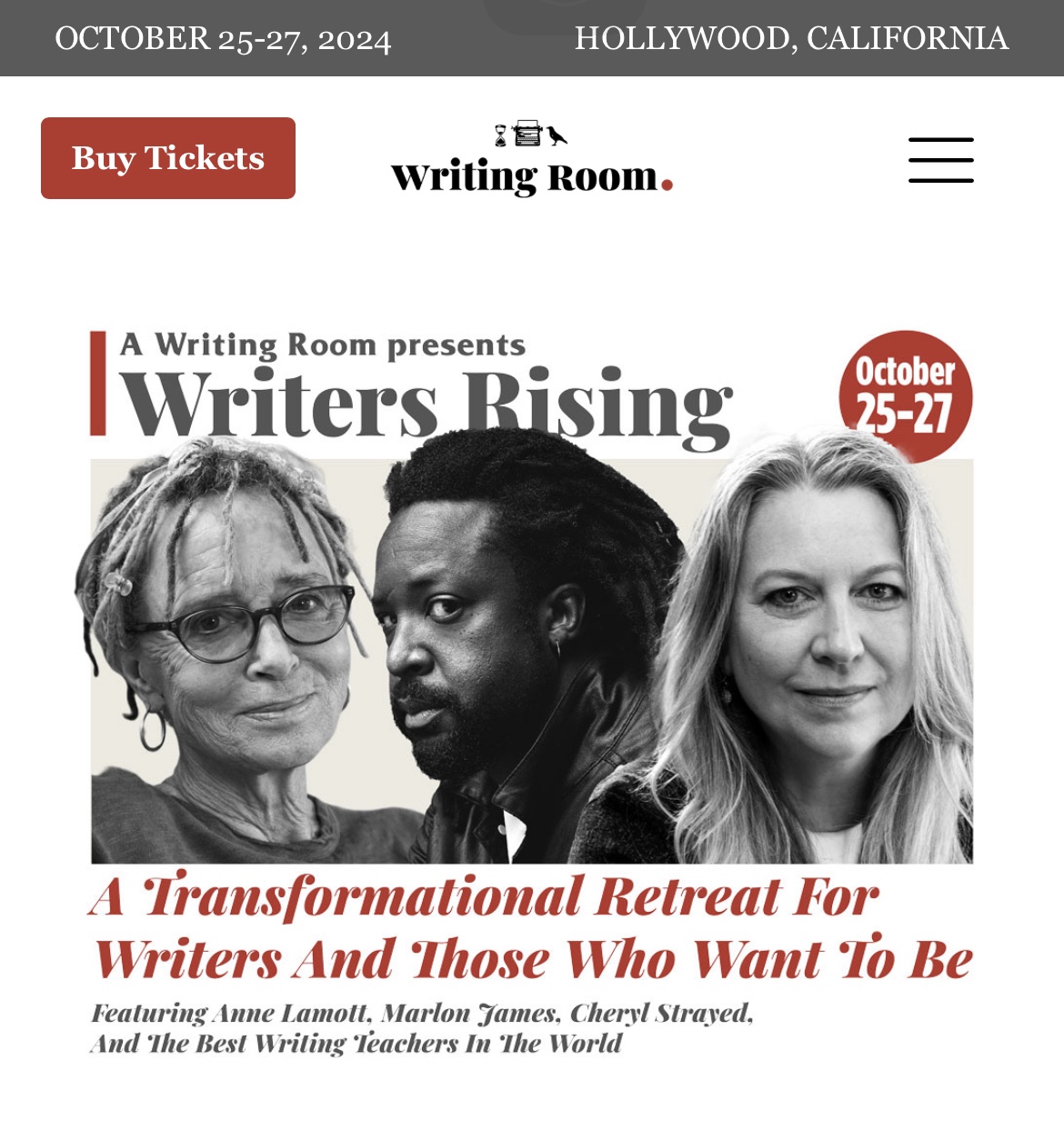
My “Chengerisms” query, I see now, was actually me gathering validation and support for showing up all me, all in, BOOBS OUT at the Writers Rising retreat this weekend. My subconscious intuition knows what I need; I sense, trust, and follow better with age. Replies rolled in with speed, earnestness, and so much love it positively bowled me over. Highly recommend!
The strongest messages I perceived throughout the conference reinforced all of my highest writing and living values: Let loose your curiosity Take risks Tell the truth Honor your Central Self Own Your Shit You are enough Assemble your pit crew Connect, connect, connect!
How tightly these correlated with the Chengerisms my friends mirrored to me: What is that about? How fascinating! Tell me more… Hey friend How did that feel? Love you love you Yaaaay! One breath Walk the talk BOOBS OUT (apparently catching on in my small circles–yaaaayy!) Tribe Sooo human.
This spontaneous, subconscious-driven exercise shows me the profound importance of good, loving feedback and the absolute value of meaningful relationship. My response to almost every reply was a sincere and heartfelt, “I feel seen!”
While I continually noodle on content and structure of Book (I’m getting closer, really!), I feel a limbic and visceral certainty about how I want readers to feel throughout and especially at the end–seen, validated, inspired, empowered, and convicted. This NaBloPoMo, I aim to color in and sharpen that vision, saturate my thinking and writing brain with it.
At the end of an executive physical, I want my patient to feel thoroughly understood. I show that I know them, even if I only see them once a year, by reflecting their stories back to them, interpolating and extrapolating what’s not said, checking in, and providing what I know patients need from their doctors: personal connection in service of self-efficacy for health. So this year for NaBloPoMo, I commit to the theme:
What I Wish For You
Thirty things I want patients, readers, or anyone, really, to experience after encountering me in person or in print. Chengerisms in action. I will resist wallowing in guilt and shame when I notice how often I fall short of these aspirations. When I see perfectionist self-loathing approach I will divert it to the nearest off-ramp. All part of the process.
This could be both fun and enlightening! Let’s see what happens, eh? Ready, set, let’s go.
All day, every day at work I talk to people. I query their perceptions about their health, their habits, relationships, and leadership. I ask about their families, challenges, and struggles. We get as personal as they are willing, and it is always a privilege and honor to be allowed into people’s lives like I am. Between the pre-call, the morning interview, and the debrief, I spend about two hours with each patient during their annual exam, reviewing the year past and anticipating the year ahead. The best days end with me feeling joyously spent, having attuned and attended to each patient intently while mining all my cumulative expertise, both personal and professional, to compile the most collaborative, relevant, and holistic action plan I can muster.
I have saved face sheets from these annual exams for the past year, all the encounters that felt meaningful to me. Each paper bears my notes from the interview, essentially a list of ideas/concepts, resources, and recommendations to include on the action plan. It’s a set of organic notes for myself, a record of how I know each person, what stands out about their life today, the most salient aspects of health and relationships this year.
Internal Medicine is a ‘cognitive’ field—we don’t do procedures. “I think, therefore I.M.” my American College of Physicians mug says. I literally talk to people for a living. And then I write about it. Each clinic note reports my patient’s state of being, in the context of their life at the time. Every year I add on to the cumulative ‘social history’—work, eating and exercise patterns, sleep, stress, and relationships. Reading through that section of the note, I can see how many years I have known the patient, and how each of these aspects of their health has evolved over time. They rise in the ranks of work, change jobs. Weight fluctuates. Kids grow up, graduate, leave home and go to college, get married. Grandchildren accumulate. My annual exam note is the record of a person’s life as I hear it.
Each encounter note’s ‘Assessment and Plan’ is essentially a problem list with my description of each active medical issue, interpretation of potential causes and implications, and plan of care. It serves to guide anyone who cares for the patient in the future (myself included) and to inform patients themselves, so they may know the rationale behind my recommendations.
This past week, I started a new journal to document each encounter for my own benefit—to recall and reflect on each interaction and log my own perceptions (intellectual, relational, visceral, and otherwise) and insights. Each entry ends with the heading “FEELING”—my attempt to articulate how the encounter affected me personally, what meaning I derived from it. I LOVE this new practice.
Similarly, I have often journaled feverishly after conversations with my best friends—the deep, philosophical, and bonding ones wherein I grab my journal in real time to jot ideas, insights, and epiphanies. My days off fill up with calls and coffee dates well in advance, and I now set aside time after each of these encounters to make similar recordings to those after my patients’ annual exams. Between friends who have known me decades (‘stem cell friends’, as I have named them this week) to lovely new ones who may be decades younger or made in specific contexts (‘tissue friends’), the connections made of late flourish as if doused in Miracle Gro concentrate. And I’m writing it all down!
This blog will be ten years old in April. This is the 630th post. It all started because I wanted to write a book on physician-patient relationship and how to save it. And yet the focus, content, and organization of Book has eluded me all this time. But it’s okay; I’m having so much fun with the process, feeling my way through, attending to and reveling in each twist and turn of the journey. I’m getting closer. I have no deadline or expectation, no goal other than fostering and honoring what emerges from the most organic and authentic places within me, for no other reason than to connect with people for whom it will be meaningful.
I talk to people. I listen. I connect. I write about it for all our benefit, so our bonds may hold strong long after each encounter, cumulatively, in the most intersecting and inclusive ways. I do it for a living—not just for an income, but for my very livelihood—I traffic in the spoken and written word to make the highest, deepest connections and meaning in life. Wow, what a duh-HA! revelation. And how lucky that my life calling and profession should align so perfectly? Book will come eventually, I am confident. I can feel it. Onward.
It’s more like that movie Everything Everywhere All At Once.
When I review biometric and lab results with patients at the end of a Day of Care (our practice’s name for the full day executive physical), results often correlate with what people tell me about their habits and circumstances in the past year, or even the past several days. Sometimes, though, one or more results do not align, and we have to stop and consider why. Occasionally this leads to additional testing and we actually find something that needs to be treated. But most of the time it’s not clinically significant and it’s okay to monitor for relevant signs and symptoms and repeat the test annually as per routine. It’s life.
But we humans fixate. Whether it’s weight, glucose, cholesterol, or some metric on a wearable device, it’s easy to get caught up in ‘the data’ and seek the one central variable (or latest technological solution) that we can address solely and thus yield the result we want. Expert scientists devise studies that control for all variables but one, intervene, collect the data, and make correlations into conclusions. There is definitive value in these experiments, and we should absolutely continue rigorous, evidence-based study and practice of medicine and public health.
And, we healthcare professionals must also step back often and look at whole systems–individual humans (body, mind, and spirit), humans in family and community, and local and global economies–not just snapshot data in vacuums. Weight, glucose, cholesterol, body fat, and cognitive function, among other things, often move in tandem. The good news is that the lifestyle advice we give to optimize all of these is all the same. The general principles are definitely not rocket science, and I think we can safely stop spending time, energy, and precious resources proving ad infinitum that good sleep, physical activity, whole foods, and healthy mindset and relationships are good for us.
That said, if it’s that simple, why are we not all already doing it? Because simple in theory too often becomes complex in practice, and we tolerate complexity less and less in our modern, instant gratification-seeking world. I borrowed a sign from a colleague early in my career: “Move more. Eat less.” Simple–deceptively and delusionally so. Now I see these words and want to reply with a scoff and an expletive–as if it’s just that easy. And yet we get so many messages that everything should be easy; that if it’s not easy then we’re doing it wrong. This supplement, that diet, this other meditation app, and any number of new cutting edge products–online, shipped to your door tomorrow!
If our goal is to elevate health and wellness and prevent disease, it’s not only our individual actions that matter. How do our behaviors intersect with, and how are they driven by, in entropic and synergistic combination with our environment and things we cannot control? In integrative medicine when inflammation is assessed to be high, a trial of elimination is often recommended. My colleagues point first to caffeine, alcohol, added sugar, dairy, and gluten: Eliminate them all for a month or so, and see how you feel. Many people report feeling significantly more energy, relief from digestive symptoms, clearer cognition, and myriad other benefits. One might interpret this as the result of removing ‘toxic’ substances from the body, which may be at least partially true. But I posit that it’s likely also due to elevated attention, intention, and mindfulness around eating, which likely cascades to subtle alterations in other health domains such as sleep and exercise. Nothing in a system happens in a vacuum–everything affects everything, directly or indirectly.
Look no further than COVID lockdown in 2020. The vast majority of corporate executive patients in my practice experienced marked improvements in almost all health metrics by the end of that year. They had eliminated work travel, business dinners, long commutes, and at least some office politics. Earnings projections and all manner of professional expectations were scaled back and down. For this privileged population, life acquired a drastically new balance of better sleep, more consistent movement, more quality time with loved ones, and net fewer calories consumed per week. After an elimination diet, patients are instructed to reintroduce foods one at a time in small quantities, to determine reactions and and thresholds. This makes sense, and can also be misleading because whatever makes us feel badly is often not just one thing. Corporations have varied in their reintroduction of prepandemic practices essentially reverting to prepandemic state. Many of my patients’ 2020 health gains have regressed commensurately.
So in practice, what can any given individual tweak in their daily routine or immediate environment to make healthier behaviors easier and more consistent? How can we change the default systems settings so we don’t have to exert such heroic intentional energy fighting our status quo habitat to be well? I still think we need to take a harder and more honest look at our global institutions, traditons, and default practices, especially those driving corporate culture. This is exceedingly difficult and complex, ‘way beyond the scope of an internal medicine doc’s weekly blog.
But I have a plan starting this week: Look for the bright spots. This idea comes from Chip and Dan Heath’s 2010 book Switch: How to Change Things When Change Is Hard. In this post-COVID era of deep psychological and social ambivalence, who’s doing well? Which organizations or teams have figured out an apparently optimal dynamic balance of in person and remote work, productivity and accountability metrics, morale, cost management, and overall integrated systems coordination? Who’s doing allostasis–maintaining stability through change–well? It’s almost never just one thing–it’s everything everywhere all at once but likely in small, cumulative, integrated ways, sometimes at the periphery and sometimes central.
Looking at whole systems can feel so daunting, especially when we get really humble and honest and see just how intricately webbed everything is–how even a small change in one domain can domino and propagate across a whole network. It can freeze us in incertainty and fear. Or it can free us to experiment–in an ‘uncontrolled’ rather than ‘controlled’ way–because too often we have no control and must act anyway. We can experiment mindfully, transparently, humbly, accountably, and flexibly. Small tweaks can establish new standards, which lead organically to subsequent adjustments downstream. A realiable cycle of assessment, action, learning, and application can help prevent getting stuck in rigidity and attachment to status quo well beyond its functional efficacy.
Life is change, an uncontrolled trial of human nature in variable and dynamic context. Everything Everywhere All at Once, all the time. We can breathe through the overwhelm, and look from both ground level and ten thousand feet. Any one thing matters both a lot and not very much in any system of systems–one of my favorite paradoxes!
So let’s get out there and BE and DO what we can! Take responsibility and own our attitudes and actions, respect others, and live in alignment with our values and integrity. What else can we ask of ourselves than that?