On the Golden Positivity Ratio

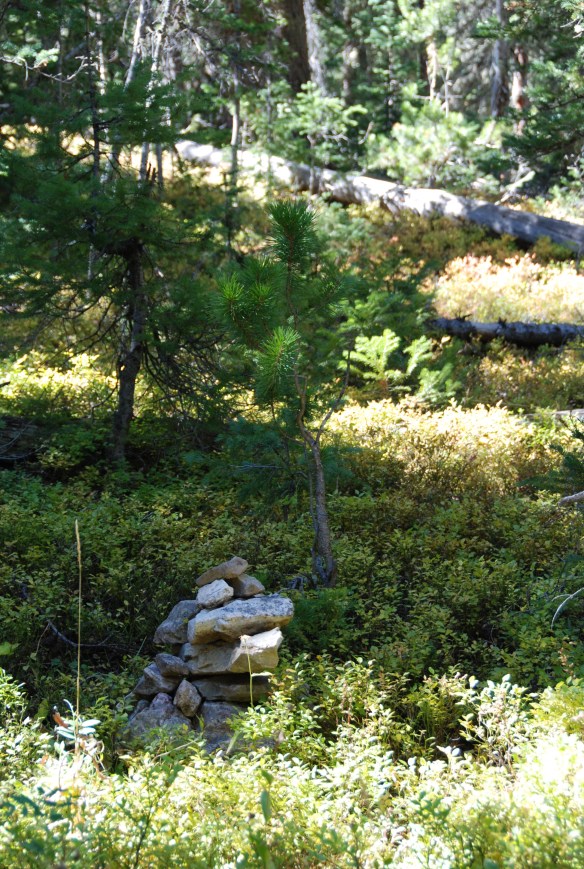
img_3845

Courtesy of Bryan Jorgensen, Las Vegas, NV, 2016

NaBloPoMo 2016, Letters to Patients, Day 25

To Patients Seeking Positivity:

Aim for the Golden Ratio!

As many of you know, I have recently undertaken to re-evaluate my Facebook usage.  Not long after I established my account c.2008, I decided to make my page a monument to positivity.  I realized that after I die, it would be the most visible and accessible legacy I leave, and I have total control over what I post.  I minimized complaining and ranting, and when frustrated I would try to write with an attitude of learning, of moving forward.  Lately I tend to leave off the latter.

Somewhere along the way, I think over the past year, but I’m not sure, pessimism and cynicism snuck in, no doubt related to politics.  The layers of consciousness infiltrated by the negative campaigning this time around extend deeper than any other election cycle in my memory—but maybe I just don’t remember.  I think humans have evolved to forget pain as a survival mechanism.  If women remembered all the pain and anxiety of pregnancy, delivery, and caring for a newborn, we would never do it more than once, are you kidding me?

I used to review my Facebook posts and feel elevated.  Today they often bring me down; it feels terrible.

Thankfully, I have some tools to resist the negativity.  I was reminded recently during my 3 Question Journal Shares with Donna over at A Year of Living Kindly.  I remembered something about healthy relationships maintaining a 3:1 ratio of positive to negative interactions.  Turns out it’s actually 5:1, widely attributed to observations by Dr. John Gottman, renowned marriage and relationship psychologist.  I think the same thing applies in other realms, too, such as self-talk—a reflection of our relationship with ourselves.  It’s not a far leap to see how this idea pertains to news, social media, and any other human interactions.

Business researchers have discovered a 5.6:1 ideal ratio in highly functioning organizations, whereas low-performing teams’ ratio landed close to 0.3:1.

For more information on the science behind the theory (and motivation for practice), I highly recommend Positive Psychology in a Nutshell, by Ilona Boniwell.  For a brief overview, check out this PDF.  The book summarizes the origins of positive psychology as a field, and the research and wisdom of its study and application.  For example, psychologist Barbara Frederickson has described how positive emotions contribute to our personal growth and development (taken from Boniwell’s text):

  1. Positive emotions broaden our thought-action repertoires
  2. Positive emotions undo negative emotions
  3. Positive emotions enhance resilience

So hereafter, I will pay more attention.  I will likely continue to share articles that illuminate my concerns for the future.  But I will aim for the 5:1 positivity ratio.  Holy cow, can you imagine if that’s actually what we saw on the news and social media?  And why not aspire to 5:1 in my personal interactions, too?  That’s taking charge of my own happiness, yes.
On Thanksgiving–Meh

img_2758

NaBloPoMo 2016, Letters to Patients, Day 24

To Patients Who Feel Lukewarm About Thanksgiving:

I’m with ya.

Not that I have anything against Thanksgiving…  I just have difficulty pouring forth a great gush of gratitude every fourth Thursday of November for a national holiday.  I thought this week it was just because of the tensions of the year, but looking back, I’ve never really loved this day.  I feel sheepish to write it, like people will think less of me.  Then again, something tells me I might not be the only one?

Yesterday I shared the most eloquent treatise on gratitude I have ever read, and I believe every word.  I try to live the premise every day—to pay attention and feel gratitude at the deepest cosmic level, connected to everything in the universe.  I marvel every day at all that I have, all that I am privileged to witness and do—to live this life, so full of learning and connection.  Today I’m supposed to summon and articulate all that moves me to thankfulness…  Why do I resist?

I imagine many would read this and think, “Wow, she is so ungrateful,” or maybe un-American?  I think most people who know me would disagree.  And those who know and love me best would hold the space with me to explore the curiosity of it all, without judging me for it or trying to ‘fix’ it.  And I’m ever so grateful for them, because I’m not sure it’s something that needs to be ‘fixed.’

I think it’s okay to feel not particularly grateful today, no more than any other day.  I also think it’s okay to feel especially grateful on this day, significantly more than any other day.  What’s not okay—what I see causing so many people to suffer—is when we shame others for thinking and feeling differently from us.  We physicians do this more than we realize, I think.  When patients don’t seem to take blood pressure, diabetes, obesity, or flu as seriously as we do, we can get very judgmental.  When they have different ideas about what will make them better (natural supplements, unusual diets, acupuncture, shamanic journeying, homeopathy), we can become positively hostile.  This is rarely helpful.

So if you, like me, are not particularly into Thanksgiving, and/or if you don’t subscribe to all conventional wisdom around certain things medical, I will try to withhold judgment.  I am indeed grateful for the chance to gather and enjoy one another’s company this week.  I don’t advertise my apathy for the holiday, as that would diminish others’ joy—and that would be antithetical to my core values.  I also appreciate the freedom to celebrate modestly rather than exuberantly.  I respect your right to choose therapies according to your values and beliefs, as long as your choices do not harm others.

I’ll continue to explore my relative indifference toward Thanksgiving.  Thank you for not trying to make me feel bad for it.

On Experiencing and Expressing Gratitude

dsc_0638

NaBloPoMo 2016, Letters to Patients, Day 23

To Patients Seeking Words for Gratitude:

I found them!

As we head to gatherings tomorrow and seek words to honor and express the occasion, I’m particularly grateful today to see the post below by David Whyte.  Where, you ask?  Why on Facebook, of course!  Back tomorrow with my own original words.  Until then, peace and gratitude to you all!

***  ***  ***

GRATITUDE

is not a passive response to something we have been given, gratitude arises from paying attention, from being awake in the presence of everything that lives within and without us. Gratitude is not necessarily something that is shown after the event, it is the deep, a-priori state of attention that shows we understand and are equal to the gifted nature of life.

Gratitude is the understanding that many millions of things come together and live together and mesh together and breathe together in order for us to take even one more breath of air, that the underlying gift of life and incarnation as a living, participating human being is a privilege; that we are miraculously, part of something, rather than nothing. Even if that something is temporarily pain or despair, we inhabit a living world, with real faces, real voices, laughter, the color blue, the green of the fields, the freshness of a cold wind, or the tawny hue of a winter landscape.

To see the full miraculous essentiality of the color blue is to be grateful with no necessity for a word of thanks. To see fully, the beauty of a daughter’s face across the table, of a son’s outline against the mountains, is to be fully grateful without having to seek a God to thank him. To sit among friends and strangers, hearing many voices, strange opinions; to intuit even stranger inner lives beneath calm surface lives, to inhabit many worlds at once in this world, to be a someone amongst all other someones, and therefore to make a conversation without saying a word, is to deepen our sense of presence and therefore our natural sense of thankfulness that everything happens both with us and without us, that we are participants and witness all at once.

Thankfulness finds its full measure in generosity of presence, both through participation and witness. We sit at the table as part of every other person’s strange world while making our own world without will or effort, this is what is extraordinary and gifted, this is the essence of gratefulness, seeing to the heart of privilege.

Thanksgiving happens when our sense of presence meets and fully beholds all other presences. Being unappreciative, feeling distant, might mean we are simply not paying attention.

© 2015 David Whyte
from ‘GRATITUDE’
In CONSOLATIONS: The Solace, Nourishment and Underlying Meaning of Everyday Words.
© David Whyte and Many Rivers Press 2015