
NaBloPoMo 2016, Letters to Patients, Day 11
To Patients Who Suffer:
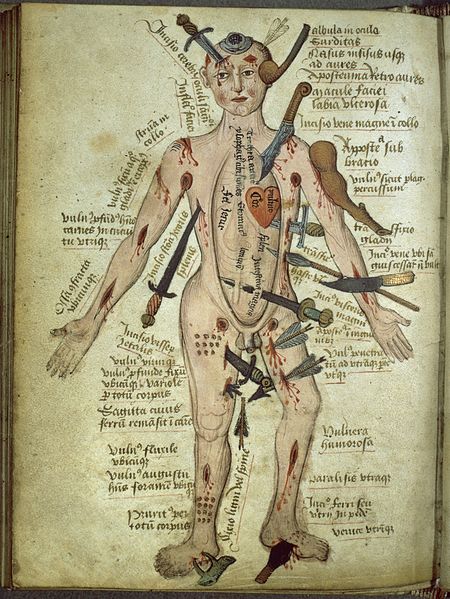
Which arrow causes you more pain, the first or the second?
Fellow blogger Michelle at The Green Study recently posted a piece in which she distinguished between pain and suffering. It reminded me of a Buddhist teaching that inspires and humbles me. Blogger and curator extraordinaire Maria Popova quotes it in this article she wrote last year, on a book by Tara Brach:
The Buddha once asked a student, “If a person is struck by an arrow, is it painful?” The student replied, “It is.” The Buddha then asked, “If the person is struck by a second arrow, is that even more painful?” The student replied again, “It is.” The Buddha then explained, “In life, we cannot always control the first arrow. However, the second arrow is our reaction to the first. And with this second arrow comes the possibility of choice.”
The first step to suffering less is cultivating awareness of the second arrow. This takes practice, and we must resist the self-judgment that comes the moment we realize we have not only shot ourselves again, but have been twisting that second arrow deeper and deeper. This shame and self-revulsion is, after all, another drop of poison on the second arrow’s tip. Instead, I like to apply Ben Zander’s acclamation when he finds himself or his students doing something ‘wrong’: “How fascinating!” Look what I did! No judgment, just lighthearted observation.
The second step to suffering less is, of course, to avoid the second arrow. Once we notice, learn how to remove it and tend the wound. Breathe deeply. Identify the sources of anger, fear, resentment, blame, contempt, shame, despair, anxiety, bitterness, envy. Breathe again. Loosen our desperate grip on these feelings. Hold them more loosely, ever more loosely. Breathe. Breathe. Hold also the Space, emotional, cognitive, and temporal, for them the move through and exit us.
Eventually, breathing, we can let go the negativity, pull the arrow out. Breathe. When assailed by another first arrow, see the second arrow coming and sidestep. Breathe. Keep breathing. Practice self-compassion and forgiveness.
Life will continue hurling arrows at us. Some will miss, others will land in our most vulnerable spots. Mindfulness practice, centered in attention to the breath, helps us evade the wounds and anguish from our own second arrows. The data, accumulated over the past four decades, is all but irrefutable for the benefits of mindfulness for depression, anxiety, chronic pain, burnout, and overall well-being. Prolonged practice even changes the physical structure of the brain, and it’s never too late to learn.
If you’d like to learn more, I have included a few more links below. You may find it worthwhile to invest in the practice. Be patient with yourself. And let me know how it goes!
http://www.wildmind.org/texts/the-arrow
http://www.huffingtonpost.com/susan-bernstein/dont-shoot-the-second-arr_b_5102701.html
http://www.nscblog.com/miscellaneous/avoiding-the-second-arrow/

 Healing Through Connection