
Smile, Laugh, Hug, Repeat

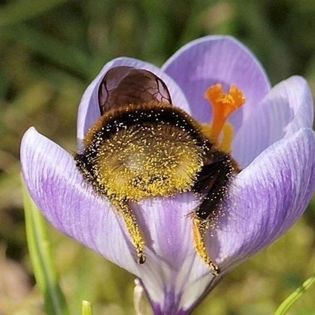
https://cheezburger.com/9757445/your-daily-treat-tired-bees-who-fell-asleep-inside-flowers

NaBloPoMo 2021:  Do Good, Kid

Times are so hard right now.  Tempers are short, nerves are frayed.  We feel edgy, agitated, hypersensitive.  It’s no wonder, with a global pandemic going on two years.  Our work, our kids’ schools, and everybody’s lives are disrupted in more complex ways than we can wrap our heads around. 

And yet, through it all, we persist. For many of us, it’s not been all bad. We slowed down, reassessed, reprioritized, and emerged with a deeper understanding and appreciation for more simple sources of fulfillment in life. If anything, it’s the connections gained from pandemic living that have saved us, and the disconnections that threaten us most.

Even after the acute scourge of COVID, we will still encounter hardships—strains on our patience with one another, acts of nature out of our control, more short tempers and frayed nerves, relationships at risk. How can we fortify ourselves and one another against despair and withdrawal? We can throw ourselves into work, which may hold us up if our jobs are full of meaning. We can numb with food, alcohol, drugs, sex, and other high risk behaviors.

We need something to fan the flames, however small, of hope and optimism—the faith that we will be okay, that we can handle whatever comes, as long as we do it together. I feel so blessed with such amazing people in my life, friends and family alike. Every day I marvel at how I got so lucky. I’m also reminded that I have a hand in these wonderful connections—I cultivate them on purpose. I learned how from my mom, and I see my kids growing in their skills.

To exercise good humor, find joy, and connect with people through that which uplifts—jokes, memes, comedy, and the like—I think we sometimes underestimate the vital importance of these practices in daily life. It’s too easy to get sucked into darkness, to lose the light. But it’s always there, however faint or dim, if we look. We can always find something to smile and laugh about. We can always offer each other a warm embrace (especially if we are vaccinated, masked, and asymptomatic, and even if we are not).

It’s how we share love, and that’s what keeps us going. When we meet people, even if our own mood is sour, we can choose to smile. That one offer of connection can set the path of any encounter on an upward trajectory, lifting all involved. We can share a funny—oh hey look, I wrote about this for NaBloPoMo last year! 😀 Besides The Big Bang Theory and Nathan Pyle, this year I also recommend Awkward Yeti, Upworthy, and any source that offers joy without judgment.

Let’s all hold each other in a little more light, love, fun, and grace, eh? 

In case you have not had your dose today, I just saw this on Facebook now; please enjoy and pass it on:

This starts my 22nd year of teaching middle school. Yesterday was quite possibly one of the most impactful days I have ever had.

I tried a new activity called “The Baggage Activity”. I asked the kids what it meant to have baggage and they mostly said it was hurtful stuff you carry around on your shoulders.

I asked them to write down on a piece of paper what was bothering them, what was heavy on their heart, what was hurting them, etc. No names were to be on a paper. They wadded the paper up, and threw it across the room.

They picked up a piece of paper and took turns reading out loud what their classmate wrote. After a student read a paper, I asked who wrote that, and if they cared to share.

I’m here to tell you, I have never been so moved to tears as what these kids opened up and about and shared with the class.

Things like suicide, parents in prison, drugs in their family, being left by their parents, death, cancer, losing pets (one said their gerbil died cause it was fat, we giggled😁) and on and on.

The kids who read the papers would cry because what they were reading was tough. The person who shared (if they chose to tell us it was them) would cry sometimes too. It was an emotionally draining day, but I firmly believe my kids will judge a little less, love a little more, and forgive a little faster.

This bag hangs by my door to remind them that we all have baggage. We will leave it at the door. As they left I told them, they are not alone, they are loved, and we have each other’s back.

I am honored to be their teacher.

via: Karen Wunderlich Loewe / Facebook

Originally posted in 2019

Ask More and Better Questions

View of I-70 from Silver Plume, CO, 2015

NaBloPoMo 2021:  Do Good, Kid

What one habit do you really wish all people would practice more? 

What difference would it make to humanity if we did? 

How could/would you incite a movement in this direction? 

Who would you recruit to help? 

Who does it a lot/enough/too much/effectively already? 

What are these people like? 

What else do you admire about them?

What else else??

My biggest pet peeve is early closure (asking far too few and poor questions, then jumping to poor conclusions). 

How would it have changed your engagement with this post, if at all, had I opened with that declaration? 

To walk my title mantra talk, it occurred to me to introduce my thesis—that we should all practice asking more and better questions—posed as a question. 

How would readers answer, I wondered?  The possibilities are infinite, OMG how awesome! 

Where would the conversation go after that, I asked myself? What else would I ask in response? The subsequent questions came to me, in the order above, as I embraced my premise in full. And wow, it felt liberated, generative, potentiating, and FUN! I would love to have this conversation!

Asking questions, more than answering them, is how we learn and grow.  Finding the best questions to unlock innovation and connection—I can think of few more satisfying undertakings.  Those questions stop us in our tracks.  We look up, straighten our posture, cock our heads.  Mental gears that don’t usually turn get cranked, sparking action potentials where none ever occurred before.  Magnificent questions carve novel landscapes of insight and creativity within, before, and between us—ah-HA!

More than anything, excellent questions help us connect. 

When you have a great idea, what do you want most when you share it?  You want people to ask you about it, right? 

And what engages you most when they ask–what are the greatest benefits? Maybe they help you flesh out a rudimentary notion, find flaws, discover applications, strengthen your argument? Maybe they point you to perspectives you had not yet seen? Maybe they trigger even more interesting questions that you had not thought to ask before?

Even converting statements to questions, as I did in the last three sentences, can alter the course of an encounter, yielding much more rewarding depth and complexity—no?

I have a friend who used to meet any concept outside his comfort zone immediately with, “That’s a bad idea.” Guess how fast I stopped sharing things with him? Thankfully, I have friends like Donna, Christine, Stacy, Nicole, and others, who will respond to even my most outlandish assertions with, “Ooo, tell me more?” “What made you say that?” “How does that relate to…?” “Where will you take this?” and the like. Our conversations inevitably end in my scribbling exuberantly, and those musings often show up on this blog. When I find myself mired in the dysfunctional narratives of my most challenging relationships, it’s the open, honest questions I ask myself that get me unstuck.

Be the person people want to tell their ideas to. Inhabit the safe place where your loved ones, those you lead, and anyone who needs you can bring their nascent, brilliant, opinionated, eccentric, flawed, WRONG, and any other thoughts. Ask more and better questions for clarification, understanding, exploration, collaboration, and connection, among other things.

Notice that the most generative questions often start with ‘What’ and ‘How’, and their answers are almost never yes, no, or some other binary choice.  The most fun exception might be, “HELL YES, or no?” 

Lastly, if you’re surrounded by pitiable interrogators, substitute their banal queries with the most fascinating ones you can muster, respond to those instead, and see where that goes.  Maybe they’ll take the hint and follow suit, and voila, you’ve started a movement.

I really love the questions below.  What are your favorites? 

Onward in curiosity, friends.

What assumptions do I make here?

What do I not know?

What is up with that?

What is the evidence?

How do I know? 

How sure am I, really?

How would I feel in that situation?

What is my objective here?

What does this person really care about?

What am I committed to first?

What next step(s) will move us toward our goal(s)?

What would I give for this?

What does this person need from me?

Sometimes Just Being With Each Other Is Enough

When my friend Dawn lost her daughter in a school shooting, our friend Lisa showed up on her doorstep unannounced.  She came in and just sat with Dawn.  No food, no words, just presence, which is what Dawn needed.

When else is simple, resonant presence enough?

My experimental physician comradery group met for the third time this week.  I am positively beside myself giddy that my MD friends are so willing to give up an hour in the evening to spend on yet another video call.  Research has shown that formal, facilitated physician forums increase our well-being in multiple domains.  Seeing as our group is informal, I have hesitated to impose an agenda.  But being docs whose nature is to ask, “What is the goal of this meeting?” I felt obligated to query us about our objectives.  What is the purpose of these sessions, how will they best serve us all?  Some awkward seconds of silence ensued, heads cocked, brows slightly furrowed.  Then, quite easily, we agreed that just being together, in professional and personal communion, was enough.  Wow, that’s it?  We just want to be in one another’s company?  I felt relieved, and also sad that this is how starved we are for connection.

I confessed my ulterior motive for forming the group:  to begin construction on wide bridges between departmental silos.  I dream that we can not only form thick personal connections, but also make our operations decisions with those connections in mind.  Scheduling protocols in your department impact workflow in mine.  Optimization for me may detract from your efficiency.  In many cases, patients are also negatively affected.  Can we find the win-win more often and easily?  I think so, and like so many things, it takes time and effort to cultivate the necessary relationships.  Maybe it can start with a few of us early adopters, choosing each other’s company once a month.

Yesterday I completed the Aspen Institute First Step Seminar: Transcendent Dialogue in a Polarized World, a three-session workshop on engaging with difference.  Once again I got to participate in a transformative pilot, and OMG it was amazing!!  Check out the workbook that guides one through assessing, constructing, and articulating their Worldview (attendees have permission to share)—phenomenal!   Session titles:

1. Understanding and Articulating Worldview

2. Pushing and Challenging Your Own Worldview

3. Making Commitments

Immediately I found myself surrounded by people from across the country and myriad fields of study and work, all convened in a wholehearted spirit of curiosity, learning, and connection—my tribe!  But by the end of Session 2, I found myself impatient, wishing for more concrete skills acquisition and training.  What method or mantra could I learn, that I could then take and apply to my next encounter with a Trump supporter?  I wanted to role play, OMG!  After sitting with this disquiet, and then discussing with the group, I realized again that simply being with these amazing people could be enough.  We read and interpreted poetry, discussed worldviews and core values.   We defined, debated, and redefined terms that appear benign and banal at first, but can be fundamentally divisive (eg “safety” and “common good”).  We sat together in mutual discerning presence, with respect and openness.  Hearing eight other people’s reflections on “Salmon Courage” by M. NourbeSe Philip flung my mind open in the most exciting way!  I cannot remember the last time I encountered so many diverse perspectives so collegially and lovingly, and I could not get enough. 

Turns out I learn, indirectly perhaps, a ton of applicable skills from these communal encounters, formal and informal alike.  I’ll continue to dissect for myself the aspects of these groups that make them so effective, such as explicit and implicit agreements around conduct and relationship.  I always seek connection when I’m with people, no matter the size of the group.  But maybe I’ve too often thought of it as gravy more than meat and potatoes?  When I approach a structured meeting, I want to take away something tangible to report on—something useful to share, that the non-attendee can also practice.  But maybe I can loosen my grip on that need.  Maybe it’s okay to say, “You just had to be there,” and then invite my friend to come with me next time. 

That is how we grow strong, loving, and productive communities anyway, right?

**Sorry for the weird formatting, friends–I don’t know how to fix it! ;P**