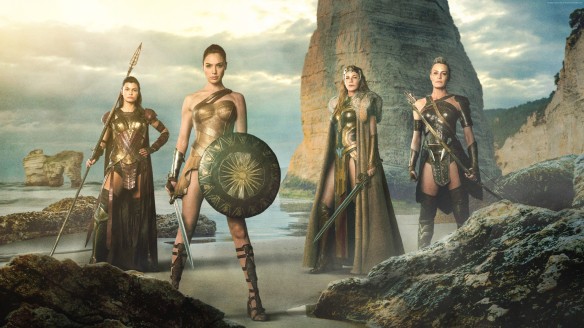
I took my daughter to see “Wonder Woman” last weekend. I highly recommend it—such a strong, complex, and inspiring portrayal of humanity at its best and worst, with a hopeful ending.
Today I’m (somewhat) inspired in parallel by (some) politicians, three Republican senators in particular, calling for transparency in drafting healthcare reform. I hereby present my attempt to integrate that exquisite Wonder Woman Experience with my current political outlook.
***WARNING*** THIS POST MAY CONTAIN SPOILERS FOR THOSE WHO HAVE NOT SEEN THE MOVIE.
Innocence
Diana of Themyscira grows up believing in the innate goodness of humans. The Amazons are educated, independent, strong, and proud, and also collaborative, compassionate, kind, and sensitive. When Diana learns of the horrific war waged by mankind outside of her paradise home, she relates it to the story of Ares, the God of War, who corrupts the hearts of men to commit acts of hatred upon one another. So, naturally, she sets out to kill Ares and fix it.
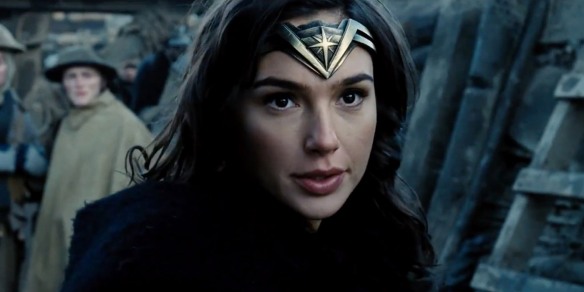
Image from http://static.srcdn.com/wp-content/uploads/2017/01/Gal-Gadot-as-Diana-Prince-in-Wonder-Woman.jpg
We journey with Diana through challenge and triumph, as she learns that, of course, it’s not that simple. She kills the man she thought was Ares, and nothing changes, the war rages on. She must reconcile the possibility that the heart of mankind is not actually pure goodness. Even without an insidiously corrupting God of War, humans are prone to their own malignant beliefs and actions. Her innocence is pierced.
In the summer of 2009 or 2010, my best friend from college and his wife came to visit. He, a molecular biology and political science double major and emergency medicine physician, and she, a worldly intellectual and future legal counsel for a major media outlet, were the first to burst my innocent political bubble. For some reason, likely due to the tremendous inspiration of Barack Obama, I had gone from thinking all politicians were liars and performance artists, to seeing them as genuine public servants, working to advance their authentic ideas of how society functions better for all citizens. I know, La-La Land! My friends described an alternative, more realistic path to politics: Person succeeds at business, rubs elbows with regulators and influences them (with money or otherwise) to facilitate his/her business success. Said person then realizes s/he could actually become one of those regulators and make a more permanent positive impact on these business interests, and so runs for office. I still remember how deflated I felt, shoulders slumped, spine rounded, at this sudden and stark realization.
Indignation
As with everything, I’m sure political reality lies somewhere in the messy middle between pure altruism and blatant, self-serving avarice. But these days, for someone who loved Obama and almost everything he stood for, it’s hard not to see the whole of our current political landscape as the latter. I think, Really, WTF? Can those in power really see nothing valid whatsoever in anything accomplished the past 8 years? Do they really think that see-saw policy-making, each administration reversing everything from the previous one, replacing wise, experienced public servants with ignorant neophytes (my opinion), is the best way to govern? OMFG, you have got to be kidding me. I seethe. But what can I do?
Ares reveals himself, and taunts Diana in her most vulnerable moment with his arrogant disdain for man’s weakness and corruptibility. He also reveals that she is, in fact, the only one who can vanquish him—only a god can kill another god. Diana, daughter of Zeus himself, possesses the power to Kick. His. Ass. Yet he dismisses her out of hand, oblivious to her inner strength of conviction and compassion (I know, so much to expound on here, maybe in another post!). Nope. Righteous indignation rises. She digs deep, finds that core courage, and obliterates him. Fist pump. He never saw it coming.

Idealism
In the end, Diana realizes that humans are a paradox: a big jumble of contradictions, perpetrators of horrific rage and destruction, and also fully worthy of love, forgiveness, and compassion. She somehow finds peace in this enigma, loving the best of humanity and vowing to protect us against our worst selves, helping us to become better.
This resonates with the idealist in me. This is how she helps us, and how we can help ourselves.
How Can We Help?
We can choose to fight against one another, and thereby focus on what we hate (about ourselves).
Or, we can choose to seek the good in one another, and focus on what we love— even better, focus on love itself. We all want access to healthcare, and to be free from bankrupting medical expenses. Everybody wants to be safe from gun violence. We all want an efficient government that sets reasonable regulations, protects citizens’ constitutional rights, and spends money wisely and with accountability. We all want to feel protected and free, loved and free to love.
The messy middle is the how. That is where we negotiate. That is also where the magic happens, as Brené Brown says, and that is where we must go, where we must persist. We can bring our best selves to meet others’ best, in mutual respect. It can be high risk, so we can enter slowly, strategically, with realistic expectations and a few trusted friends.
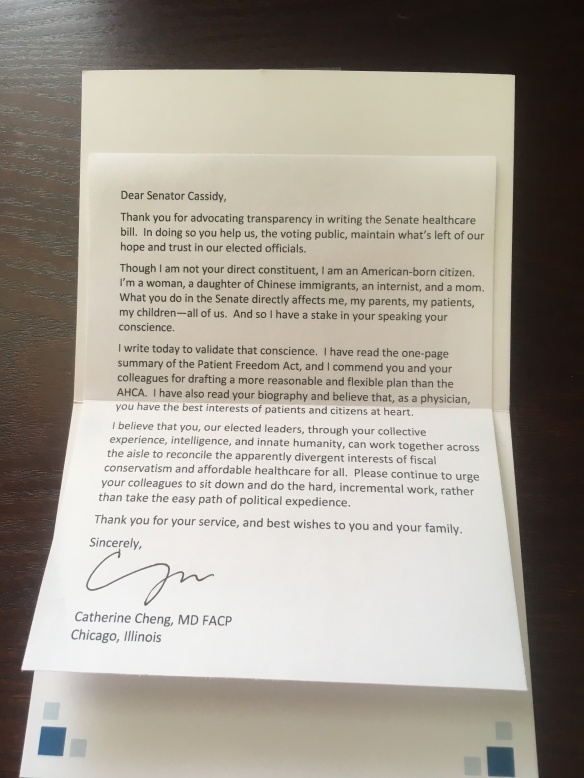
To this end, I will continue to seek out and hold up elected officials who call for more thoughtful political processes. My friend Triffany and I have made a habit of writing thank you notes to Members of Congress to validate their cooperative acts. We harbor no illusions about purity of intent, but we also know that positive reinforcement works. We can be Diana to anybody’s Ares.
Focus on and fight for what we love: common goals and interests, shared humanity, connection, and one another. It’s a lifetime’s worth of work, and well worth the fruits, if we can stick with it.