

When did you last write a love letter? Send it?
What constitutes a love letter in your mind?
Depending on your definition, maybe you’ve written/composed and sent them your whole life and not even known it? Sometimes I think this is the case for me… definitely lately. Without question, I have written and sent countless ‘conventional’ love letters in my 50 years. Since at least 4th grade, I have professed and proclaimed love for and to many, in words, on paper. The pretty paper and pen fetish started early, and has been put to very good use. Responses have varied; looking back now I can take it all so much more lightly than I did in my youth. Putting your heart out in the open, wow, that can be intense. Exhilarating, giddy, tremulous, brave, honest, fearful, uncertain, upright, vulnerable. I wonder how many reciprocations, in any form, it takes to make up for all of the non-responses and rejections? I suppose it depends on all the things–to/from whom, magnitude of emotion, stakes of the relationship (on my end), expectation, context, timing… So much of any experience is determined by my own mindset at the time, the stories I tell about myself and the other person. I smile (smirk? cringe?) as I write this today, even chuckle, because oh my gosh, I took and gave it all so seriously back then! *sigh* The peace and steadiness that comes with age… There is a comfortable looseness, a confidence that comes from loving over decades. Relationships come and go, dive deeply and float in turn; the fluidity of it all emerges over time, teaches me to flow with it more and more easily. Awareness and acceptance of this natural, organic rhythm liberates me to express more freely and with less attachment… and paradoxically, the rewards of reciprocation feel that much more bright and lucious!
I still have a stack of New Year cards to send. This involves colored pens, stickers, stamps, and trips to the mailbox. I love it all. I figure it’s okay if they’re late, because it’s a personal greeting, something I take time to do specifically for someone. People appreciate that. It’s a form of love letter, I have decided, and when does anyone not want that?
Lately friends have sought me for reflection and advice. Our conversations are heartfelt and connecting. What an incredible honor for me, to be trusted so. I take that very seriously, to be sure. But the feeling in these exchanges is not heavy. Rather, it’s deep, close, bonding, meaningful. I find myself writing summaries and reflections afterward, hundreds of words’ worth. I feel a need to document and share back, to verify the thoughts, impressions, values, and goals; I want us both to record the integrity, affirm our own relationship and shared humanity with others in our lives. It’s not a high or rush I get from these encounters. It feels slower, an unfolding, shared in confidence, soft tones and close proximity, even if over the phone. These summary ‘love letters’, as I have come to think of them, are meant to reinforce what I see as my friends’ strengths of character, their core values, and the resulting alignment of their goals and actions. I keep these missives for myself, as well, because the connection nourishes me at least as much as it may help my friends.
They are love letters.

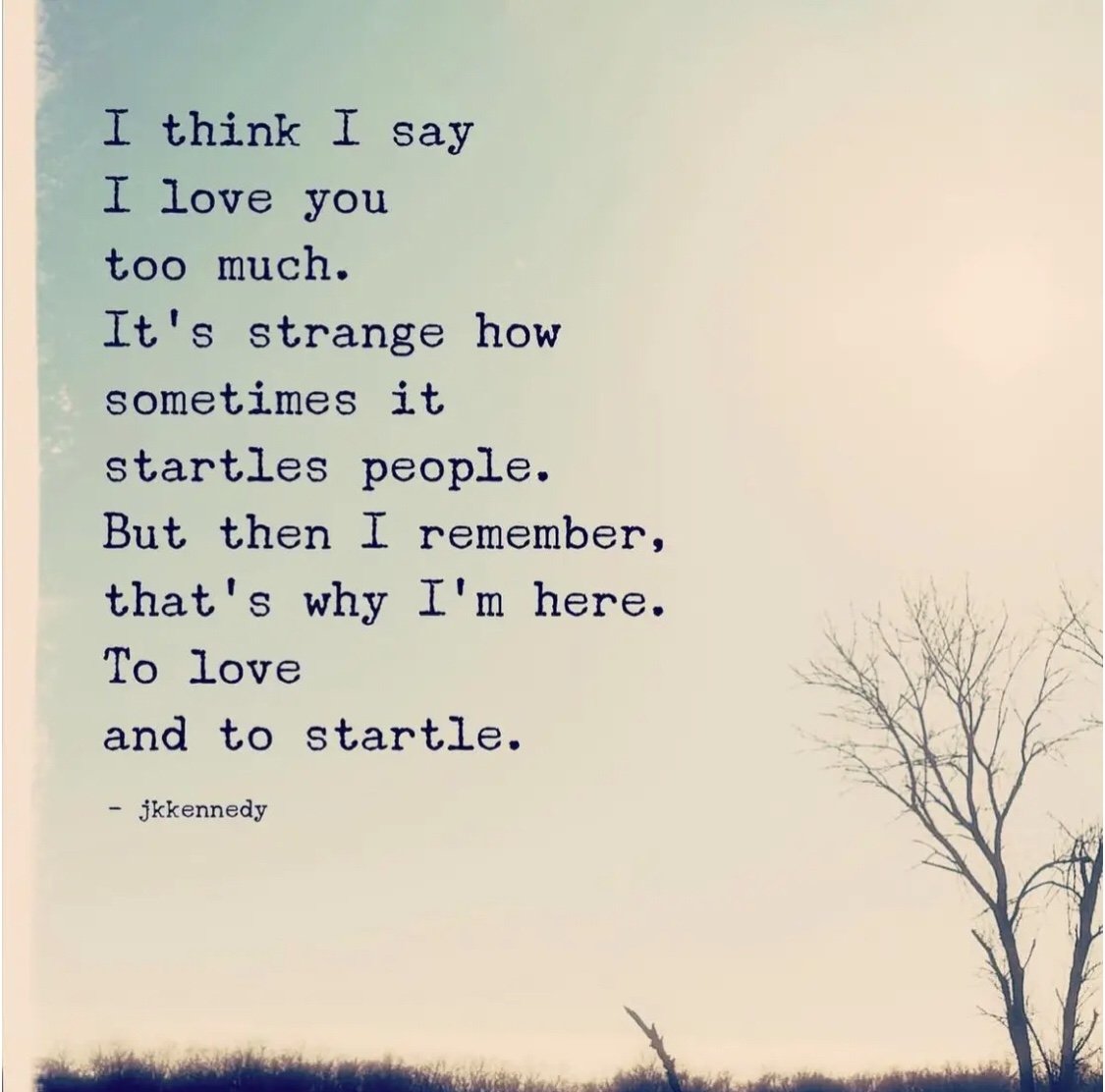
I still love this meme so much. What a simple and moving reminder about what’s nost important in life–our relationships. The best part is that when I send the text, drop the card, and leave the voice message (all love letters), just the act itself feeds me already, whether or not a response ever comes. Giving love begets yet more love–the threshold potential for this positive feedback loop is so low, it’s a wonder we don’t walk around eurphoric all the time, just from feeling love for others, HA!
For every executive physical, I debrief with my patient at the end of the day. We review biometric data and test results. This discussion includes an Action Plan, in which the dietician, exercise physiologist, and I make health behavior recommendations in the context of the person’s current life circumstances. Travel, phase of family life (eg little kids vs young adults, empty nests, and aging parents), work role/stress/status–anything relevant to their health is assessed and factored for specificity to person, place, and time (hint: everything is relevant). Over the years, and the past year especially, I reflect on patients’ goals, fears, and values in all domains of life, in addition to body mass and fasting glucose. I talk about relationships, a lot. New patients seem surprised–most often pleasantly, sometimes not… I can attune and dial back if needed. Without fail, however, the more someone discloses, the more we share (because there is always two-way sharing), the more meaningful and dense my action plans get, the more I get to love on these patients, I have only recently realized. It’s okay if they don’t accept it–not everybody wants to feel loved by their doctor. For those who do, however, I am all in…and the rewards are exponential, at least for me.
I see you.
This is what you mean to me.
This is what I wish for you.
Every time we express these, when we convey them to someone we care about, then I say we have sent a love letter. I personally value the handwritten kind most–the swoop and pressure of writing implement, the acutely vulnerable yet high potential permanence of paper, someone’s thoughts and feelings in a particular time and place, documented so concretely, tactilely–to hold, see, and smell it all at once–the uplift almost defies description.
If you seek inspiration for your own love writing, I recommend two men whose work I admire:
Grant Gosch writes sensual missives and posts with accompanying black and white photographs that stir body and soul. Follow him @saltfox_writer on Instagram. You can receive his Saturday morning love letter via email; subscribe at http://www.grantgosch.com. I am 80% through his first novel, Kingfisher Lane, and may very well bold it on my 2024 list. Additionally, Grant offers commissioned love letters in exchange for monetary support of his writing–believe me, this is high value. I have no financial interests in Grant’s work. I simply admire that he puts his heart out in the world, to connect and write on behalf of any of ours. He is a gifted writer, possessed of highly attuned and effective emotional-verbal integration, offered to us from the wilds of the Pacific Northwest.
JP Greene also writes on love and life with eloquence, heat, and edge. Follow him on Insta: @typewrittenlovenotes. JP also offers a weekly newsletter, sent from Fort Collins, Colorado, written thoughtfully and with purpose. His second book, The Beauty of Sadness, drops on April 4. I have no interests in JP’s work, either, other than to amplify it because I think the world is better for his expression.
Funny that both of these writers choose to present their work on paper, typed old school on machines that deliver ink via ribbon. I imagine that is why their work, among other reasons, resonates so deeply with something in me. Kindred.
Love letters. When and what will you send next?


 Healing Through Connection